
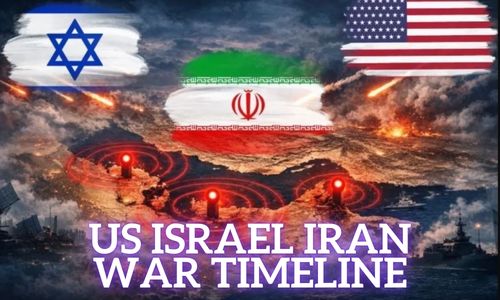
Iran War Updates
The US-Israel-Iran conflict has entered its third week with a dramatic escalation that now includes Israeli ground operations in Lebanon, devastating deep-penetration strikes on Iranian missile sites, and an unprecedented wave of Iranian retaliatory barrages across the Gulf. As diplomatic efforts falter and civilian casualties mounted with the passage of time, the conflict shows no signs of de-escalation.
This comprehensive update covers the critical developments from February 28 till date, documenting military advancements, regional spillover, and the evolving strategic calculus of all parties involved.
Day-by-Day Timeline
Week 1: The Opening Salvo
February 28 (Day 1): The “Decapitation Strike”
The war began with coordinated US-Israeli operations—Operation Epic Fury (US) and Operation Roaring Lion (Israel)—targeting Iran’s leadership and military infrastructure .
Key events:
-
Leadership decapitated: Iranian Supreme Leader Ayatollah Ali Khamenei and over 40 top Iranian officials were killed in precision strikes on Tehran
-
Massive air campaign: US and Israeli forces launched hundreds of strikes across Iran
-
School tragedy: A missile strike on Shajareh Tayyebeh girls’ elementary school in Minab, southern Iran, killed over 170 people—mostly children. Preliminary investigations suggested the strike may have resulted from outdated US targeting intelligence
-
Iranian retaliation begins: Iran launched Operation True Promise 4, the first waves of missile and drone strikes against US and Israeli assets
-
Regional spread: Lebanon, Iraq, and Gulf states began experiencing attacks
Day 1 casualties:
-
Iran: 787+ killed (Iranian Red Crescent)
-
Israel: 9 killed in Beit Shemesh missile strike
-
Lebanon: Initial strikes reported
March 1 (Day 2): The Strait of Hormuz Closes
-
Strait blocked: Iran announced closure of Strait of Hormuz to Western-linked shipping
-
Continued strikes: US-Israeli air campaign intensified
-
Bahrain hit: Fire broke out in Salman Industrial City following missile interception, killing one person
March 2 (Day 3): Regional Escalation
-
Lebanon casualties rise: Hezbollah began sustained operations against Israeli positions
-
Gulf states impacted: Kuwait reported first civilian death—an 11-year-old girl
-
Oman tanker attack: Marshall Islands-flagged product tanker MKD VYOM struck off Muscat coast, killing one
-
Iraqi militias active: Islamic Resistance in Iraq announced first operations
March 3-4 (Days 4-5): Sustained Exchanges
-
Iranian missile waves: IRGC launched multiple waves of Qadr, Emad, Kheibar-Shekan, and Fattah missiles
-
US bases targeted: Al-Dhafra Air Base (UAE), Ali Al Salem Air Base (Kuwait), and Fifth Fleet headquarters (Bahrain) came under fire
-
Civilian toll mounts: Iranian Red Crescent reported 1,230+ Iranian civilians killed
March 5 (Day 6): Naval War Begins
-
US sinks Iranian frigate: US Navy torpedoed and sank IRIS Dena in the Indian Ocean, killing at least 87 Iranian sailors
-
Iraqi militia commander killed: Airstrike on vehicle killed Islamic Resistance in Iraq commander
-
Kuwait casualties: Two interior ministry officers and two army soldiers killed on duty
Week 2: The War Deepens
March 6 (Day 7): Trump Demands “Unconditional Surrender”
-
US ultimatum: President Donald Trump publicly demanded Iran’s “unconditional surrender”
-
Iranian rejection: President Masoud Pezeshkian rejected the demand
-
Massive Israeli strikes: 80+ Israeli fighter jets struck Tehran and other cities
-
Dubai Airport attack: Drone strike near Dubai International Airport disrupted flights
March 7 (Day 8): Fuel Depots Targeted
-
Israel strikes fuel depots: Approximately 30 fuel storage facilities hit across Iran, causing massive fires and smoke over Tehran
-
US-Israel friction: US officials expressed dismay at fuel depot strikes, preferring to preserve oil infrastructure
-
UN casualty report: Iran’s UN ambassador reported 1,332 Iranian civilians killed, including 180+ children
March 8 (Day 9): Ground Troop Discussions
-
US ground forces considered: NBC News reported Trump privately discussed deploying small contingent of US ground forces into Iran
-
Continued barrages: Both sides maintained strike tempo
-
Lebanon toll rises: Lebanese Health Ministry reported mounting casualties
March 9 (Day 10): Shifting Timelines
-
Trump signals war ending: At Florida press conference, Trump said US-Israeli strikes would end “very soon” while also claiming goals largely accomplished
-
Israeli casualty claims: Military spokesman claimed approximately 1,900 Iranian soldiers killed
-
Israeli deaths confirmed: Construction worker killed in Yehud, east of Tel Aviv, bringing Israeli civilian toll to 12; two soldiers killed in Lebanon combat
-
Putin-Trump call: Leaders discussed Iran conflict and Ukraine
March 10 (Day 11): Iranian Barrage Intensifies
-
Heavy Iranian strikes: Multiple waves targeting Israeli cities and US bases
-
US evacuations: State Department ordered non-emergency personnel to leave Saudi Arabia
-
US protests: Demonstrations in 50+ US cities against the war
Week 3: Attrition and Escalation
March 11 (Day 12): Most Intense Iranian Barrage
-
“Heaviest” Iranian attack: Three-hour barrage targeting Tel Aviv, Haifa, “West Jerusalem,” US targets in Erbil, and Fifth Fleet base in Bahrain
-
Wave 37-39 operations: IRGC launched Kheibar-Shekan and Qadr missiles with one-ton warheads
-
Maritime strikes: IRGC Navy struck container ships “Expres Room” and “Mayuree Naree” after warnings ignored
-
US drone shot down: Islamic Resistance in Iraq downed MQ-9 drone over Basra
March 12 (Day 13): Commercial Hub Attacks
-
Dubai and Kuwait struck: Iranian drones hit Dubai’s al-Badaa neighborhood and Sheikh Zayed Road; Kuwait International Airport and residential building targeted
-
19 commercial ships damaged: Joint Maritime Information Center confirmed vessels hit near Basra and off UAE coast
-
US Central Command response: Announced elimination of “16 Iranian minelayers” and several naval vessels
-
Tragic school strike: US strike on Iranian elementary school, reportedly from outdated intelligence, killed 168 children—later confirmed by Pentagon investigation
-
Cyber warfare begins: Iranian-linked group claimed cyberattack on Michigan-based Stryker medical firm
March 13 (Day 14): Massive Target Claims
-
15,000 targets struck: US War Secretary Pete Hegseth announced US-Israeli forces had struck over 15,000 enemy targets in Iran
-
Iranian capabilities degraded: Hegseth claimed Iran’s “missile volume is down 90 per cent,” “one-way attack drones yesterday were down 95 per cent,” and “Iran has no air defences, Iran has no air force, Iran has no navy”
-
KC-135 crash: US refueling aircraft crashed in western Iraq, killing all four crew members (non-hostile)
-
French soldier killed: Drone attack in Erbil province killed first French military member in the conflict
-
Turkish airspace violation: Ballistic munition from Iran entered Turkish airspace; Iran denied involvement
-
Lebanon devastated: Death toll reached 773, with 1,933 injured; commercial production fell 40-50 percent
March 14 (Day 15): Political Maneuvering
-
Trump on Kharg Island: Told NBC News US had “totally demolished” Kharg Island, adding “we may hit it a few more times just for fun”
-
Questioning Khamenei’s fate: Trump raised doubts about whether new Supreme Leader Mojtaba Khamenei was alive; Iran’s foreign minister insisted he was in good health
-
US embassy warning: Baghdad embassy warned citizens to “leave Iraq now” due to militia threats
-
UAE condemnation: Minister Lana Nusseibeh accused Iran of “attacking the peacemakers”
-
Footballers return: Three Iranian women’s national team members withdrew Australian asylum applications and returned home
-
Hezbollah vows long fight: Secretary-General Naim Qassem said group prepared for “long confrontation”
-
UN peacekeepers hit: Three separate firings on UNIFIL in Lebanon, “likely by non-state armed groups”
March 15 (Day 16): Israel Expands Strikes; Gulf States Under Fire
Israel’s Expanding Campaign
-
Israeli military spokesperson Effie Defrin told CNN that the military is planning for at least three more weeks of its campaign against Iran, with “thousands of targets ahead”
-
The Israeli military struck more than 200 targets across western and central Iran over the past day, including command centers, defense systems, and weapon storage and production sites
-
Israeli Foreign Minister Gideon Saar confirmed Israel does not intend to hold direct talks with Lebanon, contradicting earlier reports of potential negotiations
Iran’s Response
-
Iran’s Islamic Revolution Guard Corps (IRGC) vowed to pursue and kill Israeli Prime Minister Benjamin Netanyahu
-
Iranian Foreign Minister Abbas Araghchi told Al-Araby Al-Jadeed that Tehran has information the US and Israel are launching attacks from certain locations against Arab states and framing them on Iran
-
Araghchi reiterated that the Strait of Hormuz is open to all except US and US-allied ships
-
Ebrahim Azizi, head of Iran’s parliamentary committee on national security, warned that Ukraine has become a target for Iran due to its drone support to Israel
Regional Attacks
-
A drone struck the UAE consulate in Erbil, wounding two security guards
-
Italy’s military reported a drone attack on Ali Al Salem Air Base in Kuwait, destroying a remotely-piloted aircraft of the Italian Task Force Air
-
Several drones struck Kuwait International Airport, damaging its radar system
-
The Islamic Resistance in Iraq announced 24 military operations against “enemy bases” over 24 hours
Casualty Updates
-
Lebanon: Death toll reached 850, including 107 children, with 2,105 injured (since March 2)
-
UAE: Six nationals killed, 142 injured since conflict began; air defenses intercepted 298 missiles, 1,606 drones, and 15 cruise missiles
-
Bahrain: Intercepted 125 missiles and 211 drones since conflict began; Aluminium Bahrain shut down three production lines (19% of capacity)
March 16 (Day 17): Israeli Ground Operations Begin; Leadership Targeted
Israel Launches Ground Operations
-
Israeli forces launched “targeted” ground operations against Hezbollah strongholds in southern Lebanon, opening a new front in the widening regional conflict
-
The Israeli army destroyed an aircraft used by Iran’s top leadership at Tehran’s Mehrabad Airport and the headquarters of the IRGC Navy in eastern Tehran
-
Israeli police found missile and interceptor fragments in the Old City of Jerusalem, including the Al-Aqsa Mosque compound
Iran’s Position
-
Foreign Minister Araghchi stated Iran is ready to take the war “as far as necessary” and that the US and Israel have “learned a good lesson” about Iranian resolve
-
An Iranian government spokesperson claimed US-Israeli strikes have killed 226 women, 204 children, and damaged more than 61,000 civilian units
-
Iran’s Minister of Cultural Heritage confirmed no damage to historical artifact depositories
Regional Escalation
-
Iraq extended airspace closure for another 72 hours
-
Iraqi Shiite militia Kata’ib Hezbollah announced the death of security official Abu Ali al-Askari
-
Iraq’s Popular Mobilization Forces reported six members killed in an Israeli airstrike in Anbar province
-
Two drones attacked the Majnoon oil field in southern Iraq
-
A booby-trapped drone struck the Royal Tulip al-Rasheed Hotel in Baghdad
UAE Hit Again
-
A drone struck a building in Umm Al Quwain, sparking a fire
-
A fire at a petroleum facility in Fujairah following a drone attack was contained
-
A drone strike triggered a fire at the Shah oil field in Abu Dhabi
-
UAE death toll revised to seven killed (two military, five civilian) and 145 injured
Lebanon Crisis Deepens
-
At least seven killed in Israeli airstrikes across southern Lebanon, including two children and two paramedics
-
Hezbollah claimed it repelled Israeli advances, striking a Merkava tank
-
Lebanese death toll rose to 886, with 2,141 injured
-
Internally displaced people in Lebanon surpassed 1 million
Diplomatic Developments
-
Oman’s Sultan met with Egyptian Foreign Minister, stressing regional de-escalation
-
Jordan’s King Abdullah met with UAE President, calling for dialogue
-
Jordan and Egypt emphasized that Gaza situation must not be overshadowed
-
French President Macron called Iranian attacks on regional states “unacceptable”
March 17 (Day 18): Iranian Strikes Escalate Across Gulf
Iran Expands Attack Range: Iran stepped up retaliatory actions, launching rockets and drones toward US-linked targets across the Gulf region. Explosions were reported in several Gulf countries as air defense systems intercepted incoming projectiles .
Missile Hits Baghdad Residential Building: A missile struck a residential building in Baghdad, killing two people. Initial reports suggested the victims were “Iranian advisers” to Tehran-backed groups .
Israel Intensifies Campaign: Israeli warplanes launched airstrikes on three Beirut neighborhoods, including Kafaat and Haret Hreik, while another raid hit a residential apartment building in the Doha Aramoun area. The IDF said strikes targeted Hezbollah-linked infrastructure in Beirut and “terror regime infrastructure” in Iran .
Gulf Air Defenses Active: Saudi Arabia intercepted and destroyed 12 drones in the eastern region. Qatar’s armed forces intercepted a missile targeting the country, while civil defense teams responded to a fire in Doha’s Industrial Area .
UAE Civilian Casualty: Falling shrapnel from a missile interception in the Bani Yas area killed a Pakistani national. A tanker near the Emirati oil port of Fujairah was hit by an unknown projectile .
Trump Criticizes UK: US President Donald Trump said he was “not happy” with the United Kingdom after Prime Minister Keir Starmer said Britain would not be drawn into a wider war with Iran. Starmer instead focused on developing a collective plan to reopen the Strait of Hormuz .
Iran Rejects Ceasefire Claims: Foreign Minister Abbas Araghchi dismissed speculation that Tehran had sought a ceasefire, stating Iran had not requested talks with Washington and currently saw no reason to negotiate .
Netanyahu Addresses Iranians: Israeli Prime Minister Benjamin Netanyahu released a video message addressing the Iranian people, wishing them a happy holiday season and stating: “The Festival of Lights signifies the age-old belief of the Iranian people that light will triumph over darkness, that good will triumph over evil” .
March 18 (Day 19): Oil Facilities Targeted
Kuwait Refinery Struck: A fire broke out at Kuwait’s Mina Al-Ahmadi oil refinery following a reported Iranian drone strike. The Kuwait Petroleum Corporation confirmed the “limited fire” was contained with no injuries. Mina Al-Ahmadi is Kuwait’s largest oil processing facility with capacity to refine around 730,000 barrels per day .
Haifa Refinery Damaged: Israeli media reported that the Haifa oil refinery—the largest oil processing facility in Israel, supplying approximately 60% of Israel’s diesel and 50% of its gasoline—was damaged following an Iranian missile strike. Israeli Energy Minister Eli Cohen said damage to the electricity grid was “localized and not significant” .
Iran Warns of “Zero Restraint”: Araghchi warned that Iran had used only a “fraction” of its military capability in recent attacks and would show “zero restraint” if its facilities were targeted again .
Qatar LNG Impacted: Iran’s strike on the Ras Laffan Industrial Area was expected to reduce Qatar’s liquefied natural gas export capacity by approximately 17 percent, potentially disrupting supplies to Europe and Asia .
US Seeks $200 Billion: The Pentagon formally sought $200 billion from Congress to support the military campaign against Iran, with Defense Secretary Pete Hegseth indicating there was no defined timeline for the conflict .
Iranian Death Toll Rises: The Iranian Red Crescent reported that at least 204 children had been killed in US-Israeli strikes, with Iran’s total death toll exceeding 1,444 .
March 19 (Day 20): New Iranian Leadership Breaks Silence
Mojtaba Khamenei’s First Statement: Iran’s new Supreme Leader Mojtaba Khamenei issued his first public statement since assuming power, stressing that recent attacks on parts of Türkiye and Oman were not carried out by Iranian armed forces or its allies. He released the message congratulating the nation on Eid al-Fitr and Nowruz (Persian New Year) .
US Deploys More Marines: The Pentagon began sending three more warships and roughly 2,200 to 2,500 additional Marines to the Middle East—the second Marine deployment within a week. The USS Boxer and two other amphibious assault ships, along with Marines of the 11th Marine Expeditionary Unit, departed from San Diego .
Trump Lashes Out at NATO Allies: Trump called NATO allies “cowards” for their reluctance to help escort ships through the Strait of Hormuz, posting: “Without the U.S.A., NATO IS A PAPER TIGER!” .
UAE Intercepts 338 Missiles: The UAE Ministry of Defense announced its air defense systems had dealt with 338 ballistic missiles, 15 cruise missiles, and 1,740 drones targeting the UAE since the war began on February 28 .
Israel Kills IRGC Spokesperson: The Israeli military said its air force killed Ali Mohammad Naini, spokesperson and head of public relations for Iran’s Islamic Revolution Guard Corps (IRGC), in an overnight strike in Tehran .
Houthis Threaten Bab el-Mandeb: Yemen’s Houthi movement announced it was considering blocking the Bab el-Mandeb Strait to ships from “aggressor countries,” threatening another critical global shipping chokepoint .
NATO Withdraws from Iraq: The NATO mission in Iraq commenced temporary withdrawal of personnel due to security concerns, with officials saying they would return when the security situation stabilized .
March 20 (Day 21): Strikes on Natanz Nuclear Facility
Natanz Nuclear Facility Hit: Israel and the US attacked Iran’s Natanz nuclear enrichment facility—the country’s main uranium enrichment site, located nearly 220 kilometers southeast of Tehran. Iranian media confirmed the strike but said there was no radiation leakage and residents were not at risk. The IAEA reiterated calls for “military restraint to avoid any risk of a nuclear accident” .
Israel Promises “Significant” Escalation: Israeli Defense Minister Israel Katz warned that “the intensity of the strikes to be carried out by the IDF and the US military against the Iranian terror regime will rise significantly” in the coming week .
US Eases Oil Sanctions Temporarily: The Trump administration announced it was lifting sanctions on Iranian oil already loaded on ships, a move aimed at wrangling soaring fuel prices. The authorization applies to oil loaded before March 20 and lasts until April 19 .
Iran Threatens Global Tourist Sites: Iran’s top military spokesperson, Gen. Abolfazl Shekarchi, warned that “parks, recreational areas and tourist destinations” worldwide would not be safe for the country’s enemies, raising concerns about potential attacks beyond the Middle East .
Diego Garcia Attack Attempt: Iran fired two intermediate-range ballistic missiles at the joint US-UK military base on Diego Garcia in the Indian Ocean—approximately 4,000 kilometers from Iran. Neither missile hit the base; one failed in flight while a US warship fired an SM-3 interceptor at the other. This marked the longest-range Iranian strike attempted in the conflict .
Oil Spill Threatens Iranian Wetlands: Satellite imagery analyzed by BBC Verify revealed a 20-kilometer oil spill between the Iranian mainland and Qeshm Island, originating from the Shahid Bagheri drone carrier struck by US forces on March 2 and 6. The spill was spreading near the Hara Biosphere Reserve and Ramsar-protected Khuran Strait Wetlands .
Trump Signals Potential Exit: In a Truth Social post, Trump said the US was “getting very close to meeting our objectives” and considering “winding down” military operations, though his administration simultaneously sent more troops to the region .
March 21 (Day 22): Massive Missile Barrage Hits Israel
Dimona and Arad Struck: Iranian ballistic missiles struck the southern Israeli cities of Dimona and Arad in the most destructive attack since the war began. Over 100 people were injured, with at least 84 wounded in Arad (10 seriously) and 47 in Dimona. The strikes tore open residential building facades and carved craters into the ground .
Dimona Nuclear Site Targeted: The attack on Dimona—which hosts a facility widely believed to be the site of the Middle East’s only nuclear arsenal—represented a significant escalation. Iran said the targeting was retaliation for Israeli strikes on its Natanz nuclear facility .
Netanyahu Vows Retaliation: Calling it a “very difficult evening,” Netanyahu vowed to continue striking Iran “on all fronts.” The Israeli military subsequently launched a wave of strikes on Tehran .
Trump Issues 48-Hour Ultimatum: Trump gave Iran 48 hours to fully reopen the Strait of Hormuz to shipping (by 23:44 GMT on March 23) or face the destruction of its energy infrastructure. He wrote on Truth Social that the US would “hit and obliterate” Iranian power plants—”starting with the biggest one first”—if Tehran did not comply .
Iran Responds with Counter-Threat: Iran’s military operational command Khatam Al-Anbiya warned that if its energy infrastructure were violated, it would target “all energy, information technology and desalination infrastructure belonging to the US and the regime in the region” .
Kharg Island Loads Oil: Despite the blockade and threats, Kharg Island began loading two Very Large Crude Carrier supertankers with approximately 4 million barrels of oil valued at over $400 million .
Japanese-Iranian Talks: Iran signaled willingness to help Japanese ships transit the Strait of Hormuz if Tokyo coordinated with Tehran, suggesting potential bilateral arrangements bypassing US-led coalition efforts .
International Joint Statement: Leaders from the UK, France, Italy, Germany, South Korea, Australia, the UAE, and Bahrain issued a joint statement condemning the “de facto closure of the Strait of Hormuz by Iranian forces” and expressing “readiness to contribute to appropriate efforts to ensure safe passage” .
March 22 (Day 23): Strikes Near Nuclear Sites
The fourth week of the war opened with a dangerous escalation as missiles landed near sensitive nuclear facilities on both sides of the conflict.
Israeli Nuclear Site Targeted: Iranian missiles struck near the Dimona nuclear research center in southern Israel’s Negev Desert, wounding over 175 people . Prime Minister Benjamin Netanyahu, visiting the affected area in Arad, called it a “miracle” no one was killed and described the attack as targeting “holy sites of the three monotheistic faiths”—the Western Wall, Church of the Holy Sepulchre, and Al-Aqsa Mosque . The UN nuclear watchdog confirmed no damage to the Israeli center and no abnormal radiation levels .
Iranian Hospital Hit: Simultaneously, a strike hit the Imam Ali Hospital in Andimeshk, southwestern Iran, forcing evacuation of patients and doctors to another city . Iran’s Health Ministry spokesman called it a “heavily damaged” facility with a partially collapsed ceiling .
Trump’s 48-Hour Ultimatum: President Trump issued a dramatic social media threat, giving Iran 48 hours to fully open the Strait of Hormuz or face destruction of its power plants “STARTING WITH THE BIGGEST ONE FIRST!” . This marked a sharp escalation from his previous comments about “winding down” operations just days earlier .
Iran’s Retaliatory Threat: Iranian parliament speaker Mohammad Bagher Qalibaf responded that if Iran’s power plants were targeted, Tehran would consider all regional energy and desalination facilities—critical for drinking water in Gulf nations—as legitimate targets for “irreversible” destruction .
Netanyahu’s Call to Allies: At a press conference in Arad, Netanyahu urged world leaders to “join up” with the US-Israel war effort, arguing Iran’s attacks on civilian areas and holy sites proved it endangered the entire world .
Lebanon Intensifies: Israeli strikes destroyed the Qasmiyeh bridge over the Litani River, part of an expanded campaign to hinder Hezbollah movements . Lebanon’s death toll surpassed 1,000, with over 1 million displaced .
March 23 (Day 24): Trump Claims Talks as Iran Denies Negotiations
Trump’s Bombshell Announcement: US President Donald Trump revealed on social media that his administration was engaged in “very good and productive conversations” with Iran regarding a “complete and total resolution” of hostilities. He announced a five-day pause on planned strikes against Iranian energy facilities to allow negotiations to continue .
Iran’s Swift Denial: Iranian Parliament Speaker Mohammad Bagher Qalibaf categorically rejected Trump’s claims, posting on X: “No negotiations have been held with the US. Fakenews is used to manipulate the financial and oil markets” .
Who Was the US Talking To?: Axios reported, citing an Israeli official, that US negotiators Steve Witkoff and Jared Kushner had been communicating with Qalibaf himself—a close friend of slain IRGC Quds Force commander Qassem Soleimani who has emerged as a key wartime decision-maker .
Israel’s Position: Prime Minister Benjamin Netanyahu, after speaking with Trump, said he believed “there is a chance to leverage the massive achievements of the IDF and the US military” to achieve war goals through an agreement. However, privately, Israeli officials expressed “real concerns” about what Washington might concede in negotiations .
Continued Strikes: Despite the diplomatic overtures, the IDF announced new waves of strikes in Tehran targeting Iranian regime infrastructure sites .
“False Flag” Allegation: Iran denied claims that it had fired missiles at the joint US-UK military base on Diego Garcia, dismissing the accusation as an “Israeli false flag” attack. Foreign Ministry spokesman Esmaeil Baghaei said the world was “thoroughly exhausted with these tired and discredited ‘false flag’ storylines” .
Mediation Efforts: Pakistan, Turkey, and Egypt emerged as key mediators, with their foreign ministers engaging separately with Iran’s Foreign Minister Abbas Araghchi and Witkoff. Pakistan confirmed it was relaying messages between the two sides .
March 24 (Day 25): Heavy Strikes Across the Region
Tel Aviv Hit: Iranian missiles struck central Tel Aviv, with one missile carrying a 100-kilogram warhead slamming into a street, blowing out windows of a neighboring apartment building. Four people suffered minor wounds .
Beirut Bombarded: Israel pounded Beirut’s southern suburbs, targeting infrastructure used by Hezbollah. A strike on a residential apartment southeast of the Lebanese capital killed at least two people .
Gulf States Under Fire:
-
Kuwait: Power lines were hit by air defense shrapnel, causing partial electricity outages; a fuel depot at Kuwait International Airport was struck, causing a fire but no casualties .
-
Saudi Arabia: The Defense Ministry destroyed 19 Iranian drones targeting its oil-rich Eastern Province .
-
Bahrain: Missile alert sirens sounded across the kingdom .
-
UAE: Air defenses intercepted nine drones launched from Iran .
Oil Market Volatility: Brent crude briefly fell below $100 per barrel following Trump’s announcement of talks, but quickly rebounded to $104 as skepticism about the negotiations grew. Oil prices remain up more than 40% since the war began on February 28 .
US Troop Movements: Reports emerged that the Pentagon is expected to send thousands of soldiers from the US Army’s elite 82nd Airborne Division to the Middle East .
March 25 (Day 26): US Ceasefire Plan Rejected
15-Point Plan Dismissed: Iran formally rejected a US-proposed 15-point ceasefire plan, describing it as “excessive and disconnected from the realities on the battlefield” .
Iran’s Five Conditions: Press TV reported Iran’s counter-demands for ending the war:
-
Complete end to US and Israeli aggression and assassinations
-
Guaranteed mechanisms to prevent future attacks
-
Guaranteed payment of war damages
-
Stopping the war across all fronts for all resistance groups
-
Recognizing Iran’s sovereign right over the Strait of Hormuz
Iranian Missile Strikes: Iran launched multiple missile attacks toward Israel, with sirens sounding across central Israel. A missile evaded Israel’s air defense systems and struck the city of Dimona, near which Israel’s main nuclear facility and reactor are located. No injuries were reported .
Israeli Military Claims:
-
Defense Minister Israel Katz said Israel had dropped over 15,000 munitions on Iran since the conflict began—about four times the number used in the Israel-Iran war last summer .
-
Katz claimed Israel had struck and “significantly damaged” a research and development facility for submarines and underwater systems in Isfahan .
US Public Opinion: A new AP-NORC poll found that 59% of Americans believe recent US military action against Iran has been excessive. Additionally, 45% are “extremely” or “very” concerned about being able to afford gas in the coming months, up from 30% in a previous poll .
Iraq Suffers Casualties: An airstrike on a military clinic in western Anbar province killed seven Iraqi soldiers and wounded 13 others. Prime Minister Mohammed Shia’ al-Sudani instructed the foreign ministry to summon the US charge d’affaires in Baghdad .
March 26 (Day 27): Iranian Naval Commander Killed
Tangsiri Eliminated: Israel announced it had killed Alireza Tangsiri, commander of the Islamic Revolutionary Guard Corps (IRGC) Navy, in an overnight airstrike. Defense Minister Israel Katz called it a show of support for US efforts to reopen the Strait of Hormuz .
-
CENTCOM Reaction: Admiral Brad Cooper, head of US Central Command, hailed the strike, saying Tangsiri’s death put Iran’s navy on a path toward “irreversible decline” after weeks of strikes that destroyed most of its larger ships .
-
Iran’s Silence: Iran had not commented on the claim as of this reporting .
Trump Extends Deadline by 10 Days: The US president announced a 10-day extension of the pause on strikes against Iranian energy facilities, moving the deadline to April 6. He said talks were “going very well,” though he later expressed uncertainty about whether the US was “willing” to reach an agreement at all .
Conflicting Signals from Trump: During a Cabinet meeting, Trump offered mixed messages:
-
Claimed Iran was “begging to make a deal, not me”
-
Said Iran’s negotiators were “great negotiators” but “lousy fighters”
-
Added: “I don’t know if we’ll be able to do that. I don’t know if we’re willing to do that”
Iran’s Formal Response: Tehran sent its formal response to the US 15-point proposal through intermediaries and is awaiting a reply, according to the semi-official Tasnim news agency .
Seven Waves of Missiles: Iran launched seven waves of missile strikes against Israel in the span of a few hours, wounding nine people in Israel and the West Bank. Cluster warheads scattered submunitions across broad areas, causing widespread damage .
US Casualties in UAE: Falling debris from an intercepted ballistic missile killed two people and wounded three others in Abu Dhabi. The UAE Defense Ministry said its forces have intercepted a total of 372 ballistic missiles and 1,826 drones since the conflict began .
Bahrain’s Defense Record: Bahrain’s Defense Force announced it has intercepted and destroyed 154 missiles and 350 drones targeting the kingdom since the war began .
Israeli Soldier Killed: One Israeli soldier was killed and four others wounded when a Hezbollah anti-tank missile struck a tank in southern Lebanon .
Lebanon’s Rising Toll: At least 13 people were killed and 28 wounded in Israeli airstrikes on towns and villages in southern Lebanon. Hezbollah claimed it struck Israeli military positions, settlements, and the Kirya defense complex in Tel Aviv .
Global Economic Warning: The OECD released its latest Economic Outlook, warning that global growth is expected to slow to 2.9% in 2026, down from 3.3% last year, citing the Middle East conflict as a key factor .
March 27 (Day 28): Houthis Warn “Fingers on the Trigger”
Houthi Intervention Threat: Yemen’s Iran-aligned Houthi group issued a dramatic warning that they are prepared for “direct military intervention” in the conflict. Military spokesperson Yahya Saree declared in a televised speech that “our fingers are on the trigger” if any new alliances join Washington and Israel against Iran, or if the Red Sea is used for “hostile operations” against Tehran .
Strategic Implications: The warning raises the prospect of a broader regional war, given the Houthis’ proven ability to strike targets far beyond Yemen and disrupt shipping lanes around the Arabian Peninsula. The group has controlled Sanaa and much of northwestern Yemen since 2014 .
Red Sea Threat: Saree specifically warned against any further tightening of what he described as “the blockade on Yemen” and called for an immediate halt to US and Israeli attacks on Iran, the Palestinian territory, Lebanon and Iraq .
US Stockpile Concerns: Anadolu Agency reported that US and Israeli forces have expended 11,294 munitions in the first 16 days at a cost of approximately $26 billion. Analysts warned that allied THAAD systems have an estimated 10 days of supply remaining, with projected depletion by April 3 .
Iranian Production Capacity: Despite extensive strikes, analyst Ibrahim Jalal noted that Iran “has not run out of missiles and drones, and has not unveiled all of its capabilities. It has not even used more than 30-40% of its stockpile. Its production capability annually exceeds 1500 missiles and 2000 drones” .
Israeli Interceptor Crisis: The RUSI analysis projected that Israel’s Arrow 2 and Arrow 3 missile defense interceptors could be depleted by the end of May 2026, raising serious questions about Israel’s ability to sustain its air defense umbrella .
March 28 (Day 29): Houthis Launch First Attacks, Marines Arrive
Houthi Missile Strike on Israel: The Houthis launched their first attacks on Israel since the conflict began, firing a missile that was confirmed by Israeli officials. There were no reports of casualties or damage .
Second Houthi Attack: The group carried out a second strike on Israel later in the day, with Houthi military spokesperson Yahya Saree vowing more strikes to come .
US Marines Deploy to Region: The first of two contingents of US Marines arrived in the Middle East on an amphibious assault ship, the US military confirmed. Thousands of additional Marines are being dispatched as the month-old war continues to escalate .
Ground Invasion Speculation: The Washington Post reported that US officials said the Pentagon was preparing for weeks of ground operations in Iran, possibly involving raids by Special Operations and conventional infantry troops. Whether President Trump would approve ground troop deployment remained uncertain .
Rubio’s Statement: Secretary of State Marco Rubio said the US could achieve its aims without ground troops but was deploying forces to the region so Trump would have “maximum” flexibility to adjust strategy. The Pentagon was also expected to deploy thousands of soldiers from the US Army’s 82nd Airborne Division .
Saudi Air Base Hit: Iran struck an air base in Saudi Arabia, wounding 12 US military personnel, two of them seriously. This marked one of the most serious breaches of US air defenses so far in the conflict .
Israeli Strikes on Tehran: Israel carried out a wave of attacks on Tehran, targeting what the Israeli military said was Iranian government infrastructure .
Lebanese Journalists Killed: Israeli strikes in Lebanon killed three Lebanese journalists in a strike on a media vehicle, Lebanon’s Al Manar TV reported. A follow-up strike on rescue workers sent to assist them also caused fatalities. Israel’s military said it had targeted one of the journalists, accusing him of being part of a Hezbollah intelligence unit .
Lebanese Soldier Killed: A Lebanese soldier was also killed in the strikes .
Eshtaol Attack: An Iranian airstrike hit the Israeli village of Eshtaol, near Jerusalem. Seven people were hospitalized, Israel’s ambulance service reported .
Bahrain Facilities Targeted: Aluminium Bahrain said its facilities were targeted in an Iranian attack, Bahrain’s state news agency reported .
Iranian Civilian Casualties: In Iran, media said at least five people were killed in a US-Israeli attack on a residential unit in the northwestern city of Zanjan. The Iran University of Science and Technology in Tehran was also struck .
US Anti-War Protests: Demonstrators took to city streets across the US in anti-Trump rallies described by organizers as a call to action against the war on Iran. With US midterm elections due in November, the increasingly unpopular war has weighed on Trump’s Republican Party .
Pakistan Mediation Efforts: Iranian President Masoud Pezeshkian spoke to Prime Minister Shehbaz Sharif of Pakistan, which hosted talks with Turkish and Saudi foreign ministers on ways to ease regional tensions .
Strait of Hormuz Deadline Extended: Trump extended a deadline he had imposed for Iran to open the strait, giving Tehran another 10 days to respond to US demands .
Pakistani Tanker Passage: Iran agreed to let an additional 20 Pakistani-flagged vessels pass through the strait, with two ships permitted to transit daily, said Pakistani Foreign Minister Ishaq Dar .
Nuclear Safety Concerns: The head of Russia’s state nuclear corporation Rosatom, which has evacuated staff from the Bushehr nuclear power plant on the Gulf coast, said the attacks threatened nuclear safety .
March 29 (Day 30): US-Israel Prepare for Talks Failure
US-Israel Military Coordination Intensifies: Israeli media reported that Israel and the US are preparing for the possibility that ongoing negotiations with Iran may fail, intensifying military cooperation in recent days. Channel 12 reported that the US has been reinforcing its military presence in the Middle East to enhance deterrence or lay the groundwork for potential future military operations .
US-Iran Divergence: The report claimed disagreements exist between the US and Israel over potential strikes on Iranian infrastructure, with Israel supporting such action while Washington is opposed. Senior Israeli officials were cited as saying there is a divergence between Tel Aviv and Washington regarding the nature of potential attacks .
Iranian Distrust: Iran questions US sincerity in the negotiations and does not trust Washington, the report added, saying Tehran has not yet responded to US demands for this reason. Iran is also seeking to involve Gulf countries as well as Russia and China in the process .
Continued Strikes Across Region: Regional escalation continued with Iranian attacks reported in multiple areas across the Gulf, including Kuwait, the United Arab Emirates and Oman .
March 30 (Day 31): Iran Announces 87th Strike Wave
Iran’s 87th Operation Wave: Iran announced a new wave of missile and drone operations, describing it as the 87th phase of Operation True Promise-4, signaling continued military escalation alongside stalled diplomatic prospects .
US-Israeli Strikes on Iraqi Paramilitary Bases: US-Israeli forces carried out air attacks on two bases of Iraq’s Popular Mobilisation Forces (PMF) in the Babil and Anbar provinces. “The 45th Brigade in the Jurf al-Nasr sector of Babil province was targeted by three airstrikes, while another attack struck the al-Karma sector east of Anbar province,” the group said in a statement. No casualties were reported .
Israeli Strikes on Tehran Continue: The Israeli military said it completed another wave of strikes targeting what it described as infrastructure linked to the Iranian government in the “heart of Tehran” .
IDF Warning to Tehran Residents: The Israeli military issued a warning to residents of Vardavard in western Tehran, cautioning of a possible strike within the next four hours. The effectiveness of the alert was unclear, as much of Iran is currently experiencing an internet blackout .
US Targets Isfahan Depot: The US targeted an Isfahan depot with 2,000-pound bombs .
Hezbollah Drone Strike: Hezbollah said it carried out a drone strike targeting an Israeli air defence system in Ma’alot-Tarshiha in northern Israel, involving a “swarm of attack drones” .
Hezbollah Attack Count: Hezbollah said it carried out 43 attacks on Israeli forces in the past 24 hours, with 26 of those attacks on Israeli forces in Lebanon .
Israeli Soldiers Killed in Lebanon: The Israeli military said four additional soldiers were killed during operations in southern Lebanon, bringing the total number of Israeli soldiers killed in southern Lebanon to at least 10 since March 2 .
Dubai Tanker Blaze: Firefighters in Dubai extinguished a blaze on a Kuwaiti oil tanker reportedly hit in an Iranian attack .
Saudi Interceptions: Saudi Arabia reported intercepting eight ballistic missiles .
Tehran Power Disruptions: Power disruptions were reported in Tehran following infrastructure damage from strikes .
Iranian Protests in Support of Government: Thousands of people rallied in the Iranian city of Karaj in support of the government and military, according to Press TV, with footage showing crowds waving flags and chanting slogans .
March 31 (Day 32): Trump Signals Willingness to End War
Trump Open to Ending War Without Opening Strait of Hormuz: President Trump told aides he is willing to end the military campaign against Iran even if the Strait of Hormuz remains largely closed, leaving a complex operation to reopen it for a later date, The Wall Street Journal reported . Trump and his aides recently assessed that a mission to pry open the crucial global energy waterway would push the war beyond his preferred timeline of four to six weeks .
“Get Your Oil” Ultimatum: Trump told nations affected by the Hormuz closure to either buy oil from America or “go to the Strait and take it” themselves . “The hard part” in the war against Iran was done, he claimed .
Pharmaceutical Company Targeted: US-Israeli airstrikes hit Tofigh Daru Research & Engineering Company, one of Iran’s largest pharmaceutical producers of anaesthetic and cancer drugs, causing significant damage to drug production lines .
Four Israeli Soldiers Killed in Lebanon: The Israeli military announced four soldiers had been killed in combat in southern Lebanon, bringing Israel’s total troop deaths in the war to 10 .
Qatar Says Gulf States “Unified” for De-escalation: Qatar’s foreign ministry spokesman Majed al-Ansari said Gulf states share “a very unified position in calling for the de-escalation and an end to the war” .
US Gas Prices Hit $4 Per Gallon: The average price of gasoline at US pumps soared past $4 per gallon—the highest since 2022—up from less than $3 at the end of February .
Eurozone Inflation Jumps: Consumer prices rose by 2.5% in March, sharply up from 1.9% in February, driven by surging energy prices from the conflict .
Four Injured in Dubai: Debris from a successful interception fell on residential houses in southern Dubai, injuring four Asian nationals .
Desalination Plant Hit on Qeshm Island: Strikes damaged a desalination plant on Iran’s Qeshm island in the strategic Strait of Hormuz .
IRGC Warns Major US Tech Firms: Iran’s Islamic Revolutionary Guard Corps (IRGC) warned that companies it accused of involvement in “terrorist espionage” could be targeted, naming several major US technology firms and urging employees and nearby residents to leave the areas .
IRGC Claims Container Ship Hit: The IRGC said it had hit an Israeli container ship in the Persian Gulf with ballistic missiles during a new wave of attacks .
Archaeological Digs Abandoned in Iraq: Archaeologists told AFP that international teams have had to evacuate ancient sites in Iraq since the war began, with around 60 missions forced to cut short their work .
Malaysian Ships Spared from Tolls: Malaysia’s Transport Minister confirmed that Iranian authorities would not impose tolls on Malaysian vessels passing through the Strait of Hormuz, citing strong diplomatic relations .
April 1 (Day 33): Trump’s Prime-Time Address
Trump Vows to Bomb Iran “Back to the Stone Ages”: In his first prime-time address from the White House since the war began, President Trump delivered a 19-minute speech blending diplomatic overtures with threats of escalation . He vowed to bomb Iran “back to the Stone Ages where they belong” and demanded that Iran negotiate to end the war .
War “Near Completion” But More Strikes Coming: Trump asserted that US military objectives were “nearing completion” but cautioned that American forces would continue to strike Iranian targets “extremely hard” over the next two to three weeks to “finish the job” .
Contradiction on Hormuz: Trump framed the opening of the Strait of Hormuz as an issue for other nations, even though he had said hours earlier that he would not agree to any cease-fire unless the waterway was opened . This marked another shift in the administration’s position.
Iranian Response – “Crushing” Attacks Vowed: Iran’s army chief issued a sharp response, warning that if US troops entered the country, “not a single person” among the invading forces would survive . Iranian officials threatened “crushing” attacks on the US and Israel following Trump’s threats .
Bridge Attack: US strikes hit a major bridge linking Tehran and Karaj—described as the country’s tallest 136-meter-high suspension crossing valued at $400 million—causing its collapse . Trump shared footage on social media claiming the bridge was destroyed .
Global Markets React Sharply: The global oil price surged 7% to $108 per barrel following Trump’s address . Asian stocks fell sharply, with South Korea tumbling 4.5% and Japan’s Nikkei 225 shedding 2.4% . S&P 500 futures pointed to a 1.4% decline .
US Central Command Update: CENTCOM announced that American forces had struck more than 12,300 targets inside Iran in the war so far .
Oxford Economics Warns of 10% Supply Shortfall: A report by Oxford Economics estimated that the war has resulted in a 10% shortfall between global oil supply and demand, warning that prolonged conflict could cause “widespread rationing” .
UK to Host Virtual Summit on Hormuz: Britain was expected to host a virtual summit about the Hormuz blockade with dozens of other nations—not including the United States .
Gulf States Face New Attacks: Early Thursday, Israel’s military said it had intercepted missiles launched from Iran. The UAE reported responding to drone and missile strikes, while Saudi Arabia reported intercepting a missile and drones .
Trump Questions NATO Commitment: In an interview published April 1, Trump warned he could leave NATO over Europe’s lack of support for the Iran war, prompting criticism even from some Republicans .
US Removes Venezuela’s Delcy Rodríguez from Sanctions List: The Trump administration removed Venezuela’s acting leader from its sanctions list, another step toward normalizing relations following the American raid that captured President Nicolás Maduro in January .
April 2 (Day 34): Iran Vows Revenge as Strikes Intensify
Iran Vows “Crushing” Attacks: Iran threatened “crushing” attacks on the US and Israel, firing missiles at Tel Aviv after Trump’s “Stone Ages” threat .
Houthis Announce Fourth Missile Attack on Israel: Yemen’s Houthi rebels announced their fourth missile attack targeting Israel, after stepping into the war in support of Iran the previous week .
Targets Include US Steel in Abu Dhabi: Iran’s targets included “American steel industries in Abu Dhabi, American aluminium industries in Bahrain, and the Rafael arms factories of the Zionist regime” .
UN Security Council Schedules Hormuz Vote: The UN Security Council scheduled a vote for April 3 on a Bahrain-sponsored resolution authorizing the use of defensive means—but not offensive—to secure international navigation in the Strait of Hormuz .
France Rejects Military Operation for Hormuz: French President Emmanuel Macron said it would be impractical to launch a military operation aimed at reopening the Strait of Hormuz, following Trump’s call for allies to take action .
US Warns of Targeting Bridges and Power Plants: Trump warned that power infrastructure could be the next target, urging Iran to agree to a deal “before it’s too late” .
Iranian Military Warns of “Surprises”: A military official told the Tasnim news agency that Iran has “prepared surprises for the coming days” that would make the outcome clear .
Israel Confirms Missile Launches from Iran: The Israeli military confirmed that more missiles had been launched from Iran toward Israeli territory .
600 Schools Damaged in Iran: Iran’s Foreign Ministry announced that more than 600 schools and educational centers have been affected by US and Israeli attacks since February 28 .
India Urges Dialogue on Hormuz: At a UK-hosted virtual meeting attended by over 60 countries, Foreign Secretary Vikram Misri represented India and emphasized that the Hormuz crisis can only be resolved through dialogue and peace. India confirmed that three Indian sailors have died in the crisis so far .
Hezbollah Fires Rockets Toward Northern Israel: Hezbollah fired several rockets toward northern Israel. Israel’s emergency medical service said two men were lightly wounded and evacuated to Ziv Medical Center .
April 3 (Day 35): US F-15E Shot Down Over Iran
US Aircraft Downed: An American F-15E Strike Eagle fighter jet was shot down over southern Iran, marking the first such incident since the war began . Both crew members initially went missing behind enemy lines.
Rescue Operation Launched: US forces initiated what Trump later described as “the most daring Search and Rescue Operations in US History” to recover the downed airmen .
Iranian Claims of Additional Downings: Iran released footage and images claiming the wreckage of two C-130 military transport planes and two Black Hawk helicopters destroyed during the operation in Isfahan. The US has not confirmed these claims, though reports suggested two disabled US planes were deliberately destroyed by American troops to prevent capture .
Israeli Strikes on Beirut: Israel pounded Beirut with airstrikes targeting militant “infrastructure” in Lebanon’s capital. Three loud blasts echoed across the city around sunset, with Israeli forces warning residents to evacuate seven neighborhoods in the southern suburbs .
East Lebanon Bridge Destroyed: An Israeli strike destroyed a bridge linking Sohmor with Mashghara in eastern Lebanon, intended “to prevent the transfer of reinforcements and military equipment” to Hezbollah. Two people were killed and 15 wounded in Sohmor as worshippers were leaving the town’s mosque after Friday prayers .
US Warns of Iranian Threats to Universities: The US embassy in Beirut warned that “Iran and its aligned terrorist militias may intend to target universities in Lebanon.” The American University of Beirut had moved classes online earlier in the week as a precaution .
UN Peacekeepers Injured: Three peacekeepers with the UN Interim Force in Lebanon (UNIFIL) were injured, two seriously, in an explosion inside a UN position near the border .
April 4 (Day 36): US Rescues Downed Pilot
Successful Rescue Mission: US forces successfully rescued the missing pilot from the downed F-15E after a “heavy firefight,” Trump confirmed. The president announced on social media that the airman was “SAFE and SOUND” .
Iranian Casualties During Rescue: Iran reported that four of its army officers were killed during the US rescue operation south of Isfahan. According to Iran’s army public relations office, the officers died early Sunday in an attack by “several US offensive aircraft” in Isfahan province, engaging in “direct combat” with enemy fighter jets, helicopters, armed drones, and support aircraft .
Continued Strikes: Both sides maintained military operations as diplomatic efforts continued behind the scenes.
April 5 (Day 37): Trump Announces “Deep” Negotiations
Ceasefire Negotiations Confirmed: Trump told Israeli media Channel 12 that the United States is engaged in “deep” negotiations with Iran to secure a ceasefire, while stressing that Washington will not “leave in the middle” of the conflict .
Multiple Diplomatic Channels: According to sources briefed on the talks, communication is being conducted through two tracks:
-
Indirect contacts mediated by Pakistan, Egypt, and Türkiye
-
Direct exchanges between US envoys and Iranian Foreign Minister Seyed Abbas Araghchi
Trump’s advisors Steve Witkoff and Jared Kushner are leading the administration’s efforts .
“Good Chance” for Deal: Trump expressed optimism about reaching a deal before Tuesday’s deadline but warned that failure would prompt “strong” US action in the region .
Tuesday Deadline Extended: Trump posted “Tuesday, 8:00 p.m. Eastern Time!” on social media, signaling a possible extension of the deadline for Iran to reopen the Strait of Hormuz .
Israel Threatens Escalation: Israeli military chief Eyal Zamir visited southern Lebanon and said Israel plans to intensify its attacks against Hezbollah, claiming more than 1,000 Hezbollah militants had been killed since the conflict resumed. “That number will continue to rise,” he warned .
Israel Awaiting US Approval: Israeli officials told state-owned Kan TV that Israel is preparing to escalate attacks on Iran if indirect talks fail, awaiting “final approval” from Trump to target energy facilities and national infrastructure in Iran .
Iranian Petchem Facilities Hit: Israel’s Defense Minister Israel Katz said the air force attacked Iran’s largest petrochemical facility in Assaluyeh County in Bushehr province. The IDF claimed to have rendered more than 85 percent of Iran’s petrochemical export capacity inoperable .
Haifa Residential Building Collapse: Four bodies were found at the site of an Iranian missile strike in Haifa, trapped under the rubble of a multi-storey residential building that collapsed on Sunday .
Oil Prices Surge: Brent crude futures rose to $109.76 a barrel, while WTI traded at $111.28, as markets reacted to continued supply disruptions from the Strait of Hormuz closure .
OPEC+ Modest Increase: OPEC+ agreed to a modest rise of 206,000 barrels per day for May, though analysts noted this decision will largely exist on paper as several key producers are unable to raise output due to the war .
April 6 (Day 38): Bushehr Struck Again; US Releases Casualty Data
US Publishes War Casualties: The Pentagon released updated casualty figures on April 3 (publicized April 6), reporting that 365 US military personnel have been wounded during the conflict. The breakdown includes 247 from the Army, 63 from the Navy, 19 from the Marine Corps, and 36 from the Air Force. The death toll remains 13, including six service members killed in Kuwait, one in Saudi Arabia, and six in a KC-135 tanker crash in Iraq .
Bushehr Nuclear Plant Struck Again: The Bushehr nuclear facility was hit for the fourth time in two weeks by US-Israeli strikes. The International Atomic Energy Agency (IAEA) confirmed that one security staff member was killed by projectile fragments, and an auxiliary building on the site was damaged. Crucially, no radiation release was reported, and the operating reactor was not affected .
Iranian Foreign Minister Abbas Araghchi responded with sharp criticism, posting on social media: “Remember the Western outrage about hostilities near Zaporizhzhia Nuclear Power Plant in Ukraine? Israel-U.S. have bombed our Bushehr plant four times now.” He warned that “radioactive fallout will end life in GCC capitals, not Tehran” .
Petrochemical Hub Targeted: Simultaneous strikes hit several petrochemical plants in Iran’s southern Khuzestan province, including the state-run Bandar Imam petrochemical complex. At least five people were reported injured .
IRGC Claims Drone Kill: Iran’s Revolutionary Guard claimed to have shot down an MQ-1 drone over Isfahan province and forced down two US warplanes .
April 7 (Day 39): Trump’s Deadline and Pakistan’s Mediation
Trump Threatens “Civilization Will Die”: President Trump issued a stark warning on the morning of April 7, stating that Iran’s “whole civilization will die tonight” if Tehran did not make a deal and reopen the Strait of Hormuz. He framed Tuesday evening as a hard deadline for a diplomatic resolution .
Pakistan Proposes Two-Week Extension: As the deadline approached, Pakistan’s Prime Minister Shehbaz Sharif stepped in as a mediator, proposing a two-week ceasefire extension. The proposal was reportedly under review by both Washington and Tehran .
US Military Objectives “Largely Achieved”: Vice President JD Vance stated that the United States has largely achieved its military objectives against Iran, while warning that Tehran faces a narrowing window to enter negotiations or risk further economic hardship .
Israeli Strikes Continue: The IDF reported striking a petrochemical facility in Shiraz, southern Iran, where nitric acid—a key material for explosives and ballistic missile components—was produced. Separately, Israeli forces struck a site producing sonar and underwater detection systems, significantly impairing Iran’s ability to detect maritime threats .
Casualties Mount Across Region:
-
Iran: 18 killed and 24 wounded in overnight strikes on residential areas in Alborz province; two killed in Isfahan railway bridge attack
-
Lebanon: Eight killed in Israeli airstrikes; total death toll rises to 1,530 with 4,812 injured
-
Iraq: Two civilians killed in Iranian drone strike on Erbil; five killed in rocket attack on Basra residence; protesters stormed Kuwaiti Consulate in Basra
-
UAE: Two injured after ballistic missile struck Thuraya Telecommunications Company building in Sharjah
Iran’s Power Grid Resilient: Amid ongoing strikes, an Iranian electricity industry spokesperson announced that the country’s power grid remains operational, with about 30,000 personnel currently deployed across maintenance teams .
China and Russia Veto UNSC Resolution: At the United Nations Security Council, China and Russia vetoed a resolution calling on member states to coordinate efforts to protect commercial shipping through the Strait of Hormuz. The draft, put forward by Bahrain, had already been significantly scaled back—removing any authorization of force—but still failed to win Moscow and Beijing’s support. Eleven of the council’s 15 members voted in favor .
The US ambassador to the UN condemned the vetoes, arguing that Iran’s closure of the strait was blocking medical aid and humanitarian supplies from reaching crises in Congo, Sudan, and Gaza. Russia and China said they were preparing an alternative resolution on Middle East maritime security. Iran’s UN ambassador praised the vetoes as a barrier against “the misuse of the Security Council to legitimize aggression” .
April 8 (Day 40): Ceasefire Announced – But Deep Divisions Emerge
US-Iran Two-Week Truce: Washington and Tehran agreed to a two-week ceasefire mediated by Pakistan, with negotiations set to begin Friday in Islamabad . Tehran agreed to guarantee safe passage for maritime traffic through the Strait of Hormuz for the duration of the pause .
Conflicting Interpretations Immediately Surface: Pakistan‘s Prime Minister Shehbaz Sharif announced that the ceasefire applied “everywhere including Lebanon and elsewhere” . However, Israel quickly contradicted this, stating that the truce “does not include Lebanon” and that operations against Hezbollah would continue .
Israeli Position: Prime Minister Benjamin Netanyahu‘s office said Israel “supports President Trump‘s decision to suspend strikes against Iran for two weeks” but made clear that the ceasefire did not cover Lebanon . The statement added that Israel “supports the US effort to ensure that Iran no longer poses a nuclear, missile and terror threat” .
Trump‘s Announcement: The US President said Iran had proposed a “workable” 10-point plan that could help end the war . However, when a Farsi version emerged indicating Iran would be allowed to continue enriching uranium, Trump called it “fraudulent” .
Iran‘s 10 Conditions: Tehran’s demands for ending the war include:
-
US commitment to guarantee non-aggression
-
Iran’s continued control over the Strait of Hormuz
-
Removal of primary and secondary sanctions on Iran
-
Acceptance of Iran‘s right to enrich uranium for peaceful purposes
April 9 (Day 41): Ceasefire on the Brink
Deadliest Day in Lebanon: Israeli strikes killed 182 people in Lebanon on Wednesday – the highest single-day death toll since the conflict began . The Lebanese health ministry confirmed the figures, prompting Iranian Foreign Minister Abbas Araghchi to post: “The world sees the massacres in Lebanon” .
Iran Closes Strait of Hormuz Again: In response to Israeli attacks on Lebanon, Iran announced it was closing the strategic waterway once more . Only 11 vessels moved through the strait on Wednesday – roughly the same as in prior days, according to maritime intelligence firm Windward .
White House Response: Press Secretary Karoline Leavitt called the closing of the strait “completely unacceptable” and repeated Trump‘s “expectation and demand” that the channel be reopened .
Iranian Parliament Speaker Objects: Mohammad Bagher Ghalibaf said planned talks were “unreasonable” because Washington allegedly broke three of Tehran‘s 10 conditions:
-
Israeli attacks on Hezbollah continued
-
An alleged drone incursion into Iranian airspace after the ceasefire
-
US refusal to accept any Iranian enrichment capabilities
Trump‘s Warning on Hormuz Tolls: The US President warned Iran against imposing tolls on ships passing through the strait. “There are reports that Iran is charging fees to tankers going through the Hormuz Strait – They better not be and, if they are, they better stop now!” Trump posted on Truth Social . Iran was reportedly requiring shippers to pay up to $1 per barrel for outbound oil .
Hezbollah‘s Response: The militant group fired rockets at northern Israel early Thursday and said it would continue doing so “until the Israeli-American aggression against our country and our people ceases” .
Kuwait Reports Drone Attacks: Kuwait accused Iran and its proxies of launching drone attacks targeting “some vital Kuwaiti facilities” . Saudi Arabia also reported that recent attacks had damaged a key pipeline in the kingdom .
Trump Lashes Out at War Critics: The President launched a nearly 500-word social media diatribe against conservative commentators Tucker Carlson, Megyn Kelly, Candace Owens, and Alex Jones, who have criticized his war policy. Trump called them “stupid people” and “NUT JOBS” .
April 10 (Day 42): Vance Heads to Islamabad as Uncertainty Persists
Vance Leads US Delegation: Vice President J.D. Vance – who has been skeptical of foreign military interventions – set off for Pakistan to lead mediated talks with Iran in Islamabad . He is joined by Trump‘s special envoy Steve Witkoff and son-in-law Jared Kushner .
No Official Word on Arrivals: Despite April 10 being the announced start date for talks, there was no official confirmation about the arrival of delegates . Pakistan waived visa requirements for journalists and officials, signaling preparations, but uncertainty shrouded the process .
Iranian Ambassador Deletes Statement: Iran‘s ambassador to Pakistan, Reza Amir Moghadam, initially confirmed a 10-member delegation would arrive but later deleted the statement amidst the deteriorating situation in Lebanon .
Air Raid Sirens Across Israel: Rocket fire from Lebanon triggered alerts across Israel, including in Tel Aviv and Ashdod .
Khamenei Vows “Resolute” Revenge: Iran‘s new Supreme Leader, Mojtaba Khamenei, said Iran would be “resolute in avenging” the deaths of his father, Ayatollah Ali Khamenei, and the country’s martyrs. He added that Iran “will take management of the Strait of Hormuz into a new phase” .
Japan Releases Additional Oil Reserves: Japanese Prime Minister Sanae Takaichi announced the release of an additional 20 days‘ worth of oil reserves in May, as the country works to secure imports via routes avoiding the Strait of Hormuz .
Limited Tanker Movement: Ship-tracking data showed that only four tankers and three bulk carriers crossed through the strait on Thursday, with one LNG tanker turning back after attempting passage .
US Military Declares “Capital V Victory”: Defense Secretary Pete Hegseth claimed that American and Israeli forces had achieved a “capital V military victory” and that the Iranian military no longer posed a significant threat . Iran‘s military countered that it had forced the US and Israel to accept its “proposed conditions and surrender” .
As US Vice President JD Vance departed for Pakistan to lead the American delegation at the Islamabad peace talks, fresh fault lines emerged. Vance struck a cautious but firm note, stating, “We are looking forward to the negotiations. I think it is going to be positive. As the President of the United States said, if the Iranians are willing to negotiate in good faith, we’re certainly willing to extend an open hand” .
However, Tehran signaled that negotiations would not proceed without prior commitments being met. Iran’s Parliament Speaker Mohammad-Bagher Ghalibaf laid down two key preconditions: a ceasefire in Lebanon and the release of Iran’s blocked assets. “These two matters must be fulfilled before negotiations begin,” he asserted .
Key Developments on April 10:
Diplomatic Front:
-
Vance warns Tehran: The Vice President cautioned Iran not to “play” the US, indicating that if Tehran tried to manipulate the negotiations, “they’re going to find that the negotiating team is not that receptive”
-
Pakistan prepares for talks: Islamabad announced visa-on-arrival facilities for delegates and journalists, with extensive security arrangements including road closures and a secured venue in the capital’s Red Zone
-
Iran sets preconditions: In addition to the Lebanon ceasefire and asset release, Tehran demanded guarantees that US “excessive demands” would be avoided
-
Israel-Lebanon talks anticipated: Reports emerged that Lebanese and Israeli officials were expected to hold direct negotiations for the first time, though Hezbollah remained opposed
Military Front:
-
Israeli strikes continue in Lebanon: Despite the US-Iran ceasefire, Israel continued its campaign against Hezbollah. The city of Nabatieh was hit by its most intense wave of strikes since the war began, with multiple buildings collapsing. At least eight members of the State Security Office were killed in an attack on government facilities
-
Jba’a carwash strike: An Israeli airstrike on a carwash in the town of Jba’a killed six people, including the owner and his two sons
-
Lebanese couple injured: An Israeli strike near the border village of Mari injured a couple as they were leaving the area
-
Strikes expand across Lebanon: Israeli warplanes carried out attacks across south Lebanon and the Bekaa Valley, hitting At-Tiri, Beit Yahoun, Bint Jbeil, al-Ansar, and Sohmori
-
Former Iranian FM killed: Kamal Kharazi, a former Iranian foreign minister who once suggested Tehran could seek a nuclear weapon, died after being wounded in an airstrike
Economic and Regional Impact:
-
Oil prices remain elevated: Brent crude rose about 1% to roughly $97 per barrel, though spot market prices for immediate delivery surged to around $145, reflecting a severe supply squeeze
-
US inflation jumps: The Labor Department reported that consumer prices rose 3.3% over the past 12 months, up sharply from 2.4% in February, driven largely by higher gasoline costs
-
Kuwait blames Iran for drone attacks: Kuwait accused Iran and its proxies of launching drone attacks targeting it despite the ceasefire, though Iran’s Revolutionary Guard denied involvement
-
Japan releases more oil reserves: Japan announced it would release an additional 20 days’ worth of oil reserves in May to address supply uncertainty
-
Australia, Singapore pledge energy cooperation: The two nations vowed closer cooperation to ensure energy security in the face of disruptions
-
Zelenskyy reveals Ukrainian operations: Ukrainian President Volodymyr Zelenskyy made his first public acknowledgment that Ukrainian forces shot down Iranian-designed Shahed drones in multiple Middle Eastern countries during the war
April 11 (Day 43): Marathon Talks Begin in Islamabad
April 11 marked the commencement of the historic Islamabad talks, with Vance becoming the highest-ranking American official to meet directly with Iranian representatives since the 1979 Islamic Revolution . The negotiations, held away from public view in a luxury hotel suite, would stretch for nearly 24 hours.
Key Developments on April 11:
Diplomatic Front:
-
Talks begin: The US and Iranian delegations commenced face-to-face negotiations in Islamabad, with Pakistan’s Prime Minister Shehbaz Sharif meeting with Vance
-
Israeli stance on Lebanon: Israeli Foreign Minister Gideon Saar contradicted earlier reports, stating that Israel did not intend to hold direct talks with the Lebanese government in the coming days
-
Hezbollah vows continued resistance: Secretary-General Naim Qassem declared that the group’s campaign against Israel would not relent, saying its “resistance continues as long as there is breath”
-
Iran warns of “explicit costs”: Parliament Speaker Ghalibaf warned that continued Israeli attacks on Hezbollah would bring “explicit costs and STRONG responses”
Military Front:
-
Hezbollah remains defiant: Qassem asserted that Israel had “failed on the ground” and was unable to launch a sustained ground offensive, adding that Israeli forces had not succeeded in stopping Hezbollah’s missile fire
-
Lebanon death toll mounts: The Lebanese Health Ministry reported that the death toll from Israeli attacks had risen to 850 since March 2, including 107 children, with 2,105 people injured
-
Italian forces targeted: Italy’s military reported a drone attack on the Ali Al Salem Air Base in Kuwait, which destroyed a remotely-piloted aircraft of the Italian Task Force Air, though all personnel were reported safe
-
Kuwait airport radar damaged: Several drones struck Kuwait International Airport, damaging its radar system but causing no injuries
-
UAE consulate in Erbil struck: A drone struck the UAE consulate in Erbil, wounding two security guards and damaging the building
-
Iran threatens Ukraine: Ebrahim Azizi, head of Iran’s parliamentary committee on national security and foreign policy, stated that Ukraine had become a target for Iran due to its involvement in the war by providing drone support to Israel
Economic and Regional Impact:
-
Bahrain aluminum smelter shuts down production: Aluminium Bahrain, the world’s largest single-site aluminum smelter, began shutting down three primary production lines, representing 19 percent of its total production capacity
-
Gulf defense statistics released: The UAE reported intercepting 298 ballistic missiles, 1,606 drones, and 15 cruise missiles since the conflict began, with six nationals killed and 142 injured. Bahrain intercepted 125 missiles and 211 drones
-
Saudi Arabia launches reporting app: The Ministry of Defense launched a service enabling citizens to report drones or missiles through the “Tawakkalna” mobile app
-
US inflation concerns grow: The economic impact of the war continued to reverberate, with energy prices driving broader consumer expenses higher
Diplomatic failure: After less than a day of negotiations in Islamabad, talks between US and Iranian officials ended without a deal. The talks, which were part of a temporary two-week ceasefire, aimed to secure a permanent end to the war triggered by the US-Israeli strikes on February 28 .
Conflicting narratives emerge: Iranian Foreign Minister Abbas Araghchi claimed the two sides were “just inches away” from signing an “Islamabad MoU” when the US introduced “maximalism, shifting goalposts, and blockade.” The US official response presented six red lines, including demands that Iran end all uranium enrichment, dismantle major nuclear facilities, end funding for proxy groups, and fully open the Strait of Hormuz without tolls .
Israel prepares for renewed war: All three major Hebrew TV networks reported that the IDF is gearing up for renewed conflict, in what appeared to be a coordinated leak by defense officials. IDF Chief of Staff Lt. Gen. Eyal Zamir instructed the military to move to a “heightened state of readiness” and prepare for a potential Iranian surprise attack .
Military preparations underway: A senior defense official told Kan public broadcaster that “Israel is interested in renewing the war against Iran,” as the previous conflict ended “too early, without sufficient pressure being applied on Iran regarding the nuclear issue and ballistic missiles” .
April 12 (Day 44): Islamabad Talks Collapse
Diplomatic failure: After less than a day of negotiations in Islamabad, talks between US and Iranian officials ended without a deal. The talks, which were part of a temporary two-week ceasefire, aimed to secure a permanent end to the war triggered by the US-Israeli strikes on February 28 .
Conflicting narratives emerge: Iranian Foreign Minister Abbas Araghchi claimed the two sides were “just inches away” from signing an “Islamabad MoU” when the US introduced “maximalism, shifting goalposts, and blockade.” The US official response presented six red lines, including demands that Iran end all uranium enrichment, dismantle major nuclear facilities, end funding for proxy groups, and fully open the Strait of Hormuz without tolls .
Israel prepares for renewed war: All three major Hebrew TV networks reported that the IDF is gearing up for renewed conflict, in what appeared to be a coordinated leak by defense officials. IDF Chief of Staff Lt. Gen. Eyal Zamir instructed the military to move to a “heightened state of readiness” and prepare for a potential Iranian surprise attack .
Military preparations underway: A senior defense official told Kan public broadcaster that “Israel is interested in renewing the war against Iran,” as the previous conflict ended “too early, without sufficient pressure being applied on Iran regarding the nuclear issue and ballistic missiles” .
April 13 (Day 45): US Announces Naval Blockade
Trump orders blockade: President Trump announced that the US Navy would enforce a naval blockade on Iranian ports, marking a major maritime escalation. The US military said the blockade would begin Monday at 10 a.m. ET (1400 GMT) .
Blockade scope defined: US Central Command issued a note to seafarers stating that the blockade would be enforced in the Gulf of Oman and Arabian Sea east of the Strait of Hormuz, applying to “all vessel traffic regardless of flag.” Any vessel entering or departing the blockaded area without authorization would be “subject to interception, diversion, and capture” .
Israel expresses full support: Prime Minister Benjamin Netanyahu announced Israel’s support for the blockade, stating: “Iran violated the rules (of the peace talks in Pakistan), President Trump decided to impose a naval blockade. We, of course, support this firm position, and we are in constant coordination with the United States” .
Iran slams ‘grave violation’: Iran’s ambassador to the UN, Amir Saeid Iravani, wrote to Secretary-General Antonio Guterres calling the blockade “a grave violation of the sovereignty and territorial integrity of the Islamic Republic of Iran” and “a serious violation of the fundamental principles of the international law of the sea” .
IRGC warns of ‘deadly vortex’: The IRGC’s naval command posted on X that all traffic in the strait is “under the full control of the armed forces” and warned that “the enemy will become trapped in a deadly vortex in the strait if it makes the wrong move,” posting a video showing vessels in crosshairs .
Bint Jbeil surrounded: The Israeli military announced that its troops had completely surrounded the key town of Bint Jbeil in southern Lebanon after killing more than 100 Hezbollah fighters there over the past week. Netanyahu described Bint Jbeil as a “symbol of Hezbollah’s resistance” since the 2006 war .
Hezbollah confirms clashes: The Iran-backed group acknowledged it had been engaged for days in clashes with Israeli forces in Bint Jbeil, as Israeli forces pushed Hezbollah fighters away from the border, creating what Netanyahu called a “solid security belt, deeper than before” .
April 14 (Day 46): Blockade Enforcement Begins
US blockade takes effect: The US naval blockade of Iranian ports officially began. The US military stated that the blockade would not impede neutral transit passage through the Strait of Hormuz to or from non-Iranian destinations .
Iran open to conditional talks: Despite the escalation, Iranian Envoy to India Mohammad Fathali stated that Iran is open to another round of peace talks with the United States, provided it does not make any “unlawful demands” and heeds Tehran’s conditions. “If they (the US) accept our conditions, it is possible,” he said .
Trump hints at diplomacy resuming: President Trump told the New York Post that a second round of talks could take place in Pakistan “over the next two days.” He also told Fox News that the war was “close to over,” stating: “I mean I view it as very close to over” .
Vance offers ‘grand bargain’: Vice President JD Vance revealed that Trump is seeking a “grand bargain” with Tehran, offering to “make Iran thrive and prosper” and “join the world economy” if it commits to abandoning its nuclear weapons program .
UN chief sees hope: UN Secretary-General Antonio Guterres said it was “highly probable” that US-Iran talks would resume, praising Pakistan’s “constructive role” in facilitating negotiations. He stressed that there was “no military solution” to the conflict .
Israel-Lebanon breakthrough: In a historic diplomatic development, Israeli and Lebanese ambassadors met face-to-face in Washington, DC, for the first time in decades. US Secretary of State Marco Rubio encouraged both sides to seize what he called a “historic opportunity” for peace, though Hezbollah rejected the negotiations entirely .
Flight disruptions continue: Global air travel remained severely disrupted, with Israeli carrier El Al cancelling flights for customers departing Israel through April 18. Major Middle Eastern hubs including Dubai, Doha, and Abu Dhabi continued to face closures .
April 15 (Day 47): Military Threats Intensify
Iran threatens US ships and troops: In a sharp escalation of rhetoric, Mohsen Rezaei, a senior military adviser to Supreme Leader Mojtaba Khamenei, warned that Iran could sink US naval vessels enforcing the blockade, stating American warships “can definitely be exposed to our missiles.” He also threatened to take “thousands” of US soldiers hostage in the event of a ground invasion .
IDF expands Lebanon operations: Netanyahu announced that he has instructed the IDF to widen the security zone in southern Lebanon and extend it eastward toward the slopes of Mount Hermon to “better assist our Druze brothers in their time of distress.” The IDF outlined key conditions for any agreement, including establishing a buffer zone up to the Litani River free of Hezbollah presence .
Israel-Lebanon talks continue: Despite ongoing hostilities, Israel and Lebanon agreed to hold further negotiations “at a mutually agreed time and venue,” according to the US State Department. However, Israel refused to commit to a ceasefire in southern Lebanon .
Netanyahu affirms US-Israel unity: The Prime Minister stated that US and Israeli goals remain “identical,” including the removal of enriched material from Iran, an end to enrichment capabilities, and the reopening of the straits. “It is too early to say how this matter will end, or even how it will progress. In anticipation of the possibility that fighting may resume, we are prepared for any scenario,” he said .
Hezbollah-Hezbollah trade attacks: Israel and Hezbollah exchanged heavy fire, with Lebanon’s National News Agency reporting fatalities from Israeli airstrikes and drone attacks in southern Lebanon. The Israeli military detected approximately 30 launches toward Israel, with one man slightly wounded in shelling from Lebanon .
Sanctions imposed: The US imposed new sanctions targeting Iran’s oil network, signaling continued economic pressure even as diplomatic channels remained open .
April 16 (Day 48): Ceasefire Announcement and Political Drama
Key Developments:
-
Israel-Lebanon 10-Day Ceasefire Announced: U.S. President Donald Trump announced that Israel and Lebanon had agreed to a 10-day ceasefire, effective April 16, after he spoke with Israeli Prime Minister Benjamin Netanyahu and Lebanese President Joseph Aoun. The truce aimed to pause fighting between Israel and the Hezbollah militant group and boost attempts to extend the ceasefire between Iran, the United States, and Israel.
-
US Senate Rejects Anti-War Resolutions: A resolution aimed at limiting President Trump’s ability to wage war in Iran failed in the US Senate for the fourth time. This signaled continued Congressional support for the administration’s强硬 stance.
-
Iran Seeks Accountability for Leadership Killings: Iran officially announced it was seeking to hold the US and Israel accountable for the killing of its leadership, calling the actions violations of international law and “war crimes”. More than 3,300 people have been killed in joint US-Israeli airstrikes on Iran since February 28, including then-Supreme Leader Ali Khamenei.
-
US Threatens Renewed Strikes on Iranian Energy Infrastructure: Pentagon chief Pete Hegseth warned that US forces were ready to restart combat if Iran rejects a deal, threatening to bomb Iran’s “infrastructure, power and energy”. He described the ongoing naval blockade as “the polite way to go” before potential bombs start dropping.
-
Hegseth Announces Naval Interception Orders: US naval forces were ordered to intercept Iranian-flagged vessels and ships supporting Iran, with authority to use force if the blockade was challenged.
-
Israel Strikes Hezbollah Targets Despite Truce Talks: Within 24 hours of ceasefire talks, Israeli airstrikes pounded southern Lebanon, with the IDF claiming over 200 targets linked to Hezbollah were hit.
-
Iran Warns of Troop Hostage-Taking: Tehran warned it would target American ships and take troops hostage if the US attempted to blockade the Strait of Hormuz, entering a more volatile phase marked by rising tensions.
-
US Calls on Allies to Secure Gulf Maritime Routes: US Defense Secretary urged allies to help secure critical Gulf waterways, highlighting limited international support amid the crisis.
-
Iran Used Chinese Spy Satellite to Target US Bases: Reports emerged that Iran used a Chinese-built spy satellite to help target US military bases across the Middle East during the war, raising fresh concerns about Beijing’s role.
-
Iran to Shift to Remote Learning: All schools in Iran were ordered to switch to remote learning from April 21 until further notice, indicating preparations for continued disruption or further strikes.
-
US Missile Defenses May Take Years to Rebuild: The US and its regional allies deployed thousands of interceptors to defend against Iranian attacks during the six-week conflict, and rebuilding these stockpiles may take years.
April 17 (Day 49): Truce Takes Effect Amid Optimism and Threats
Key Developments:
-
Israel-Lebanon Ceasefire Officially Begins: The 10-day ceasefire between Israel and Lebanon officially took effect at midnight on April 17, bringing a temporary halt to cross-border hostilities.
-
Trump Optimistic About Iran Deal: President Trump voiced optimism about reaching a deal with Iran, saying the war was “going along swimmingly” and “perfect,” suggesting it could end “pretty soon”. He also mentioned that the next meeting between the US and Iran may take place over the weekend.
-
Hezbollah Warns: “Finger On The Trigger” : Despite the truce, Hezbollah declared it had its “finger on the trigger” in case Israel violated the ceasefire, underscoring the fragility of the agreement.
-
Trump “Prohibits” Israel from Bombing Lebanon: President Trump stated that the United States had “prohibited” Israel from bombing Lebanon following the ceasefire deal, adding that Washington would work with Lebanon to “deal with” Hezbollah.
-
Iran Was on the Verge of Attacking Israel: An Iranian military source revealed that Iran had decided to attack Israel at exactly 8:00 PM the previous night if Trump did not fulfill his pledge, and all necessary preparations had been made, including placing missile launch platforms in operational mode.
-
US Intelligence: Iran Still Has Thousands of Missiles and Drones: The director of the Defense Intelligence Agency told Congress that Iran’s military forces still hold stockpiles of thousands of missiles and attack drones that pose a threat to US and allied forces in the region. This came despite some 13,000 strikes on Iran since the war began, many aimed at missiles and missile production facilities.
-
Iran Digging Out Buried Missile Launchers: Satellite imagery suggested that Iran was digging out its underground missile bases during the ceasefire, which had been targeted in earlier strikes as part of a strategy aimed at trapping missile launchers underground.
-
Iran Limited Impact of US-Israeli Attacks: Western intelligence assessments indicated that Iran was able to mitigate the impact of US-Israeli strikes through meticulous pre-war planning, including the deployment of launchers and decentralization of command, and still retains the ability to respond if the ceasefire fails.
April 18 (Day 50): Iran Fully Closes Strait of Hormuz
-
Iran reverses reopening, fires on ships: The standoff over the Strait of Hormuz escalated dramatically as Iran reversed its earlier decision to reopen the waterway and fired on vessels attempting to pass, in retaliation after the United States pressed ahead with its blockade of Iranian ports. The IRGC Navy warned that “no vessel should make any movement from its anchorage in the Persian Gulf and the Sea of Oman, and approaching the Strait of Hormuz will be considered as cooperation with the enemy” and be targeted.
-
Hezbollah praises Iran’s firm stance: Hezbollah leader Naim Qassem said Iran’s firm position at Hormuz forced the US and Israel into accepting the Lebanon ceasefire, adding that the ongoing 10-day truce with Israel cannot be one-sided, vowing that his fighters would respond to Israeli attacks on Lebanon.
-
India expresses deep concern: India’s Foreign Secretary Vikram Misri met Iran’s ambassador and conveyed “deep concern” after two India-bound energy-carrying vessels were prevented from transiting the strait by Iranian naval guards—the first instance of India-bound energy carriers being blocked during the ceasefire.
-
Iran declares victory: Iranian parliamentary speaker Mohammad Bagher Ghalibaf said in a national televised address that Iran had been “victorious in the field” during weeks of war and had only agreed to a temporary truce because the US accepted Iran’s demands.
-
Pakistan’s diplomatic push: Pakistan’s powerful military chief, Field Marshal Asim Munir, headed to Tehran for a three-day trip, where Iranian leaders said he carried US proposals for a second round of peace talks.
April 19 (Day 51): US Seizes Iranian Cargo Ship, Iran Rejects Talks
-
US seizes Iranian vessel: President Trump announced that the US military had seized an Iranian cargo ship, the Touska, that tried to run the US blockade. The guided missile destroyer USS Spruance “stopped them right in their tracks by blowing a hole in the engine room,” Trump said on Truth Social. Maritime security sources said the vessel likely carried dual-use items that could be used by the Iranian military.
-
Iran officially rejects negotiations: Senior Iranian official Ebrahim Zolfaghari declared that Tehran has officially rejected all negotiations with the US, stating that any peace deal is now cancelled and the Strait of Hormuz is fully closed again “as long as there is a naval blockade”.
-
Trump maintains blockade: Trump said the naval blockade will “remain in full force” until “our transaction with Iran is 100 per cent complete,” insisting Tehran “can’t blackmail us”.
-
Iran’s nuclear rights defended: Iranian President Masoud Pezeshkian said Trump “has no justification” to deprive Iran of its nuclear rights, asking: “Who is he to deprive a nation of its rights?”
-
Israel preparing for war resumption: Israeli newspaper Maariv reported that Israel, along with the US, is preparing for a possible collapse of the ceasefire with Iran, with energy facilities as potential targets. “There is close coordination between the two sides, and if fighting resumes, the targets will also include Iranian energy facilities,” a senior Israeli military official was quoted as saying.
-
Lebanon restores infrastructure: Lebanon’s military said it had reopened a road and bridge damaged by Israeli strikes in the country’s south, as a 10-day truce held between Hezbollah and Israel.
April 20 (Day 52): Trump Declares Ceasefire Effectively Over
-
Trump sets Wednesday deadline: President Trump said he now considers the ceasefire with Iran to be effectively over by “Wednesday evening Washington time,” signaling a potential escalation in tensions if no agreement is reached. “It’s highly unlikely that I’d extend it,” Trump was quoted as saying by Bloomberg.
-
Iran offers new death toll: Iran’s Forensic Chief Abbas Masjedi announced that at least 3,375 people had been killed in the conflict, with only four of the dead remaining unidentified. The Pentagon also confirmed that 415 US troops had been wounded in the war since February 28, including 271 Army, 63 Navy, 62 Air Force, and 19 Marines. The death toll for US service members remains at 13.
-
Iran yet to decide on talks: Iran’s Foreign Ministry Spokesperson Esmaeil Baqaei said Tehran has yet to decide whether to attend the next round of talks with the US in Pakistan, citing “bad faith” and “historical mistrust”.
-
US destroyer strikes Iranian ship: Trump posted on Truth Social that after the Iranian vessel Touska ignored warnings to stop, the USS Spruance “blew a hole in the engine room.” The small container ship, part of the IRISL group hit with US sanctions, was boarded off the coast of Iran’s Chabahar port.
-
Russia lifts Iran airspace restrictions: Russia’s Federal Air Transport Agency (Rosaviatsiya) announced that it had lifted restrictions on flights over Iranian airspace and resumed overflights, reversing measures that had been in place since late February amid heightened regional tensions.
-
Iraq reopens border crossing with Syria: Iraq reopened the Rabia border crossing with Syria after more than a decade to accelerate overland fuel oil exports amid disruption to Gulf shipping following the Iran war.
-
Argentina’s Milei backs war: Argentine President Javier Milei declared that the joint US-Israel war against Iran was the “right thing to do” as he signed the Isaac Accords aimed at deepening bilateral ties between Israel and Latin American countries.
-
Netanyahu calls conflict “battle of civilization”: Israeli Prime Minister Benjamin Netanyahu said Israel remains “still at war” with Iran, describing the conflict as a “battle of civilisation against barbarism” and adding that “enormous things” have been achieved.
April 21 (Day 53): Mixed Signals as Ceasefire Deadline Nears
-
Trump offers mixed messages: President Trump offered contradictory statements about the path ahead, declaring he was in “no rush” to end the conflict while also expressing confidence that further negotiations with Tehran would soon take place in Pakistan. With the ceasefire to expire on April 22, Trump warned that “lots of bombs” will “start going off” if there’s no agreement before the deadline.
-
No Iranian delegation departs for Pakistan: Iranian state television said that “no Iranian delegation has yet departed for Islamabad, Pakistan; whether it is the main or subsidiary delegation; primary or secondary,” dismissing reports suggesting otherwise.
-
Iran’s chief negotiator rejects talks under threats: Parliament speaker and chief negotiator Mohammad Bagher Qalibaf accused the US of wanting Iran to surrender, adding that Iran has been preparing “to reveal new cards on the battlefield.” “We do not accept negotiations under the shadow of threats,” Qalibaf wrote on X.
-
More than 20 Iranian “shadow vessels” transit past US blockade: Shipping industry intelligence site Lloyd’s List reported that more than 20 Iranian so-called “shadow vessels” had transited past the US blockade, bypassing American naval forces.
-
Oil prices fall on hope of resumed talks: Hanging onto the hope of resumed negotiations in Pakistan, oil prices fell Tuesday, with Brent crude down 0.4% at $95.12 a barrel and WTI down 1.2% at $88.50.
-
US to host Israel-Lebanon talks: A US official told AFP that the United States will hold new negotiations between Israel and Lebanon on Thursday to encourage an agreement following the start of a fragile US-mediated ceasefire. The first direct talks between Israel and Lebanon in decades were held on April 14.
-
JD Vance expected in Islamabad: Reports indicated that US Vice President JD Vance was set to arrive in Islamabad on Wednesday (April 22) for the second round of talks.
-
IMO chief backs freedom of navigation: The head of the International Maritime Organization (IMO) said countries standing up for freedom of navigation in the Strait of Hormuz are sending “the right message” as tensions continue to threaten global shipping. The IMO has drawn up evacuation plans for roughly 20,000 seafarers stranded aboard more than 1,600 vessels.
-
FIFA backs Iran’s World Cup bid: Amid the conflict, FIFA announced its support for Iran’s World Cup bid, adding a unique dimension to the diplomatic landscape.
-
66 anti-war US veterans arrested: US security forces arrested 66 protesters who had gathered at the Capitol building to oppose the war. The protesters, carrying red tulips, chanted anti-war slogans including “Donald Trump is a war criminal” and “Not one more penny” for war.
April 22 (Day 54): Trump Extends Ceasefire Indefinitely
-
Ceasefire extended at Pakistan’s request: US President Donald Trump announced that the United States was indefinitely extending the Iran ceasefire—a day before it was to expire—as a new round of peace talks was put on hold. The announcement appeared to ease fears that fighting would promptly resume.
-
JD Vance’s trip shelved: The White House shelved Vice President JD Vance’s planned trip to Islamabad after Iran rebuffed efforts to restart the dialogue. Pakistan had planned to host the next round of negotiations, but Iran’s refusal to negotiate “under the shadow of threats” led to the postponement.
-
Pakistan PM thanks Trump: Prime Minister Shehbaz Sharif thanked President Trump for extending the ceasefire, expressing hope that both sides would be able to “conclude a comprehensive peace deal” to end the conflict. Sharif said, “On my personal behalf and on behalf of Field Marshal Syed Asim Munir, I sincerely thank President Trump for graciously accepting our request to extend the ceasefire”.
-
Iran holds rallies with ballistic missile: Iranian hard-liners rallied as possible talks broke down, with members of Iran’s paramilitary Revolutionary Guard bringing a ballistic missile on a mobile launcher to one event in Tehran. Footage showed men carrying Kalashnikov-style assault rifles riding atop a missile resembling a Qadr ballistic missile, which Iran used widely when attacking Israel during the war.
-
Iran yet to respond to ceasefire extension: Iran had not yet responded to Trump’s announcement of the ceasefire extension. Both countries have warned that, without a deal, they were prepared to resume fighting.
-
Oil prices turn lower: Brent crude futures were down 0.2% at $98.27 a barrel, while WTI futures fell 0.3% to $89.39, as investors assessed the outlook for US-Iran peace talks following the ceasefire extension.
-
IAEA chief welcomes extension: Rafael Grossi, the head of the International Atomic Energy Agency, told reporters that the effort to end the war is a “complex process” and that it’s important to allow “continuity” for that process to play out.
-
Hezbollah attacks northern Israel: Hezbollah said it attacked northern Israeli positions, demonstrating that the Lebanon front remains active despite ceasefire talks.
-
US blocks Iraq’s dollar shipments: The United States moved to block Iraq’s dollar shipments to squeeze Iran-backed militias, adding economic pressure on Tehran’s regional allies.
-
Trump mulls Jones Act waiver: President Trump is considering extending the Jones Act waiver, which allows foreign-flagged cargo ships to move fuel and other goods between domestic ports, to ease US oil shipments amid supply disruptions.
Ceasefire Extended but Peace Elusive
The indefinite extension of the ceasefire provides a diplomatic window, but significant hurdles remain:
-
Iran’s conditions: Tehran refuses to negotiate as long as the US naval blockade remains in place and insists on recognition of its nuclear rights
-
US demands: Trump seeks “a comprehensive peace deal” that would likely include Iran accepting limits on its nuclear and missile programs, as well as reopening the Strait of Hormuz
-
Military preparations: Both Israel and the US have prepared strike plans targeting Iranian energy facilities if the truce collapses
-
Regional dynamics: Hezbollah continues to clash with Israel, and the US is squeezing Iran-backed militias in Iraq through economic measures
As the war enters its eighth week, the world watches to see whether diplomacy can prevail over military escalation. The coming days will be critical in determining whether the indefinite ceasefire leads to a lasting peace or merely postpones renewed hostilities.
April 23 (Day 55): Israel-Lebanon Talks Advance
Israel-Lebanon Talks Set: A second round of direct talks between Israel and Lebanon was scheduled to begin in Washington, while prospects for Iran-US negotiations in Pakistan remained dubious.
Continued Cross-Border Fire: Hezbollah continued drone and rocket attacks on northern Israeli positions, while the IDF conducted retaliatory strikes in southern Lebanon. The tit-for-tat exchanges threatened to dissolve the regional truce completely.
France Peacekeeper Dies: A French peacekeeper injured in an attack on a United Nations Interim Force in Lebanon (UNIFIL) patrol earlier in the week succumbed to his wounds, marking another casualty in the expanding conflict.
April 24 (Day 56): Friday Prayers Show Unity
Public Display of Unity: Iranian worshippers gathered at Tehran University for Friday prayers, displaying banners showing the portraits of Supreme Leader Ayatollah Mojtaba Khamenei alongside his late father Ali Khamenei and revolutionary founder Ayatollah Khomeini. The gathering signaled ongoing public support despite wartime hardships.
Diplomatic Backchannels Remain Active: Despite public stalemate, Pakistani sources confirmed that diplomatic channels continued to progress quietly, with Iranian Foreign Minister Abbas Araghchi preparing for a regional tour.
April 25 (Day 57): US Envoys Head to Pakistan
Witkoff and Kushner Deployed: The White House announced that Trump’s special envoy Steve Witkoff and son-in-law Jared Kushner would depart for Islamabad on Saturday for talks with Iranian Foreign Minister Abbas Araghchi.
Araghchi Arrives in Islamabad: The Iranian foreign minister landed in Pakistan’s capital, where he met with Pakistani Foreign Minister Ishaq Dar and Army Chief Field Marshal Asim Munir. However, an Iranian foreign ministry spokesperson posted on X that Iranian officials did not plan to meet with US representatives directly, and that Tehran’s concerns would be conveyed through the Pakistani mediator.
Trump’s Mixed Messaging: Trump told Reuters that Iran planned to make an offer aimed at satisfying US demands but that he did not know what the offer entailed. He also declined to identify who Washington was negotiating with, cryptically stating “we’re dealing with the people that are in charge now”.
Minimal Shipping Through Hormuz: Shipping data showed that only five ships crossed the Strait of Hormuz in the previous 24 hours, compared to approximately 130 vessels daily before the war. These included an Iranian oil-products tanker but none of the crude-carrying supertankers that normally supply global markets.
Hezbollah Downs Israeli Drone: Lebanese authorities reported six people killed by an Israeli strike, while Hezbollah successfully downed an Israeli drone. Israel said its forces killed six armed Hezbollah members.
April 26 (Day 58): Trump Cancels Envoy Trip
Trump Pulls the Plug: Despite preparations, Trump abruptly cancelled the Islamabad envoy trip, telling Fox News that Iran “offered a lot, but not enough” and that “if they want to talk, they can come to us, or they can call us”. Two US Air Force C-17s carrying security personnel and equipment flew out of Pakistan.
Araghchi’s Regional Diplomacy Continues: Undeterred by the US cancellation, Araghchi flew to Oman, where he met Sultan Haitham bin Tariq al-Said to discuss security in the Strait and a proposed regional security framework free of outside interference. He later returned to Islamabad for further consultations.
Regional Diplomatic Push: Araghchi held separate phone calls with his Qatari and Saudi counterparts, briefing them on Iran’s diplomatic initiatives to end the war. Saudi Arabia and Qatar affirmed their readiness to contribute to mediation efforts.
Hezbollah Rejects Direct Talks: Hezbollah leader Naim Qassem rejected Lebanon’s planned direct talks with Israel, calling them a “grave sin” that would destabilize Lebanon and vowing to “continue resistance”.
Hormuz Conditions Hardened: Iranian MP Ali Nikzad declared that the Strait of Hormuz “will not revert to pre-war conditions,” stating that this was an order from the Supreme Leader. He added, “We will by no means return the Strait of Hormuz to its previous state”.
Casualty Data Releases: Iranian state media reported that the war had claimed 3,468 Iranian lives, including 1,460 civilians—over 45 percent of the total. Approximately 34,000 people had been wounded, with 150 still hospitalized.
April 27 (Day 59): Hospital Damage Report Released
Medical Infrastructure Devastated: Iran’s Health Minister Mohammad-Reza Zafarghandi announced that US-Israeli attacks had recorded approximately 240 strikes on medical facilities, leaving “50 hospitals and nearly 50 emergency centers” damaged since February 28.
Hezbollah Leader Hardens Stance: Qassem maintained that “no matter the scale of threats, we will neither retreat nor yield, and we will not be defeated.” Meanwhile, the Israeli military reported striking Hezbollah sites in southern and eastern Lebanon.
Ceasefire Violations Continue: Israel and Hezbollah continued small-scale clashes despite the ceasefire, with drone attacks wounding Israeli soldiers and retaliatory airstrikes causing casualties in southern Lebanon.
Iran Submits New Proposal: Senior Iranian sources revealed that Tehran had submitted a new proposal to Washington envisioning staged talks, with the nuclear issue set aside initially until the war ends and disputes over Gulf shipping are resolved. The proposal also called for a new legal regime over the Strait of Hormuz, compensation, a guarantee against renewed military aggression, and lifting the US naval blockade.
April 28 (Day 60): Offers, Rejections, and a Superyacht
Iran Offers Hormuz Reopening Deal: In a significant diplomatic move, Iran offered to reopen the Strait of Hormuz in exchange for the US lifting its naval blockade on Iranian ports and an end to the war. Tehran proposed that discussions on the nuclear program would come in a later phase—decoupling the nuclear issue from immediate maritime security.
Trump Skeptical: While US Secretary of State Marco Rubio called Iran’s proposal “better than what we thought they were going to submit,” insisting any eventual deal had to “definitively prevent them from sprinting towards a nuclear weapon.” Trump, however, reportedly rejected the offer and signaled further pressure.
Putin-Araghchi Meeting: Araghchi met Russian President Vladimir Putin in St Petersburg. Putin described the Iran-Russia relationship as a “strategic partnership” and said Moscow would work to restore stability in West Asia. Putin also revealed he had received a message from Iran’s Supreme Leader Mojtaba Khamenei, conveying his “appreciation” and “best wishes for his good health”.
Russian Superyacht Breaches Blockade: The 142-meter Nord superyacht, worth over $500 million and linked to sanctioned Russian billionaire Alexey Mordashov, sailed through the blockaded Strait of Hormuz from Dubai to Muscat, raising questions about how it managed to cross the highly restricted waterway.
IDF Destroys Hezbollah Tunnels: The Israeli Defense Forces announced they had located and destroyed two major Hezbollah tunnels in southern Lebanon’s Qantara. Built with “direct guidance” from Iran over more than a decade, the tunnels spanned some two kilometers (1.2 miles) and reached depths of 25 meters. The IDF used nearly 450 tons of explosives high enough to register on seismic systems.
**Oil Prices Breach 100:∗∗WestTexasIntermediatecrudebrokeabove100 for the first time in two weeks, while Brent crude continued climbing. US average gas prices reached $4.18 per gallon—the highest since April 2022. Brent crude had surged more than 40 percent since the attacks began on February 28.
UAE Announces OPEC Exit: UAE announced it would leave the OPEC oil cartel effective May 1, a move long rumored as Abu Dhabi chafed against production quotas. Experts noted, however, that the UAE could not meaningfully increase exports while the Strait of Hormuz remained mainly closed.
April 29 (Day 61): Nuclear Fears Rise
Mojtaba Khamenei Officially “Fine”: Senior Iranian officials dismissed rumors about Supreme Leader Mojtaba Khamenei’s health. Dr. Mohammad Hossein Ziyaeenia, his Deputy Representative in India, insisted the leader was “in a good situation” and “fine.” However, Mojtaba has not appeared publicly since being chosen to succeed his father and reportedly suffered severe injuries including leg wounds requiring three operations, burns to his face and lips, and hand damage.
IRGC Consolidates Wartime Power: Reports emerged that the IRGC has effectively taken control of wartime decision-making, with Supreme Leader Mojtaba Khamenei’s role largely limited to legitimizing decisions made by generals rather than issuing directives. Iran reportedly “no longer has a single, undisputed clerical arbiter at the pinnacle of power”.
Trump Warns of Iranian Nuclear “Sprint”: US Senator Marco Rubio warned that Iran is “sprinting towards” nuclear weapons capability, stressing any future agreement must prevent Tehran from advancing its program.
Germany Criticizes US Strategy: German Chancellor Friedrich Merz delivered one of Europe’s strongest criticisms of Washington’s approach, saying the US entered the conflict without a clear exit plan and was now paying the price. Germany offered minesweepers once hostilities end.
Qatar Warns of Frozen Conflict: Qatari officials warned of the possibility of a “frozen conflict” if a definitive resolution is not found soon, indicating that the standoff could persist indefinitely without significant change on either side.
Shortage of Critical Commodities: Beyond oil, the strait’s closure pushed up prices of critical minerals and commodities transiting the waterway. Experts warned of “long-term disruptions” even if fighting remains paused.
April 30 (Day 62): Iranian Leader Emerges on X
Mojtaba Khamenei breaks silence: Iran’s new supreme leader, who had been injured and out of public view since the February 28 strike that killed his father, posted a series of tweets on X claiming that a new day is dawning. “A new chapter for the Persian Gulf and the Strait of Hormuz is unfolding,” the leader of the Islamic Republic tweeted. “Today, it has been proven to not only the global public opinion but even to the rulers of countries that the U.S.’s presence and establishment in the Persian Gulf is the main source of instability in the region.”
Supreme leader’s condition revealed: Mojtaba Khamenei was injured in the February 28 attack. According to The New York Times, citing four unnamed senior Iranian officials: “One leg was operated on three times, and he is awaiting a prosthetic. He had surgery on one hand and is slowly regaining function. His face and lips have been burned severely, making it difficult for him to speak. Access to him is extremely difficult and limited now. He is surrounded mostly by a team of doctors and medical staff.”
Oil price peak: Brent futures hit a 2026 peak of 126.41perbarrelonApril30,up7472.48.
May 1 (Day 63): JINSA Blockade Report Released
US blockade shows success: JINSA (Jewish Institute for National Security of America) released “Turning Tides: U.S. Blockade Enforcement Exceeds Iranian Evasion,” finding the blockade “largely successful.” The report noted the truth “lies in between though far closer to the Pentagon’s claim.”
Blockade effectiveness: JINSA senior policy analyst Yoni Tobin emphasized that “none that we tracked going through were oil tankers. It’s very significant because that is really what the blockade is all about—it’s preventing Iranian shipments of oil to the Far East, and to China, primarily, which is responsible for the vast majority of Iran’s revenue.”
May 4 (Day 66): US Launches “Project Freedom”
New US initiative: The US launched “Project Freedom” to help vessels pass through the Strait of Hormuz. However, President Trump suspended the effort the next day, citing a request from Pakistan and other countries to see if an agreement to resolve the conflict “can be finalized and signed.”
May 5 (Day 67): Project Freedom Suspended
Trump halts naval escort mission: Citing diplomatic progress, Trump suspended Project Freedom pending potential resolution. The suspension reflects the complex interplay between military pressure and diplomatic negotiation.
May 8 (Day 70): US Disables Iranian Oil Tankers
US fires on Iranian vessels: Iran attempted to send two oil tankers through the US blockade. The US fired on and disabled both of them. JINSA reported: “None have ultimately evaded U.S. blockade enforcement.”
Israeli killing of Ali Larijani: The Israeli Defense Forces announced they had killed Ali Larijani, secretary of Iran’s Supreme National Security Council, significantly escalating tensions.
May 11 (Day 73): Iran Warns of Advanced Missiles
Iran’s defense minister announcement: Iran’s defense minister announced that the country now possesses advanced missiles with greater capabilities than previous generations, warning they will be deployed if Israel undertakes any new aggression.
Israel-Iran tensions simmer: The threat highlights Iran’s continued military readiness despite the ceasefire, with Iranian officials maintaining a posture of strength while engaging in negotiations.
May 12 (Day 74): Multiple Escalations
Israel secretly deploys Iron Dome to UAE: US Ambassador to Israel Mike Huckabee admitted that Israel sent Iron Dome anti-missile batteries and personnel to operate them to the United Arab Emirates during the Iran war. This represents the first publicly acknowledged deployment of Israel’s military to the Emirates since the war began, exposing deepening military cooperation.
Iran expands Strait control zone: The Iranian Armed Forces expanded the Navy’s control zone in the Strait of Hormuz. According to Deputy Political Director of the IRGC Navy Mohammad Akbarzadeh, the strait’s width, previously estimated at 20 to 30 miles (32-48 km), has increased to between 200 and 300 miles (321-482 km), from the cities of Jask and Sirik to areas beyond Qeshm and Greater Tunb islands.
Iran warns of 90% uranium enrichment: Iran warned of 90% uranium enrichment (weapons-grade level) in case of renewed US-Israeli attack.
Pentagon war cost update: The Pentagon announced the cost of the war with Iran had climbed to nearly $29 billion.
Israel strikes south Lebanon: Israel hammered south Lebanon with strikes ahead of US-Lebanon talks, with Beirut reporting 380 people killed in Israeli attacks since an April 17 ceasefire took effect.
May 13 (Day 75): Iran Doubles Down on Hormuz
Iran claims Hormuz control could double oil income: Iran’s military spokesman Mohammad Akraminia said Tehran’s control over the Strait of Hormuz could generate “significant” economic revenue and strengthen the country’s international position. “Our oversight of the Strait of Hormuz will generate significant economic revenues for our country—potentially even doubling our oil income—and will strengthen our influence on the international stage.” He added that the western part of the strait was controlled by the naval forces of the Revolutionary Guards, while the eastern section was overseen by the Iranian navy.
Iran rejects disarmament: Hezbollah rejected disarmament and called the US-backed UN resolution “deceptive” as tensions escalated ahead of new US-backed negotiations between Lebanon and Israel.
Nasrin Sotoudeh released on bail: Iranian authorities released prize-winning rights lawyer Nasrin Sotoudeh on bail following her latest arrest on April 1, part of what activists say is a crackdown on civil society during the war.
May 14 (Day 76): Iran Accuses US of Blockade
Iran flips narrative: Iranian Foreign Minister Abbas Araghchi claimed that the US, not Iran, is blocking the Strait of Hormuz, stating the US imposed a naval blockade on ships traveling to and from Iranian ports in mid-April to cut off the country’s oil revenues.
Two India-bound vessels cross strait: Two India-bound LPG vessels, Symi and NV Sunshine, successfully crossed the Strait of Hormuz, according to officials.
May 15 (Day 77): Israel Pushing for Return to War
Israel pushes for renewed conflict: Israeli and US military officials held talks on possible scenarios for renewed military action against Iran during the past week, with Tel Aviv pushing for a return to the conflict, according to Israeli public broadcaster KAN. Israel conveyed a message to Washington expressing interest in resuming military action, arguing that the war with Iran had ended “earlier than it should have.”
Limited strike options considered: One scenario discussed involved limited US strikes on Iranian fuel and energy facilities aimed at pressuring Tehran to return to negotiations and abandon its nuclear program.
Trump faces two options: Israeli officials said Trump faces two main options: resuming military action (supported by Netanyahu) or tightening the maritime blockade in the Strait of Hormuz.
Israeli Defense Minister statement: Israeli Defense Minister Israel Katz said: “We are prepared for the possibility that we may soon be required to act again in Iran.”
Iran prepared for retaliation: The report added that Israel had prepared for possible Iranian retaliation, including renewed missile attacks on Israeli territory if fighting resumes.
Trump rejects Iran proposal: Iran sent Pakistan its response to a US proposal for ending the war, but Trump dismissed it as “totally unacceptable.”
May 16 (Day 78): US, Israel Gear Up for New Strikes as Ceasefire Frays
-
US-Israel war preparations: The NYT reported that the US and Israel were preparing for a possible resumption of attacks as early as the following week, representing the most intensive preparations since the April ceasefire.
-
Iran’s warnings: Iran warned it may boost uranium enrichment to 90% if attacks resume.
-
Lebanon escalation: An Israeli strike on a civil defence centre in southern Lebanon killed at least six people, including three paramedics.
May 17 (Day 79): ‘Clock Is Ticking’ – Trump Issues Ultimatum to Iran
-
Trump’s warning: US President Donald Trump warned that “the clock is ticking” for Iran to reach a deal.
-
50/50 war chance: Israeli officials told local media they saw a 50% chance of renewed war within days as military preparations intensified.
-
Hezbollah strikes: The Israeli military launched a massive series of airstrikes on southern Lebanon despite a truce extension.
May 18 (Day 80): US Ammo Planes Land as Gulf States Seek Restraint
-
Military buildup: Dozens of US planes carrying ammunition from bases in Germany landed in Tel Aviv.
-
Iran’s threat: Iran threatened to block the Strait of Hormuz completely if talks failed.
-
US base speculation: Reports emerged of a secret US military base in Iraq used during the war.
May 19 (Day 81): Trump Threatens Attack ‘in Two or Three Days’
-
Imminent attack warning: Trump warned Iran that the US would attack “in two or three days” if no deal was reached.
-
Israel’s full readiness: Israel’s military leaders said they were fully prepared to rejoin fresh US strikes on Iran.
-
Diplomatic stall: US-Iran negotiations made little headway as mutual distrust deepened.
May 20 (Day 82): IRGC Threatens Global War if US Resumes Strikes
-
Regional war warning: Iran’s Revolutionary Guard warned that renewed US or Israeli aggression could expand the war far beyond the Middle East.
-
Iran’s 14-point plan: Iran’s Foreign Ministry said negotiations were ongoing “based on Iran’s 14-point proposal”.
-
US-Israel tensions: Reports surfaced of a tense phone call between Trump and Netanyahu over the future of the war.
May 21 (Day 83): US-Israel Tensions Boil Over in Tense Trump-Netanyahu Call
-
Tense Trump-Netanyahu call: Axios reported a tense phone call where Trump told Netanyahu mediators were working on a “letter of intent” to end the war and launch a 30-day negotiation period.
-
Senior official’s warning: A senior Israeli defense official predicted a prolonged war, stating: “As long as this regime does not fall, we are likely to face recurring rounds of fighting”.
-
Rubio’s optimistic note: US Secretary of State Marco Rubio said there were “some good signs” a peace deal could be reached.
May 22 (Day 84): Uranium Dispute Threatens to Derail Peace Deal
-
Nuclear deadlock: Tehran said a US demand to ship out more than 400kg of enriched uranium would “kill the deal”.
-
Fear of surprise attack: Israeli intelligence officials warned Iran could be planning a surprise missile and drone attack targeting the Gulf countries and Israel.
-
IDF readiness: The Israeli military confirmed it was prepared to resume intense combat operations against Iran.
May 23 (Day 85): ‘Decisive’ Days Ahead as US, Israel Weigh Options
-
‘Decisive’ timeline: US Secretary of War Pete Hegseth said the upcoming days would be “decisive” in the Iran war.
-
War of attrition: Analysts noted the conflict was drifting towards a long-term, multi-front war of attrition.
-
Negotiations stall: The current goal of negotiations was reported as merely extending the unstable ceasefire, not reaching formal peace.
May 24 (Day 86): Trump Tells Negotiators ‘Not to Rush’ Iran Deal
-
Trump’s caution: Trump instructed US negotiators “not to rush into a deal” with Iran, raising Israeli security concerns.
-
Hezbollah escalation: Iranian-backed Hezbollah and Israeli forces continued fierce exchanges, with reports of Israeli troops pushing deeper into Lebanon.
-
Mutual distrust: Iran’s top negotiator said Tehran would not accept any agreement unless its people’s rights were fully secured.
May 25 (Day 87): Israeli Army Chief Vows ‘Intense Combat’ as US-Iran Deal Nears
-
IDF readiness: Israeli military chief Herzi Halevi said his forces were “prepared to resume intense combat operations immediately”.
-
Deal not final: Iran cautioned that an agreement with the US was still not within reach despite some progress.
-
Rubio’s optimism: Marco Rubio said an Iran deal could materialise “today,” but added Israel retained the right to defend itself.
May 26 (Day 88): US Carries Out Fresh Iran Strikes, Dimming Peace Hopes
-
US strikes Iran: The US carried out fresh strikes against Iranian military installations and vessels in southern Iran, dimming hopes for an imminent peace deal.
-
Iran’s ‘no safe haven’ threat: Supreme Leader Mojtaba Khamenei warned that Gulf countries would no longer serve as a protective shield for US bases.
-
Nuclear facility attacks: Israel intensified strikes on Iran’s key nuclear and industrial sites, including the Khondab Heavy Water Complex.
May 27 (Day 89): US and Iran Trade Fire as Ceasefire Violations Mount
-
US ‘self-defence’ strikes: US forces conducted “self-defence” strikes in southern Iran against missile launch sites and boats trying to emplace mines.
-
Kuwait intercepts missiles: Kuwait intercepted missiles launched by Iran late Wednesday, a move CENTCOM called an “egregious ceasefire violation”.
-
Iran’s denial: Iran’s Revolutionary Guards said a return to war was unlikely, but the Islamic Republic was ready to respond to any attack.
May 28 (Day 90): Natanz Hit as Iran Declares ‘No Peace Until Israel Destroyed’
-
Major nuclear strike: Israeli state media confirmed a coordinated operation killed senior military and nuclear figures and struck the uranium enrichment facility at Natanz.
-
‘No peace’ ultimatum: The IRGC declared “there will be no peace in the Middle East unless Israel is destroyed” as US and Iranian forces exchanged overnight strikes.
-
Talks suspended: Iran halts nuclear talks with the US following the Israeli strikes.
May 29 (Day 91): US, Iran Reach ‘Political Understanding’ on 60-Day Truce
-
60-day truce framework: Reports indicated the US and Iran had reached a “political understanding” on a proposed MoU to extend the ceasefire for 60 days to allow formal negotiations.
-
UAE role revealed: Multiple reports surfaced suggesting the UAE carried out dozens of airstrikes inside Iran during the war with US-Israeli intelligence support.
-
Iran’s trust deficit: Iran’s chief negotiator warned the US was not to be trusted, saying Tehran would not agree to any deal unless it fully secures Iranian rights.
May 30 (Day 92): US Warns It Is ‘More Than Capable’ of Resuming War
-
US warning: War Secretary Pete Hegseth warned that Washington was “more than capable” of restarting the war if a satisfactory deal was not reached.
-
Hezbollah escalation: Iran-backed Hezbollah fired a rocket barrage at a northern Israeli town “in defence of Lebanon”.
-
Iran unveils new boat: Iran’s IRGC publicly unveiled a new missile-armed fast attack boat dubbed the “27 Rajab”.
May 31 (Day 93): Iran Halts Talks, Accusing US of ‘Contradictory’ Positions
-
Talks halted: Iran suspended indirect negotiations with the US, citing a lack of trust, contradictory US positions, and Israeli attacks on Lebanon.
-
Hezbollah ceasefire: Reports emerged that Hezbollah accepted a US-backed proposal to halt attacks on Israel.
-
Lebanon invasion expands: Netanyahu ordered the Israeli army to expand its invasion of Lebanon.
June 1 (Day 94): Iran Exchanges Fire with US, Threatens ‘Direct War’ Over Lebanon
-
US-Iran fire exchange: The US and Iran traded strikes again as Iran said Israeli attacks on Lebanon could jeopardize Tehran’s ceasefire with the US.
-
‘Direct war’ warning: Iran warned that crossing red lines in Lebanon and Gaza would mean “direct war”.
-
New IRGC threat: The IRGC threatened to open “new fronts” if Israel did not respect the ceasefire.
June 2 (Day 95): Trump Steps into Israel-Hezbollah Conflict as Iran Review US Deal
-
Trump’s mediation: Trump stepped in to mediate between Israel and Hezbollah, saying the two sides would not attack each other.
-
Iran studying deal: Iranian media reported Tehran was reviewing a proposed US agreement to halt their war but had not communicated with Washington for days.
-
Continued exchanges: Mixed signals and sporadic military exchanges between the two countries highlighted broader divisions.
June 3 (Day 96): US Strikes Qeshm Island as Iran Targets Kuwait Airport
-
US strikes on Qeshm Island: The US announced it conducted “self-defence” strikes on Iran’s Qeshm Island in response to waves of Iranian ballistic missiles fired at Kuwait and Bahrain.
-
Kuwait Airport attack: Iranian drone and missile attacks struck the ‘T1’ building of Kuwait’s international airport, causing injuries.
-
Peace deal stalemate: Trump claimed gas prices would drop when the Iran war ends, while Iranian media reported Tehran was still reviewing a deal to halt the war as the conflict remained stuck in a stalemate.
June 4 (Day 99): Ceasefire Hopes & Congressional Pushback
-
Lebanon-Israel truce: A U.S.-mediated conditional ceasefire agreement between Israel and Lebanon was announced, raising hopes for a broader deal to end the U.S.-Israeli war with Iran.
-
Hezbollah rejects deal: Hezbollah immediately rejected the ceasefire agreement, launching rocket and drone attacks into northern Israel hours after the announcement.
-
Congressional action: The U.S. House passed a resolution restricting the Trump administration’s ability to continue military operations against Iran without congressional authorization.
-
Iran’s supreme leader: Mojtaba Khamenei declared Iran had dealt a “decisive blow” to the United States and Israel.
June 5 (Day 100): Ceasefire Frays & 100 Days of War
-
100-day milestone: June 7 marked the 100th day since the outbreak of the war, despite Trump’s earlier declaration that it would end quickly.
-
Lebanon ceasefire frays: Hezbollah continued rocket and drone attacks into northern Israel, with Israeli forces advancing and occupying territory in southern Lebanon.
-
Iran demands Lebanon withdrawal: Iran reaffirmed support for Hezbollah and demanded Israel withdraw from southern Lebanon as a condition for any broader peace deal.
-
Little progress in talks: The U.S. and Iran made little progress in interim peace deal talks, with the sides seeing their worst clashes since the April ceasefire.
June 6 (Day 101): US-Iran Strikes Trade & Ceasefire Collapses
-
US drone strike: A pre-dawn U.S. drone strike hit Iranian radar facilities, which Iran condemned as a ceasefire violation.
-
IRGC retaliation: Iran’s Islamic Revolution Guards Corps (IRGC) announced retaliatory strikes on two U.S. air bases in Kuwait and U.S. Fifth Fleet facilities in Bahrain.
-
Ceasefire “effectively collapsed”: Analysts declared the U.S.-Iran ceasefire had effectively collapsed, with the region sliding toward wider conflict.
-
Strait of Hormuz tensions: Iranian forces launched ballistic missiles and drones toward the Strait of Hormuz, while U.S. forces targeted Iranian drones and radar installations.
June 7 (Day 102): Iran Launches Missiles at Israel
-
First direct Iranian missile attack on Israel: Iran launched a wave of missiles at Israel for the first time since the April ceasefire.
-
Israel retaliates: Israel’s military launched strikes on military targets in western and central Iran in response.
-
Trump intervenes: President Trump urged Iran to return to negotiations, suggesting a final agreement could be reached within days, while telling Netanyahu “not to strike” back.
-
US shoots down drones: CENTCOM announced it shot down two Iranian one-way attack drones above the Strait of Hormuz.
June 8 (Day 103): Israel & US “Fully Coordinated” – Iran Charges
-
Iran accuses US coordination: Iran said Israeli strikes were “fully coordinated” with U.S. Central Command (CENTCOM).
-
Israel halts Iran strikes at Trump’s request: Israel agreed to halt airstrikes on Iran at Trump’s request but continued its offensive in Lebanon “at full force”.
-
Iran halts attacks, warns on Lebanon: Iran’s military halted attacks on Israel but warned of a “crushing” response if Israeli attacks against Lebanon continued.
-
US bears “direct responsibility”: Iran’s Foreign Ministry said the U.S. bears direct responsibility for Israeli actions in the region.
June 9 (Day 104): One-Week Halt & “Total Victory” Claim
-
Israel and Iran agree to one-week halt: Trump announced Israel and Iran agreed to temporarily halt airstrikes against each other for at least a week.
-
Trump declares “total victory” soon: Trump said the U.S. would declare “total victory” over Iran within two weeks.
-
Pakistan announces peace deal: Pakistani Prime Minister Shehbaz Sharif announced the U.S. and Iran had agreed to immediately and permanently end military operations on all fronts.
-
Deal unlikely in 2-3 days: Pakistani government sources said reaching a final agreement within days was “unlikely” due to Israel’s “non-stop” ceasefire violations in southern Lebanon.
June 10 (Day 105): US Strikes Iran – Trump Warns “Pay a Heavy Price”
-
US strikes southern Iran: U.S. forces attacked Qeshm Island and targets in southern Iran in retaliation for the downing of a U.S. AH-64 Apache attack helicopter.
-
Iran strikes US bases: Iran launched attacks targeting U.S. military bases in Jordan and Bahrain.
-
Trump’s warning: Trump declared Iran had taken too long to negotiate and would now “pay a heavy price”.
-
Iran reconsiders diplomacy: Tehran said it would reconsider continuing diplomatic efforts with Washington following the attacks.
June 11 (Day 106): US & Iran Trade Fresh Attacks
-
US strikes Iranian military sites: The U.S. and Iran traded a new round of strikes, with U.S. attacks targeting Iranian military surveillance, communication systems, and air defense sites.
-
Iran strikes 18 US targets: Iran said it struck 18 major U.S. military targets in Kuwait and Bahrain, including Patriot systems and Fifth Fleet communications facilities.
-
Trump cancels planned strikes at last minute: Trump called off plans for renewed U.S. military strikes on Iran, citing progress in negotiations.
-
Israel caught off guard: Israeli officials were surprised by Trump’s cancellation, with Tel Aviv unaware of any imminent agreement.
-
Truce “practically meaningless”: Iran warned the shaky ceasefire was now “practically meaningless” following the fresh strikes.
June 12 (Day 107): Peace Deal Text Agreed
-
Final draft peace agreement reached: Pakistani Prime Minister Shehbaz Sharif announced a final draft peace agreement had been reached between Iran and the U.S..
-
Trump says deal could be signed this weekend: Trump said a deal to permanently end the war could be signed as soon as the weekend.
-
Iran insists on nuclear rights: Iran insisted on its right to enrich uranium and maintain control over the Strait of Hormuz under any deal.
-
Israel excluded from negotiations: Despite jointly launching the war with the U.S., Israel was excluded from the negotiations.
June 13 (Day 108): US & Iran Agree on Text – Signing Set for Sunday
-
Text of peace deal agreed: Pakistan confirmed the U.S. and Iran had agreed on the text of an agreement to end hostilities.
-
Trump announces Sunday signing: Trump announced the deal with Iran to end the war would be signed on Sunday.
-
Strait of Hormuz to reopen: The deal would allow for the full reopening of the Strait of Hormuz and lay the foundation for dismantling Iran’s nuclear program.
-
Israel must withdraw from Lebanon: Iran’s foreign minister said Israel would have to withdraw from occupied areas in southern Lebanon as part of the deal.
June 14 (Day 109): US & Iran Reach Peace Agreement
-
Peace agreement reached: The U.S. and Iran reached a peace agreement to end the conflict that had lasted more than three months, including a ceasefire between Israel and Hezbollah in Lebanon.
-
Strait of Hormuz to reopen: Trump said the Strait of Hormuz would be reopened and the U.S. naval blockade of Iran would end.
-
Trump criticizes Israeli strike: Trump criticized an Israeli strike on Lebanon that could complicate finalizing the framework deal.
-
Iran warns Israeli attacks may derail talks: Iran’s parliament speaker warned that Israel’s renewed air attacks against Lebanon could derail the negotiating process.
June 15 (Day 110): War Officially Ends – MoU Finalized
-
War officially ends: Iran’s Supreme National Security Council confirmed the war would officially end on the night of June 15.
-
US naval blockade lifted: The U.S. naval blockade against Iran was lifted as of June 15, with an immediate and permanent end to military operations on all fronts.
-
MoU finalized: Tehran and Washington finalized the text of a memorandum of understanding (MoU) on ending the war.
-
Israel calls deal a “catastrophe”: Israeli analysts said the U.S.-Iran agreement was a significant strategic setback for Israel.
June 16 (Day 111): Israel Refuses Lebanon Withdrawal
-
Israel refuses to withdraw: Israeli Defense Minister Israel Katz pledged Israel would not withdraw troops from southern Lebanon under any circumstances.
-
Iran says Lebanon withdrawal is key condition: Iran’s foreign minister said ending the war in Lebanon was an “inseparable” part of the peace deal and a prerequisite for ending the war with Iran.
-
Israeli military activity continues: Israeli military activity continued across Lebanon despite the U.S.-Iran MoU aiming to end conflict on all fronts.
-
Israel prepared large-scale strike: Israel had prepared a large-scale strike on Iran that was canceled just one hour before takeoff.
June 17 (Day 112): US-Iran MoU Signed Electronically
-
MoU signed electronically: The U.S. and Iran electronically signed the MoU aimed at ending the war.
-
Official signing set for Switzerland: The agreement will be officially signed in Switzerland on Friday.
-
US gives deal copy to Israel: Trump said the U.S. gave Israel a copy of the deal.
-
Vance calls it “true regional peace deal”: Vice President JD Vance said the agreements would also cover Israel, Lebanon, and the Persian Gulf countries.
June 18 (Day 113): Trump & Iran’s President Sign Deal
-
Trump and Iran’s president sign deal: Trump and Iran’s president signed a deal meant to end the Middle East war.
-
Islamabad Memorandum signed: The “Islamabad Memorandum” was signed by the U.S. and Iran on June 18.
-
Tankers cross Strait of Hormuz: Tankers began crossing the Strait of Hormuz after the deal was signed.
-
60-day negotiation period: The memorandum starts a 60-day negotiation period to reach a final settlement.
-
Israel launches fresh airstrikes: Israeli forces launched fresh airstrikes in Lebanon, raising doubts about the peace agreement.
June 19 (Day 114): US-Iran Talks Canceled as Israel Strikes Lebanon
-
US-Iran Switzerland talks canceled: Planned talks between the U.S. and Iran in Switzerland were abruptly canceled.
-
Israeli strikes kill 15 in Lebanon: Israeli strikes killed at least 15 people in southern Lebanon, triggering the cancellation.
-
Vance delays trip: Vice President JD Vance delayed his trip to Switzerland for the negotiations.
-
Israel “stunned” by deal: Israeli officials and experts were stunned by the U.S.-Iran deal, raising concerns about a shifting regional balance of power.
-
Deal’s future in doubt: The cancellation and continued Israeli fighting against Hezbollah clouded prospects for a lasting truce.
June 20 (Day 113): Iran Closes Strait of Hormuz, Israel-Hezbollah Ceasefire Agreed
-
Strait of Hormuz closure: Iran announced the closure of the Strait of Hormuz, citing “violations” of the recently signed MoU with the U.S. and ongoing Israeli strikes in Lebanon.
-
Opposing U.S. claims: The U.S. military denied Iran’s claim to control the strait, and President Trump threatened to impose U.S. tolls on the shipping lane if a deal was not reached.
-
Israel-Hezbollah truce: Israel and Hezbollah agreed to a ceasefire following deadly exchanges that had strained the broader U.S.-Iran deal, though Israeli strikes continued to be reported.
-
U.S.-Iran talks proceed: U.S. and Iranian envoys headed to Switzerland for talks aimed at building on the interim pact, despite tensions over Lebanon.
June 21 (Day 114): Lebanon Ceasefire Under Strain, Technical Talks Begin
-
Ceasefire violations: Despite the truce, Israeli attacks in southern Lebanon killed at least 28 people, drawing sharp criticism from Iran.
-
Technical groups formed: Three technical groups were established as part of the U.S.-Iran talks to discuss Iran’s nuclear program, the situation in Lebanon, and the unfreezing of Iranian assets.
-
Diplomatic efforts: A new round of U.S.-Iran talks was set to begin in Switzerland, even as the conflict in Lebanon threatened broader peace efforts.
June 22 (Day 115): First Round of High-Level Talks Conclude with “Encouraging Progress”
-
Talks wrap up: The first round of high-level U.S.-Iran negotiations in Switzerland concluded with what both sides described as “encouraging progress” and a “very good foundation” for a final deal.
-
New Lebanon mechanism: The U.S. and Iran established a new conflict avoidance coordination mechanism for Lebanon, which reportedly excluded Israel from the monitoring process.
-
Continued Israeli operations: Despite the diplomatic progress, Israel continued its strikes in Lebanon, with Tehran demanding a halt as part of the interim deal.
June 23 (Day 116): Iran’s President Visits Pakistan, Demands Israeli Withdrawal
-
Presidential visit: Iranian President Masoud Pezeshkian arrived in Pakistan for talks with officials mediating the negotiations between Tehran and Washington.
-
Troop withdrawal demand: Iranian authorities demanded that Israeli troops withdraw from Lebanese territory as a condition for implementing the peace agreement.
-
Netanyahu’s stance: Israeli Prime Minister Benjamin Netanyahu asserted that the Israeli army would continue its occupation of southern Lebanon and destroy Hezbollah’s infrastructure.
June 24 (Day 117): Rubio Defends Deal, U.S.-Iran Split on Key Issues
-
U.S. defends deal: U.S. Secretary of State Marco Rubio dismissed the idea that Israel was trying to undermine the U.S.-Iran deal.
-
Conflicting statements: The U.S. and Iran issued conflicting statements on nuclear inspections, frozen assets, and terms for the Strait of Hormuz.
-
Israel-Lebanon talks: Israeli, Lebanese, and U.S. officials discussed proposals for the Lebanese Armed Forces to backfill Israeli positions in southern Lebanon.
June 25 (Day 118): Iran’s Quds Force Chief Warns Israel, UN Evacuation Paused
-
Quds Force warning: Iran’s Quds Force chief warned Israel to evacuate all of Lebanon or face “humiliation and failure”.
-
UN halts evacuation: The UN agency paused its ship evacuation initiative in the Strait of Hormuz after a vessel was attacked.
-
No legal requirement: Reports indicated that the U.S.-Iran MoU had no legal requirement for Israel to withdraw its troops from Lebanon.
June 26 (Day 119): U.S. Launches Fresh Strikes, Israel-Lebanon Framework Signed
-
U.S. airstrikes: The U.S. military launched fresh strikes on Iran in response to an attack on a commercial ship in the Strait of Hormuz.
-
Israel-Lebanon framework: Israel and Lebanon signed a U.S.-brokered “framework agreement” outlining a path towards eventual full Israeli withdrawal from southern Lebanon.
-
Iran’s warning: Iran warned the U.S. to restrain Israel, stating that any further threats would be considered actionable and met with a response.
June 27 (Day 120): More U.S. Strikes, Iran Targets U.S. Facilities
-
Escalation of strikes: The U.S. launched more strikes on Iranian sites near the Strait of Hormuz, prompting Iran to target American military facilities in the Middle East.
-
MoU violations: Iran accused the U.S. of violating the MoU, with an adviser to Iran’s Supreme Leader stating that Tehran would respond to each violation.
-
Israeli operations: Israeli forces attacked a southern Lebanese town, a day after agreeing to withdraw some troops from the area.
June 28 (Day 121): Fragile Ceasefire Strained, Tit-for-Tat Attacks Continue
-
Ceasefire under pressure: The fragile U.S.-Iran ceasefire came under severe strain as both sides exchanged fire and accused each other of violations.
-
Iran’s FM speaks: Iranian Foreign Minister Abbas Araghchi called on the U.S. to pressure Israel to stop its attacks on Lebanon.
-
Hezbollah targeted: Israel struck Hezbollah militants in Lebanon, just a day after agreeing to the latest ceasefire deal with Lebanon.
June 29 (Day 122): U.S. and Iran Agree to Halt Attacks, Renew Talks
-
Agreement to halt attacks: The U.S. and Iran agreed to temporarily halt all direct military activities and plan a new round of talks in Doha, Qatar, to resolve disputes over the Strait of Hormuz.
-
Hopes of saving deal: The agreement raised hopes of salvaging the interim peace deal that had been under pressure from days of tit-for-tat strikes.
-
Analysis of resurgence: An analysis suggested that the resurgence of fighting in the Gulf was a consequence of the ambiguity in the U.S.-Iran memorandum.
June 30 (Day 123): Israel Warns of War “Tomorrow,” Iran Refuses to Meet Envoys
-
Israeli warning: Israeli Defense Minister Israel Katz warned that Israel could be at war with Iran as early as “tomorrow” if Tehran launched missiles at Israeli territory.
-
Iran refuses talks: Iran said it would not meet with top U.S. envoys who flew to the region, clouding the prospects for a lasting peace.
-
Lebanese criticism: Lebanese Parliament Speaker Nabih Berri strongly criticized the U.S.-brokered agreement, arguing that it risked increasing internal instability in Lebanon.
July 1 (Day 124): Indirect Talks in Doha, Iran Warns U.S. to “Muzzle Its Pets”
-
Indirect talks begin: Low-level, indirect technical talks between the U.S. and Iran began in Doha, mediated by Qatari and Pakistani officials.
-
Harsh rhetoric: Iranian Foreign Minister Abbas Araghchi issued a sharp warning to the U.S., urging it to “muzzle its pets” in Israel after an Israeli minister said Iran’s Supreme Leader was “marked for death”.
-
Joint Committee formed: The U.S., Iran, and Lebanon agreed to establish a Joint Committee to oversee ceasefire compliance in Lebanon.
July 2 (Day 125): Doha Talks Conclude with “Positive Progress,” Iran Halts Nuclear Talks
-
Positive progress: The indirect talks in Doha concluded with what mediators described as “positive progress,” with oil prices falling in response.
-
Nuclear talks suspended: Iran halted nuclear talks with the U.S. following what Iranian state media described as a coordinated Israeli operation that killed senior military and nuclear figures and struck a uranium enrichment facility at Natanz.
-
Warning against miscalculations: An Iranian military commander warned the U.S. and Israel against any attacks on the country as it prepared for the funeral of the late Supreme Leader Ali Khamenei.
July 3 (Day 126): U.S. Reportedly Prevents Israeli Assassination Plot
-
Alleged assassination plot: The New York Times reported that the U.S. believed Israel had plotted to assassinate Iranian Foreign Minister Abbas Araghchi and Parliament Speaker Mohammad Bagher Ghalibaf, two key negotiators.
-
Washington’s warning: The U.S. reportedly warned Tehran through third-party countries about the risks.
-
IRGC warning: Iran’s Islamic Revolutionary Guard Corps warned it would retaliate fiercely against any U.S. or Israeli actions targeting the country ahead of Khamenei’s funeral.
July 4 (Day 127): Iran Begins National Mourning for Supreme Leader Khamenei
-
National mourning begins: Iran began a six-day national mourning period for the late Supreme Leader Ali Khamenei, who was killed in a U.S.-Israeli airstrike on February 28.
-
Massive crowds: Huge crowds gathered in Tehran for the funeral ceremonies, with many chanting calls for vengeance.
-
Talks on hold: The funeral put on hold talks with the U.S. intended to reach a permanent end to the war.
July 5 (Day 128): Netanyahu Sees No U.S.-Israel Disagreements, Iran Warns of Retaliation
-
Netanyahu’s claim: Israeli Prime Minister Benjamin Netanyahu stated that there were no disagreements between Israel and Washington on political issues, including Iran.
-
Iran’s warning: Iran’s Supreme Court Chief Justice declared that the U.S. and Israel would face retaliation commensurate with the crimes they had committed.
-
Next talks likely in Islamabad: Reports indicated that the next round of U.S.-Iran talks would likely be held in Islamabad, focusing on sanctions, frozen assets, and the nuclear file.
July 6 (Day 129): Millions Join Khamenei’s Funeral, Trump Threatens to “Finish the Job”
-
Mass funeral: Millions joined the funeral procession for Khamenei in Tehran, with banners calling for vengeance against the U.S. and Israel.
-
Trump’s threat: President Trump said the U.S. would either reach a deal with Iran or “finish the job,” renewing his threat of military action.
-
Israeli violations: The Israeli army carried out airstrikes and artillery shelling in southern Lebanon, violating the ongoing ceasefire agreement.
July 7 (Day 130): U.S. Resumes Military Action, Reimposes Sanctions on Iran
-
Hostilities resume: President Trump formally notified Congress that military action against Iran had resumed, beginning a new 60-day period for operations without fresh congressional authorization.
-
Sanctions reimposed: The U.S. Treasury Department revoked the oil trading license with Iran and ordered the termination of all previously signed contracts.
-
Vessel attacks: The U.S. believed Iran fired missiles at commercial vessels in the Strait of Hormuz.
July 8 (Day 131): Trump Declares Ceasefire “Over,” U.S. Strikes 80 Iranian Targets
-
Ceasefire over: President Trump declared the interim ceasefire with Iran was “over” after Tehran carried out new attacks on U.S. bases in the Gulf.
-
Large-scale U.S. strikes: The U.S. military launched large-scale strikes on Iran, hitting over 80 targets in response to Iranian attacks on vessels in the Strait of Hormuz.
-
Iran vows response: Iran warned of a “crushing retaliation” and accused the U.S. of seriously violating the Islamabad memorandum of understanding.
July 9 (Day 132): U.S. and Iran Trade More Strikes, Jordan Intercepts Missiles
-
Continued strikes: The U.S. and Iran traded more strikes, with the U.S. launching new airstrikes and Tehran hitting sites in Kuwait and Bahrain.
-
Jordanian involvement: Jordanian air defenses intercepted and shot down eight missiles launched from Iran toward Jordanian territory.
-
Casualties reported: U.S. airstrikes in Iran over the previous two days killed 78 people, according to Iran’s Health Ministry.
July 10 (Day 133): Iran Vows Never to Surrender, Warns of Retaliation
-
Defiant stance: Iran’s Parliament Speaker and chief negotiator, Mohammad Bagher Ghalibaf, declared that the war with the U.S. would never end with Iran’s surrender and that Tehran was prepared for a full-scale defense.
-
Retaliation threat: Iran’s National Security Council secretary warned that attacks on Iranian infrastructure would be retaliated against, and Israel would not remain safe.
-
Unclaimed strikes: Mystery surrounded who launched the latest airstrikes against Iran, as neither the U.S. nor Israel claimed responsibility.
July 11 (Day 134): Iran Rejects Talks Until U.S. Backs Down, New Leader Vows Revenge
-
Talks rejected: Iran stated it would not enter negotiations with the U.S. until Washington backs down from its positions.
-
Vow of revenge: Iran’s new Supreme Leader, Mojtaba Khamenei, vowed to avenge the killing of his father, declaring that retribution “must certainly” be carried out.
-
Diplomatic door open: The U.S. said the door to diplomacy with Iran “remains open” but warned Tehran would be held accountable for actions threatening international peace and security.
July 12 (Day 135): IRGC Launches Ballistic Missiles at Israel, U.S. Launches Third Round of Strikes
-
Iranian missile attack: Iran’s Islamic Revolutionary Guard Corps launched a direct ballistic missile attack on Israel, targeting strategic military bases.
-
Third U.S. strike: The U.S. military launched a third round of strikes against Iran in response to an Iranian attack on a container ship in the Strait of Hormuz.
-
Heavy exchanges: U.S. and Iranian forces exchanged heavy missile and drone strikes, with Tehran targeting U.S. facilities across the Gulf.
July 13 (Day 136): Mediators Hold New Talks, Iran Targets U.S. Bases in Multiple Countries
-
Mediatory talks: Pakistani, Qatari, and Egyptian negotiators held a new series of mediatory talks with the U.S. and Iran toward de-escalation.
-
Iranian strikes: Iran’s IRGC targeted U.S. bases in Jordan, Bahrain, and Kuwait in retaliation for U.S. attacks on Iranian coastal provinces.
-
Strait of Hormuz demand: Iran stated it would reopen the Strait of Hormuz once the U.S. ends interference in the strategic waterway.
July 14 (Day 137): U.S. Launches Another Round of Strikes, Oil Tankers Struck
-
Renewed U.S. strikes: The U.S. launched another round of strikes against Iran on Monday, marking a new escalation in hostilities.
-
Oil tankers attacked: Iranian cruise missiles struck two Emirati oil tankers in the Strait of Hormuz, killing one Indian crew member and wounding eight others.
-
Trump on deal: President Trump said a deal with Tehran to end the war was still possible despite the escalating conflict.
-
Iran’s FM condemns U.S.: Iranian Foreign Minister Abbas Araghchi said the U.S. “criminal and provocative” actions in the Strait of Hormuz have jeopardized regional peace and security.
July 15-16 (Days 138 & 139): Escalation Intensifies
Iran attacks US targets: Iranian forces launched strikes against US military positions in the region, prompting an American response.
US retaliatory strikes: The United States initiated what would become a series of nightly strikes against Iranian targets, marking the beginning of a sustained campaign.
July 17 (Day 140): US Violates Memorandum; Iran Threatens “Total War”
US carries out seventh consecutive night of strikes: The United States conducted its seventh consecutive night of military strikes against Iran. The operation, which began at 3:00 PM EDT, marked a sustained escalation in US military pressure.
Iranian memorandum violation claims: Iran’s Supreme Leader Military Advisor Mohsen Rezaei declared the US-Iran memorandum of understanding “null and void,” accusing the US of multiple violations.
Specific US violations cited by Iran:
-
Failure to secure Israeli withdrawal from southern Lebanon
-
Opening “illegal shipping lanes” in the Strait of Hormuz while Iran’s legitimate route remained open
-
Ongoing military strikes on Iran’s coastal areas
-
Continued freezing of Iranian assets
Iran threatens “full-scale offensive”: Rezaei warned that if US strikes continue, Iran’s armed forces would move beyond the current “deterrence and retaliation” phase into a “full-scale offensive and destruction” phase. Under this scenario, all US bases and personnel outside American territory would become direct targets.
Iran attacks US targets in Kuwait and Syria: The Islamic Revolutionary Guard Corps (IRGC) announced large-scale strikes on US military assets in both countries. In Kuwait, targets included:
-
A detection and tracking radar system
-
Multiple major weapons depots
-
Two HIMARS rocket artillery positions
-
Ammunition storage facilities
In Syria: The IRGC struck the US Special Operations command center in the Al-Tanf region, destroying a radar system and several special operations helicopters.
Iran strikes US naval assets in Bahrain: The IRGC claimed to have destroyed a US unmanned vessel base in Bahrain, with large numbers of unmanned boats consumed by fire. Bahrain’s primary artificial intelligence center—allegedly used by the US for targeting—was also struck with multiple ballistic missiles and dozens of drones.
US Navy vessel targeted in Indian Ocean: Iran’s navy used shore-based cruise missiles to strike a US naval vessel in the northern Indian Ocean, forcing it to retreat.
US to send additional tankers to Israel: US officials notified Israel that dozens of additional aerial refueling tankers would be deployed, suggesting preparation for expanded military operations.
Israeli Parliament dissolves: The Israeli Knesset dissolved on July 17, with new elections scheduled for October 27—the first time in 38 years Israel has held elections on their legal schedule rather than early. The government has become a caretaker administration.
July 18 (Day 141): Two Oil Tankers Hit; Strait Declared “Completely Closed”
Two oil tankers explode near Hormuz: The IRGC announced that two oil tankers exploded and caught fire while passing through a mined area in the southern Strait of Hormuz. The IRGC declared the strait “completely closed” and warned that it would remain shut until the US ceases military operations.
Iran warns against shipping: The IRGC Navy stated that no oil or gas transport could occur through the strait while US military operations continue and warned all vessels to avoid mined areas.
US service member killed in Iraq: A US service member died while conducting an operation in northern Iraq involving the controlled detonation of ammunition from a downed Iranian drone. Another US personnel member was injured.
US searches for missing soldier in Jordan: US forces continued searching for a service member missing after Iranian strikes on Jordan on July 17. Unidentified remains were reportedly discovered, pending identification.
Israel warns of immediate military response readiness: Israeli Chief of Staff General Herzi Halevi announced that the IDF remains on “high alert,” monitoring Iranian missile activity, including launches toward Jordan’s Aqaba region. Halevi stated that Israeli forces are “ready to resume combat at any moment”.
Israel intercepts missile fragments: The IDF reported intercepting multiple missiles aimed at Jordan, with debris falling near the southern Israeli city of Eilat.
Hormuz traffic drops to zero: Iranian media reported that traffic through the Strait of Hormuz had fallen to zero.
July 19 (Day 142): Zarif Says “No Talks Under Fire”
Iran rules out negotiations: Iranian Foreign Minister Mohammad Javad Zarif declared that Iran will not negotiate under fire, effectively ruling out diplomatic solutions to the blockade while military operations continue.
Holocaust denial video resurfaces: A state-linked media outlet in Iran released a video containing Holocaust denial content, escalating rhetoric against Israel.
Israeli retaliation threats continue: Netanyahu stated that Israeli attacks “will continue as long as necessary until the Iranian threat is neutralized.”
July 20 (Day 143): Drone Attacks and US Casualty Confirmation
Iranian drone attacks on Gulf states: Iran launched multiple drone strikes against targets in Bahrain and Kuwait, where hundreds of US military personnel remain stationed.
US airstrikes continue: American warplanes conducted airstrikes on military targets in Iran, widening the scope of operations.
US soldier’s death confirmed in Jordan: The US military confirmed the death of the soldier previously missing after the July 17 attack on Jordan. The soldier’s remains were identified, bringing total US military deaths since the start of the conflict to 15.
July 21 (Day 144): Escalation Risk Grows
Iran warns of “painful response”: Iranian Defense Minister Mohammad Reza Ashtiani warned that any attack on Iran’s nuclear sites would be met with “a painful response that will make the enemy regret it.”
Israel conducts naval drills: The Israeli Navy conducted maneuvers in the Red Sea, simulating a blockade-running scenario in the event of a broader maritime conflict.
GCC foreign ministers meet: The foreign ministers of the Gulf Cooperation Council held an emergency meeting to discuss the escalating threat to shipping routes in the Persian Gulf.
US strikes target Revolutionary Guard leadership: American forces continued nightly airstrikes, with some strikes targeting Revolutionary Guard command and control centers in response to the July 17 attacks on US bases.
July 22 (Day 145): US Notifies Israel of Escalation, Threatens Civilian Infrastructure
US plans massive escalation: The Israeli newspaper Israel Hayom reported that the US had notified Israel of plans to significantly expand strikes against Iran, including the first use of heavy bombers in the conflict—targeting the Koh Mountain (Gao Shan) underground nuclear facility near Natanz . Israeli intelligence believed Iran had transferred thousands of uranium enrichment centrifuges to the mountain’s underground tunnels in late 2025 .
Trump threatens civilian infrastructure: President Trump threatened to bomb Iranian bridges or power plants, saying: “Every time Iran fires at ships in the Strait of Hormuz, America will bomb and destroy a bridge or power plant in Iran, including in and around Tehran” . International oil prices rose approximately 3% following the threat .
Iran’s retaliatory warning: Iran’s Khatam al-Anbiya Central Headquarters warned that any US attack on Iranian infrastructure would be met with symmetrical retaliation—striking oil, gas, electricity, and economic infrastructure across the region. Iranian Parliament Speaker Mohammad Bagher Ghalibaf declared: “The logic of this war is clear: either everyone has it, or no one has it. If Iran cannot export oil, no other country will export oil either” . Foreign Minister Abbas Araghchi promised a “resolute, strong, and decisive” response .
US strikes continue: US Central Command launched its 12th consecutive night of strikes against Iranian military targets, targeting facilities to “continue weakening Iran’s ability to threaten regional shipping” . Iranian media reported explosions in multiple southern and southwestern cities, including Sirik in Hormozgan Province, Ahvaz in Khuzestan Province, and Bushehr . An Iranian official reported that missile strikes on the Shalamcheh border crossing with Iraq killed two people .
Israel on highest alert: Following the US notification of planned escalation, Israel raised its alert level to maximum, preparing for potential Iranian retaliatory missile strikes .
July 23 (Day 146): Trump Considers “Largest Ever” Strike as US Senate Rejects War Powers Resolution
Trump hints at massive new offensive: In an interview with Axios, President Trump said he was “seriously considering” launching a massive new offensive against Iran—one that would surpass Operation Epic Fury in scale. “I am considering launching a large-scale strike, on a scale never seen before. I am close to making a decision. We are fully prepared for it,” he said. Trump added that Israel would join “within two minutes” if asked, but that US forces could act alone .
US Senate rejects war powers resolution: The Senate voted 49-47 to defeat a resolution aimed at limiting Trump’s war powers regarding Iran—a defeat for Democrats but a signal of eroding bipartisan support for the administration’s strategy. The House had earlier passed a similar measure 214-208 .
Netanyahu reveals persuasion tactics: In a podcast interview, Prime Minister Netanyahu revealed that he had convinced Trump to join the war by presenting seven slides detailing Israel’s military plan. Netanyahu told Trump: “I am not asking whether you will allow us to do this—I am telling you what we are going to do.” Trump reportedly did not answer immediately but “after much consideration ultimately joined the attack” .
Iran continues strikes: Iran’s military struck US bases in Bahrain and Jordan with “Arash” drones, targeting fuel depots, warehouses, and personnel quarters . US Central Command completed its 13th consecutive night of strikes .
Casualty update: According to the latest Iranian Health Ministry figures, US strikes between June 27 and July 23 killed 55 Iranians and wounded 629 .
July 24 (Day 147): Trump Halts Strikes – The “Patriot Missile Shortage” Pause
Trump orders halt to strikes: After 13 consecutive nights of airstrikes, President Trump ordered a halt to the night’s scheduled attacks—a decision that surprised military and diplomatic observers . This marked the first pause in the US bombing campaign since July 10 .
Reason for halt: Patriot missile shortage fears: Multiple US officials told The New York Times that Trump paused strikes because of concerns over dwindling US air defense interceptor stocks in the region. On July 24, Trump met with senior advisors and officials to review the drawdown of “Patriot” and other air defense ammunition. Just before the meeting, Trump had been considering expanding operations; afterward, he ordered no strikes .
Two US officials cited a specific catalyst: Iranian ballistic missiles had breached US air defenses days earlier, killing three US soldiers at a base in Jordan . Pentagon officials reportedly informed Trump that escalating the war would invite more intense Iranian retaliation, further depleting US air defense stocks. According to an April report, the Pentagon had already consumed more than 1,200 Patriot missiles during the conflict, each costing over $4 million, and stocks had only decreased since .
Iran responds in kind: Following the US pause, Iran also halted its reprisal strikes. Iranian Army spokesman Mohammad Akraminia explained that Tehran is implementing a “reprisal deterrence” strategy—matching US actions tit-for-tat to deter violations of the understanding between the two sides .
July 25 (Day 148): Details Emerge on Patriot Shortage; Trump Advisors Keep Pressure On
US official denies ammunition shortage: US Ambassador to the UN Michael Waltz denied that air defense shortages drove the pause, insisting instead that Trump halted strikes “to create space for diplomacy” . This public denial contrasted with anonymous officials’ statements to multiple outlets .
Iran issues Israel warning: Islamic Revolutionary Guard Corps (IRGC) spokesman Hossein Mohebbi warned that if Israel “rekindles war,” Iran will make it “bear severe consequences.” He also warned Britain and Gulf states against supporting the US, calling them “legitimate targets” if they facilitate US operations .
Iran releases damage assessment: The IRGC published a list of US military assets damaged in response to US strikes—though the Pentagon did not confirm the claims .
Israel PM prepares for Washington: Prime Minister Netanyahu announced he would travel to the US on July 27 for talks with Trump . Israeli sources indicated he would present new intelligence to the White House showing Iran was accelerating its nuclear weapons program and that the chances of a US-Iran deal were “slim” while escalation was “inevitable” .
July 26 (Day 149): Iran Declares Conflict Paused; Israel Warns of New Escalation
Iran confirms mutual pause: Iranian Army spokesman Mohammad Akraminia formally announced that because the US had halted strikes for two consecutive nights, Iran’s reciprocal strikes had also stopped. He reiterated Iran’s “reprisal deterrence” strategy .
Iran analyzes US options: Akraminia assessed that the US is “in a dead end” with three possible choices: 1) exiting the war; 2) launching a massive air campaign under Israeli pressure; or 3) launching a ground invasion. Iran, he said, had prepared for all contingencies .
Netanyahu speaks before departure: The Israeli prime minister declared that the war would only end when Iran’s regime falls or is “so weakened that it is forced to abandon its nuclear program.” He stressed that regardless of any agreement, “Iran’s nuclear program must end” .
Israel warns of Iran deception: Netanyahu said his visit was not about presenting new intelligence—since the two militaries already share intelligence—but about “understanding President Trump’s thinking.” He added that the war’s next phase largely depends on Trump’s decision .
Hezbollah and West Bank escalate: Hezbollah claimed 17 attacks on Israeli positions in southern Lebanon . In the West Bank, Netanyahu confirmed Israeli forces had forcibly entered villages, seized weapons, and raided a hospital in Nablus, detaining two Palestinians .
July 27 (Day 150): Diplomatic Maneuvering Intensifies; Netanyahu Heads to Washington
Trump signals openness to deal: President Trump said he had “enough patience and time” for a deal with Iran—but warned that if no new ceasefire agreement materializes, the US would “return to the state of two days ago”—meaning full-scale strikes. “We have plenty of ammunition, plenty of different types,” he boasted .
Trump explains pause: The president said he halted strikes because intermediary nations asked him to give negotiations one more chance—not because of ammunition shortages. “I think Iran wants to reach a deal,” he said . He noted his positions on Iran were “somewhat divided” from Israel’s but “overall very close” .
Netanyahu arrives in US: The Israeli prime minister departed for Washington, saying he would attend the funeral of Senator Lindsey Graham and meet Trump on July 28—their first face-to-face meeting since the war began .
Iran denies direct US talks: Iranian Foreign Ministry spokesman Esmail Baghaei said Iran was engaged in talks with Oman—not the US—about the Strait of Hormuz, and that no direct negotiations were taking place with Washington .
US naval blockade tightens: US Central Command announced that its naval blockade had forced 17 commercial vessels to change course, rendered 2 vessels inoperable, and boarded 2 others for inspection .
Iran warns over blockade: Iran’s Khatam al-Anbiya Central Headquarters said the US blockade of Iranian coastal waters constituted an “expansion of regional war” and that Iran would “absolutely not overlook any American threat” .
July 28 (Day 151): Trump-Netanyahu White House Meeting – “Full Coordination” but No Details
First war-time White House meeting: President Trump hosted Prime Minister Netanyahu for their first in-person meeting since the war began on February 28. The roughly one-hour meeting included both leaders’ full national security teams—Trump’s included Vice President Vance, Secretary of State Rubio, Defense Secretary Hegseth, CIA Director Ratcliffe, and Middle East envoy Witkoff .
“Positive and constructive” talks: The White House issued a statement describing the meeting as “positive and constructive,” but held no joint press conference or public statement afterward . Both sides reiterated their “shared commitment to preventing Iran from acquiring nuclear weapons” .
Israel declares “full coordination”: Tzachi Hanegbi, head of the Prime Minister’s Office for Public Diplomacy, later said the two leaders had achieved “full coordination.” He denied that the long-rumored “Koh Mountain” nuclear facility intelligence was discussed, calling earlier reports “completely untrue.” Hanegbi also said the US had not pressured Israel on Gaza, Lebanon, or West Bank settlements, and that Netanyahu’s goal was “strategic coordination, not dragging America into war” .
Contrast with pre-war February meeting: The July 28 meeting contrasted sharply with the pre-war February 11 White House meeting. In that earlier session, Netanyahu’s team reportedly “convinced” Trump to strike Iran—using seven slides to brief the president on Israeli operational plans . This time, officials emphasized “coordination” rather than persuasion.
Trump on timing: During his trip, Trump said: “Time is running out. Either get it done quickly or call the whole thing off” .
July 29 (Day 152): Israel Warns of Imminent Iran Decision; US Debate Continues
Netanyahu says Iran decision “within days”: Following his Washington meeting, Netanyahu told Israeli media that Trump would decide on the next steps regarding Iran “in the coming days”—including whether to resume large-scale strikes. The Israeli leader stressed that regardless of US action, Israel remained prepared to act alone .
Iran’s military remains on alert: Iranian officials reiterated their readiness for US ground action or renewed air strikes, with one IRGC commander noting that Iran had “prepared for every contingency” .
US domestic debate continues: The pause in hostilities triggered a US domestic debate, with some analysts praising the strategic restraint while others warned that Iran was using the hiatus to rebuild military capability.
Casualties Update (as of July 29, 2026)
| Country | Reported Deaths | Reported Wounded | Key Details / Civilian Toll |
|---|---|---|---|
| Iran | ~7000+ | ~34,800+ | Over 1,500 civilians killed, including hundreds of women and children. |
| United States | 18 | 620+ | All service members, killed in various military engagements. |
| Israel | ~60 | ~750+ | Fatalities primarily from Iranian missile attacks, including civilians. |
| Lebanon | ~3900+ | ~7,061+ | Over 100 children among the dead; numbers include both Hezbollah fighters and civilians. |
| Gulf States (UAE, Kuwait, etc.) | ~78 | ~800+ | Figures are incomplete but reflect civilian casualties from the regional escalation of the war. |










LEAVE A COMMENT