
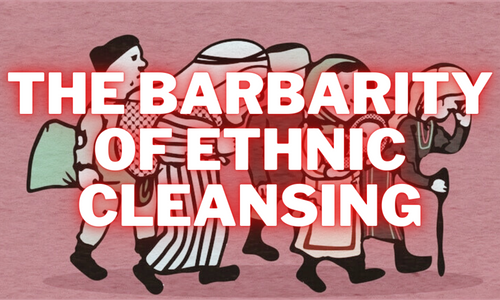
Ethnic Cleansing
OUTLINE
1:Introduction
2: Definition of Ethnic Cleansing
3: Importance of the Topic
4: History of Ethnic Cleansing
(a) Origin and Emergence of Ethnic Cleansing
(b) Historical Examples of Ethnic Cleansing
5. Causes of Ethnic Cleansing
6. Methods of Ethnic Cleansing
7. Impact of Ethnic Cleansing
8. International Reaction to Ethnic Cleansing
9. Conclusion
ESSAY
Ethnic cleansing refers to the forced removal of a particular ethnic or religious group from a particular geographical area through the use of violence, coercion, or intimidation. The aim is to create an ethnically homogeneous region or state, often through the extermination of the targeted group. Ethnic cleansing is a violation of human rights and is considered a crime against humanity. It is often accompanied by atrocities such as genocide, rape, torture, and other forms of violence against the targeted group.
The topic of ethnic cleansing is of great importance due to the devastating consequences it has on the affected individuals and communities. Ethnic cleansing leads to mass displacement, human suffering, and often results in the loss of countless lives. It is a violation of basic human rights and can have long-term impacts on the political and social stability of affected regions. Ethnic cleansing also poses a threat to international peace and security as it often leads to wider conflicts and destabilization of entire regions.
The international community has a responsibility to prevent and respond to ethnic cleansing. It is important to understand the causes and methods of ethnic cleansing in order to develop effective prevention strategies and ensure that those responsible are held accountable for their actions. Additionally, raising awareness about the devastating consequences of ethnic cleansing can help build public support for action to prevent such atrocities from occurring in the future.
Ethnic cleansing has a long history that dates back to ancient times, but the term itself gained prominence during the 1990s, in the context of the wars that followed the break-up of Yugoslavia. However, there have been several significant examples of ethnic cleansing throughout history. One of the most well-known examples of ethnic cleansing is the Armenian Genocide, which took place between 1915 and 1923. The Ottoman Empire, with the support of Turkish nationalists, targeted the Armenian population for extermination, resulting in the deaths of an estimated 1.5 million Armenians. Another example is the forced removal of Native Americans from their lands by European colonizers in North and South America. This process began with the arrival of Christopher Columbus in the Americas in 1492 and continued well into the 19th century. The indigenous population was forcibly relocated and subjected to violence and discrimination, resulting in the loss of millions of lives.
In the 20th century, the most prominent examples of ethnic cleansing include the Holocaust, in which Nazi Germany sought to exterminate Jews and other minorities in Europe, resulting in the deaths of six million Jews and several million others. The Bosnian genocide, which took place during the Bosnian War in the early 1990s, saw the targeted killing of Bosniak Muslims and other non-Serbs by Bosnian Serb forces, resulting in an estimated 100,000 deaths. More recently, the Rohingya crisis in Myanmar has been described by the United Nations as ethnic cleansing. The Rohingya, a Muslim minority in Myanmar, have been targeted by the military and Buddhist extremists, resulting in mass killings, rape, and forced displacement of hundreds of thousands of people. Overall, ethnic cleansing has had a devastating impact on millions of lives throughout history, resulting in loss of life, displacement, and long-lasting social and political consequences.
The origins of ethnic cleansing can be traced back to ancient times when conquering armies would often forcibly remove or kill the inhabitants of conquered territories. However, the modern concept of ethnic cleansing emerged in the 20th century. During the Balkan Wars of the early 1900s, Serbian forces expelled the Muslim Albanian population from the Sandzak region of Serbia and Montenegro. This was one of the first instances of forced population transfer on the basis of ethnicity in modern history.
The term “ethnic cleansing” gained wider recognition during the Yugoslav Wars of the 1990s, particularly during the Bosnian War. The conflict saw widespread violence and atrocities committed by all sides, including the forced expulsion of Bosniak Muslims and other non-Serb populations from their homes. The Serbian forces targeted the Muslim population with violence, including killings, rape, and forced displacement, with the aim of creating a Serb-dominated territory. The international community condemned these actions as ethnic cleansing, and the term gained wider use in academic and political circles.
Since then, instances of ethnic cleansing have occurred in many parts of the world, including Africa and Asia, and continue to be a major concern for the international community. The emergence of the concept of ethnic cleansing has led to increased attention to these atrocities and has paved the way for international laws and mechanisms to address them. Throughout history, there have been numerous examples of ethnic cleansing, where a particular ethnic or religious group is forcibly removed or eliminated from a specific area. Here are some of the most notable examples:
- Native American Removal: In the 19th century, the United States government forcibly removed Native American tribes from their ancestral lands and relocated them to reservations. This policy of removal and relocation resulted in the deaths of tens of thousands of Native Americans.
- Armenian Genocide: Between 1915 and 1923, the Ottoman Empire systematically targeted and killed Armenian people, resulting in the deaths of an estimated 1.5 million Armenians. This event is considered one of the first modern cases of genocide.
- Holocaust: During World War II, Nazi Germany targeted and killed six million Jews, as well as millions of others including Romani people, disabled individuals, and homosexuals, in what is known as the Holocaust.
- Bosnian War: During the Bosnian War in the 1990s, Serbian forces engaged in ethnic cleansing against Bosniak Muslims, including the killing of an estimated 8,000 Muslim men and boys in the Srebrenica massacre.
- Rwandan Genocide: In 1994, members of the Hutu ethnic group in Rwanda targeted and killed an estimated 800,000 Tutsi people, as well as moderate Hutus, in what is considered one of the worst cases of ethnic cleansing and genocide in modern history.
- Rohingya Crisis: Since 2017, the Myanmar military has been carrying out a campaign of ethnic cleansing against the Rohingya people, a Muslim minority group. The campaign has included mass killings, rape, and forced displacement of over a million Rohingya people.
These examples highlight the devastating consequences of ethnic cleansing, which can lead to mass displacement, human suffering, and loss of life on a massive scale.
There are various causes of ethnic cleansing, including political, economic, and social factors. Here are some of the main factors that can contribute to the occurrence of ethnic cleansing:
- Nationalism: The rise of nationalist movements can lead to the demonization of minority groups and the belief that they do not belong in a particular territory. This can create an atmosphere where the forced removal or elimination of minority groups is seen as necessary for the protection of the dominant group.
- Territorial disputes: Ethnic cleansing can occur as a result of territorial disputes between different ethnic or religious groups. When different groups lay claim to the same territory, violence and displacement can arise as each group tries to assert their dominance.
- Economic factors: Economic disparities and competition for resources can also play a role in ethnic cleansing. For example, if a particular ethnic or religious group controls a valuable resource, such as land or oil, they may be targeted by other groups who want to gain control over those resources.
- Political instability: Ethnic cleansing can also occur during periods of political instability, such as civil wars or political transitions. During such times, different groups may try to gain power and eliminate rival groups to secure their hold on power.
- Historical tensions: Long-standing historical tensions between different ethnic or religious groups can also contribute to the occurrence of ethnic cleansing. These tensions can be exacerbated by political or economic factors, resulting in violence and displacement.
Overall, ethnic cleansing is a complex phenomenon that is driven by a combination of political, economic, social, and historical factors. Addressing these underlying factors is essential to prevent the occurrence of ethnic cleansing and promote peace and stability in diverse societies.
Ethnic cleansing can take many forms, ranging from forced displacement to mass killings. Here are some of the most common methods of ethnic cleansing:
- Forced expulsion: One of the most common methods of ethnic cleansing is forced expulsion, where a particular ethnic or religious group is forcibly removed from a particular area. This can involve the use of violence, intimidation, or threats to coerce people to leave their homes.
- Mass killings: Ethnic cleansing can also involve mass killings, where members of a particular group are systematically targeted and killed. This can be done through direct violence, such as shooting or bombing, or through indirect means such as starvation, dehydration, or disease.
- Rape and sexual violence: Sexual violence, including rape, is often used as a weapon of ethnic cleansing, particularly against women and girls. The goal is to destroy the social fabric of the targeted group and to humiliate and traumatize its members.
- Destruction of cultural and religious heritage: Ethnic cleansing can involve the destruction of cultural and religious heritage, including the destruction of religious sites, monuments, and artifacts. This is often done to erase the history and identity of the targeted group.
- Forced assimilation: Ethnic cleansing can also involve forced assimilation, where members of a particular group are forced to give up their cultural or religious practices and adopt those of the dominant group. This can be done through coercive measures such as forced conversions or the suppression of cultural practices.
Overall, ethnic cleansing is a brutal and inhumane practice that can cause immense suffering and devastation. It is essential that the international community takes steps to prevent and stop ethnic cleansing and hold those responsible accountable for their actions.
The impact of ethnic cleansing is devastating, both for the individuals and communities directly affected, as well as for the broader society and international community. Here are some of the key impacts of ethnic cleansing:
- Human suffering: The most immediate impact of ethnic cleansing is on the individuals and communities directly affected. Ethnic cleansing can result in forced displacement, separation from family members, loss of property, and physical and emotional trauma.
- Loss of life: Ethnic cleansing can also result in the loss of many lives, as members of targeted groups are systematically targeted and killed.
- Destruction of social fabric: Ethnic cleansing can destroy the social fabric of a community by erasing its history and culture, disrupting social networks, and creating deep-seated fear and mistrust between different groups.
- Political instability: Ethnic cleansing can also have significant political ramifications, leading to instability and conflict within a country and across borders. This can undermine efforts to build peaceful and democratic societies, and create long-lasting tensions and animosity.
- Humanitarian crises: Ethnic cleansing can also lead to humanitarian crises, with large numbers of people forced to flee their homes and seek refuge in other parts of the country or abroad. This can overwhelm the capacity of host communities and humanitarian organizations to respond effectively.
Overall, ethnic cleansing has profound and long-lasting impacts on individuals, communities, and societies as a whole. It is essential that the international community takes decisive action to prevent and respond to ethnic cleansing, support affected communities, and promote peace and reconciliation.
The international community has responded to instances of ethnic cleansing in various ways, ranging from condemnation and sanctions to military intervention and humanitarian assistance. Here are some of the key ways in which the international community has responded to ethnic cleansing:
- Diplomatic condemnation: One of the most common responses to ethnic cleansing is diplomatic condemnation by the international community. This can involve public statements by heads of state, resolutions by international organizations such as the United Nations, and diplomatic pressure on the government responsible for the ethnic cleansing.
- Sanctions: The international community can also impose economic and political sanctions on governments responsible for ethnic cleansing. This can include trade embargoes, travel bans, and asset freezes, with the aim of putting pressure on the government to change its behavior.
- Military intervention: In some cases, the international community has resorted to military intervention to stop ethnic cleansing. This can involve peacekeeping missions, military strikes, or even the deployment of troops to protect civilians from violence.
- Humanitarian assistance: The international community can also provide humanitarian assistance to those affected by ethnic cleansing. This can include food, shelter, medical care, and other essential services to help people rebuild their lives.
- Accountability and justice: Finally, the international community can work to hold those responsible for ethnic cleansing accountable for their actions. This can involve the establishment of tribunals or courts to prosecute war crimes and crimes against humanity, as well as efforts to promote truth, justice, and reconciliation.
Overall, the international community has a vital role to play in preventing and responding to ethnic cleansing. It is essential that the international community works together to protect the rights of all individuals and to promote peace, justice, and reconciliation.
Ethnic cleansing is a brutal and inhumane practice that has caused immense suffering and devastation throughout history. It involves the deliberate targeting and persecution of individuals or communities based on their ethnic or religious identity, and can take many forms, from forced displacement to mass killings. The impact of ethnic cleansing is profound and long-lasting, with effects on individuals, communities, and societies as a whole, including human suffering, loss of life, destruction of social fabric, political instability, and humanitarian crises.
The international community has a responsibility to prevent and respond to ethnic cleansing, through diplomatic, economic, and military means, as well as by providing humanitarian assistance and promoting accountability and justice. While progress has been made in recent years to prevent and respond to ethnic cleansing, much more needs to be done to ensure the rights and dignity of all individuals are protected, and to build peaceful and inclusive societies based on respect for diversity and human rights. It is essential that the international community continues to work together to address the root causes of ethnic cleansing and to promote lasting solutions that promote peace, justice, and reconciliation.









LEAVE A COMMENT