
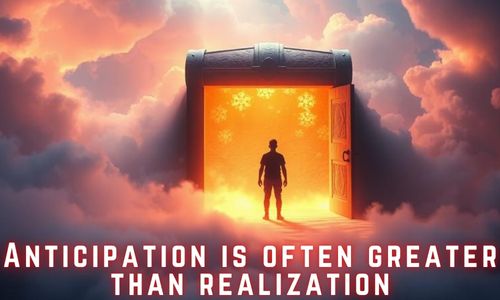
Anticipation is Often Greater than Realization
ESSAY OUTLINE
1. Introduction
Hook: Begin with a universal example of eager anticipation (e.g., counting down to a holiday, waiting for a package, the excitement before a first date).
Introduce the Theme: Briefly state that human beings are wired to look forward to future events, often investing them with immense hope and imagination.
Thesis Statement: While realization delivers the tangible experience, the emotional and psychological state of anticipation is frequently more powerful, intense, and fulfilling than the event itself, a phenomenon driven by imagination, the inherent imperfections of reality, and the fleeting nature of satisfaction.
2. The Power of Idealized Imagination
Topic Sentence: Anticipation creates a perfect, personalized version of an event in our minds, which reality can seldom match.
Supporting Details:
Explain how, while waiting, we imagine only the best-case scenario, free from potential disappointments or mundane details.
Use examples: Dreaming of a flawless, life-changing vacation versus the reality of travel delays and crowds; imagining a perfect romantic reunion while overlooking the normal stresses of real-life interaction.
Analysis: The mind, unimpeded by facts, builds an idealized narrative that becomes the standard for comparison, setting the stage for letdown.
3. The Inevitable Discrepancy with Reality
Topic Sentence: The actual experience often fails to live up to the idealized vision due to uncontrollable external factors and the ordinary nature of reality.
Supporting Details:
Discuss how reality introduces complications: bad weather, technical glitches, personal fatigue, or the simple fact that daily life continues even during long-awaited events.
Use examples: The highly anticipated blockbuster movie that turns out to be just “good”; the expensive gourmet meal that is enjoyable but doesn’t provide a transcendent experience.
Analysis: Realization carries the weight of execution and circumstance, while anticipation exists in a flawless, abstract space.
4. The Pleasure of the Journey vs. The Destination
Topic Sentence: The sustained pleasure derived from looking forward to something often outweighs the brief satisfaction of its attainment.
Supporting Details:
Describe the prolonged joy, planning, and daydreaming that occur in the lead-up to an event.
Contrast this with the quick culmination and often swift return to baseline happiness after the event passes (a concept linked to “hedonic adaptation”).
Use examples: The fun of planning and researching a trip can be as enjoyable as the trip itself; the excitement of Christmas morning quickly giving way to post-holiday lethargy.
Analysis: Anticipation is a prolonged state of potential and desire, while realization is a single point in time that is quickly absorbed into memory.
5. Conclusion
Restate Thesis: Reiterate that the emotional high of anticipation, fueled by imagination and hope, is an experience that realization consistently struggles to surpass.
Summarize Key Points: The perfect world of our imagination, the inevitable imperfections of reality, and the fleeting nature of fulfillment all contribute to this phenomenon.
Final Thought / Concluding Insight: Therefore, we should learn to savor the state of anticipation itself, recognizing it as a significant source of joy, rather than merely treating it as a prelude to a potentially disappointing climax. This understanding allows us to appreciate the entire journey, not just the destination.
ESSAY
We have all felt that specific, thrilling ache of counting down the days until a long-awaited vacation, of tracking a package’s every move across the country, or of feeling our heart flutter in the hours before a promising first date. This common experience points to a profound and often paradoxical truth about human nature.
Our minds seem hardwired to project our hopes and imaginations onto the blank canvas of the future. We invest upcoming events, both monumental and mundane, with a level of perfection and significance that the present moment rarely holds, building elaborate castles in the air before a single brick of reality has been laid.
This natural tendency reveals a powerful core idea: while the actual experience delivers a tangible outcome, the emotional and psychological state of anticipation frequently generates a more potent and fulfilling joy. This phenomenon occurs primarily because our boundless imagination crafts ideal scenarios that reality cannot match, because the inherent imperfections of any lived experience inevitably introduce compromises, and because the satisfaction of attainment is often fleeting, leaving the prolonged pleasure of yearning as the richer prize.
When we await a future event, our minds selectively curate an idealized scenario. We envision only the highlights, meticulously editing out any potential for disappointment or the mundane logistics that real life imposes. This mental process focuses exclusively on peak moments—the perfect sunset, the ecstatic reunion, the flawless performance—while completely ignoring the inevitable annoyances like long lines, bad weather, or simple fatigue. Our imagination, therefore, crafts a pristine and seamless storyboard where nothing goes wrong.
Consider someone dreaming of a long-awaited vacation. They picture themselves effortlessly relaxing on a pristine, empty beach, the sun warming their skin in a perfect glow. This mental image completely omits the seven-hour flight in a cramped seat, the frustration of a lost luggage claim, or the crowds of other tourists jostling for the same photo opportunity. Similarly, an individual anticipating a romantic date imagines a scene of effortless connection and intimate conversation, conveniently forgetting the normal pressures of making conversation, the possibility of a minor misunderstanding, or the simple awkwardness that can accompany any real-world interaction.
This act of mental creation sets a nearly impossible standard. Unconstrained by facts, practical limitations, or chance, the mind builds an idealized narrative that reality has no hope of fulfilling. We consciously or unconsciously use this perfect internal blueprint as the benchmark for judging the actual experience. Consequently, when the real event introduces even minor imperfections—a rainy day, a delayed start, a slightly under-seasoned meal—our brain immediately registers the discrepancy. This gap between the flawless anticipation and the flawed reality directly sets the stage for a sense of letdown, making the actual experience feel like a diminished version of what was promised in our thoughts.
Reality consistently introduces complications that our anticipatory daydreams conveniently edit out. While we imagine a perfect scenario, the mundane world continues uninterrupted. A long-awaited outdoor concert faces bad weather, drenching the crowd and muddying the field. A crucial technical glitch disrupts a meticulously planned virtual presentation, fraying nerves and undermining the intended impact. Even simple personal fatigue can dull the enjoyment of a special occasion, or the nagging thought of unfinished work waiting at home can intrude upon a vacation. These uncontrollable elements assert the messy, unpredictable truth of lived experience, which starkly contrasts with the pristine, controlled narrative we build in our minds.
Concrete examples vividly illustrate this clash between expectation and reality. A highly anticipated blockbuster movie, which trailers and hype promised would be a cinematic revolution, often turns out to be merely “good” or a competent retelling of a familiar story, leaving audiences with a sense of deflation rather of awe. Similarly, an expensive gourmet meal at a celebrated restaurant provides enjoyment, but it rarely delivers the transcendent, life-altering culinary epiphany the diner envisioned during weeks of anticipation. The experience becomes just another meal—well-prepared and pleasant, but ultimately bound by the physical and sensory limits of reality.
This inevitable letdown occurs because realization must carry the heavy weight of execution and circumstance. The actual event contends with logistics, physics, human error, and the simple passage of time, all of which chip away at the idealized vision. In contrast, anticipation thrives in a flawless, abstract space, free from the friction of the real world. It is a perfect, weightless thought-experiment, while realization is a grounded, physical event subject to all the laws and limitations of the universe. This fundamental asymmetry ensures that the perfect, imagined version will almost always outshine the imperfect, lived one.
The sustained psychological pleasure we derive from looking forward to a future event frequently outweighs the brief, and often anticlimactic, satisfaction of its attainment. The human mind expertly savors the prolonged joy, planning, and daydreaming that occur in the lead-up to an event. For weeks or even months, we actively research destinations, curate playlists, visualize successes, and share our excitement with others. This process builds a sustained, low-level dopamine release that tints our everyday life with a sense of happy expectation, making the waiting period itself a rewarding experience.
This extended state of eager potential starkly contrasts with the quick culmination and the swift return to baseline happiness after the event passes, a psychological process known as hedonic adaptation. The actual vacation, celebration, or acquisition reaches its peak rapidly and then concludes, leaving us with memories but also a tangible void where our anticipation once lived. Our psychological baseline quickly reasserts itself, and we soon find ourselves seeking the next source of excitement, the cycle beginning anew as the realized event fades into the past.
Common experiences powerfully illustrate this dichotomy. Consider how the fun of planning a trip—poring over maps, reading hotel reviews, and imagining adventures—often provides as much, if not more, enjoyment than the trip itself, which is inevitably punctuated by stress and minor inconveniences. Similarly, the intense excitement that builds throughout Christmas Eve culminates in a frantic morning of gift-opening, which quickly gives way to the post-holiday lethargy and the realization that the magical buildup is over.
Ultimately, this dynamic confirms a crucial distinction: anticipation is a prolonged state of potential and desire, while realization is a single point in time that is quickly absorbed into memory. The journey of wanting, hoping, and imagining provides a durable and renewable source of pleasure, whereas the destination offers only a fleeting moment of consummation before the experience is relegated to the static pages of our past.
The thrill of the chase consistently outshines the capture, demonstrating that the emotional high of anticipation, which our imagination and hope fuel, is an experience that realization consistently struggles to surpass. We build peaks of expectation in our minds that the plains of reality can rarely match.
This dynamic unfolds through a powerful psychological trilogy. First, our minds construct a perfect world of imagination, editing out all potential flaws and scripting an idealized narrative where every detail aligns with our desires. Then, the inevitable imperfections of reality intrude, introducing delays, compromises, and mundane details that dismantle our flawless mental blueprint. Finally, the fleeting nature of fulfillment asserts itself, as the joy of attainment quickly fades into memory, leaving us longing for the next source of excitement. Together, these forces create a cycle where the dream often holds more power than its realization.
This understanding invites a profound shift in perspective. We must learn to savor the state of anticipation itself, consciously appreciating the sweet tension of “what if” and the joyful planning that precedes an event. By recognizing this phase as a significant source of joy in its own right, and not merely a prelude to a potential letdown, we empower ourselves to appreciate the entire journey of an experience, not just its destination. In doing so, we reclaim the prolonged pleasure of looking forward, making the wait as rewarding as the arrival.










LEAVE A COMMENT