

Similarities of 1970 vs 2024 Elections in Pakistan
Pakistan’s political history has repeatedly been shaped by controversial elections, institutional confrontations, and deep divisions between the state and the public. Among the most defining moments in this turbulent democratic journey are the 1970 general elections and the 2024 general elections. Though separated by more than five decades, both elections exposed critical weaknesses within Pakistan’s political structure, intensified national polarization, and left lasting scars on democratic institutions.
The 1970 elections eventually culminated in the tragic dismemberment of Pakistan and the birth of Bangladesh, while the 2024 elections generated widespread political instability, institutional mistrust, economic uncertainty, and unprecedented public frustration. The similarities between these two elections reveal recurring patterns of political engineering, denial of electoral mandates, institutional overreach, and the weakening of democratic norms.
Understanding these parallels is essential for evaluating how Pakistan repeatedly finds itself trapped in cycles of political crises that damage governance, economic progress, and national unity.
The Historical Importance of the 1970 Elections
Pakistan’s First Genuine Nationwide Election
The 1970 elections were the first direct general elections held in Pakistan based on universal adult franchise. Conducted under the military regime of General Yahya Khan, these elections were expected to restore democratic governance after years of political instability.
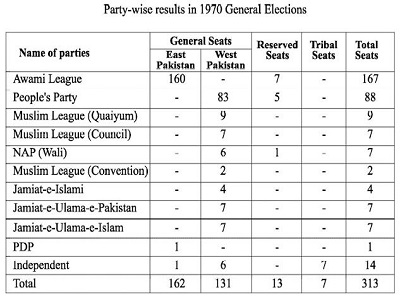
The results were historic:
- Sheikh Mujibur Rahman’s Awami League secured an overwhelming victory in East Pakistan.
- Zulfikar Ali Bhutto’s Pakistan Peoples Party dominated West Pakistan.
- The Awami League won an outright majority in the National Assembly.
Under democratic principles, Sheikh Mujibur Rahman should have become the Prime Minister of Pakistan. However, political elites and powerful state institutions resisted transferring power to the elected majority.
Denial of Electoral Mandate
The refusal to honor the election results became the turning point in Pakistan’s history. Political negotiations collapsed, protests intensified, and military operations in East Pakistan triggered civil war and foreign intervention.
 The consequences were catastrophic:
- The separation of East Pakistan
- The creation of Bangladesh in 1971
- Massive loss of life
- International humiliation
- Institutional distrust that continued for decades
The 1970 elections demonstrated how undermining public mandate could destroy national cohesion.
The Political Context of the 2024 Elections
A Highly Polarized Political Environment
The 2024 elections took place in an atmosphere dominated by political confrontation, economic crisis, inflation, media restrictions, and institutional controversies. Following the removal of former Prime Minister Imran Khan in 2022, Pakistan experienced one of the most polarized political periods in its history.
Several developments shaped the political environment:
- Crackdowns on opposition leaders
- Restrictions on political rallies
- Legal cases against key political figures
- Social media censorship
- Public anger over inflation and unemployment
- Questions regarding electoral transparency
Despite these challenges, independent candidates backed by Pakistan Tehreek-e-Insaf performed strongly in the elections.
Questions Over Electoral Fairness
The 2024 elections were marked by allegations of:
- Delayed election results
- Internet shutdowns
- Alleged manipulation of vote counts
- Administrative interference
- Unequal political playing field
Although a coalition government emerged after the elections, a significant segment of the population questioned the legitimacy of the political arrangement.
This situation deepened political mistrust and widened the divide between institutions and citizens.
Striking Similarities Between 1970 and 2024 Elections
1. Public Mandate Versus Power Structure
One of the strongest similarities between the two elections was the conflict between the electorate’s mandate and the existing power structure.
1970
The Awami League secured a clear parliamentary majority, but the ruling establishment resisted handing over power.
2024
Many voters believed the strongest popular political force faced systematic obstacles despite demonstrating significant electoral support.
In both elections, the perception that the public mandate was denied created political instability and widespread anger.
2. Institutional Distrust Intensified
Both elections severely damaged public confidence in institutions.
After 1970
Citizens in East Pakistan lost faith in the federal structure and state institutions.
After 2024
Questions emerged regarding:
- Electoral transparency
- Judicial neutrality
- Administrative independence
- Media freedom
Public trust is the foundation of democracy. Once institutions lose credibility, governance becomes increasingly difficult.
3. Deep Political Polarization
The 1970 elections divided Pakistan geographically and politically between East and West Pakistan. Political leaders failed to bridge differences through democratic dialogue.
Similarly, the 2024 elections intensified divisions among:
- Political parties
- State institutions
- Urban and rural voters
- Youth and traditional elites
Social media amplified hostility, misinformation, and political hatred at unprecedented levels.
4. Economic Instability Following Political Crisis
Political uncertainty after both elections severely damaged economic confidence.
Post-1970 Economic Impact
- Industrial decline
- Investor panic
- Economic fragmentation after separation
- Weakening of national markets
Post-2024 Economic Impact
- Currency instability
- Reduced foreign investment
- IMF dependency concerns
- Business uncertainty
- Rising inflation
Political instability consistently discourages economic growth and weakens investor confidence.
5. Weak Democratic Continuity
Both elections reflected Pakistan’s inability to sustain uninterrupted democratic evolution.
1970
Military influence over politics prevented democratic transition.
2024
Critics argued that democratic processes remained heavily influenced by non-political centers of power.
The repeated interruption of democratic maturity continues to prevent stable governance.
6. Youth Frustration and Public Anger
In both periods, ordinary citizens became deeply frustrated with the political system.
1970
East Pakistani citizens felt politically marginalized despite electoral victory.
2024
Young voters expressed anger over:
- Lack of employment opportunities
- Economic hardship
- Political suppression
- Reduced democratic space
Pakistan’s youth population today is far larger and more digitally connected, making political dissatisfaction more visible and intense.
How the 1970 Elections Dented Pakistan
National Disintegration
The most devastating consequence of the 1970 elections was the breakup of Pakistan. The inability to accept democratic outcomes directly contributed to civil conflict and eventual separation.
Long-Term Institutional Damage
The crisis created permanent distrust between provinces and the central government. It also strengthened the role of non-democratic interventions in politics.
International Isolation
Pakistan suffered diplomatic embarrassment and strategic losses internationally after the 1971 war.
Psychological Impact on National Identity
The events deeply affected Pakistan’s national psyche, creating lasting insecurity regarding political unity and federalism.
How the 2024 Elections Dented Pakistan
Growing Democratic Crisis
The 2024 elections intensified debates regarding:
- Electoral credibility
- Constitutional rights
- Civil liberties
- Political engineering
The perception of unfairness weakened democratic legitimacy.
Economic Pressure and Investor Concerns
Political instability directly affected economic confidence. Investors generally avoid countries experiencing governance uncertainty and prolonged political conflict.
Social Media Radicalization
Unlike 1970, digital media played a central role in shaping narratives during 2024. Political divisions spread rapidly online, increasing hostility and reducing space for constructive dialogue.
Brain Drain and Youth Disillusionment
Many educated young Pakistanis increasingly considered emigration due to:
- Economic instability
- Political uncertainty
- Lack of opportunities
- Institutional mistrust
This brain drain threatens Pakistan’s long-term development potential.
The Role of Leadership Failures in Both Elections
Leadership failures significantly contributed to national crises in both periods.
In 1970
Political leaders failed to compromise and prioritize national unity.
In 2024
Political actors often prioritized power struggles over institutional stability and democratic reconciliation.
The absence of inclusive political dialogue remains a recurring weakness in Pakistan’s governance system.
Lessons Pakistan Must Learn
Respect for Electoral Mandate
Democracy cannot survive if electoral outcomes are selectively accepted.
Strengthening Institutions
Independent institutions are essential for political stability and public trust.
Reducing Political Engineering
Political systems become unstable when unelected actors excessively influence democratic processes.
Promoting National Reconciliation
Political opponents must engage in dialogue rather than perpetual confrontation.
Protecting Constitutional Supremacy
Long-term stability requires full adherence to constitutional principles and democratic norms.
Final Words
The similarities between the 1970 and 2024 elections reveal a troubling continuity in Pakistan’s political trajectory. In both cases, electoral controversies, institutional mistrust, and resistance to democratic mandates generated severe national crises. While the consequences of 1970 led to territorial disintegration, the aftermath of 2024 has created deep political polarization, economic uncertainty, and democratic instability.
Pakistan’s future depends on whether its political leadership and institutions can finally break this historical cycle. Sustainable progress requires transparent elections, constitutional governance, institutional neutrality, and respect for the will of the people. Without these foundations, the country risks repeating patterns that have repeatedly weakened democracy, damaged national unity, and hindered economic development.








LEAVE A COMMENT