
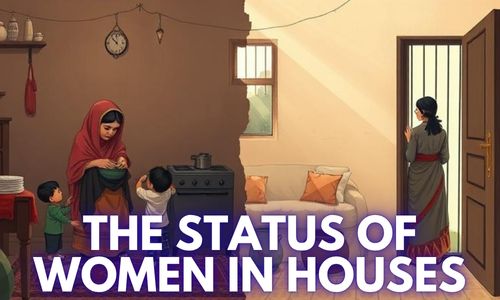
The Status of Pakistani Women in Houses
ESSAY OUTLINE
1: Introduction
- Define the two stereotypes:
- “Angel in the house” — idealized, obedient, self-sacrificing woman.
- “Source of all evils” — blamed for social ills, dishonor, moral decline.
- Explain how both coexist in Pakistani cultural narratives.
- Thesis statement:
- Pakistani society simultaneously idealizes and demonizes women, using both stereotypes to control them and justify gender inequality.
2: Historical and Cultural Roots
- Colonial-era Victorian ideals shaping “angel” image.
- Patriarchal traditions enforcing honor/shame codes.
- Religious interpretations (varied) used to justify both respect and control.
- Example: women as family “izzat” (honor) but also potential “fitna” (disorder).
3: The “Angel in the House” Ideal
- Expectations of obedience, modesty, sacrifice.
- Women glorified as mothers, wives, caregivers.
- Pressure to uphold family honor through chastity and subservience.
- Example: Celebrated roles in media, poetry, religious sermons.
4: Women as “Source of All Evils”
- Blaming women for sexual temptation and social corruption.
- Justifying restrictions: purdah, mobility limits, dress codes.
- Victim-blaming in harassment and assault cases.
- Example: Misuse of blasphemy and morality accusations.
5: Manifestations in Everyday Life
- Honor killings justified as protecting family reputation.
- Strict gender roles enforced in education, work, politics.
- Media portraying women as either saints or seductresses.
- Control over marriage choices, divorce, inheritance.
6: Consequences for Women
- Limited education and employment opportunities.
- Psychological burden of conflicting expectations.
- Violence and legal discrimination.
- Marginalization from decision-making in family and society.
7: Counterarguments and Complex Realities
- Diverse experiences across class, region, ethnicity.
- Strong women’s movements challenging stereotypes.
- Legal reforms and policy efforts for gender equality.
- Examples of women in leadership, activism, education.
8: Recommendations
- Promote nuanced, balanced portrayals of women in media and education.
- Reform laws to ensure women’s rights and protection.
- Encourage male allies and community dialogue to challenge harmful norms.
- Support grassroots and institutional efforts for gender equality.
9: Conclusion
- Restate thesis:
- Pakistani society often oscillates between idealizing and demonizing women to maintain control.
- Emphasize the harm of both extremes.
- Call to action:
- Urge collective responsibility to recognize women as full human beings with rights and agency.
ESSAY
Pakistani society often holds up an ideal of the “angel in the house,” portraying women as perfectly obedient, modest, and self-sacrificing. Families and communities expect women to dedicate themselves entirely to caring for husbands, children, and elders without question. Society glorifies these roles in poetry, religious sermons, and popular media, praising the selfless mother, dutiful wife, and pious daughter as the moral backbone of the family.
At the same time, society often blames women as the “source of all evils,” accusing them of causing moral decline, dishonor, and social unrest. People label women as temptresses or disruptors who provoke men or threaten cultural and religious values. They justify controlling women’s choices, freedom, and even their bodies by claiming women must be restricted to prevent societal corruption.
Pakistani culture maintains these two contradictory images side by side. Society praises women for their supposed purity and sacrifice but quickly condemns them when they fail to conform perfectly to expectations. Families may honor women in theory yet control their education, movement, and marriage choices in practice. Media and public discourse often switch between praising women as saints and blaming them for social ills. This duality creates confusion and conflict in gender roles, making it hard for women to navigate daily life without judgment or restriction.
Pakistani society simultaneously idealizes and demonizes women, using both stereotypes to control them and justify gender inequality. By casting women either as paragons of virtue who must obey without question or as dangerous sources of disorder who need strict control, society maintains patriarchal power. This essay will explore how these conflicting stereotypes shape expectations, policies, and everyday interactions, ultimately limiting women’s rights and freedoms in Pakistan.
British colonial rule introduced and reinforced Victorian ideals of the “good woman” as pure, modest, and devoted to home and family. Colonial administrators, missionaries, and local elites promoted this vision of womanhood in education systems, literature, and social reforms. Pakistani society absorbed and adapted these values, merging them with local traditions. As a result, people came to see the “angel in the house” model—a woman who sacrifices her needs for family harmony and reputation—as the moral ideal, even after independence.
Deeply rooted patriarchal traditions in South Asia have long tied women’s behavior to family honor and reputation. Families expect women to maintain strict codes of modesty, obedience, and sexual purity. They use honor and shame as tools of social control, punishing women who defy these expectations through social ostracism, violence, or even so-called “honor killings.” By placing the burden of family reputation on women’s conduct, society ensures women police themselves and each other to maintain these restrictive roles.
People often use selective religious interpretations to both elevate and limit women. They cite religious texts and traditions to command respect for mothers, wives, and daughters, portraying them as vital to moral and spiritual life. Simultaneously, they invoke religious authority to justify controlling women’s dress, mobility, and rights, arguing that strict boundaries preserve social order. Different schools of thought and local cultures interpret religious teachings in diverse ways, but many communities focus on justifying male authority and female subordination in the name of religion.
Pakistani society often describes women as the repository of family “izzat” (honor), placing immense pressure on them to uphold family reputation through modesty and obedience. Yet the same society also warns that women can be a source of “fitna” (disorder or temptation) if they assert independence or violate social norms. This dual labeling allows families and communities to justify close surveillance, strict controls, and even violence against women while still claiming to value and honor them. Women must constantly navigate this contradiction, aware they can be praised as symbols of virtue or condemned as threats to social stability depending on how they act.
Society places heavy expectations on women to behave with absolute obedience and modesty. Families teach girls from an early age to defer to elders, husbands, and male relatives without question. They urge women to sacrifice personal ambitions, desires, and even well-being for the sake of family unity and reputation. Social customs reward those who accept these roles with approval and respect, while they shame or punish those who resist.
Pakistani culture frequently glorifies women who excel in caregiving roles. People celebrate the image of the devoted mother who nurtures children with patience and love, the loyal wife who supports her husband unconditionally, and the dutiful daughter who serves her family. Literature, folklore, and even school curricula elevate these roles as the highest forms of womanhood, leaving little room to value women for achievements outside the domestic sphere.
Families tie their social standing and honor (izzat) to the perceived chastity and obedience of their women. Parents instruct daughters to dress modestly, limit interactions with men, and avoid any behavior that could invite gossip or suspicion. They expect women to accept decisions about marriage, career, and social life without protest. Any deviation from these norms can trigger social stigma, familial conflict, or even violence in the name of protecting honor.
Media portrayals frequently reinforce the “angel in the house” ideal by glorifying patient, self-sacrificing female characters in dramas and films. Poets often romanticize the image of the pure, devoted lover or the saintly mother. Religious sermons praise women who embody modesty, loyalty, and sacrifice, presenting them as moral exemplars for the entire community. These cultural messages shape public attitudes and expectations, ensuring that many see such roles as the natural destiny of all women.
Society frequently casts women as the root cause of moral decline and sexual chaos. Leaders, clerics, and elders warn that women’s behavior “provokes” men, suggesting that female beauty or independence inherently leads to temptation. Families instruct girls to suppress their presence in public spaces, arguing that women’s visibility or assertiveness invites immorality. By blaming women for social corruption, communities deflect responsibility from men and ignore broader systemic failures.
Families and institutions impose strict rules on women’s dress and movement, claiming these restrictions prevent societal disorder. Parents enforce purdah (seclusion) and conservative dress codes, warning daughters that any violation will invite shame or violence. Authorities often limit women’s access to education, work, and public life by insisting these measures maintain public morality. In reality, these rules control women’s autonomy while shifting the burden of male behavior onto women themselves.
When harassment or sexual violence occurs, society often blames the victim instead of holding perpetrators accountable. Police, community elders, and even family members question what the woman wore, where she went, or whom she spoke with. Courts and investigation processes sometimes treat victims with suspicion or hostility, discouraging them from seeking justice. This culture of victim-blaming not only denies survivors support but also reinforces the idea that women are responsible for provoking crime.
People sometimes weaponize accusations of blasphemy or immorality to punish women who challenge social norms or resist control. Neighbors, rivals, or even family members can accuse women of insulting religion or violating moral codes to settle personal scores. These accusations carry deadly consequences, as mobs or courts may act violently with little evidence. By labeling independent or outspoken women as threats to religious or moral order, society legitimizes their exclusion, punishment, or even killing.
Families in Pakistan often justify murdering women in the name of “honor,” claiming they must protect their reputation from alleged shame. Elders and male relatives actively enforce these punishments when they suspect a woman of choosing her own partner, seeking divorce, or even being seen with an unrelated man. Communities frequently condone or excuse these killings by arguing that the woman endangered collective honor. Courts and police sometimes show leniency to perpetrators, reinforcing the idea that violence against women is acceptable when defending family pride.
Schools, workplaces, and political institutions often limit women’s participation by enforcing rigid gender expectations. Teachers discourage girls from pursuing careers in science, politics, or leadership by framing them as male domains. Employers routinely demand that women prioritize family over work, offering fewer opportunities or promotions. Political parties frequently sideline female candidates or expect them to serve as figureheads without real power. By enforcing these roles, society restricts women’s potential and denies them equal participation in public life.
Television dramas, films, and advertisements often present women in simplistic, contradictory roles. Producers cast women as flawless, obedient wives and mothers—the “ideal” self-sacrificing saint—or as dangerous temptresses who undermine family values. Journalists sensationalize scandals involving women while ignoring their achievements or struggles. These portrayals shape public attitudes by reinforcing the expectation that women must choose between being revered or reviled, leaving little room for complexity, agency, or equality.
Families frequently control whom women can marry, rejecting love marriages and arranging matches that serve social or economic interests. Parents and elders pressure women to accept partners without consent and threaten them if they resist. Divorce carries stigma, with communities blaming women for marital breakdown and discouraging them from leaving abusive relationships. In matters of inheritance, families often deny women their legal share, citing tradition or fear of losing property outside the family. By controlling these life decisions, society limits women’s freedom and enshrines inequality in law and custom.
Families and communities often restrict girls’ education by prioritizing boys’ schooling or enforcing early marriage. Parents choose to keep daughters at home for safety or “honor,” denying them the chance to study beyond primary or secondary levels. Employers discriminate against women by offering fewer jobs, lower wages, and limited promotions. By enforcing narrow gender roles, society actively blocks women from achieving economic independence and contributing fully to national development.
Society places women under constant pressure by demanding they embody both the “angel” and the “source of evil” stereotypes. Families expect women to be obedient, modest, and self-sacrificing while also holding them responsible for social ills if they step outside prescribed roles. Women internalize this tension, feeling guilt, anxiety, and confusion about their identity and purpose. Mental health suffers when women face relentless judgment, with many experiencing depression, low self-esteem, and a sense of powerlessness.
Women face high rates of domestic violence, sexual harassment, and assault, often with little legal protection or justice. Courts and police sometimes blame victims or dismiss complaints, leaving perpetrators unpunished. Laws such as those regulating inheritance or family matters frequently disadvantage women by giving men greater authority over property and decisions. Society tolerates harmful practices like forced marriage and honor killings, using cultural or religious justifications to deny women safety and rights.
Families typically exclude women from key decisions about marriage, finances, or children’s education, treating them as dependents rather than partners. Communities rarely consult women in local governance or development projects, and political parties often limit their roles to token representation. Even when laws mandate women’s participation, social norms and harassment discourage them from speaking up. By sidelining women from decision-making, society weakens democratic values and deprives itself of diverse perspectives that could solve pressing problems.
Pakistani society does not treat all women in a single, uniform way. Urban women with access to education often negotiate greater freedom and career opportunities than those in rural areas. Women from wealthier families may exercise more personal choice and mobility, while poorer women face compounded economic and gender barriers. Ethnic and regional cultures shape expectations differently—for example, women in parts of Sindh, Punjab, Khyber Pakhtunkhwa, or Balochistan experience varying degrees of conservatism or openness. By recognizing this diversity, we can avoid overgeneralizing and address inequalities more precisely.
Women’s rights activists and organizations in Pakistan actively challenge the “angel” and “source of all evils” labels. They lead campaigns against honor killings, forced marriage, and domestic violence. They organize protests and legal advocacy to expand women’s rights in education, health, and employment. Feminist writers and artists produce work that exposes injustices and questions harmful traditions. By mobilizing communities and influencing public debate, these movements weaken stereotypes and push society toward more nuanced and equitable understandings of gender.
The state has passed laws to protect women from violence, harassment, and discrimination. Legislators have criminalized practices such as honor killings and acid attacks. The government has introduced laws requiring workplaces to prevent sexual harassment and promote equal opportunities. Policy initiatives encourage girls’ education, maternal health, and economic participation. While enforcement often lags, these legal reforms signal a shift in values and provide tools for women to assert their rights. By strengthening implementation, Pakistan can move closer to genuine gender equality.
Pakistani women increasingly occupy leadership roles in politics, business, academia, and civil society. Women like Benazir Bhutto have led the nation as prime minister, setting a precedent for political participation. Activists such as Malala Yousafzai and Asma Jahangir have gained global recognition for championing education and human rights. Women professionals excel as doctors, lawyers, journalists, and entrepreneurs, breaking traditional barriers. By highlighting these success stories, society can challenge stereotypes and inspire future generations to see women as equal partners in national progress.
Media producers should create stories that portray women as complex, capable individuals instead of limiting them to saints or seductresses. Scriptwriters and journalists can highlight real women’s achievements, struggles, and diverse roles in society. Educators can revise curricula to include women’s contributions to history, science, and culture, helping students see women as equals. By promoting balanced, realistic images, society can challenge harmful stereotypes and encourage respect for women’s rights and agency.
Lawmakers should strengthen and enforce legal frameworks that protect women from violence, harassment, and discrimination. They can close loopholes that allow perpetrators of honor killings or child marriages to escape justice. Courts should ensure that women have equal rights in marriage, divorce, and inheritance. Policymakers can establish and fund shelters, legal aid, and counseling services for survivors of abuse. By reforming laws and enforcing them fairly, the state can provide women with the security and freedom they need to thrive.
Men should recognize their role in perpetuating or dismantling gender inequality. Community leaders, teachers, and parents can start open conversations about how harmful traditions hurt everyone, not just women. Male allies can speak out against harassment and violence, model respectful behavior, and support women’s ambitions and choices. NGOs and local groups can hold workshops and dialogues to change mindsets. By fostering understanding and cooperation, society can build collective responsibility for gender justice.
The government, NGOs, and donors should fund and empower local women’s organizations that understand their communities’ needs. Institutions can create policies that promote women’s participation in decision-making, from village councils to corporate boards. Employers can adopt gender-sensitive workplace practices, such as childcare support and equal pay. Community groups can design local solutions, like literacy programs or microfinance initiatives for women. By investing in both grassroots and institutional change, Pakistan can create a sustainable path toward gender equality.
We can see how people praise women as obedient, self-sacrificing “angels” while also blaming them for society’s moral failings. Politicians, religious leaders, families, and the media often use these contradictory images to limit women’s choices and reinforce their subordination. By defining women in extremes, society denies them their complexity, individuality, and full citizenship.
These stereotypes do real damage to women’s lives. When society demands that women be perfect, obedient caregivers, it pressures them to sacrifice their dreams and independence. When society labels them as sources of temptation or chaos, it justifies restricting their movement, policing their clothes, and blaming them for violence they face. Both extremes feed discrimination, violence, and legal inequality. They trap women in roles designed to control them instead of recognizing their rights and contributions.
We must challenge these harmful narratives together. Families, educators, lawmakers, religious leaders, and media professionals should all commit to treating women as full human beings with dignity, rights, and agency. We can start by promoting respectful dialogue, reforming unjust laws, and supporting women’s participation in every sphere of life. By rejecting stereotypes and embracing equality, we can build a fairer, safer, and more prosperous Pakistan for everyone.









LEAVE A COMMENT