

Who Is Hamas
Introduction
The creation of Hamas is a pivotal chapter in the history of the Israeli-Palestinian conflict. Hamas, an acronym for Harakat al-Muqawama al-Islamiyya (Islamic Resistance Movement), has played a significant role in shaping the political and social landscape of the Middle East. Understanding the origins of Hamas requires delving into the complex historical, social, and political factors that led to its formation in 1987.
Historical Context
The Israeli Occupation and Palestinian Resistance
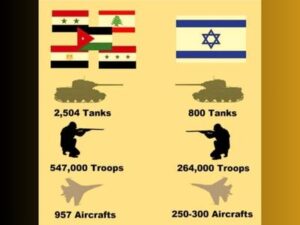
The roots of Hamas can be traced back to the broader context of Palestinian resistance against Israeli occupation. Following the 1967 Six-Day War, Israel occupied the Gaza Strip and the West Bank, leading to widespread unrest and the emergence of various resistance movements.
The Palestinian Liberation Organization (PLO), established in 1964, was the primary political and military representative of the Palestinian people. However, internal divisions and varying ideologies within the Palestinian resistance paved the way for the emergence of new factions.
The Influence of the Muslim Brotherhood
Hamas’s ideological foundation is deeply intertwined with the Muslim Brotherhood, an Islamist organization Ikhwan ul Muslameen founded in Egypt in 1928 by Muhammad Hassan Al Banaa. The Brotherhood’s emphasis on social services, religious education, and political activism resonated with many Palestinians.

In the 1970s and 1980s, the Muslim Brotherhood gained significant influence in the Gaza Strip, establishing a network of charitable organizations, schools, and mosques. This groundwork laid the ideological and organizational foundation for Hamas.
Formation of Hamas
The First Intifada
The immediate catalyst for the creation of Hamas was the outbreak of the First Intifada (uprising) in December 1987. The Intifada was a mass Palestinian uprising against Israeli occupation, characterized by widespread civil disobedience, protests, and violent clashes. It highlighted the Palestinian people’s frustration with the occupation and their desire for self-determination.
Sheikh Ahmed Yassin and the Founding of Hamas
In the midst of the First Intifada, Sheikh Ahmed Yassin, a prominent Palestinian cleric and a leader of the Muslim Brotherhood in Gaza, took the initiative to form Hamas.
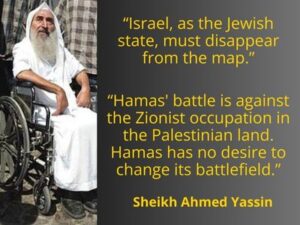
On December 14, 1987, Hamas was officially established with the goal of liberating Palestine from Israeli occupation and establishing an Islamic state. Yassin’s leadership and the organization’s Islamist ideology distinguished Hamas from other Palestinian factions, such as the secular PLO.
Charter of Hamas
In 1988, Hamas published its charter, which outlined its objectives and ideological stance. The charter called for the destruction of Israel and the establishment of an Islamic state in historic Palestine. It also emphasized the importance of jihad (struggle) and portrayed the Israeli-Palestinian conflict as a religious war between Islam and Judaism. The charter’s uncompromising stance and religious rhetoric set Hamas apart from other Palestinian groups and garnered both support and criticism.
Hamas’s Organizational Structure and Activities
Political and Military Wings
Hamas operates through a dual structure, consisting of a political wing and a military wing known as the Izz ad-Din al-Qassam Brigades. The political wing focuses on social services, education, and political activities, while the military wing is responsible for armed resistance against Israel. This dual structure allows Hamas to maintain a significant presence in both the political and military spheres.
Social Services and Community Engagement
One of the key factors contributing to Hamas’s popularity among Palestinians is its extensive network of social services. Hamas operates schools, hospitals, and charitable organizations, providing much-needed services to impoverished communities in Gaza and the West Bank. These efforts have helped Hamas build a strong support base and establish itself as a legitimate representative of Palestinian interests.
Hamas Role in Palestinian Politics
Electoral Success and Governance
In 2006, Hamas achieved a major political victory by winning the Palestinian legislative elections. This victory allowed Hamas to form a government, challenging the dominance of the Fatah-led Palestinian Authority (PA). However, tensions between Hamas and Fatah led to a violent conflict in 2007, resulting in Hamas taking control of the Gaza Strip while the PA retained control of the West Bank.
Challenges and Controversies
Hamas’s governance of Gaza has been marked by numerous challenges, including economic hardship, international isolation, and ongoing conflict with Israel. The organization’s use of violence, including rocket attacks on Israeli civilians, has drawn widespread condemnation and led to its designation as a terrorist organization by several countries, including the United States and the European Union. Despite these challenges, Hamas remains a significant force in Palestinian politics and continues to enjoy substantial support among Palestinians.
Hamas and the Israeli-Palestinian Conflict
Wars and Ceasefires
Since its creation, Hamas has been involved in multiple conflicts with Israel, including major wars in 2008-2009, 2012, 2014, 2021 and now 2023 (on going). These conflicts have resulted in significant casualties and destruction, particularly in Gaza. Periodic ceasefires, often brokered by international mediators, have provided temporary respite but have failed to achieve a lasting resolution to the conflict.
International Relations and Diplomacy
Hamas’s relations with other countries and political entities are complex. While it has received support from Iran, Qatar, and Turkey, its designation as a terrorist organization by many Western countries has limited its diplomatic engagement. Efforts to reconcile with the Palestinian Authority and participate in peace negotiations have faced numerous obstacles, reflecting the broader challenges of achieving peace in the region.
Anti-Hamas Propaganda
Terrorist Organization
Anti-Hamas propaganda, particularly from Israeli and Western sources, focuses on depicting Hamas as a terrorist organization. This narrative includes:
- Violent Tactics: Emphasizing Hamas’s use of suicide bombings, rocket attacks, and other forms of violence against Israeli civilians.
- Human Rights Violations: Highlighting instances where Hamas has used human shields, committed extrajudicial killings, and suppressed political dissent within Gaza.
- Destruction of Israel: Pointing to Hamas’s charter, which calls for the elimination of the state of Israel.
Foreign Influence
Another aspect of anti-Hamas propaganda involves portraying the group as a proxy for foreign powers, such as Iran, which allegedly provides financial and military support to Hamas. This narrative seeks to undermine Hamas by suggesting it does not act in the best interest of Palestinians but rather serves the interests of its foreign backers.
Conspiracy Theories
Israeli Creation of Hamas
One of the most pervasive conspiracy theories is the claim that Israel had a hand in creating Hamas. This theory suggests that:
- Divide and Rule: Israel allegedly supported the formation of Hamas in the 1980s to create a counterbalance to the secular Palestinian Liberation Organization (PLO) and Fatah, aiming to weaken Palestinian unity.
- Indirect Support: Some proponents argue that Israel indirectly supported Hamas by allowing its leaders to operate freely in the early years, while simultaneously cracking down on secular Palestinian groups.
US Involvement
Another conspiracy theory posits that the United States, as a key ally of Israel, also had a role in the rise of Hamas. This theory suggests:
- Geopolitical Strategy: The US might have seen Hamas as a means to counter Soviet influence in the Middle East during the Cold War, given the Brotherhood’s opposition to Soviet-aligned Arab regimes.
- Destabilization Tactics: Some theorists argue that the US and Israel sought to create divisions within the Palestinian resistance movement to prevent the emergence of a unified front against Israel.
Analyzing the Theories
Lack of Concrete Evidence
While these conspiracy theories are widespread, they often lack concrete evidence. Historical records show that Hamas’s creation was primarily driven by local leaders influenced by the Muslim Brotherhood’s ideology, rather than by direct foreign intervention.
Complex Realities
The real history of Hamas’s creation is complex and involves multiple factors, including:
- Grassroots Mobilization: The First Intifada and local dissatisfaction with existing Palestinian leadership were critical in Hamas’s formation.
- Ideological Foundations: The influence of the Muslim Brotherhood and the desire for an Islamic resistance movement played significant roles.
- Regional Dynamics: The broader geopolitical context, including regional rivalries and the Israeli-Palestinian conflict, shaped Hamas’s emergence.
Conclusion
The creation of Hamas is a testament to the intricate and multifaceted nature of the Israeli-Palestinian conflict. Rooted in historical grievances, religious ideology, and socio-political dynamics, Hamas has evolved into a major player in Palestinian politics and a symbol of resistance for many Palestinians. Understanding the origins and development of Hamas is crucial for comprehending the broader context of the ongoing conflict and the prospects for peace in the Middle East.
Propaganda and conspiracy theories about the making of Hamas reflect the highly charged and contentious nature of the Israeli-Palestinian conflict. While pro-Hamas propaganda emphasizes the group’s role as a resistance movement, anti-Hamas narratives focus on its violent tactics and alleged foreign ties. Conspiracy theories add another layer of complexity, often lacking substantiated evidence. Understanding these narratives requires a critical approach, recognizing the motivations behind the dissemination of such information and the broader historical and geopolitical context.










LEAVE A COMMENT