
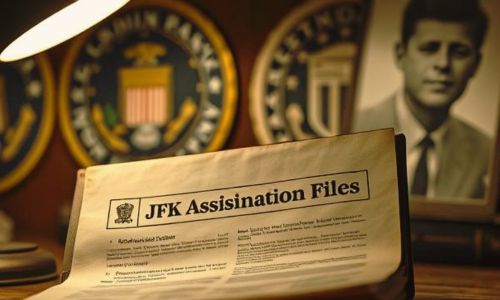
The JFK Files
The assassination of President John F. Kennedy on November 22, 1963, remains one of the most debated events in American history. For decades, government agencies have kept thousands of documents related to the case classified, fueling speculation and conspiracy theories. The term “JFK files” refers to these classified documents, which contain crucial details about the investigation, intelligence reports, and possible foreign involvement.
Why were these files kept secret for so long? What do they reveal? And what is the government’s reasoning behind withholding some information even today? This article dives deep into the history, revelations, and goals behind the JFK files.
Background: The Assassination of John F. Kennedy
On November 22, 1963, an assassin shot and killed President John F. Kennedy in Dallas, Texas, while he rode in an open-top motorcade. Authorities identified Lee Harvey Oswald as the lone gunman and arrested him hours later. However, two days after his arrest, nightclub owner Jack Ruby shot and killed Oswald, further fueling speculation of a cover-up.
In response to public outrage and demands for answers, officials established the Warren Commission in 1964 to investigate the assassination. The commission concluded that Oswald acted alone, but many critics widely challenged its findings. Over the years, researchers and theorists have proposed various explanations, ranging from CIA involvement to foreign government conspiracies. This skepticism prompted authorities to create and classify the JFK files.
What Are the JFK Files?
The JFK files are a collection of classified government documents related to the assassination of President John F. Kennedy. These files are housed under the John F. Kennedy Assassination Records Collection, managed by the National Archives and Records Administration (NARA).
Several government agencies, including the CIA, FBI, NSA, and Secret Service, contributed to these files. Some of these records contain intelligence reports, surveillance data, and diplomatic communications that could provide insights into Oswald’s activities before the assassination.
In 1992, in response to growing public interest, Congress passed the JFK Assassination Records Collection Act, requiring the government to release all assassination-related documents by October 26, 2017—unless national security concerns justified continued secrecy.
The Release of JFK Files
Since the passage of the 1992 JFK Records Act, the files have been released in phases:
-
1992-2017: Partial releases under strict government control.
-
October 2017: President Donald Trump ordered the release of thousands of previously classified documents. However, some files remained redacted.
-
December 2021: President Joe Biden authorized another batch of files, but still kept some classified for national security reasons.
-
June 2023: More documents were declassified, but some were still withheld—leading to continued frustration among historians and the public.
- March 2025: President Trump publicized all the withheld documents of the files which are considering the final release of the documents.
The gradual release of these files has provided some answers but also sparked new questions, keeping the mystery alive.
The 2025 Release of Documents
The 2025 declassification of documents related to President John F. Kennedy’s assassination has reignited public interest and debate over this pivotal event in American history. These newly released files offer deeper insights into the circumstances surrounding the assassination, revealing both new information and reinforcing existing theories.
Key Revelations from the 2025 Declassified JFK Files
-
Intelligence Oversight and Surveillance of Lee Harvey Oswald
The declassified documents indicate that the CIA and FBI were actively monitoring Lee Harvey Oswald prior to the assassination. Despite this surveillance, agencies reportedly lost track of Oswald’s activities in the critical months leading up to November 22, 1963. Notably, investigators have implicated three top CIA officials—James Jesus Angleton, Richard Helms, and George Joannides—in misleading the Warren Commission about their knowledge of Oswald. Researcher Jefferson Morley suggests that this deception could imply a deeper level of complicity or negligence within the CIA.
-
Exploration of Foreign Involvement
The files delve into potential connections between Oswald and foreign entities, particularly the Soviet Union and Cuba. While these documents explore the possibility of foreign sponsorship, they do not provide definitive evidence linking these governments to the assassination. This lack of conclusive proof continues to fuel debates about the extent of international involvement.
-
Discrepancies in Medical Evidence
Newly released medical records highlight disagreements among experts regarding the nature of President Kennedy’s wounds and the findings of the autopsy. These disputes have intensified discussions about the number of shots fired and the potential involvement of multiple shooters. Such inconsistencies contribute to ongoing skepticism about the official narrative.
-
Revelations of CIA Covert Operations
The declassified documents shed light on covert CIA operations, including surveillance tactics and involvement in foreign political affairs. These disclosures reveal the extent of the agency’s activities during the Cold War era, offering a broader context for understanding the intelligence landscape of the time.
Major Revelations from the JFK Files
Although many documents have been released, some of the most shocking revelations include:
-
Oswald Was Under CIA and FBI Surveillance – Declassified documents show that intelligence agencies tracked Oswald before the assassination, raising questions about whether they could have prevented it.
-
Foreign Involvement Speculations – Some files indicate that Cuban and Soviet officials were aware of Oswald’s activities, but no solid proof links them to the assassination.
-
Possible Government Cover-Ups – Some U.S. officials worried about how much information to disclose, prompting accusations of a deliberate cover-up.
Despite these revelations, the full truth remains elusive, and the classification of certain files only fuels further speculation.
Conspiracy Theories and the JFK Files
The JFK assassination has been the subject of countless conspiracy theories. Many believe the official narrative—Oswald acting alone—is incomplete or false. The release of the JFK files has fueled both confirmations and contradictions of these theories. Some of the most popular theories include:
The “Second Shooter” Theory
-
Many believe there was more than one gunman involved in the assassination.
-
Eyewitnesses reported hearing multiple gunshots, suggesting shots were fired from the “grassy knoll” rather than just the Texas School Book Depository.
-
The House Select Committee on Assassinations (HSCA) in 1979 concluded that JFK was “probably assassinated as a result of a conspiracy,” though it could not identify the conspirators.
CIA and Government Involvement
-
The CIA’s relationship with Oswald has long been a topic of debate. Some files suggest Oswald was under surveillance by the agency before the assassination.
-
Some theories claim that elements within the CIA orchestrated the assassination due to JFK’s policies on Cuba and Vietnam.
-
A newly declassified document suggests the CIA had undisclosed knowledge about Oswald’s movements before November 22, 1963.
Mafia and Organized Crime Connection
-
It has been suggested that the Mafia had a motive to kill JFK due to his administration’s crackdown on organized crime.
-
Jack Ruby, who killed Oswald, had connections to organized crime, leading some to suspect he was ordered to silence Oswald.
Despite the release of thousands of documents, no definitive proof of a conspiracy has emerged. However, the lack of full disclosure keeps these theories alive.
Purpose of the JFK Files
The primary purpose of the JFK files is to ensure transparency and historical accuracy regarding Kennedy’s assassination. However, they serve multiple objectives:
-
Addressing Public Skepticism – Many Americans believe the government has hidden critical information about JFK’s murder. Releasing these files helps restore trust.
-
Investigating Conspiracies – Scholars and independent researchers analyze these records to verify or debunk conspiracy theories.
-
National Security Protection – Some files remain classified to safeguard intelligence-gathering techniques and protect foreign policy interests.
The government has struggled to balance public demand for full disclosure with national security concerns, leading to a prolonged and controversial declassification process.
Why JFK Files Kept Classified
Although the government has released many documents, it still classifies or heavily redacts some, citing national security concerns as the primary reason. Here’s why some files remain withheld:
1. National Security Risks
-
Some documents contain sensitive intelligence-gathering methods that are still used today.
-
The CIA and FBI have argued that disclosing certain files could compromise ongoing intelligence operations.
2. Protection of Informants and Sources
-
Some files contain the names of confidential informants or foreign agents.
-
These individuals, or their families, could be at risk if their identities are exposed.
3. Foreign Policy Considerations
-
Some information may involve foreign governments, particularly Cuba and the Soviet Union.
-
The U.S. government may want to protect diplomatic relations by withholding sensitive details.
While President Joe Biden released additional files in June 2023, he still allowed certain documents to remain classified. This has frustrated historians and researchers, who argue that the public deserves full transparency.
Public and Media Reaction to the JFK Files
The release of the JFK files has been met with mixed reactions from the public and media.
1. Historian and Researcher Analysis
-
Many historians see the released documents as valuable historical resources, but they also emphasize that key questions remain unanswered.
-
Some experts argue that the government’s reluctance to fully declassify the files suggests that there is still something to hide.
2. Media Coverage and Public Trust
-
Major news outlets have covered the releases extensively, with headlines highlighting both new discoveries and continued secrecy.
-
A large percentage of the public remains skeptical of the official explanation, as polls indicate that over 60% of Americans believe JFK’s assassination involved a conspiracy.
3. Ongoing Calls for Full Disclosure
-
Advocacy groups and freedom-of-information activists continue to pressure the government to release all remaining files.
-
Some lawsuits have been filed against intelligence agencies demanding full transparency.
The JFK files continue to spark debate, proving that the assassination’s impact still resonates over 60 years later.
Calls for Renewed Investigation
In response to these revelations, filmmaker Oliver Stone has urged Congress to reopen the investigation into President Kennedy’s assassination. Stone criticizes the Warren Commission’s conclusion that Oswald acted alone, pointing to the newly declassified information as evidence of a possible cover-up. He advocates for a thorough re-examination of all evidence, free from political influence, to address lingering doubts and restore public trust.
The Future of the JFK Files
Will the remaining JFK files ever be released? That remains an open question. Here’s what could happen next:
1. Further Declassification Efforts
-
Public and congressional pressure may force the government to release all remaining files in the coming years.
-
Legal challenges could push for a full unredacted disclosure of the remaining documents.
2. The Role of Modern Technology
-
Advances in AI and digital forensics may allow experts to analyze previously overlooked evidence.
-
Enhanced video and photo analysis might provide new insights into ballistics and shooter positions.
3. Possibility of New Discoveries
-
Some historians believe that undiscovered documents may still exist in private archives or classified government storage.
-
If any new whistleblowers or insiders come forward, they could change the narrative.
We may never fully know the truth behind JFK’s assassination, but as officials declassify more files, we may come closer to understanding what really happened on November 22, 1963.
The JFK files represent one of the most significant collections of classified government documents in U.S. history. Although officials have released many documents, they continue to hide key details, fueling speculation and distrust.
Despite decades of investigation, questions persist about Oswald’s motives, potential conspiracies, and the extent of government involvement. The continued classification of certain documents suggests that there is still something the government is hesitant to reveal.
As more information becomes available, historians, researchers, and the public will continue their search for the truth behind one of the most controversial events in American history. Until then, the JFK assassination remains an enduring mystery.










LEAVE A COMMENT