
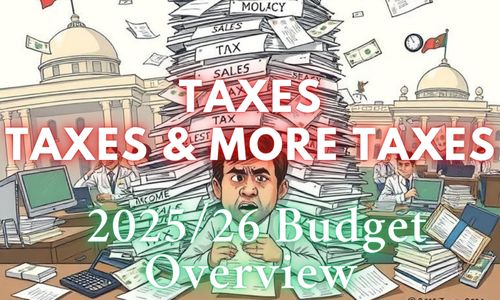
Taxes Taxes and More Taxes
Pakistan’s Federal Budget for 2025–26 was officially presented on June 10, 2025. Here are some key highlights:
1: Total Budget Size: Rs 17.6 trillion, slightly lower than last year’s Rs 18.9 trillion.
2: GDP Growth Target: 4.2%, with inflation expected to decline to 4.7%.
3: Defence Budget: Increased by 20%, reaching Rs 2.55 trillion, citing regional security concerns.
4: Tax Revenue Target: Rs 14.13 trillion, with a focus on AI-based audits and digital invoicing to curb tax evasion.
5: Public Sector Development Programme (PSDP): Rs 1 trillion, prioritizing infrastructure, energy, and water projects.
6: Debt Servicing: Rs 8.2 trillion, highlighting financial constraints.
7: Salary & Pension Increase: 10% hike for federal employees and 7% increase in pensions.
8: Social Welfare: Rs 716 billion allocated to Benazir Income Support Programme (BISP), covering 10 million families.
9: New Taxes: New extortionate taxes enforced on e-commerce, large transactions, and digital services.
Focused Sectors
Pakistan’s Federal Budget 2025–26 has significantly impacted several key sectors, shaping economic priorities for the year ahead. Here are the most affected areas:
1: Defence & Security: The defence budget saw a 20% increase, reaching Rs 2.55 trillion, citing regional security concerns.
2: Taxation & Revenue: Stricter enforcement on e-commerce, digital transactions, and AI-based audits to curb tax evasion.
3: Public Sector Development (PSDP): Rs 1 trillion allocated, focusing on infrastructure, energy, and water projects.
4: Debt Servicing: Rs 8.2 trillion earmarked, highlighting financial constraints.
5: Social Welfare: Rs 716 billion allocated to Benazir Income Support Programme (BISP), covering 10 million families.
6: Salaries & Pensions: 10% salary hike for federal employees and 7% increase in pensions.
7: Agriculture & Industry: Growth targets set at 4.5% for agriculture and 4% for industry, with incentives for exports and manufacturing.
8: Energy & Environment: Rs 133 billion allocated for water resources, including major dam projects.
9: Education & Health: Increased funding for schools, healthcare infrastructure, and preventive care initiatives.
Taxes Taxes and More Taxes
Pakistan’s Federal Budget 2025–26 introduces several tax measures aimed at boosting revenue and improving compliance. Here are the key tax-related changes:
1: Expanded Tax Scope: New taxes on luxury items, digital transactions, and e-commerce.
2: Solar Panel Tax: An 18% tax on imported solar panels, sparking debate over its impact on renewable energy adoption.
3: Online Shopping Tax: A 2% tax on the sale of online items, collected at the time of delivery.
4: Non-Filers Restrictions: Non-filers are banned from purchasing vehicles, property, and opening bank accounts to encourage tax compliance.
5: Income Tax Adjustments: Relief for salaried individuals, with lower tax rates for middle-income earners.
6: Higher Taxes on Digital Transactions: A new levy on digital payments, increasing withholding tax rates.
7: Property & Real Estate Taxes: Lower withholding tax on property purchases, but higher excise duties on commercial transfers.
8: Pension Tax: Pension income above Rs 10 million will be taxed at 5%.
9: Corporate & Stock Market Taxes: Capital Gains Tax (CGT) increased, and dividend tax rates raised.
The government aims to increase tax revenue by Rs 623 billion while balancing relief measures for certain groups
Taxes on Digital Transactions
The new taxes on digital transactions in Pakistan’s Federal Budget 2025–26 are expected to have significant effects on businesses, consumers, and the overall digital economy. Here are some key impacts:
1: Higher Costs for Online Shoppers: A 2% tax on online purchases and additional levies on digital payments will make e-commerce more expensive.
2: Increased Tax Burden on Freelancers & Digital Businesses: Freelancers and online service providers will now face a 5% tax on digital earnings, potentially reducing their profits.
3: Stricter Compliance for E-commerce Platforms: Local and foreign e-commerce platforms, including AliExpress, Amazon, and Temu, must now collect and remit taxes on transactions involving Pakistani customers.
4: Impact on Social Media Advertising: A 5% tax on digital ads will apply to businesses advertising on platforms like Facebook, YouTube, Instagram, and TikTok.
5: Courier & Payment Gateways as Tax Collectors: Banks and courier services must deduct taxes on digital transactions, making compliance more complex.
6: Potential Slowdown in Digital Growth: The higher tax burden may discourage startups and small businesses from expanding their digital operations.
While the government aims to increase tax revenue and regulate the digital economy, critics argue that these measures could hinder innovation and push businesses toward informal channels.
Invaded Sectors by Taxes
The new taxes on digital transactions in Pakistan’s Federal Budget 2025–26 will significantly impact several sectors, particularly those reliant on online payments and e-commerce. Here are the most affected industries:
1: E-commerce & Online Retail: Platforms like Daraz, Amazon, and AliExpress will face higher tax compliance costs, potentially leading to increased prices for consumers.
2: Freelancing & IT Services: Freelancers and tech professionals will now be subject to a 5% tax on digital earnings, which could discourage remote work and online entrepreneurship.
3: Social Media & Digital Advertising: Businesses advertising on platforms like Facebook, YouTube, Instagram, and TikTok will be taxed 5% on ad spending, increasing marketing costs.
4: Courier & Logistics Services: Companies handling cash-on-delivery (CoD) transactions must now deduct taxes before delivering payments, adding complexity to operations.
5: Online Banking & Payment Gateways: Banks and financial institutions must withhold taxes on digital transactions, making compliance more stringent.
6: Streaming & Subscription Services: Platforms like Netflix, Spotify, and YouTube Premium may increase subscription fees due to new digital service taxes.
While the government aims to boost tax revenue and regulate the digital economy, critics argue that these measures could slow down digital growth and push businesses toward informal channels.
Tax Net Expansion
Pakistan’s Federal Budget 2025–26 aims to expand the tax net by targeting previously untaxed sectors and improving compliance. Here’s how the government plans to achieve this:
Key Strategies to Increase the Tax Net
1: Digital Economy Taxation: E-commerce platforms and online businesses must now collect and remit taxes on transactions.
2: Luxury & High-End Goods: New taxes on imported solar panels (18%), high-end vehicles, and luxury real estate.
3: Freelancers & IT Professionals: A 5% tax on digital earnings will apply to freelancers and online service providers.
4: Agriculture & Real Estate: Stricter enforcement on large landowners and commercial property transactions.
5: Stock Market & Investments: Capital Gains Tax (CGT) increased, and dividend tax rates raised.
6: Retail & Small Businesses: Mandatory tax registration for businesses exceeding a certain revenue threshold.
7: Banking & Financial Transactions: Higher taxes on interest income and digital payments.
The government expects these measures to increase tax revenue by Rs 623 billion while improving compliance across sectors.
Impact of budget on Pakistan Economy
Pakistan’s Federal Budget 2025–26 is expected to have a significant impact on the economy, shaping growth, inflation, and investment trends. Here are the key effects:
Positive Impacts
1: Stock Market Surge: The Pakistan Stock Exchange (PSX) hit record highs, with the KSE-100 Index crossing 123,000 points, reflecting investor confidence.
2: GDP Growth Target: The government aims for 4.2% GDP growth, up from 2.7% last year, signaling economic recovery.
3: Inflation Control: Inflation is projected to decline to 7.5%, offering relief to consumers.
4: Fiscal Deficit Reduction: The deficit is expected to drop to 3.9% of GDP, improving financial stability.
5: Boost in Exports & Remittances: Policies supporting exports and overseas remittances aim to strengthen foreign reserves.
Challenges & Concerns
1: Debt Servicing Pressure: Rs 8.2 trillion allocated for debt repayment, limiting funds for development.
2: Higher Taxes on Digital Economy: New taxes on e-commerce, digital transactions, and online services may slow digital sector growth.
3: Energy Sector Costs: Increased taxation on solar panels and fuel could raise energy costs.
4: Limited Job Creation Measures: Critics argue that the budget lacks strong employment generation initiatives.
Overall, the budget reflects fiscal discipline, tax enforcement, and investment incentives, but challenges remain in debt management and digital sector taxation.
Impact on Agriculture Sector
Pakistan’s Federal Budget 2025–26 introduces new taxes on the agriculture sector, which will have significant effects on farmers, agribusinesses, and food prices. Here’s how agriculture will be impacted:
Key Tax Changes Affecting Agriculture
1: Agriculture Income Tax Increase: The government plans to revamp agricultural taxation, bringing it in line with other sectors. Large landowners will face higher tax rates, while small farmers may receive exemptions.
2: Fertilizer Tax Hike: The Federal Excise Duty (FED) on fertilizers is set to increase to 10%, making fertilizers more expensive for farmers.
3: New Duty on Pesticides: A 5–10% duty on pesticides will be imposed, raising costs for crop protection.
4: Water & Irrigation Costs: Taxes on water usage and irrigation equipment may increase operational expenses for farmers.
5: Impact on Small Farmers: While large landowners will bear the brunt of taxation, small-scale farmers may struggle with rising input costs, potentially affecting crop yields.
Potential Consequences
1: Higher Food Prices: Increased costs for fertilizers and pesticides may lead to higher crop production costs, which could raise food prices.
2: Reduced Profit Margins: Farmers may face lower profits due to higher taxation and operational expenses.
3: Shift to Informal Markets: Some farmers may avoid formal taxation by selling produce through informal channels.
The government argues that these taxes will increase revenue and improve fiscal discipline, but critics warn of negative effects on food security and rural livelihoods.
Taxes Impact on Salaried Class
Pakistan’s Federal Budget 2025–26 brings mixed effects for the salaried class, with income tax relief for lower and middle-income earners but higher taxes for high-income individuals. Here’s how it impacts different salary brackets:
Tax Relief for Lower & Middle-Income Earners
- Tax-free income threshold remains at Rs 600,000.
- Reduced tax rates for those earning Rs 600,000–2,200,000:
- Rs 600,000–1,200,000: Tax rate cut from 5% to 1%.
- Rs 1,200,000–2,200,000: Tax rate reduced from 15% to 11%.
- Salary Increase: Government employees receive a 10% salary hike, helping offset inflation.
Higher Taxes for High-Income Earners
- Rs 2,200,000–3,200,000: Tax rate slightly reduced from 25% to 23%.
- Rs 3,200,000–4,100,000: Tax rate remains at 30%.
- Above Rs 4,100,000: Tax rate unchanged at 35%.
Other Impacts
- Minimum Wage Raised: Increased to Rs 37,000, benefiting lower-income workers.
- Pension Increase: 12.5% hike for retired government employees.
- Brain Drain Measures: A 1% reduction in surcharge for high earners to retain skilled professionals.
While the budget provides relief for lower-income earners, high-income individuals face continued tax pressure.
Challenges of Budget 2025/26
Pakistan’s Federal Budget 2025–26 presents several challenges despite its focus on fiscal discipline and economic recovery. Here are the key concerns:
Economic & Fiscal Challenges
- High Debt Servicing: Rs 8.2 trillion allocated for debt repayment, limiting funds for development.
- Fiscal Deficit Pressure: Despite efforts to reduce the deficit to 3.9% of GDP, financial constraints remain.
- Limited Job Creation Measures: Critics argue that the budget lacks strong employment generation initiatives.
Taxation & Business Concerns
- Higher Taxes on Digital Economy: New taxes on e-commerce, digital transactions, and online services may slow digital sector growth.
- Agriculture Sector Struggles: Increased taxation on fertilizers, pesticides, and irrigation raises costs for farmers.
- Energy Sector Costs: Increased taxation on solar panels and fuel could raise energy costs.
Social & Public Sector Challenges
- Inflationary Pressures: While inflation is projected to decline to 7.5%, rising costs in key sectors may offset relief.
- Healthcare & Education Funding: Some experts believe funding for schools and hospitals is insufficient.
- Public Reaction: Mixed responses, with concerns over defense spending vs. cuts in public welfare programs.
While the budget aims to boost tax revenue and improve fiscal stability, these challenges highlight potential hurdles for businesses, consumers, and economic growth.
Criticism
Pakistan’s Federal Budget 2025–26 has faced criticism from business leaders, economists, and opposition parties, highlighting concerns over unrealistic tax targets, lack of relief for industries, and increased burden on the middle class. Here are the key points of criticism:
Economic & Fiscal Concerns
- Unrealistic Tax Collection Target: Business leaders argue that the Rs 2,500 billion hike in tax collection is overly ambitious and difficult to achieve.
- High Debt Servicing: Rs 8.2 trillion allocated for debt repayment, limiting funds for development.
- IMF Influence: Critics claim the budget is heavily influenced by IMF conditions, prioritizing fiscal targets over public welfare.
Impact on Businesses & Industries
- Lack of Relief for Industrial Sector: The Karachi Chamber of Commerce & Industry (KCCI) criticized the budget for failing to reduce electricity tariffs and interest rates, making business operations costly.
- Higher Taxes on Digital Economy: New taxes on e-commerce, digital transactions, and online services may slow digital sector growth.
- Agriculture Sector Struggles: Increased taxation on fertilizers, pesticides, and irrigation raises costs for farmers.
Public Reaction & Social Concerns
- Burden on Salaried Class: Opposition leaders argue that higher taxes on salaries and property disproportionately affect middle-class citizens.
- Inflationary Pressures: Despite claims of inflation control, critics argue that rising costs in key sectors will offset relief.
- Public Backlash: Many citizens believe the budget makes life harder in Pakistan, with increased taxation and limited social welfare measures.
While the government defends the budget as necessary for economic stability, critics warn that it fails to provide meaningful relief for businesses and the general public.
Conclusion
Pakistan’s Federal Budget 2025–26 has a mixed impact on the economy, balancing fiscal discipline, tax enforcement, and development spending. Here’s a breakdown of its overall effects:
Positive Impacts
- Economic Growth Target: The government aims for 4.2% GDP growth, signaling recovery.
- Inflation Control: Inflation is projected to decline to 7.5%, offering relief to consumers.
- Stock Market Surge: The Pakistan Stock Exchange (PSX) hit record highs, reflecting investor confidence.
- Fiscal Deficit Reduction: The deficit is expected to drop to 3.9% of GDP, improving financial stability.
- Boost in Exports & Remittances: Policies supporting exports and overseas remittances aim to strengthen foreign reserves.
Challenges & Concerns
- Debt Servicing Pressure: Rs 8.2 trillion allocated for debt repayment, limiting funds for development.
- Higher Taxes on Digital Economy: New taxes on e-commerce, digital transactions, and online services may slow digital sector growth.
- Energy Sector Costs: Increased taxation on solar panels and fuel could raise energy costs.
- Limited Job Creation Measures: Critics argue that the budget lacks strong employment generation initiatives.
Overall, the budget reflects fiscal discipline, tax enforcement, and investment incentives, but challenges remain in debt management and digital sector taxation.









LEAVE A COMMENT