
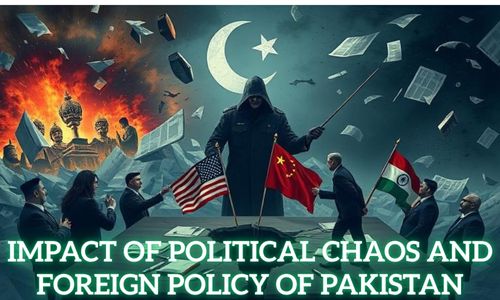
Impact of Political Chaos and Foreign Policy of Pakistan
In the complex realm of global diplomacy, Pakistan’s foreign policy is intricately tied to its domestic political landscape. Every shift in the internal political arena—be it changes in governance, civil-military relations, or economic instability—reverberates through the corridors of international diplomacy. Understanding the impact of Pakistan’s domestic politics on its international posture is not just relevant for geopolitical scholars but essential for stakeholders across South Asia and beyond.
The Foundation of Pakistan’s Foreign Policy
Pakistan’s foreign policy is anchored in several core strategic objectives:
-
Ensuring national security, especially in relation to India
-
Safeguarding territorial sovereignty
-
Maintaining economic stability through foreign partnerships
-
Fostering relations with major global powers such as China, the United States, and Gulf countries
-
Supporting the Kashmir cause at global forums
-
Advocating for the Muslim world, particularly via the Organization of Islamic Cooperation (OIC)
However, these objectives are rarely pursued in a vacuum. Internal dynamics—from military dominance to political instability—profoundly shape Pakistan’s international behavior.
Civil-Military Relations: The Engine Behind Policy Shifts
No analysis of Pakistan’s foreign policy is complete without recognizing the dominant role of the military establishment. While the civilian government formally controls foreign relations, the military—particularly the Pakistan Army and Inter-Services Intelligence (ISI)—has traditionally dictated security and strategic decisions, especially regarding:
-
India-Pakistan tensions
-
Afghanistan policy
-
Nuclear posture
-
China-Pakistan Economic Corridor (CPEC)
This civil-military imbalance often results in inconsistency and unpredictability in diplomatic engagements. For instance, diplomatic overtures made by civilian leaders can be undercut or reversed due to strategic calculations by the military. This dual-track policymaking has repeatedly created confusion for global partners, weakening Pakistan’s diplomatic credibility.
Political Instability and Its Diplomatic Fallout
Frequent changes in government, lack of policy continuity, and politicization of foreign engagements have hurt Pakistan’s ability to maintain consistent international relationships. Every change in leadership—whether through elections, judicial interventions, or military influence—leads to a realignment of diplomatic priorities.
Consider the varying stances of different administrations:
-
Imran Khan’s PTI government sought to position Pakistan as a neutral mediator in Middle Eastern conflicts and emphasized a foreign policy of dignity and independence.
-
PML-N and PPP governments focused more on economic diplomacy and rebuilding ties with Western countries.
These shifts, often unaccompanied by robust institutional frameworks, create a fragmented international image, making long-term diplomatic partnerships difficult.
The Economic Crisis and Foreign Relations
Pakistan’s economic volatility plays a pivotal role in shaping its global diplomacy. Bailouts from the IMF, aid from China and Gulf states, and remittance diplomacy all showcase how economic dependence drives foreign policy.
-
IMF agreements come with political strings attached, often requiring Pakistan to realign its economic governance, which affects trade and strategic partnerships.
-
Saudi Arabia and UAE provide vital financial lifelines, often resulting in foreign policy decisions aligned with their regional interests, including on issues like Iran and Yemen.
-
CPEC, a flagship of China’s Belt and Road Initiative, places Pakistan in a critical position in Sino-American rivalry, compelling Islamabad to maintain strategic ambiguity in balancing its relations with both global giants.
Thus, economic desperation often overrides ideological commitments, turning foreign policy into a tool for survival rather than strategy.
Judiciary and Media: Domestic Institutions with Foreign Policy Impact
Domestic institutions like the judiciary and media increasingly influence Pakistan’s global reputation.
-
High-profile court cases involving corruption, blasphemy, or political bans are closely watched by international human rights and legal institutions, affecting bilateral and multilateral ties.
-
The media’s portrayal of foreign actors—particularly India, Israel, and the West—can shape public opinion to a degree that policymakers feel pressured to adjust their rhetoric or approach.
-
Issues such as press freedom, judicial independence, and human rights violations are frequently raised by Western allies, directly impacting Pakistan’s ability to secure aid, trade deals, and diplomatic leverage.
Kashmir Policy and National Narrative
The Kashmir issue remains central to Pakistan’s national identity and foreign policy. Domestic political actors leverage the Kashmir narrative to gain popular support, which often hardens Pakistan’s foreign policy stance against India.
-
Any softening of tone on Kashmir by civilian leaders is quickly met with backlash from political rivals, the military, and the public.
-
Internationalizing Kashmir is a recurring goal, but domestic failures in governance and credibility weaken Islamabad’s ability to gain sustained international support.
Thus, internal nationalist pressures create a narrow space for diplomatic flexibility, making de-escalation with India politically costly.
Islamist Parties and Religious Sentiment in Foreign Policy
Religious political parties and movements also exert influence on Pakistan’s foreign policy, especially regarding:
-
Relations with Israel (non-recognition)
-
Position on blasphemy laws
-
Stance on issues involving the Muslim Ummah, such as Palestine, Rohingya, and Uyghur Muslims
Public mobilization by religious groups can derail diplomatic efforts. For instance, street protests against France over perceived blasphemous content affected Pakistan’s diplomatic missions and trade relations in Europe.
These dynamics show that domestic religious sentiment often imposes non-negotiable limits on foreign policy maneuverability.
Afghanistan and the Taliban: A Tale of Strategic Depth and Backlash
Pakistan’s relationship with Afghanistan, particularly post-U.S. withdrawal, is emblematic of how internal security and ideological calculations influence regional strategy.
-
Pakistan’s support of the Taliban has long been a contentious point internationally. While it provided strategic depth, it also invited criticism and diplomatic isolation, especially from the West.
-
The Tehrik-i-Taliban Pakistan (TTP) resurgence complicates Pakistan’s internal security and exposes contradictions in its Afghan policy.
Domestic blowback from cross-border terrorism and refugee management further forces policymakers to recalibrate their stance, often leading to conflicting messages at the international stage.
Foreign Policy as a Tool of Domestic Legitimacy
Politicians across party lines often use foreign visits, UN speeches, and diplomatic successes as tools for domestic image-building. Leaders use international recognition to boost legitimacy, especially when under pressure at home.
-
Photo-ops with world leaders
-
Participation in global summits
-
Deals with superpowers
These are often leveraged in local media to gain political capital. However, this instrumentalization of foreign policy sometimes leads to short-term optics over long-term strategy.
Domestic Stability as the Precursor to Diplomatic Strength
For Pakistan to truly excel in the global arena, it must first resolve its internal contradictions. Strengthening democratic institutions, achieving economic stability, and ensuring civil-military balance are prerequisites for a credible, consistent, and forward-looking foreign policy.
Until Pakistan harmonizes its internal political architecture, its international relations will remain reactive, inconsistent, and vulnerable to domestic tremors.







LEAVE A COMMENT