

Syrian Civil War
The Syrian Civil War, which began in 2011 following the Arab Spring protests, started as a peaceful movement against President Bashar al-Assad’s government but escalated into a full-scale civil war.
The conflict has caused immense suffering, with 500,000 deaths and millions displaced. Regional and global powers, including Russia and Iran supporting the government, and the U.S. and Western nations backing opposition forces, have become involved.
The war has been marked with never ending sufferings and dilemma by atrocities such as chemical weapon use, indiscriminate bombings, illegal abductions and killings. Efforts to resolve the conflict politically have failed, and the situation remains unstable.
Role of Arab Spring
The Arab Spring played a significant role in the outbreak of the Syrian Civil War. In early 2011, protests began in Syria calling for political reforms and greater freedoms. These protests were part of a broader wave of uprisings in the Middle East and North Africa, including Tunisia, Egypt, Libya, and Yemen.
The Syrian government responded to the protests with a violent crackdown, using live ammunition and other brutal tactics against demonstrators. This repression only fueled more protests and unrest, leading to a cycle of violence and escalation that eventually spiraled into a full-scale civil war.
The Arab Spring provided a catalyst for Syrian opposition groups to organize and mobilize against the government, and also brought attention and support from regional and international actors. The uprisings in other countries also served as a model for the Syrian opposition, who saw the success of protests in Tunisia and Egypt as evidence that change was possible.
However, the Syrian Civil War also differed from other Arab Spring uprisings in several ways. Unlike in Tunisia and Egypt, where the militaries largely sided with the protesters, the Syrian military remained loyal to the government. The conflict also quickly became more complex and multi-faceted, with various opposition groups and regional and global powers becoming involved, leading to a protracted and devastating war.
Effect of US Invasion over Iraq
Some argue that the US invasion of Iraq in 2003 caused the Syrian Civil War, but they cannot solely attribute the conflict’s origins to the invasion, as they are more complex. The Syrian Civil War began in 2011 as a result of a number of domestic and regional factors, including political and economic grievances, sectarian tensions, and the broader regional context of the Arab Spring.
However, the US invasion of Iraq did have a significant impact on the region and may have indirectly contributed to the outbreak of the Syrian Civil War. The toppling of Saddam Hussein’s regime in Iraq created a power vacuum that led to increased sectarian tensions and instability in the region. This, in turn, contributed to the rise of extremist groups such as ISIS and Al-Qaeda, which have played a role in the Syrian conflict.
Overall, while the US invasion of Iraq was not the direct cause of the Syrian Civil War, it did have a significant impact on the region and may have indirectly contributed to the outbreak of the conflict.
Factions Involved in Syrian Civil War
The Syrian Civil War involves a complex web of factions, with multiple groups fighting for control of territory and influence in the country. Some of the main factions involved include:
1: Syrian Government: Led by President Bashar al-Assad, the Syrian government controls the capital city of Damascus and other parts of the country. Russia, Iran, and various Shia militias have supported the government.
2: Syrian Opposition: The opposition is a broad coalition of groups fighting against the Syrian government. This includes both secular and Islamist factions, as well as various Kurdish groups. The opposition has received support from the United States, Turkey, and other Western and Gulf countries.
3: ISIS: The Islamic State of Iraq and Syria (ISIS) is a jihadist group that emerged from the chaos of the Syrian Civil War. At its height, ISIS controlled large swathes of territory in Syria and Iraq, and carried out numerous atrocities against civilians and opposition groups. In recent years, ISIS has significantly weakened, but it still maintains a presence in some parts of the country.
4: Kurdish Groups: The Kurdish population in Syria has its own political and military groups, including the People’s Protection Units (YPG) and the Kurdish Democratic Union Party (PYD). These groups have fought against ISIS and participated in the broader conflict in Syria.
5: Other Islamist Groups: A number of other Islamist factions, including al-Nusra Front (now known as Hayat Tahrir al-Sham) and Ahrar al-Sham, have carried out atrocities against civilians and opposition groups.
The involvement of multiple factions with differing interests and goals has made the Syrian Civil War a complex and protracted conflict, with no clear end in sight.
US & EU Struggle to Topple Asad’s Regime
The United States and Europe have several interests in Syria, including strategic, humanitarian, and geopolitical concerns. Here are some key reasons why the US and Europe have worked to remove Bashar al-Assad:
1: Strategic Interests: The US and Europe have strategic interests in the Middle East, including maintaining access to oil and countering terrorism. The Syrian Civil War has created instability in the region, which threatens these strategic interests.
2: Humanitarian Concerns: The war in Syria has caused immense suffering and displacement for millions of Syrians. The US and Europe have provided humanitarian aid to those affected by the conflict.
As for why the US and Europe want to remove Bashar al-Assad specifically, there are several reasons. First, the Assad regime has been accused of carrying out war crimes and atrocities against civilians, including the use of chemical weapons. Removing Assad is seen as a way to hold those responsible accountable for these crimes.
Second, the Assad regime is aligned with Russia and Iran, which are seen as adversaries by the US and Europe. Removing Assad would weaken the influence of these countries in the region.
Finally, there is a belief among some policymakers that removing Assad could lead to a more stable and democratic Syria. However, there are also concerns that removing Assad could lead to even greater instability and conflict in the region.
Russian Interests in Syria
Russia has several interests in supporting the Syrian government led by Bashar al-Assad, and has been a key ally of the Syrian regime since the outbreak of the civil war. Here are some of the main reasons why Russia has been interested in supporting the Assad regime:
1: Military and Strategic Interests: Russia maintains a naval base in the Syrian port city of Tartus, which provides the Russian military with a foothold in the Mediterranean. The continuation of the Assad regime is seen as important for protecting this strategic interest.
2: Geopolitical Considerations: Russia sees itself as a counterweight to the US and Europe in the Middle East, and supporting the Assad regime is a way to assert its influence in the region. Russia has also sought to maintain its relationship with Iran, which is an important ally of the Syrian government.
3: Economic Interests: Russia has a stake in the Syrian energy sector, with Russian companies involved in oil and gas exploration and production in the country.
4: Domestic Concerns: The Syrian conflict has become a key issue in Russian domestic politics, with President Vladimir Putin using his support for Assad as a way to bolster his own image as a strong leader and defender of Russian interests.
Overall, Russia’s support for the Assad regime is driven by a combination of military, strategic, geopolitical, economic, and domestic factors. Russia sees itself as a key player in the Middle East, and supporting the Assad regime is a way to maintain its influence in the region.
Sectarian Factor
Sectarianism has played a significant role in the Syrian Civil War. The conflict has been characterized by a divide between the predominantly Sunni Muslim opposition and the Alawite-dominated government led by President Bashar al-Assad. Other religious and ethnic groups, including Christians, Kurds, and Druze, have also been involved in the conflict, either as supporters of one side or as neutral parties.
The Assad regime has historically been dominated by members of the Alawite minority, a branch of Shia Islam, while the majority of the population in Syria is Sunni Muslim. This has contributed to a perception among some Sunnis that the government is discriminatory and represents only a narrow sectarian interest. As a result, many Sunnis have supported the opposition groups, which include both secular and Islamist factions.
On the other hand, some Alawites and other minority groups have been wary of the opposition, fearing that a Sunni-dominated government could lead to discrimination or violence against their communities. This has led some minority groups to support the government or remain neutral in the conflict.
The sectarian dimension of the conflict has been exacerbated by outside actors, with Iran and other Shia-majority countries supporting the Assad regime, while Saudi Arabia and other Sunni-majority countries support the opposition. This has led to a wider regional proxy war in which sectarian divisions have been exploited for political gain.
Overall, while the Syrian Civil War has multiple complex factors, sectarianism has played a significant role in shaping the conflict and exacerbating tensions between different groups in the country.
Saudi Interests in Syria
Saudi Arabia has been involved in the Syrian conflict since its outbreak in 2011, and has played a significant role in supporting the opposition to the Assad regime. Here are some of the main reasons why Saudi Arabia has been interested in the conflict:
1: Geopolitical Considerations: Saudi Arabia sees itself as a key player in the region and has sought to assert its influence in Syria. The conflict has been seen as an opportunity to push back against Iranian influence, which is seen as a threat to Saudi Arabia’s own regional ambitions.
2: Sectarian Considerations: Saudi Arabia is a predominantly Sunni Muslim country and has supported the Sunni-dominated opposition to the Alawite-led Assad regime. The conflict has been viewed by some in Saudi Arabia as a struggle between Sunni and Shia Muslims, with the Iranian-backed Assad regime seen as aligned with Shia interests.
3: Humanitarian Concerns: The conflict in Syria has led to a humanitarian crisis, with millions of people displaced and in need of assistance. Saudi Arabia has provided significant financial support to aid organizations working in the country.
4: Domestic Politics: The conflict has become a key issue in Saudi Arabian domestic politics, with the government facing pressure to support the opposition and take a more active role in the conflict.
Iran’s Proxies in Syria
Iran has been a key player in the Syrian Civil War since its outbreak in 2011, and has provided significant support to the Assad regime. Here are some of the main reasons why Iran has been interested in the conflict:
1: Geopolitical Considerations: Iran sees itself as a key player in the region and has sought to expand its influence in Syria. The conflict has been seen as an opportunity to strengthen Iran’s regional position and counterbalance the influence of Saudi Arabia and other Sunni-majority countries in the region.
2: Strategic Considerations: Syria has long been an ally of Iran, and the Assad regime has provided a strategic foothold for Iran in the Levant region. Iran has been keen to maintain this strategic relationship, which has given it access to Hezbollah in Lebanon and other regional allies.
3: Sectarian Considerations: Iran is a predominantly Shia Muslim country and has supported the Alawite-led Assad regime, which is also aligned with Shia Islam. The conflict has been viewed by some in Iran as a struggle between Sunni and Shia Muslims, with the opposition seen as aligned with Sunni interests in the region.
4: Counter-Terrorism Efforts: Iran has been involved in the conflict in part to fight against extremist groups such as ISIS and Al-Qaeda, which pose a threat to Iran’s own security.
Overall, Iran has been involved in the Syrian Civil War due to a combination of geopolitical, strategic, sectarian, and security considerations. The conflict has provided Iran an opportunity to expand its influence in the region, counterbalance Saudi Arabia and other Sunni-majority countries, maintain strategic alliances, and fight against extremist groups.
Israel’s Proxies in Syria
These airstrikes have occasionally led to direct military confrontations between Israel and Syria, as well as between Israel and Iran.
In addition to its military involvement, Israel has also provided humanitarian aid to Syrians affected by the conflict. The Israeli military has set up field hospitals near the border with Syria to provide medical treatment to wounded Syrians, and Israel has also provided humanitarian aid such as food, clothing, and shelter to Syrian refugees.
Overall, Israel’s involvement in the Syrian conflict has been primarily focused on its security concerns regarding Iran and Hezbollah. While Israel has sought to limit its involvement in the conflict, its actions have at times escalated tensions and led to direct military confrontations.
Turkish Interests and Involvement in Syria
Turkey has been involved in the Syrian Civil War since its outbreak in 2011, and has played a significant role in the conflict. Here are some of the main reasons why Turkey has been interested in the conflict:
1: Geopolitical Considerations: Turkey sees itself as a regional power and has sought to assert its influence in Syria. The conflict has been seen as an opportunity to expand Turkey’s regional influence and counterbalance the influence of Russia and Iran.
2: Security Concerns: The conflict has had significant security implications for Turkey, particularly in relation to the Kurdish population in Syria. Turkey has been concerned about the emergence of autonomous Kurdish areas in Syria, which it fears could fuel separatist sentiment among the Kurdish population in Turkey.
3: Humanitarian Concerns: The conflict in Syria has led to a significant humanitarian crisis, with millions of people displaced and in need of assistance. Turkey has been at the forefront of providing humanitarian assistance to those affected by the conflict, and has taken in millions of Syrian refugees.
4: Domestic Politics: The conflict has become a key issue in Turkish domestic politics, with the government facing pressure to take a more active role in the conflict and support the opposition to the Assad regime.
5: Economic Considerations: Turkey has sought to benefit economically from the conflict, particularly in relation to trade and reconstruction efforts.
Overall, Turkey’s interest in the Syrian conflict has been driven by a combination of geopolitical, security, humanitarian, domestic, and economic factors. The conflict has been seen as an opportunity to expand Turkey’s regional influence, address security concerns related to the Kurdish population, provide humanitarian assistance to those affected by the conflict, and benefit economically from reconstruction efforts.
Turkey has played a significant role in the Syrian Civil War since its outbreak in 2011. Here are some of the main ways in which Turkey has been involved in the conflict:
1: Support for the Opposition: Turkey has provided support to the opposition to the Assad regime, including providing safe havens for opposition fighters and allowing them to cross the border into Syria. Turkey has also supported various opposition groups, including the Free Syrian Army.
2: Humanitarian Assistance: Turkey has been at the forefront of providing humanitarian assistance to those affected by the conflict, and has taken in millions of Syrian refugees. Turkey has established refugee camps and provided food, shelter, and medical assistance to those in need.
3: Security Concerns: Turkey has been concerned about the emergence of autonomous Kurdish areas in Syria, which it fears could fuel separatist sentiment among the Kurdish population in Turkey. Turkey has conducted military operations in Syria against Kurdish militias, including the People’s Protection Units (YPG).
4: Military Intervention: Turkey has intervened militarily in Syria on multiple occasions, including through cross-border artillery shelling, airstrikes, and ground operations. In 2018, Turkey launched a major military operation against Kurdish militias in northern Syria.
5: Diplomatic Efforts: Turkey has been involved in various diplomatic efforts to resolve the conflict, including through its participation in the Astana talks with Russia and Iran.
Overall, Turkey’s role in the Syrian Civil War has been multifaceted and has included support for the opposition, humanitarian assistance, military intervention, and diplomatic efforts. The conflict has also had significant security implications for Turkey, particularly in relation to the Kurdish population in Syria.
Dominance of ISIS
The Islamic State of Iraq and Syria (ISIS) gained significant control over parts of Syria during the Syrian Civil War. ISIS took advantage of the chaos and instability caused by the conflict to establish a self-declared caliphate in large parts of Syria and Iraq.
At its peak, ISIS controlled large parts of eastern and northern Syria, including major cities such as Raqqa and Deir ez-Zor. The group also controlled key oil fields, which provided a significant source of revenue for the group.
ISIS was known for its brutal tactics, including the use of beheadings, crucifixions, and public executions. The group also carried out attacks against civilians and targeted religious minorities, including Christians and Yazidis.
The international community launched a concerted effort to combat ISIS in Syria, with a US-led coalition conducting airstrikes against the group and supporting local forces on the ground. In 2017, the Syrian Democratic Forces (SDF), a coalition of Kurdish and Arab fighters, captured Raqqa from ISIS, marking a significant setback for the group.
While ISIS no longer controls territory in Syria, the group continues to carry out attacks and maintain a presence in the country. The conflict in Syria, along with ongoing instability in neighboring Iraq, has provided fertile ground for extremist groups like ISIS to operate and recruit.
Defeat of ISIS
Local and international forces defeated ISIS in Syria through a combination of military operations and political developments that weakened the group’s support base and its ability to control territory. Here are some of the key factors that contributed to the defeat of ISIS in Syria:
1: International Coalition Airstrikes: The US-led international coalition launched a series of airstrikes against ISIS targets in Syria, which helped to weaken the group’s infrastructure and military capabilities.
2: Local Ground Operations: Local forces, including the Syrian Democratic Forces (SDF) and other opposition groups, launched ground operations against ISIS-held territory. These forces received support from the international coalition, including weapons, training, and logistical support.
3: Loss of Support: Over time, the brutal tactics and repression of ISIS turned many Syrians against the group. This led to a loss of support and weakened the group’s ability to operate effectively.
4: Political Developments: The defeat of ISIS was also helped by political developments that weakened the group’s support base. For example, the Syrian government regained control of areas previously held by opposition groups, which limited the ability of ISIS to operate in those areas. The defeat of ISIS in Iraq also helped to limit the group’s ability to operate across the border in Syria.
5: Counter-Terrorism Operations: Intelligence and counter-terrorism operations by Syrian, regional, and international security forces played a role in weakening the group’s ability to plan and carry out attacks.
Overall, the defeat of ISIS in Syria was the result of a sustained and coordinated effort by local and international forces, along with political developments that undermined the group’s support base. However, the threat of ISIS and other extremist groups in Syria remains, and the conflict continues to pose significant challenges to regional stability and security.
Kurd’s Struggle
The Kurds have been one of the major players in the Syrian Civil War, and their struggle has been an important aspect of the conflict. Here are some of the key elements of the Kurdish struggle in Syria:
1: Quest for Autonomy: The Kurds in Syria have long sought greater autonomy and recognition of their rights. They have sought to establish a political system that allows for greater self-rule, including the creation of autonomous regions.
2: Military Operations: The Kurdish People’s Protection Units (YPG) and Women’s Protection Units (YPJ) have played a significant role in the conflict, fighting against both the Assad regime and various opposition groups. The YPG has received support from the United States and other Western countries, while also working with Russian and Syrian government forces at times.
3: Humanitarian Crisis: The conflict has resulted in a significant humanitarian crisis, with the Kurdish population in Syria suffering from displacement, violence, and lack of access to basic necessities. The Kurds have established refugee camps and sought to provide assistance to those affected by the conflict.
4: Political Developments: The Kurds have been involved in various political developments aimed at resolving the conflict, including participating in negotiations and peace talks.
5: Tensions with Turkey: The Kurdish struggle in Syria has been a source of tension with Turkey, which has concerns about the emergence of autonomous Kurdish areas on its southern border. Turkey has conducted military operations in Syria against Kurdish militias and has sought to limit the influence of the Kurds in the region.
The Kurdish struggle in Syria centers on seeking greater autonomy and recognition of their rights, while engaging in military operations and political efforts to resolve the conflict. However, tensions with Turkey and ongoing violence have hindered progress, leaving the future of the Kurdish struggle uncertain.
Role of Hezbollah
Since 2012, Hezbollah, a Lebanese Shia militant group, has supported the Syrian government led by Bashar al-Assad in the Syrian Civil War. Here are some key aspects of Hezbollah’s involvement in the conflict:
1: Military Support: Hezbollah has provided significant military support to the Syrian government, including sending fighters to Syria and providing training and weapons to Syrian government forces. Hezbollah’s involvement has been crucial in helping the Syrian government regain control of key areas, including the city of Aleppo.
2: Ideological Alignment: Hezbollah’s involvement in the Syrian conflict is partly due to its ideological alignment with the Syrian government, which is also led by the Alawite sect of Shia Islam. Hezbollah sees the conflict as a struggle against Sunni extremist groups, such as ISIS and Al-Qaeda, and a defense of Shia interests in the region.
3: Regional Power Struggle: Hezbollah’s involvement in the Syrian conflict is also linked to its broader regional ambitions and its rivalry with Saudi Arabia. Saudi Arabia has supported opposition groups in Syria, while Hezbollah has supported the Syrian government. The conflict has thus become a proxy war between Saudi Arabia and Iran, which supports Hezbollah.
4: Domestic Criticism: Some Lebanese groups have criticized Hezbollah’s involvement in the Syrian conflict, arguing that it has increased sectarian tensions and put Lebanon at risk of retaliatory attacks. However, Hezbollah has justified its involvement as a necessary defense of regional Shia interests and has maintained popular support in Lebanon.
Overall, Hezbollah’s involvement in the Syrian conflict has been significant, with its military support helping the Syrian government regain control of key areas. Hezbollah’s ideological alignment with the Syrian government and broader regional power struggle with Saudi Arabia has also played a role in its involvement in the conflict.
Regional Tensions
Tensions between Turkey and Russia over Syria
Turkey and Russia have had a complex relationship in relation to the Syrian Civil War. In the early stages of the conflict, Turkey supported the Syrian opposition and provided them with a safe haven on its border. Russia, on the other hand, supported the Syrian government and provided military aid to Assad’s forces. This created tensions between the two countries, as they were supporting opposing sides in the conflict.
In 2015, Russia intervened directly in the Syrian conflict by launching airstrikes against Syrian opposition groups. This move changed the balance of power on the ground and allowed the Syrian government to make significant gains. Turkey, which had previously been calling for Assad’s removal, shifted its position and began working more closely with Russia to find a political solution to the conflict.
However, tensions between Turkey and Russia have continued to flare up over Syria. One key point of contention has been Turkey’s support for Syrian opposition groups in the Idlib province. Russia, which views these groups as terrorists, has supported Syrian government offensives to retake the province, leading to clashes between Turkish and Syrian forces. In 2020, a Russian airstrike hit a Turkish military convoy in Idlib, leading to further tensions between the two countries.
Another point of contention has been Turkey’s support for the Kurdish-led Syrian Democratic Forces (SDF), which Turkey views as a terrorist organization due to its links to the Kurdistan Workers’ Party (PKK). Russia, which has cultivated a relationship with the SDF, has called on Turkey to respect Syria’s territorial integrity and sovereignty.
Overall, while Turkey and Russia have worked together at times to find a political solution to the conflict, their interests in Syria often clash, leading to tensions between the two countries.
Tensions between Turkey and Syria
Turkey and Syria have had a tense relationship throughout the Syrian Civil War. Here are some key aspects of their relationship during the conflict:
1: Support for Opposing Sides: Turkey has been a strong supporter of the Syrian opposition since the start of the conflict, providing them with weapons, training, and safe havens on its border. Syria, on the other hand, has accused Turkey of supporting terrorist groups and has received military support from Russia and Iran.
2: Border Tensions: The conflict has also led to tensions along the Turkey-Syria border. Turkey has accused Syria of firing across the border and has responded with military action, including launching airstrikes against Syrian targets. Syrian refugees have also crossed the border into Turkey in large numbers, leading to strain on Turkey’s resources and social tensions.
3: Turkish Military Intervention: In 2016, Turkey launched a military intervention in northern Syria, known as Operation Euphrates Shield, with the aim of pushing back ISIS and Kurdish forces from its border. The intervention led to clashes with Syrian government forces, who accused Turkey of violating Syria’s territorial integrity.
4: Turkish Support for Syrian Opposition: Turkey has continued to support Syrian opposition groups, including the Free Syrian Army (FSA) and factions in the Idlib province. This has led to clashes between Turkish and Syrian government forces, with Turkey accusing Syria of targeting Turkish troops and civilians in Idlib.
Overall, the conflict has led to a significant deterioration in the relationship between Turkey and Syria. Turkey’s support for the opposition and military intervention in northern Syria have angered the Syrian government, while Syrian actions along the border and targeting of Turkish troops have strained the relationship further. The conflict has also led to social tensions within Turkey, as the country has struggled to cope with the influx of Syrian refugees.
Tensions between Turkey and Kurds
Turkey has a long-standing conflict with the Kurdish people, which has been a key factor in its involvement in the Syrian Civil War. Here are some key aspects of the tensions between Turkey and Kurds during the conflict:
1: Kurdish-led Forces in Syria: The Syrian Democratic Forces (SDF), a coalition of Kurdish and Arab forces, have played a significant role in the fight against ISIS in Syria. Turkey views the Kurdish elements of the SDF as an extension of the Kurdistan Workers’ Party (PKK), a Kurdish separatist group that has been fighting Turkey for decades.
2: Turkish Military Intervention: In 2016, Turkey launched a military intervention in northern Syria, known as Operation Euphrates Shield, with the aim of pushing back ISIS and Kurdish forces from its border. The operation targeted both ISIS and the Kurdish-led forces, and led to clashes with Syrian government forces, who accused Turkey of violating Syria’s territorial integrity.
3: Turkish Crackdown on Kurdish Militants: Turkey has also intensified its crackdown on Kurdish militants within its own borders, leading to social tensions and clashes between Turkish security forces and Kurdish activists.
Support for Syrian Opposition: Turkey has been a key supporter of the Syrian opposition throughout the conflict, providing them with weapons, training, and safe havens on its border. The opposition has included some Kurdish factions, which has led to accusations from the Syrian government and its allies that Turkey is supporting terrorists.
Turkey’s involvement in the Syrian Civil War has been largely driven by tensions with the Kurds. Turkey’s military intervention and crackdown on Kurdish militants have caused clashes with Kurdish-led forces in Syria and heightened social tensions domestically. The conflict has also created friction between Turkey and regional powers like Iran and Russia, who have developed relationships with the Kurds in Syria.
Tensions between Saudi Arabia and Iran over Syria
The Syrian Civil War has been a key factor in exacerbating tensions between Saudi Arabia and Iran, who support opposing sides in the conflict. Here are some key aspects of the tensions between the two countries during the conflict:
1: Support for Opposing Sides: Iran has been a key supporter of the Syrian government, providing it with military, financial, and diplomatic support. Saudi Arabia, on the other hand, has been a strong supporter of the Syrian opposition, providing them with weapons, training, and financial assistance.
2: Sectarian Tensions: The conflict has also taken on a sectarian dimension, with the Syrian government being led by Alawites, a Shia offshoot, while the opposition is predominantly Sunni. This has led to accusations from both sides that the other is using the conflict to spread its own brand of Islam and destabilize the region.
3: Proxy War: Saudi Arabia and Iran have also seen the conflict as a proxy war, with both countries vying for influence in the region. This has led to tensions not only in Syria, but also in other countries in the region, such as Yemen and Bahrain.
4: Diplomatic Tensions: The conflict has strained diplomatic relations between Saudi Arabia and Iran, with both countries accusing the other of meddling in their internal affairs and supporting terrorist groups. This has led to the severing of diplomatic ties and the imposition of economic sanctions on each other.
Overall, the Syrian Civil War has been a key factor in exacerbating tensions between Saudi Arabia and Iran, who support opposing sides in the conflict. The sectarian dimension of the conflict and the regional power struggle has made it difficult to find a peaceful resolution to the conflict.
Tensions between Russia and Israel over Syria
The Syrian conflict has caused tensions between Russia and Israel due to a number of factors. Here are some of the key points:
1: Russian Support for the Syrian Government: Russia has been a key supporter of the Syrian government throughout the conflict, providing it with military and diplomatic support. This has put it at odds with Israel, which views the Syrian government as a threat to its security.
2: Israeli Airstrikes on Syria: Israel has carried out numerous airstrikes on targets in Syria, including those it claims are Iranian military installations or shipments of advanced weaponry bound for Hezbollah. Russia, as a key ally of the Syrian government, has condemned these airstrikes as a violation of Syrian sovereignty and a threat to regional stability.
3: Russian Military Presence in Syria: Russia has maintained a military presence in Syria throughout the conflict, with a naval base in Tartus and an airbase in Latakia. This has led to concerns from Israel that Russian military hardware could fall into the hands of Hezbollah or other Iranian-backed groups.
4: Accidental Targeting: In September 2018, Syrian forces accidentally shot down a Russian military aircraft during an Israeli airstrike on Syrian military installations. Russia blamed Israel for the incident, which led to a temporary cooling of relations between the two countries.
Overall, differing perspectives on the conflict and the interests of key players in the region root the tensions between Russia and Israel over Syria. While both countries have expressed a desire to avoid direct conflict, the risk of miscalculation or escalation remains.
Tensions between Russia and USA over Syria
The Syrian conflict has also caused tensions between Russia and the USA due to a number of factors. Here are some of the key points:
1: Support for Opposing Sides: The USA has been a key supporter of the Syrian opposition, providing them with weapons, training, and financial assistance. On the other hand, Russia has been a key supporter of the Syrian government, providing it with military and diplomatic support. This has put the two countries at odds and fueled the conflict.
2: Russian Military Intervention: In 2015, Russia intervened militarily in the Syrian conflict, sending troops, weapons, and air support to bolster the Syrian government’s fight against opposition forces. The USA viewed this intervention as a challenge to its interests in the region and as Russia’s attempt to increase its global influence.
3: Accusations of Chemical Weapons Use: The use of chemical weapons in the Syrian conflict has been a major point of contention between the USA and Russia. Both countries have accused the other of supporting the use of chemical weapons by the Syrian government or opposition forces.
4: Proxy War: Both the USA and Russia have seen the Syrian conflict as a proxy war, vying for influence in the region. This has led to tensions not only in Syria, but also in other countries in the region, such as Ukraine.
Differing perspectives on the conflict and the interests of key players in the region have rooted the tensions between Russia and the USA over Syria. The risk of miscalculation or escalation remains, as the conflict continues to play out with no clear end in sight.
Tensions between Russia and Europe over Syria
The Syrian conflict has also caused tensions between Russia and Europe due to a number of factors. Here are some of the key points:
1: Russian Military Intervention: In 2015, Russia intervened militarily in the Syrian conflict, sending troops, weapons, and air support to bolster the Syrian government’s fight against opposition forces. Many European countries viewed this intervention as a challenge to their interests in the region and as a way for Russia to increase its global influence.
2: Disagreements over the Future of Syria: Europe has been a key supporter of the Syrian opposition and has called for the removal of Syrian President Bashar al-Assad from power. Russia, on the other hand, has supported the Syrian government and has been reluctant to call for Assad’s removal. This has led to tensions between Russia and Europe over the future of Syria.
3: Refugee Crisis: The Syrian conflict has led to a significant refugee crisis, with millions of Syrians fleeing the country and seeking asylum in Europe. This has put a strain on the resources and political systems of many European countries, and has led to criticism of Russia’s role in the conflict.
4: Accusations of Human Rights Violations: Both government and opposition forces have marked the Syrian conflict with numerous human rights violations, including the use of chemical weapons and the targeting of civilians. European countries have accused Russia of supporting these violations by backing the Syrian government.
Blame Game
Blame game is a common phenomenon during wars, where different parties involved in the conflict often accuse each other of various wrongdoings. Here are some of the ways blame game has played out during the Syrian civil war:
1: Accusations of Chemical Weapons Use: The use of chemical weapons has been a major point of contention during the Syrian conflict, with both the government and opposition forces accusing each other of using them. The United Nations and the international community have actively investigated these allegations and assigned blame.
2: Accusations of Human Rights Violations: Numerous human rights violations have marked the Syrian conflict, with both government and opposition forces targeting civilians, engaging in torture, and carrying out extrajudicial killings. The international community continues investigating and assigning blame for these actions.
3: Accusations of Foreign Interference: Many parties involved in the Syrian conflict have accused foreign powers of interfering in the conflict and supporting one side or the other. For example, the Syrian government has accused the United States and its allies of supporting opposition forces, while opposition forces have accused Russia and Iran of supporting the government.
4: Accusations of Terrorism: The presence of extremist groups such as ISIS and al-Qaeda in Syria has led to accusations of terrorism, with various parties accusing each other of supporting or condoning these groups.
Overall, the blame game during the Syrian civil war has complicated efforts to find a resolution to the conflict, as different parties are often unwilling to take responsibility for their actions and are quick to assign blame to others. Efforts to investigate and hold accountable those responsible for violations of international law have engaged the international community, but the process has often proven difficult and contentious.
Aftermaths of Syrian Civil War
The Syrian civil war has had significant and far-reaching consequences both within Syria and beyond. Here are some of the aftermaths of the Syrian civil war:
1: Humanitarian Crisis: The Syrian conflict has resulted in a humanitarian crisis, with millions of people displaced from their homes and in need of humanitarian aid. The war has also resulted in significant loss of life, with estimates ranging from 400,000 to over 500,000 people killed.
2: Refugee Crisis: The Syrian conflict has led to one of the largest refugee crises in modern history, with millions of Syrians fleeing to neighboring countries and beyond. This has had significant social, economic, and political implications for the countries hosting these refugees, as well as for the refugees themselves.
3: Political Instability: The Syrian conflict has contributed to political instability in the region, with various parties involved in the conflict and their respective allies vying for power and influence. This has had implications for regional security and stability.
4: Rise of Extremist Groups: The Syrian conflict has created a fertile ground for the rise of extremist groups such as ISIS and al-Qaeda, which have taken advantage of the chaos and instability to gain territory and recruit fighters.
5: Destruction of Infrastructure: The Syrian conflict has resulted in significant damage to Syria’s infrastructure, including hospitals, schools, and other public facilities. The cost of rebuilding and reconstructing Syria’s infrastructure will be significant and will require significant international support.
Overall, the aftermaths of the Syrian civil war are complex and far-reaching, with significant humanitarian, political, and economic implications both within Syria and beyond. The international community will need to work together to address these challenges and support efforts to rebuild and reconstruct Syria in the aftermath of the conflict.
Stalemate
The Syrian government, with the support of Russia and Iran, has regained control of much of the territory previously held by rebel forces, including the city of Aleppo and other key strategic locations. This has significantly weakened the position of opposition forces and reduced the likelihood of a military victory by rebel forces.
In addition, the defeat of ISIS and other extremist groups has also changed the dynamics of the conflict, with these groups no longer posing a significant threat to the stability of the country.
However, the conflict remains unresolved, with significant challenges remaining in terms of political, economic, and social stability. The Syrian government faces significant challenges in rebuilding and reconstructing the country, including the need to address the needs of millions of displaced Syrians and the cost of rebuilding infrastructure and institutions destroyed during the conflict.
The international community will need to continue to play a significant role in supporting efforts to resolve the conflict and rebuild the country in the aftermath of the war. This will require sustained political engagement, economic support, and humanitarian aid to address the needs of the Syrian people and help rebuild the country.
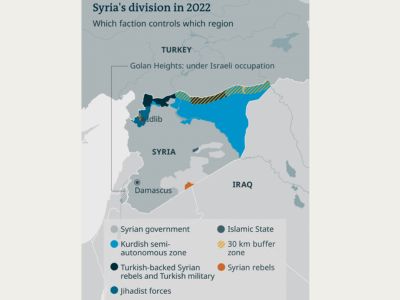
Re-Eruption of Civil War
In 2020, Turkey and Russia brokered a ceasefire to halt the Syrian government’s push to retake Idlib, though sporadic fighting continued. On November 27, HTS and its allies launched an offensive to counter government and Iran-backed militia attacks on civilians.
The Syrian government, weakened by years of war, sanctions, and internal struggles, failed to resist effectively. HTS rebels swiftly advanced, capturing Aleppo on November 30, followed by Hama and Homs within days.
Rebels in the southwest also took Deraa and Suweida, pushing toward Damascus. By early Sunday, HTS rebels entered Damascus, released detainees from Saydanaya prison, and declared Assad’s flight.
Assad fled the capital just before their arrival. Prime Minister Mohammed al-Jalali expressed willingness to cooperate with Syria’s new leadership, while HTS leader Jawlani instructed his forces to avoid official institutions, allowing them to remain under the prime minister’s authority until a formal handover.
End of Tyrant – Post Bashar Al Assad
Syrian rebels declared President Bashar al-Assad’s ouster after seizing Damascus, ending his 50-year rule and more than 13 years of civil war. This victory dealt a heavy blow to Assad’s allies, Russia and Iran.
Following the capture of the capital, rebels stormed Iran’s embassy and confirmed Assad’s departure from Damascus, while the army continued operations against remaining “terrorist groups.” The rebels also freed prisoners from Sednaya prison, marking the end of Assad’s oppressive rule.
They announced plans for a transitional governing body and the building of a united Syria. The collapse of Assad’s regime shifted regional power dynamics, with Israel welcoming the change but fearing Islamist factions’ rise.
Russia’s preoccupation with Ukraine limited its ability to intervene. Assad’s whereabouts became uncertain after a flight departure from Damascus, fueling speculations.
Prime Minister Mohammad Ghazi al-Jalali called for free elections, signaling a move toward Syria’s post-Assad future. The Syrian civil war, which began in 2011, had drawn in global powers, created opportunities for extremists, and displaced millions.
With Assad gone, Syria faces an uncertain future, balancing internal and external challenges while working toward reconstruction.
Chances of Smooth Transition
The rapid events in Syria have shocked Arab capitals, raising fears of regional instability. Years of war have devastated the country, with cities reduced to rubble, hundreds of thousands of lives lost, and millions of refugees. Stabilizing western Syria, now captured by rebels, is crucial.
Western governments face the challenge of engaging with a new administration influenced by Hayat Tahrir al-Sham (HTS), a global terrorist group. The U.S. has confirmed its presence in eastern Syria to prevent the Islamic State’s resurgence.
Experts believe Syria’s transition will depend on maintaining order, with rebuilding requiring the lifting of sanctions and cooperation from Europe and the U.S. Despite HTS’s power, many Syrians fear strict Islamist rule and reprisals.
Regional powers like the UAE and Egypt view HTS as a threat and are likely to resist its influence. Anwar Gargash from the UAE highlighted concerns about extremism, instability, and Assad’s political failures. The future challenge will be navigating Syria’s transition while balancing competing interests and ensuring long-term stability.












LEAVE A COMMENT