
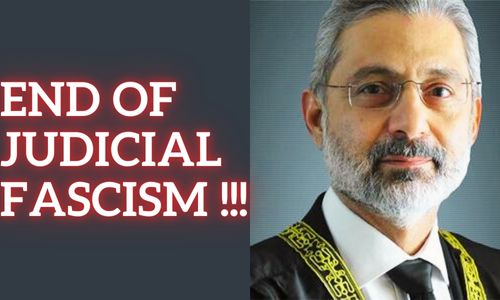
End of Judicial Fascism
Qazi Faez Isa retired from his position as the Chief Justice of Pakistan (CJP) on October 25, 2024. He was succeeded by Justice Yahya Afridi After his retirement, Justice Isa traveled to Istanbul with his wife. His tenure as CJP was marked by several landmark rulings and a commitment to judicial transparency.
Justice Isa’s notable rulings include declaring the execution of former Prime Minister Zulfikar Ali Bhutto illegal and upholding the conviction of former President Pervez Musharraf in a high treason case. He also presided over the Faizabad dharna case and chaired the Memogate and Quetta commission investigations
Overview
Qazi Faez Isa served as the 29th Chief Justice of Pakistan from September 17, 2023, to October 25, 2024. His tenure was marked by several significant rulings and efforts to promote judicial transparency and independence but on the same time filled with different controversies and disputes. Here are some key highlights:
Notable Rulings
- Zulfikar Ali Bhutto Case: Declared the execution of former Prime Minister Zulfikar Ali Bhutto as illegal.
- Pervez Musharraf High Treason Case: Upheld the conviction of former President Pervez Musharraf.
- Faizabad Dharna Case: Emphasized the importance of constitutional rights to assembly while balancing state responsibilities.
- Election Commission of Pakistan (ECP) Case: Supported the ECP’s decision to nullify the PTI’s intra-party elections.
- Reserved Seats Case: Partially dissented in the reserved seats case of the PTI and Sunni Ittehad Council.
Judicial Reforms
- Live Broadcasts: Initiated live broadcasts of public interest cases, enhancing transparency.
- Performance Evaluations: Introduced annual performance evaluations for High Court Judges by the Judicial Commission.
Contributions to Balochistan
- Revitalizing the Judiciary: Played a pivotal role in revitalizing the High Court in Balochistan.
- Education and Wildlife Preservation: Ensured the smooth operation of Balochistan’s education system and wildlife preservation efforts.
Personal Legacy
- Commitment to Fundamental Rights: Advocated for women’s rights and fundamental rights throughout his tenure.
- Farewell Address: In his farewell address, he advised the incoming Chief Justice Yahya Afridi to be careful while delivering justice.
Justice Isa’s tenure was not without controversy, as he faced backlash over some of his rulings and faced allegations of election interference4. However, his commitment to judicial transparency and independence left a lasting impact on Pakistan’s judiciary.
Controversies and Disputes
Qazi Faez Isa’s tenure as Chief Justice of Pakistan was marked by several controversial decisions that stirred social and political turmoil:
Faizabad Dharna Case: His ruling emphasized the importance of constitutional rights to assembly while balancing state responsibilities. This decision was met with mixed reactions, with some praising it for upholding democratic principles and others criticizing it for not being stringent enough1.
Election Commission of Pakistan (ECP) Case: Supporting the ECP’s decision to nullify the PTI’s intra-party elections proved controversial, as some perceived it as an attempt to undermine the political party.
26th Amendment and Constitutional Court: His support for the 26th Amendment and the idea of a Constitutional Court led to debates about the balance of power between the judiciary and other state organs.
Intra-Party Elections: Justice Isa dismissed PTI’s review petition challenging the Election Commission of Pakistan’s (ECP) decision regarding its intra-party elections. PTI perceived this decision as an attempt to undermine the party’s internal democratic processes.
Article 63A Bench Formation: Justice Isa rejected PTI’s objections to the bench formed to hear the review petition on Article 63A, which deals with disqualifying lawmakers who defy party policies. PTI argued that the bench was improperly constituted, but Justice Isa deemed these claims baseless and dismissed them.
Reserved Seats Case: Justice Isa partially dissented in the reserved seats case involving PTI and the Sunni Ittehad Council. Observers viewed this decision as controversial, adding to the tensions between the judiciary and PTI.
Administrative Decisions: Some judges criticized his administrative decisions, including the formation of benches and handling of suo motu cases, as being unilateral and lacking transparency. This led to accusations of bias and favouritism.
Farewell Reference: The farewell reference for Justice Isa highlighted the divisions within the judiciary. Several senior judges, including Justice Mansoor Ali Shah, Justice Munib Akhtar, and Justice Ayesha Malik, chose to skip the event, citing concerns over Justice Isa’s leadership and his handling of judicial matters
Human Rights Violations: There were claims that Justice Isa did not adequately address ongoing human rights abuses, particularly in conflict zones and areas with significant military presence.
Illegal Abductions: Reports of enforced disappearances and illegal abductions by state and non-state actors were a major concern. Critics argue that Justice Isa did not take sufficient action to investigate or hold accountable those responsible for these abductions.
Negligence over Letter by High Court Judges: Justice Qazi Faez Isa’s reaction to the letter from the Islamabad High Court (IHC) judges, which accused intelligence agencies of interfering in judicial matters, was significant but also highlighted his limitations in taking decisive action. Despite the strong statements and the full court meeting, there was criticism that Justice Isa did not take immediate and concrete actions to address the allegations.
This perceived inaction led to frustration among some judges and legal experts. The aftermath of these events included increased scrutiny of the judiciary and its relationship with intelligence agencies, as well as ongoing debates about judicial independence and accountability.
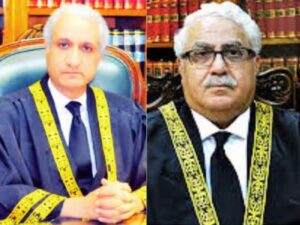
Resignations of Judges: The resignations of Justice Mazahar Ali Akbar Naqvi and Justice Ijaz Ul Ahsan were significant events that highlighted the divisions within the judiciary during Justice Qazi Faez Isa’s tenure as Chief Justice of Pakistan. Justice Naqvi resigned on January 10, 2024, amid allegations of misconduct by Faez Isa, including amassing wealth beyond his resources. His resignation came as the Supreme Judicial Council (SJC) was hearing a reference against him. Naqvi cited the public knowledge of the circumstances and considerations of due process as reasons for his resignation.
Justice Ahsan, who was next in line to become the Chief Justice of Pakistan, resigned prematurely on January 11, 2024 due to the conduct of non cooperation by Faez Isa with him. His resignation followed closely after Justice Naqvi’s departure and raised questions about the reasons behind his untimely exit. Analysts speculated that anticipation of facing misconduct references might have influenced Ahsan to resign.
These resignations underscored the tensions and controversies within the Supreme Court, particularly during Justice Isa’s tenure. The judiciary faced significant scrutiny and challenges, reflecting the broader issues of judicial independence and accountability in Pakistan.
These decisions reflect Justice Isa’s commitment to judicial transparency and independence, but they also highlight the challenges and controversies that come with such a high-profile role.
Aftermaths
Several controversies marked Justice Qazi Faez Isa’s tenure as Chief Justice of Pakistan, including allegations that he overlooked human rights violations and illegal abductions. Critics argue that his focus on certain high profile cases and judicial reforms led to a neglect of pressing human rights issues.
- Judicial Division: His perceived neglect of these issues contributed to divisions within the judiciary, with some judges and legal experts criticizing his priorities and approach.
- Public Outcry: Human rights organizations and activists expressed disappointment and frustration over the lack of judicial intervention in addressing these violations.
- Political Backlash: The allegations of neglect fueled political tensions, with opposition parties using these issues to criticize the judiciary and the government.
Masses and Bar’s Reception
The retirement of Justice Qazi Faez Isa as Chief Justice of Pakistan has indeed sparked positive sentiments among certain segments of the public and the legal community. Here are some key points:
Public Sentiments
- Perceived Bias: Some members of the public believe that Justice Isa’s decisions were biased, particularly those involving the Pakistan Tehreek-e-Insaf (PTI). This perception has led to criticism and distrust in his judicial impartiality.
- Controversial Rulings: His rulings on high-profile cases, such as the Faizabad dharna case, the high treason case against Pervez Musharraf, and the case regarding the intra-party elections of Pakistan Tehreek-e-Insaf, which cost them their political emblem prior to the general elections, have been polarizing. Critics argue that political motivations drove these decisions and that they did not serve the interests of justice.
Bar Councils’ Reactions
- Judicial Independence: Some bar councils and legal experts have expressed concerns about Justice Isa’s approach to judicial independence. They argue that his decisions and administrative actions created divisions within the judiciary and undermined its credibility.
- Lack of Consensus: The absence of several senior judges, including Justice Mansoor Ali Shah, Justice Muneeb Akhtar, and Justice Ayesha Malik, from his farewell reference underscored the judiciary’s lack of consensus and unity during his tenure.
These negative sentiments reflect the broader challenges and controversies that marked Justice Isa’s tenure as Chief Justice. Upon his retirement, many bar councils across Pakistan, along with Pakistan Tehreek-e-Insaf, marked October 26 as a “Day of Deliverance.”












LEAVE A COMMENT