
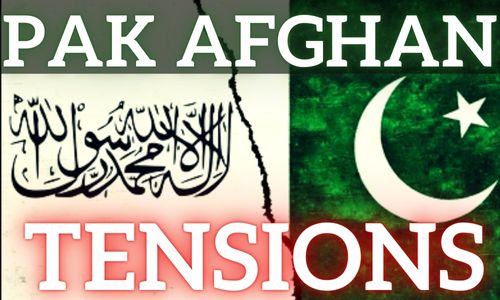
Pak Afghan Tensions
The relationship between Pakistan and Afghanistan has long been marked by a complex blend of shared history and persistent conflict. Both nations share deep cultural, ethnic, and religious ties, yet their bilateral relationship remains fraught with mistrust and disputes. From historical boundary disagreements to contemporary issues of cross-border terrorism and trade disputes, the tensions between Pakistan and Afghanistan significantly impact South Asia’s stability.
To understand the challenges and opportunities in their relationship, it is essential to delve into the historical roots of their conflicts, explore their contemporary dynamics, and assess potential paths toward peaceful coexistence.
Historical Roots of Tensions
The Durand Line Dispute
The Durand Line, a 2,640-kilometer border demarcated in 1893 by British India, remains a contentious issue. While Pakistan recognizes it as an international boundary, Afghanistan has consistently disputed its legitimacy, arguing that it was imposed under duress during colonial rule. This disagreement fuels ongoing border tensions and complicates efforts for lasting peace.
Impact of the Soviet-Afghan War
The Soviet invasion of Afghanistan in 1979 brought millions of Afghan refugees into Pakistan, straining resources and fostering the growth of militant groups. This era also saw Pakistan’s intelligence agency, the ISI, supporting various factions in Afghanistan, laying the groundwork for future mistrust between the two neighbors.
Post-9/11 Developments
U.S. Intervention in Afghanistan
The post-9/11 U.S. intervention radically altered the geopolitical landscape. Pakistan became a key ally in the “War on Terror,” yet its relationship with Afghanistan grew more strained due to allegations of harboring insurgent groups.
Emergence of the Taliban
As the Taliban regained power in 2021, Pakistan found itself navigating a precarious situation. While the Taliban’s return brought some strategic alignment, it also raised fears of cross-border militancy and the resurgence of the Tehrik-i-Taliban Pakistan (TTP).
Contemporary Issues in Pakistan-Afghanistan Relations
Cross-Border Terrorism
Both nations accuse each other of harboring and supporting militants. Afghanistan claims that Pakistan shelters Taliban factions, while Pakistan blames Afghanistan for providing a haven to the TTP. These mutual allegations exacerbate tensions and hinder collaboration on regional security.
Refugee Repatriation Challenges
Pakistan hosts millions of Afghan refugees, many of whom fled during the Soviet invasion and subsequent conflicts. Efforts to repatriate these refugees are often hindered by humanitarian concerns, with international organizations urging Pakistan to adopt more humane policies.
Economic and Trade Dynamics
Despite geographical proximity, trade between Pakistan and Afghanistan is limited due to security issues and political mistrust. Reviving trade routes and improving economic ties could be a game-changer for both countries, but sustained efforts are needed to address underlying conflicts.
Influence of External Powers
Role of the United States
The U.S. continues to exert significant influence in the region, especially in shaping Afghanistan’s future. However, its withdrawal has left a power vacuum that complicates Pakistan-Afghanistan relations.
China’s Involvement
China’s interest in stabilizing the region stems from its Belt and Road Initiative (BRI). By investing in Afghanistan’s infrastructure and mediating between Pakistan and Afghanistan, China plays a pivotal role in fostering regional peace.
India’s Strategic Interests
India’s involvement in Afghanistan further complicates the situation. Pakistan perceives India’s presence in Afghanistan as a strategic threat, adding another layer of tension to an already fragile relationship.
Humanitarian and Social Impacts
Refugee Dynamics Post-Taliban Takeover
The Taliban’s return has prompted a fresh wave of Afghan refugees into Pakistan, exacerbating the already significant burden of hosting one of the world’s largest refugee populations. Pakistan faces the dual challenge of addressing humanitarian needs while managing its own economic constraints.
Rights of Ethnic Pashtuns Across Borders
The Pashtun population, which straddles the Pakistan-Afghanistan border, faces unique challenges. Issues such as restricted movement, cultural marginalization, and suspicion of involvement in militant activities further complicate the humanitarian landscape.
Civilian Casualties from Cross-Border Skirmishes
Frequent military clashes along the border have taken a toll on civilian lives. Efforts to create safe zones or enforce ceasefires are often undermined by deep-seated mistrust, leaving communities in a perpetual state of fear and instability.
Economic Impact of Tensions
Disruption of Trade Routes
The strained relationship has led to frequent closures of key trade routes, such as the Torkham and Chaman border crossings. These disruptions not only affect bilateral trade but also impact regional commerce, depriving both nations of economic opportunities.
Lost Opportunities for Economic Cooperation
Despite their proximity, Pakistan and Afghanistan have failed to capitalize on their potential for economic collaboration. Joint initiatives in energy, agriculture, and infrastructure could transform the region, but political instability and mutual distrust remain major obstacles.
Cost of Military Expenditures
Both nations allocate significant portions of their budgets to defense, diverting resources away from development projects. This arms race not only deepens poverty but also perpetuates the cycle of conflict.
Taliban’s Return to Power in Afghanistan
Implications for Pakistan
The Taliban’s resurgence has created a mixed bag of opportunities and challenges for Pakistan. On one hand, Pakistan expected the Taliban’s return to provide a stable and friendly government in Kabul. However, the reality has been far more complicated. Increased border skirmishes, the rise in extremist activities, and a lack of decisive cooperation on cross-border security issues have heightened tensions.
Shifts in Regional Alliances
The Taliban’s rise has also altered regional alliances. While Pakistan was once seen as a key influencer in Afghanistan, the Taliban’s unpredictability has led Islamabad to seek broader regional partnerships, including closer ties with China and Russia, to counterbalance uncertainties.
Security Challenges
Activities of Tehrik-i-Taliban Pakistan (TTP)
One of the most pressing concerns for Pakistan is the resurgence of the TTP, a militant group responsible for numerous attacks within Pakistan. With alleged sanctuaries in Afghanistan, the TTP has gained strength, prompting Pakistan to escalate military operations and diplomatic efforts to address the threat.
Increased Insurgencies Along the Durand Line
The porous Durand Line has become a hotspot for insurgent activities. Frequent clashes between border forces and militant infiltrations disrupt daily life and weaken bilateral relations.
Pakistan’s Military Operations
In response to these threats, Pakistan has launched multiple military campaigns along its western border. While these operations have yielded some success in disrupting militant networks, they often strain relations with Afghanistan, which views these actions as a breach of sovereignty.
Pakistan’s Airstrikes on Afghanistan
Since the Taliban returned to power in Afghanistan in 2021, Pakistan has carried out several airstrikes targeting suspected Tehreek-e-Taliban Pakistan (TTP) hideouts in Afghanistan. The most notable attacks include:
- March 2024: Pakistan launched airstrikes in Khost and Paktika provinces, targeting TTP hideouts.
- December 2024: Pakistan conducted airstrikes in the Barmal district of Paktika province, resulting in the deaths of 46 civilians, including women and children.
These airstrikes have significantly strained relations between Pakistan and Afghanistan, with both sides accusing each other of harboring militants and carrying out cross-border attacks.
On December 24, 2024, Pakistan launched airstrikes on Taliban bases in Afghanistan’s Paktika province. The strikes targeted suspected hideouts of the Tehreek-e-Taliban Pakistan (TTP) and resulted in significant casualties. Reports indicate that at least 46 people were killed, including women and children. The airstrikes caused widespread destruction in the Barmal district, with several villages, including Murg Bazaar, being heavily affected.
The Taliban’s Ministry of Defence condemned the attack, calling it a violation of international principles and an act of aggression. They have vowed to retaliate, emphasizing their right to defend their land and sovereignty. The situation has further escalated tensions between Pakistan and Afghanistan, with both sides blaming each other for harboring militants and carrying out cross-border attacks. It’s a complex and volatile situation with significant implications for regional stability.
Reasons of Airstrike
Pakistan launched airstrikes on Afghanistan due to the presence of Tehreek-e-Taliban Pakistan (TTP) militants in the region. Pakistan accuses the Afghan Taliban of sheltering these militants, who have been responsible for a surge in attacks on Pakistani forces. The airstrikes targeted suspected TTP hideouts in Paktika province, resulting in significant casualties, including civilians.
The situation has escalated tensions between Pakistan and Afghanistan, with both sides blaming each other for harboring militants and carrying out cross-border attacks. It’s a complex and volatile situation with significant implications for regional stability.
Afghan Reaction
Afghanistan has strongly condemned the recent Pakistani airstrikes in Paktika province. The Taliban’s Ministry of Defence called the attacks a violation of international principles and an act of aggression, vowing to retaliate. Former Afghan President Hamid Karzai also condemned the airstrikes, describing them as a blatant aggression and a violation of Afghanistan’s sovereignty. The Ministry of Foreign Affairs summoned Pakistan’s chargé d’affaires in Kabul to deliver a formal protest note, warning of serious consequences.
The situation has further strained relations between the two countries, with both sides accusing each other of harboring militants and carrying out cross-border attacks. It’s a tense and volatile situation with significant implications for regional stability.
Efforts for Diplomacy and Resolution
Bilateral Talks and Agreements
Periodic dialogues between Pakistani and Afghan officials have shown glimpses of hope. Agreements on trade, border management, and intelligence sharing are steps in the right direction, though implementation remains a challenge.
Mediation Efforts by External Countries
Countries like China, Qatar, and Turkey have played pivotal roles in facilitating dialogue between Pakistan and Afghanistan. These mediators aim to create an environment conducive to sustainable peace.
Role of International Organizations
The United Nations and other international bodies continue to advocate for conflict resolution through diplomatic channels. Initiatives focused on humanitarian aid, refugee support, and economic development can serve as confidence-building measures.
Future Prospects for Pakistan-Afghanistan Relations
Potential Areas for Collaboration
There is significant potential for cooperation in areas such as counter-terrorism, trade, and infrastructure development. Establishing trust through small, actionable agreements could pave the way for broader collaboration.
Risks of Continued Tension
If current tensions persist, both nations risk deepening instability, economic decline, and isolation from global opportunities. The ongoing conflict also threatens to spill over into neighboring regions, exacerbating global security challenges.
Recommendations for Sustainable Peace
- Establishing permanent border management systems
- Promoting people-to-people connections to rebuild trust
- Strengthening multilateral initiatives for regional stability
The tensions between Pakistan and Afghanistan are deeply rooted in history, politics, and regional geopolitics. While challenges abound, there are ample opportunities for collaboration and peace. Addressing mutual concerns through dialogue, fostering economic ties, and involving regional stakeholders can help transform their relationship from one of conflict to cooperation.
The road to lasting peace will not be easy, but the stakes are too high to ignore. Both nations must prioritize the welfare of their people and the stability of the region to move toward a brighter future.








LEAVE A COMMENT