
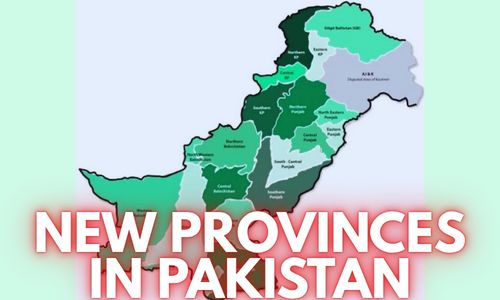
New Provinces in Pakistan
The debate over creating new provinces in Pakistan has intensified as the country faces one of the most difficult economic periods in its history. Rising inflation, persistent unemployment, declining industrial growth, heavy debt obligations, and increasing poverty have raised a fundamental question: Should Pakistan create new administrative provinces while struggling with a fragile economy, or should national resources be directed toward economic recovery first?
We examine the constitutional, administrative, economic, and political dimensions of the issue while evaluating whether new provinces can realistically improve governance and reduce poverty or whether they may place an additional burden on already constrained public finances.
Pakistan’s Economic Crisis: A Nation Under Financial Pressure
Pakistan’s economy has experienced repeated cycles of instability over the past decade. Several interconnected challenges have weakened economic growth:
- High inflation reducing purchasing power.
- Large fiscal deficits increasing government borrowing.
- Growing external debt and debt servicing obligations.
- Persistent trade imbalance due to higher imports than exports.
- Currency depreciation increasing import costs.
- Energy shortages and high electricity tariffs affecting industries.
- Slow industrial growth leading to unemployment.
- Declining foreign investment because of economic uncertainty.
These factors collectively contribute to slower GDP growth and reduced employment opportunities across both urban and rural Pakistan.
Pakistan’s Rising Poverty Rate
One of the gravest consequences of prolonged economic instability is the increase in poverty.
Millions of households struggle with:
- Rising food prices
- Higher transportation costs
- Expensive healthcare
- Limited educational opportunities
- Reduced employment prospects
- Declining real wages
Rural communities remain particularly vulnerable because agriculture, their primary source of income, has been affected by rising input costs, water shortages, and fluctuating market prices.
Urban poverty has also increased as inflation continues to erode household incomes.
What Is the Proposal for New Provinces?
Pakistan currently consists of four provinces:
- Punjab
- Sindh
- Khyber Pakhtunkhwa
- Balochistan
There have been recurring proposals to establish additional provinces, including:
- South Punjab
- Hazara Province
- Bahawalpur Province
- Karachi Province
- Potohar Province
- Former FATA administrative restructuring
Supporters argue that smaller administrative units can improve governance, while opponents question the timing and financial feasibility.
Economic Challenges of Creating New Provinces
While administrative benefits are frequently discussed, creating a new province requires substantial financial resources. Pakistan has long debated the creation of new provinces to improve governance, ensure equitable resource distribution, and address regional grievances. While proponents argue that smaller administrative units can deliver better public services, critics contend that introducing new provinces at a time of economic instability and high poverty could instead create new opportunities for corruption and place additional strain on public finances.
1. Expansion of Government Means Expansion of Bureaucracy
Each new province requires an entirely new government structure, including:
- Governor House
- Chief Minister Secretariat
- Provincial Assembly
- High Court
- Provincial Police Headquarters
- Civil Secretariat
- Provincial Departments
- Public Service Commission
- Election infrastructure
Establishing these institutions requires billions of rupees in infrastructure, salaries, vehicles, residences, and recurring administrative expenses.
2. More Political Offices, More Patronage
Every new province creates hundreds or thousands of new political and bureaucratic positions, including:
- Ministers
- Advisors
- Parliamentary Secretaries
- Secretaries
- Commissioners
- Deputy Commissioners
- Additional government employees
Critics argue that this expansion may increase political appointments based on loyalty rather than merit, leading to:
- Nepotism
- Political favoritism
- Increased discretionary spending
- Greater opportunities for rent-seeking
3. Increased Development Funds Can Mean Increased Leakages
Each provincial government receives development budgets.
Without strong accountability mechanisms, these budgets may become vulnerable to:
- Inflated contracts
- Ghost projects
- Fake procurement
- Kickbacks
- Misappropriation of public funds
Pakistan has historically faced governance challenges at multiple administrative levels, and simply creating additional provinces does not automatically improve financial oversight.
4. Duplication of Administrative Functions
Instead of one provincial department, multiple provinces would each require separate departments for:
- Education
- Health
- Agriculture
- Finance
- Local Government
- Revenue
- Excise
- Industries
This duplication increases operational costs and can reduce efficiency if not accompanied by administrative reforms.
5. Rising Pension and Salary Burden
Pakistan already allocates a significant share of its budget to:
- Government salaries
- Pension liabilities
- Administrative expenses
Creating additional provinces would likely increase long-term financial commitments, leaving fewer resources for:
- Healthcare
- Education
- Poverty alleviation
- Infrastructure development
6. Weak Accountability Can Multiply Corruption Risks
If oversight institutions remain weak, more provincial governments may mean:
- More procurement contracts
- More licensing authorities
- More land administration offices
- More regulatory bodies
Without improvements in transparency, digital governance, auditing, and independent accountability, corruption risks could expand alongside the size of government.
7. Existing Provinces Already Face Governance Challenges
Many governance experts argue that Pakistan should first improve the performance of existing provinces by focusing on:
- Digital governance
- Merit-based recruitment
- Independent accountability institutions
- Local government empowerment
- Transparent procurement systems
If these issues remain unresolved, merely increasing the number of provinces may not improve public service delivery.
8. Economic Timing Matters
Pakistan has faced recurring challenges including:
- High inflation
- Fiscal deficits
- Public debt
- Currency depreciation
- Rising poverty
- Energy-sector circular debt
In such an environment, critics argue that allocating substantial funds to establish new provincial administrations could divert resources from more immediate priorities such as:
- Job creation
- Social protection
- Energy reforms
- Education
- Healthcare
Recurring Administrative Expenses
Beyond initial infrastructure, provinces incur ongoing expenditures including:
- Salaries
- Pensions
- Utilities
- Security
- Vehicle fleets
- Office maintenance
- Information technology systems
- Public administration
These recurring costs could place additional pressure on an already constrained fiscal framework.
Would New Provinces Reduce Poverty?
Creating a province alone does not automatically reduce poverty.
Poverty reduction depends primarily on:
- Economic growth
- Job creation
- Industrial expansion
- Agricultural productivity
- Investment
- Education
- Healthcare
- Infrastructure
- Business confidence
Without sustained economic reforms, administrative restructuring may have only a limited direct impact on poverty.
The Constitutional Process for Creating New Provinces
The Constitution of Pakistan provides a legal framework for altering provincial boundaries. Such changes require broad political consensus and constitutional procedures, including parliamentary approval under the relevant constitutional provisions.
Because provincial boundaries affect representation, administration, and resource distribution, creating a new province generally requires significant agreement among political stakeholders rather than a simple executive decision.
Arguments Against Creating New Provinces
Critics argue that timing is critical.
Current economic challenges include:
- Budget deficits
- Debt servicing
- Inflation
- Fiscal constraints
Creating new provinces may increase public expenditure before the economy has stabilized.
Opponents argue that available resources should instead prioritize:
- Employment generation
- Energy reforms
- Export growth
- Education
- Healthcare
- Poverty alleviation
- Infrastructure modernization
Alternative Governance Reforms Without Creating New Provinces
Several governance improvements can occur without immediate provincial restructuring.
Strengthening Local Governments
Empowering district governments can improve:
- Municipal services
- Waste management
- Water supply
- Local infrastructure
- Community development
Fiscal Decentralization
Allocating greater financial authority to districts may improve service delivery while avoiding the administrative costs associated with creating entirely new provinces.
Digital Governance
Expanding digital public services can reduce bureaucracy and improve transparency through:
- Online taxation
- Digital land records
- Electronic licensing
- E-governance portals
Administrative Reorganization
Some regional concerns may be addressed by creating additional administrative divisions, districts, or specialized development authorities rather than establishing new provinces.
Can Economic Growth and New Provinces Coexist?
Administrative reforms and economic reforms are not necessarily mutually exclusive. However, sequencing matters.
A stronger economy provides:
- Higher tax revenues
- Greater fiscal space
- Increased investment
- Better infrastructure financing
These conditions make institutional expansion more financially sustainable.
Conversely, implementing large-scale administrative changes during periods of severe fiscal stress may require difficult trade-offs in public spending.
The Role of Political Consensus
The creation of new provinces is ultimately both a constitutional and political issue. Sustainable reforms require:
- Broad parliamentary agreement
- Provincial consultation
- Transparent financial planning
- Public participation
- Institutional preparedness
Without consensus, administrative restructuring risks becoming politically contentious rather than a mechanism for improving governance.
Regional Equity and National Unity
One of the central objectives often cited by proponents is improving regional equity. Addressing disparities in development, infrastructure, education, healthcare, and employment remains an important national objective regardless of whether new provinces are created.
Policies that promote balanced development across all regions can strengthen national cohesion while improving economic opportunities for underserved communities.
Future Outlook
Pakistan faces a complex policy challenge. On one hand, demands for new provinces reflect concerns about governance, representation, and regional development. On the other hand, the country continues to confront inflation, fiscal pressures, debt obligations, and widespread economic hardship.
Any decision regarding provincial restructuring should be accompanied by comprehensive fiscal planning, institutional readiness, and long-term development strategies to ensure that governance reforms contribute meaningfully to improved public services and sustainable economic growth.
Conclusion
The debate over new provinces in Pakistan extends beyond administrative boundaries. It encompasses governance, constitutional law, fiscal sustainability, regional equity, and economic development. While smaller provinces may offer opportunities for improved administration and localized policymaking, they also involve substantial financial and institutional commitments whose chances are very thin due to the current hybrid regimes in place.
At a time when Pakistan faces significant economic challenges and elevated poverty levels, policymakers must carefully weigh the potential long-term governance benefits against the immediate fiscal implications. Ultimately, lasting improvements in living standards will depend not only on administrative structures but also on sustained economic reforms, productive investment, effective public institutions, and policies that generate employment and inclusive growth across all regions of the country.










LEAVE A COMMENT