
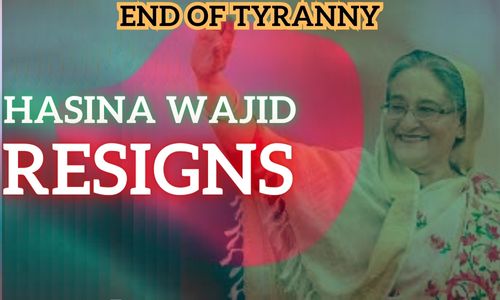
Hasina Wajid Resigns
In a surprising turn of events, Prime Minister Sheikh Hasina has resigned from her position and fled Bangladesh on an army helicopter. This unprecedented move has left the nation in a state of mixed emotions and speculation about the future political landscape of Bangladesh.
The Build-Up to the Resignation
Political Tensions and Public Discontent
Over the past few months, Bangladesh has been experiencing significant political unrest. Public discontent with the current government has been on the rise, fueled by allegations of corruption, economic instability, and human rights violations. The opposition parties have been increasingly vocal, organizing protests and rallies demanding the resignation of Prime Minister Sheikh Hasina. While the riots left around 200+ dead and hundreds injured.
Internal Conflicts within the Ruling Party
Reports suggest that internal conflicts within the ruling party, the Awami League, have also played a crucial role in the resignation. Key members of the party have been at odds over various policy decisions, leading to a fragmented leadership. The lack of cohesion within the party has weakened its ability to govern effectively, adding to the mounting pressure on Sheikh Hasina.
The Resignation and Escape
Timeline of Events
The resignation and escape of Prime Minister Sheikh Hasina were executed with meticulous planning. According to reliable sources, the sequence of events unfolded as follows:
- Early Morning Hours: In the early hours of the morning, Prime Minister Sheikh Hasina submitted her resignation letter to the President of Bangladesh.
- Immediate Departure: Following the resignation, Sheikh Hasina was escorted to an army helicopter stationed at a secure location.
- Fleeing the Country: The helicopter took off, heading to an undisclosed location outside Bangladesh.
Security Concerns and Implications
The use of an army helicopter for the escape indicates significant security concerns. It is speculated that the Prime Minister’s life was under threat, necessitating such drastic measures. This move has raised questions about the stability and safety of high-ranking officials in Bangladesh.
Reaction from the Opposition and the Public
Opposition’s Response
The opposition parties have hailed the resignation as a victory for democracy. Leaders of the opposition have expressed their relief and have called for immediate elections to ensure a smooth transition of power. They have also urged the international community to support Bangladesh during this critical period.
Public Sentiment
The public reaction has been mixed. While some citizens have welcomed the resignation, hoping for positive political change, others are concerned about the uncertainty and potential chaos that may follow. The resignation has sparked debates and discussions across various media platforms, with citizens expressing their views and concerns about the future of Bangladesh. Despite the fact Bangladesh Army has taken the control in hands and announced a national interim government but masses are also demanding resignation of the Army Cheif in the dire time.
International Reactions and Implications
Global Leaders’ Statements
International leaders have reacted to the news with caution. Statements from neighboring countries and global powers emphasize the importance of maintaining stability and ensuring a peaceful transition of power. The international community is closely monitoring the situation and is prepared to offer assistance if needed.
Impact on Bangladesh’s Foreign Relations
The resignation of Prime Minister Sheikh Hasina could have significant implications for Bangladesh’s foreign relations. The country has been a key player in regional politics, and any shift in leadership may affect existing alliances and agreements. In the coming days, countries will activate diplomatic channels to understand the new political dynamics in Bangladesh.
Future Prospects for Bangladesh
Potential Successors
With the resignation of Sheikh Hasina, attention now turns to potential successors. The Awami League and opposition parties are considering several prominent figures for leadership roles. The selection of a new leader will be crucial in determining the future direction of the country.
Path to Stability and Growth
Bangladesh faces significant challenges in the wake of the resignation. The new leadership will need to address the underlying issues that led to the current crisis, including political corruption, economic instability, and human rights concerns. Rebuilding public trust and ensuring a transparent and fair political process will be essential for achieving long-term stability and growth.
Conclusion
The resignation and escape of Prime Minister Sheikh Hasina mark a pivotal moment in Bangladesh’s history. The nation stands at a crossroads, with the potential for both significant challenges and opportunities. As the world watches closely, the actions of Bangladesh’s political leaders and the response of its citizens will shape the country’s future trajectory. The situation in Bangladesh remains fluid, with continuous updates expected as new developments unfold.












LEAVE A COMMENT