
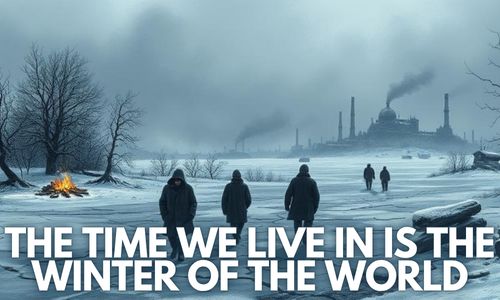
The Time We Live In Is The Winter of The World
ESSAY OUTLINE
1: Introduction
- Interpret the metaphor “winter of the world.”
Explain that “winter” symbolizes harshness, decay, stagnation, or crisis in human civilization. - Briefly describe contemporary global challenges.
Mention war, environmental crises, social fragmentation, moral decline, economic inequality, etc. - Thesis statement:
Argue that today’s era reflects a “winter of the world” because of widespread crises, erosion of values, and loss of hope—yet this “winter” also offers a chance to prepare for renewal.
2: Historical Context of the Metaphor
- Use of “winter” in literature and philosophy.
Shakespeare’s Richard III (“Now is the winter of our discontent”), cyclical views of history. - Past periods described as “winters”
Dark Ages, World Wars. - Expectation of cycles:
Harsh periods often precede renewal or rebirth (spring).
3: Evidence of “Winter” in Modern Times
A. Political and Social Instability
- Rise of authoritarianism.
- Erosion of democratic norms.
- Widespread social polarization and conflict.
B. Environmental Degradation
- Climate change impacts: fires, floods, storms.
- Biodiversity loss, pollution.
- Failure of international cooperation.
C. Economic Inequality and Injustice
- Wealth gap between rich and poor.
- Precarious work and unemployment.
- Exploitation and corporate greed.
D. Moral and Spiritual Crisis
- Decline in shared values.
- Rise of consumerism and materialism.
- Loss of empathy, community, and solidarity.
4: Psychological Impact on Individuals
- Increased anxiety, depression, and loneliness.
- Sense of hopelessness about the future.
- Alienation in a hyper-connected yet fragmented world.
5: Counterarguments and Hopeful Signs
- Human resilience in adversity.
- Technological progress and innovation.
- Global movements for justice, climate action, human rights.
- The idea that “winter” can be a time of preparation for renewal.
6: The Way Forward
- Rebuilding trust in institutions and among people.
- Fostering empathy, dialogue, and solidarity.
- Prioritizing sustainability and justice.
- Nurturing hope and collective responsibility for change.
7: Conclusion
- Restate thesis:
Our time resembles the “winter of the world,” marked by crisis and decline. - Emphasize the dual nature of winter:
Though harsh, winter is also necessary—a time to reflect, prepare, and renew. - Call to action:
Urge readers to recognize these challenges while working together to bring about a “spring” of renewal and hope.
ESSAY
We use the metaphor “winter of the world” to describe a period marked by harshness, decay, and crisis in human civilization. Just as winter represents the coldest and bleakest season, our time symbolizes stagnation and decline in many aspects of life. We see humanity losing its warmth, compassion, and vitality, leaving society in a state of moral and spiritual chill. By interpreting this metaphor, we acknowledge that our era resembles a time when growth halts, hope fades, and survival becomes difficult.
We face multiple, interlocking crises that reinforce the idea of a global “winter.” Wars and conflicts continue to devastate communities, displacing millions and causing immense suffering. Environmental crises such as climate change, deforestation, and biodiversity loss threaten the very foundations of life on Earth. Social fragmentation deepens as polarization, intolerance, and mistrust undermine communities. Moral decline emerges when consumerism, corruption, and selfishness replace shared values and empathy. Economic inequality widens the gap between rich and poor, leaving billions in poverty while a few amass vast wealth. By acknowledging these challenges, we understand why our time feels bleak and cold, much like winter.
Today’s era truly reflects the “winter of the world” because of widespread crises, the erosion of moral and social values, and the loss of collective hope. Yet, like the natural cycle of seasons, this “winter” also offers us an opportunity to reflect, prepare, and rebuild. If we recognize the severity of our challenges, we can lay the groundwork for renewal and a more hopeful future. We must use this difficult time not only to survive but to sow the seeds of positive change that can lead to a new spring for humanity.
Writers and philosophers have long used “winter” as a powerful metaphor to describe periods of hardship, decline, and discontent in human affairs. Shakespeare famously opens Richard III with the line “Now is the winter of our discontent,” using winter to represent political turmoil, betrayal, and suffering in England. Philosophers and historians often adopt cyclical views of history, recognizing that civilizations experience recurring phases of growth, decline, and renewal. They see winter as the inevitable low point in these cycles—a time when societies confront their deepest challenges and must decide how to respond. By drawing on these literary and philosophical traditions, we understand that describing our era as the “winter of the world” places it within a long-standing framework of human reflection on decline and crisis.
Historians have described several eras as “winters” in human history to illustrate times of darkness and difficulty. For example, the European “Dark Ages” followed the collapse of the Roman Empire, bringing political fragmentation, cultural decline, and social instability. Similarly, the World Wars in the 20th century plunged humanity into violence, destruction, and moral horror on a global scale. People at those times experienced loss, fear, and a collapse of the values they once trusted. By examining these historical “winters,” we see that societies have faced devastating crises before. They serve as reminders that our own challenges, though unique in form, continue a pattern of periods when humanity struggles against its own failures and limitations.
Despite their severity, historical “winters” also carry the promise of eventual renewal. Human societies have shown remarkable resilience by emerging from dark periods with fresh ideas, reforms, and cultural growth—just as spring inevitably follows winter. For example, the Renaissance grew out of the stagnation of the Middle Ages, bringing a revival of learning, art, and humanism. After World War II, many nations built new international institutions to promote peace and cooperation. By recognizing this cyclical pattern, we can view today’s “winter of the world” not only as a warning about our current crises but also as a call to prepare for a better future. We must understand that even the harshest times can inspire change, innovation, and collective renewal if we choose to respond wisely.
Governments around the world are embracing authoritarian practices that limit freedom and undermine human rights. Leaders consolidate power by suppressing dissent, controlling the media, and weakening checks and balances. Citizens witness their rights erode while fear and repression replace open debate. By tolerating authoritarianism, societies move further into the cold, harsh reality that the “winter” metaphor suggests.
Political institutions designed to serve the people face growing attacks and manipulation. Politicians ignore constitutional limits, undermine fair elections, and polarize voters for personal gain. Citizens lose faith in democracy as corruption, partisanship, and dishonesty become common. This erosion of democratic norms chills civic life and makes it harder to solve urgent problems together.
Societies are fracturing along lines of ideology, religion, race, and class. Media and online platforms amplify divisions, spreading anger and distrust. People retreat into echo chambers, demonize opponents, and refuse dialogue. These deep divisions weaken social bonds, making cooperation and compromise rare. As conflict spreads, the social “winter” grows colder and more threatening.
Climate change intensifies natural disasters that devastate communities. Fierce wildfires consume homes and forests. Floods destroy infrastructure and displace millions. Powerful storms leave cities in ruins. Governments and societies struggle to respond as these crises grow more frequent and severe. This environmental decline embodies the deadly, unrelenting chill of winter on a planetary scale.
Human activity is driving species to extinction at an alarming rate. Forests vanish, oceans fill with plastic, and air and water become toxic. We destroy the ecosystems that sustain us, leaving the Earth poorer and less resilient. By poisoning our own environment, we create a lifeless, barren world—like a winter that never ends.
Despite urgent warnings from scientists, nations fail to act decisively. Leaders prioritize short-term gains over long-term survival. International agreements falter as countries withdraw or ignore their promises. This failure to unite against a common threat shows humanity frozen in inaction, deepening the sense that we live in the winter of the world.
A small elite amasses unimaginable wealth while billions struggle to meet basic needs. Corporations and billionaires avoid taxes and exploit loopholes, leaving public services underfunded. People see opportunity vanish as inequality hardens into a permanent divide. This stark injustice creates social coldness, resentment, and despair.
Employers replace secure jobs with low-wage, unstable work. Workers face layoffs, reduced benefits, and the constant fear of losing income. Young people struggle to find meaningful careers despite investing in education. By forcing millions to live with uncertainty and anxiety, the economic system creates a harsh, wintry landscape of fear and insecurity.
Corporations prioritize profit over people and the planet. They cut corners, underpay workers, and lobby against regulations meant to protect the environment or public health. Consumers see their rights and choices shrink as monopolies tighten their grip. This exploitation mirrors the harshness of winter—where the strong survive by taking from the vulnerable.
Communities lose the moral frameworks that once held them together. People disagree on basic truths and principles. Cynicism replaces trust, and moral relativism weakens shared commitments to justice, honesty, and responsibility. Without common values, society drifts into a cold, disjointed state.
Advertising and popular culture encourage people to value possessions over purpose. The constant push to buy, own, and display wealth replaces deeper spiritual or ethical goals. Individuals measure worth by what they have rather than who they are. This obsession with material gain hollows out human connections, leaving society spiritually barren—like trees stripped bare in winter.
Modern life isolates people, even as technology connects them superficially. Neighbors no longer know each other, and communities break down. Individuals struggle to feel empathy for those who suffer, focusing instead on personal gain or survival. This loss of solidarity leaves people alone in a moral and emotional winter, unable to rely on one another for warmth or support.
People experience rising levels of anxiety, depression, and loneliness as they navigate the challenges of this “winter of the world.” Economic pressures, political instability, and environmental fears create constant stress. Individuals worry about losing jobs, affording housing, or surviving natural disasters. Social divisions and mistrust make it harder to form close, supportive relationships. Even in crowded cities or busy online spaces, people feel alone and disconnected. Mental health professionals report unprecedented numbers of patients seeking help, and many struggle without access to care. By fostering an environment of fear, uncertainty, and isolation, our era inflicts a deep psychological chill on countless lives.
Many people look to the future and see only darkness. Young people worry about inheriting a world ravaged by climate change, inequality, and political dysfunction. Workers see careers replaced by automation or unstable gig jobs. Communities feel powerless to stop corruption, violence, or environmental destruction. This pervasive sense of helplessness drains motivation and weakens collective will to improve society. People stop believing in progress or justice, accepting decline as inevitable. This loss of hope reflects the bleakness of winter—a season when growth ceases and survival feels like the only goal.
Modern technology connects people across vast distances instantly, but these connections often remain shallow and transactional. Social media replaces face-to-face conversation with curated images and polarized arguments. Algorithms feed users only what reinforces their beliefs, fragmenting public discourse. Despite constant notifications and endless content, individuals struggle to form genuine, trusting relationships. Many feel unseen, unheard, and misunderstood—even when surrounded by digital “friends.” This alienation mirrors the cold isolation of winter, where people withdraw into themselves, unable to find the warmth of true community or shared purpose.
Humans have always shown remarkable resilience when facing hardship. People adapt to changing circumstances, rebuild after disasters, and support one another through crises. Communities organize mutual aid networks during pandemics or natural disasters, demonstrating solidarity and compassion. Survivors of war, poverty, and oppression find ways to heal and create better lives for themselves and their families. By recognizing this resilience, we see that even in the “winter of the world,” humanity retains the capacity to endure, learn, and grow stronger. This adaptability offers hope that we can confront our current challenges and emerge with renewed purpose.
Despite the problems we face, technological advances continue to improve human life in many ways. Scientists develop renewable energy sources to fight climate change, while engineers design more efficient and sustainable systems. Medical researchers create vaccines and treatments that save millions of lives. Digital tools expand access to education and connect people across the globe. Innovators solve problems that once seemed insurmountable, showing that human ingenuity can counteract some of the harshness of our era. By investing in thoughtful, ethical innovation, societies can find ways to soften the metaphorical winter and prepare for a brighter future.
Across the world, people refuse to accept injustice and decline without a fight. Activists demand action on climate change, pressuring governments and corporations to reduce emissions and protect ecosystems. Movements for racial justice challenge discrimination and violence, seeking to build more equitable societies. Human rights defenders work to expose abuses and support vulnerable populations. These global efforts show that millions of people remain committed to creating a fairer, more sustainable, and more compassionate world. By joining and supporting these movements, individuals help turn the “winter” of crisis into a season of determined preparation for change.
The metaphor of winter doesn’t only represent decline and hardship—it also carries the promise of renewal. In nature, winter is a period of rest and preparation before the rebirth of spring. Seeds lie dormant, storing energy for future growth. Similarly, human societies can use this difficult time to reflect on failures, reconsider values, and plan new ways of living. Leaders, thinkers, and ordinary people can work to reform institutions, restore trust, and build solidarity. By viewing today’s crises as opportunities to prepare for renewal, we transform despair into hope. This perspective reminds us that even the coldest, darkest season can set the stage for new beginnings.
Societies must actively rebuild trust to overcome the “winter of the world.” Governments, corporations, and organizations need to act transparently and uphold their promises. Leaders must demonstrate integrity by prioritizing the common good over personal or partisan gain. Citizens should hold institutions accountable through civic participation and informed voting. At the same time, people must rebuild trust in one another by rejecting cynicism and embracing honesty in their daily interactions. Communities can strengthen bonds by encouraging cooperation, mutual respect, and shared responsibility. By restoring trust, societies lay the foundation for effective action and collective resilience against future crises.
Individuals and communities must cultivate empathy to bridge divides and heal conflicts. Schools, families, and media can promote understanding by encouraging people to listen to diverse perspectives and recognize shared humanity. Dialogue must replace shouting matches and insults, allowing opposing sides to find common ground and work toward solutions. Community organizations can bring people together through service projects, cultural exchanges, and public forums. By fostering solidarity, societies build networks of support that help people face hardship with dignity and compassion. Empathy and dialogue thaw the chill of polarization, helping society emerge from its metaphorical winter.
Policymakers and citizens must prioritize sustainability and justice to address the root causes of today’s crises. Governments can invest in renewable energy, protect natural resources, and enforce environmental regulations. Companies must adopt ethical practices that respect workers’ rights and reduce harm to the planet. Communities can support local, sustainable economies that balance profit with social responsibility. At the same time, societies must address inequality by ensuring fair wages, accessible education, and strong social safety nets. By prioritizing sustainability and justice, humanity can avoid repeating past mistakes and create a more balanced, equitable world ready to blossom into “spring.”
Individuals must reject fatalism and nurture hope by believing in their power to make a difference. Leaders, educators, and storytellers can inspire people by sharing examples of positive change and collective triumph. Communities can encourage volunteerism, civic engagement, and grassroots activism. By acknowledging that everyone has a role to play, societies cultivate a sense of shared purpose and responsibility. People can work together to solve problems, support the vulnerable, and build systems that serve all. Nurturing hope and collective responsibility transforms the dark, cold “winter” into a period of determined preparation for renewal and growth.
We must recognize that the era we live in truly resembles the “winter of the world,” marked by widespread crisis, moral decline, and deep uncertainty. Political instability, environmental destruction, economic inequality, and social fragmentation cast a cold, unwelcoming shadow over our lives. People feel alienated, hopeless, and overwhelmed by problems that seem too big to solve. By acknowledging this harsh reality, we confront the truth of our times instead of ignoring it. We accept that we live in a period of profound challenge and crisis that demands honest reflection and urgent action.
However, we must also remember that winter is not purely a time of death and decay—it is also necessary for growth and renewal. In nature, winter allows the soil to rest, seeds to germinate in secret, and life to prepare for the rebirth of spring. Similarly, our current crises give us an opportunity to reflect on our failures, question harmful systems, and reexamine our values. We can use this period of hardship to plan meaningful reforms, strengthen communities, and rebuild institutions. By understanding winter’s dual nature, we can transform despair into resolve, seeing it as an essential stage on the path to renewal.
I urge readers to recognize these challenges honestly while refusing to surrender to hopelessness. We must work together, across differences, to heal divisions and solve shared problems. Each of us can contribute by fostering empathy, supporting justice, protecting the environment, and demanding accountability from leaders and institutions. Let us embrace our collective responsibility to create change, nurturing hope even in the coldest, darkest season. By doing so, we prepare the ground for a “spring” of renewal—a time when our societies can flourish with greater compassion, sustainability, and solidarity. Let us commit today to building that better future together.












LEAVE A COMMENT