
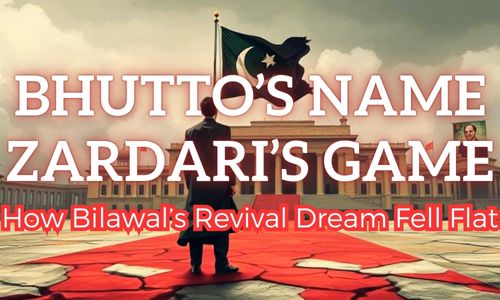
Bilawal vs. The System – The Broken Will & Broken Party
Benazir Bhutto’s assassination in 2007 forced the Pakistan Peoples Party (PPP) into a leadership crisis, shaking both the nation and the party she led. As grief swept the country, her son Bilawal Bhutto Zardari emerged as her chosen political heir. However, Asif Ali Zardari swiftly seized control of the PPP, sidelining Bilawal and consolidating power. Under Zardari’s command, the party lost its national prominence. Despite his legacy and charisma, Bilawal has failed to revive the PPP’s former influence. This article explores how Zardari took over the party and why Bilawal continues to struggle in restoring its past glory.
Benazir Bhutto’s Will and Bilawal’s Nomination
After Benazir Bhutto’s assassination, her handwritten political will surfaced, naming her son Bilawal Bhutto Zardari as her successor—a move symbolizing dynastic continuity in South Asian politics. At just 19 and studying at Oxford, Bilawal lacked political experience, so the will appointed Asif Ali Zardari as a temporary regent. Zardari, however, extended his role indefinitely. He revealed the will amid public mourning, proclaimed Bilawal as chairperson, and took control as co-chairman. In reality, Zardari ran the party, making key decisions while Bilawal remained a symbolic figure. The will’s intent faded as Zardari prioritized political control over its vision.
Asif Ali Zardari’s Strategic Entry
Zardari’s rise was no accident; he executed a deliberate plan using political instincts and survival tactics. After Benazir’s death, Pakistan was in turmoil—streets burned, people mourned, and a sympathy wave surged for the PPP. Zardari seized this moment precisely.
He positioned himself as the guardian of Benazir’s legacy and protector of her children, wrapping himself in grief and loyalty. He mastered the optics—weeping at rallies, invoking “Shaheed Rani,” and delivering emotional speeches—to claim political legitimacy.
Within days, he consolidated party control. The PPP’s central executive committee, full of seasoned politicians, backed him, some from loyalty to Benazir, others recognizing his rising power.
Zardari also delayed Bilawal’s political grooming, keeping him abroad instead of immersing him in Pakistan’s political trenches. This created a vacuum, which Zardari filled, entrenching his authority.
Through emotional appeals, power-brokering, and organizational maneuvering, Zardari established himself not as a caretaker but as the PPP’s de facto leader. By Bilawal’s return, the party bore Zardari’s imprint.
The Rise of the Zardari Doctrine
Once in control, Zardari embarked on a mission to reshape the PPP—not in line with Bhutto’s legacy, but according to his own vision. This shift came to be known among political circles as the “Zardari Doctrine”—a focus on pragmatism, patronage, and transactional politics rather than ideology, populism, or grassroots activism.
The PPP began drifting away from its traditional voter base: the poor, the working class, the peasants. Instead, under Zardari, the party became a vehicle for elite negotiations, power-sharing deals, and bureaucratic appointments. Gone were the fiery speeches about social justice, replaced with muted statements crafted for boardrooms and coalition partners.
Zardari also replaced or sidelined many of the old guard—those who had served Bhutto loyally—with newcomers who pledged allegiance to him personally. This included technocrats, bureaucrats, and controversial figures whose loyalty was to the chairman, not the cause. The ideological soul of PPP, once rooted in socialism and public welfare, began to erode.
Internally, decision-making became centralized. Party conventions, public engagement forums, and provincial meetings lost significance. All major decisions flowed from Zardari’s office, often without consultation. This made the PPP less of a democratic entity and more of a tightly controlled enterprise.
The result? Disillusionment. Many old supporters drifted away, while new voters failed to connect with the party’s unclear vision. The electoral decline of PPP in subsequent years can largely be attributed to this ideological shift. While Zardari ensured political survival and even managed to become President of Pakistan, it came at the cost of the party’s soul.
Role of Zardari’s Close Circle in Party Dynamics
**Precis (Active Voice):**
Zardari did not act alone. A close circle of advisers, loyalists, and power brokers surrounded him, strengthening his hold on the party. These individuals—wealthy, well-connected, and media-savvy—focused not on ideology but on political engineering.
They eroded internal party democracy, silencing dissent and sidelining veteran leaders who had fought alongside Zulfikar Ali Bhutto and Benazir. In their place, Zardari promoted business-minded dealmakers.
The inner circle weakened provincial structures, particularly in Punjab, where Karachi-based elites overshadowed local leaders. Only Sindh remained a stronghold, sustained by administrative control rather than popular support.
This setup constrained Bilawal. Zardari’s loyalists encircled him, resisting any reforms or new strategies. Even Bilawal’s speeches and public engagements reportedly required approval, ensuring Zardari’s dominance.
Over time, the PPP transformed into a party of survival, not vision. It lost its moral authority, narrative power, and political momentum.
Bilawal Bhutto’s Early Struggles
Bilawal Bhutto Zardari entered Pakistani politics bearing the weight of his family’s legacy, but his journey proved difficult from the start. Though he inherited the PPP chairmanship, real power remained with his father, Asif Ali Zardari. Bilawal’s early years confined him to scripted speeches and ceremonial roles, reducing him to a figurehead rather than a decisive leader.
His lack of political experience quickly showed. Foreign-educated and unfamiliar with grassroots politics, he struggled with weak Urdu, stiff public appearances, and underdeveloped political instincts. Pakistani voters, accustomed to fiery oratory and cultural fluency, often saw him as an out-of-touch elite.
Constant comparisons to his charismatic mother and grandfather further burdened him. The media dissected his every word, magnifying his mistakes. Inside the PPP, Zardari loyalists blocked his attempts to assert authority, leaving him frustrated and sidelined within his own party.
Electoral failures compounded his struggles. Under Bilawal’s nominal leadership, the PPP lost ground in Punjab, Balochistan, and KP, shrinking to a Sindh-based party sustained by administrative control rather than public support. These defeats weakened his credibility and cast doubt on his ability to revive the Bhutto legacy.
Despite flashes of potential—sharper speeches, progressive stances, and growing appeal among youth—Bilawal’s efforts have yet to spark a major resurgence. Without breaking free from his father’s grip and reforming the party’s structure, his political future remains uncertain.
The Disconnect Between PPP and Its Traditional Base
The Pakistan Peoples Party (PPP), once a champion of the masses under Zulfikar Ali Bhutto and Benazir Bhutto, gradually lost its grassroots connection under Asif Ali Zardari and later Bilawal Bhutto Zardari. Zardari shifted the party’s focus from mass mobilization to elite political dealings, sidelining the rural poor, laborers, and students who once formed its core.
As the party abandoned its historic slogans and welfare-driven agenda, voters in Punjab and Khyber Pakhtunkhwa began supporting PTI and PML-N. Even in Sindh, PPP retained control more due to weak opposition than genuine loyalty. Although Bilawal acknowledged the disconnect and promised to rebuild the base, he failed to implement meaningful reforms. PPP’s inability to modernize its message or re-engage the public continues to erode its national relevance.
Failure to Build a New Political Narrative
Bilawal Bhutto’s PPP fails to craft a compelling modern narrative for Pakistan’s young, digitally engaged voters. While the party champions progressive causes like gender equality and climate change, its messaging lacks consistency and substantive action.
Bilawal’s speeches on social justice and anti-corruption ring hollow against PPP’s poor governance record in Sindh, where crumbling healthcare, infrastructure, and corruption allegations expose a widening credibility gap. Unlike PTI’s anti-establishment appeal or PML-N’s development-focused branding, the PPP struggles to define its post-Benazir identity.
To revive the party, Bilawal must move beyond dynastic nostalgia and articulate a clear vision addressing economic struggles, youth unemployment, and education reform—backed by real policy, not just rhetoric. Without this shift, the PPP risks remaining trapped in its identity crisis.
PPP’s Weak Digital and Media Strategy
The PPP’s outdated political communication strategy fails to compete in Pakistan’s digital era. While rivals like PTI dominate social media with youth engagement and narrative control, Bilawal’s party struggles with weak online presence and reactive messaging.
PPP’s social media accounts merely post event updates and press statements, lacking interactive content or viral storytelling that resonates with young voters. Traditional media continues shaping the party’s narrative unchallenged, as PPP neglects to build its own digital ecosystem of influencers and rapid-response teams.
Meanwhile, PTI’s supporters aggressively defend their party online, turning social media into a decisive political battleground. PPP still relies on 1990s-era tactics – press conferences and newspaper coverage – while ignoring 70 million smartphone users.
To regain relevance, Bilawal must urgently invest in digital strategy: hiring tech-savvy teams, creating engaging content, training digital activists, and crafting narratives for the online generation. Without mastering digital politics, PPP risks permanent obsolescence.
Lack of Grassroots Mobilization
The PPP has lost its historic grassroots strength by abandoning the worker networks that once powered its mass mobilizations. Under Zardari’s leadership, the party centralized power, neglected local chapters, and prioritized electoral deals over people’s movements—causing widespread disillusionment among union leaders, student activists, and farmers’ groups.
Though Bilawal attempts to rebuild these connections, entrenched party elites resist organizational reforms that threaten their control. Years of neglect have eroded trust in former strongholds like Punjab and KP, where the PPP now lacks meaningful ground presence.
To survive, the party must urgently reinvest in grassroots rebuilding—reactivating student wings, re-engaging labor unions, and cultivating new local leadership. Without reviving this organizational backbone, no amount of rallies or rhetoric can restore the PPP’s fading relevance. Sustainable power demands reconnecting with the masses it once championed.
Reputation Damage from Corruption Allegations
Corruption scandals have crippled the PPP’s credibility, particularly during Asif Zardari’s era. Unproven but persistent allegations—from the “Mr. 10%” label to NAB investigations—cemented the party’s image as corrupt and nepotistic. These perceptions alienated urban middle-class voters who prioritize accountability.
Though Bilawal himself avoids scandal, he hesitates to fully disown the party’s tainted past. His defensive justifications undermine his reformist rhetoric, leaving young voters conflicted about supporting a fresh leader tied to old misconduct.
To recover, PPP must take concrete action: enforcing internal accountability, disclosing funding sources, sidelining compromised figures, and elevating trustworthy new leaders. Mere denials won’t suffice—only visible ethical reforms can rebuild its legitimacy. Bilawal must lead this cleanup decisively if he hopes to restore the party’s tarnished legacy.
Steps Bilawal Needs to Take to Bring Back PPP’s Glory
Rebuilding the PPP won’t be easy, but it’s far from impossible. Bilawal still holds the Bhutto name, which carries emotional weight. He has the charisma and potential to be a national leader—but potential alone isn’t enough. Here’s what he must do to bring back the party’s lost glory:
1. Establish True Independence from Zardari
Bilawal must break away from his father’s shadow—not with disrespect, but with purpose. He needs to assert his authority, make his own decisions, and promote a new generation of leaders loyal to him and the party’s ideology.
2. Rebuild the Party from the Ground Up
Invest in grassroots mobilization. Reactivate local chapters, engage with unions, student bodies, and marginalized communities. Hold internal elections to democratize the party structure and reconnect with the people.
3. Craft a Bold, Consistent Narrative
PPP needs a message for today’s Pakistan. Whether it’s economic justice, climate resilience, or digital inclusion—Bilawal must craft a story that resonates with the youth and urban middle class. Legacy alone won’t win elections anymore.
4. Embrace Digital Media
Build a modern digital strategy. Recruit influencers, launch interactive campaigns, and dominate social media with clear, consistent messaging. Establish a digital think tank that can counter political disinformation and promote the party’s values.
5. Prioritize Clean Governance and Reforms
Bilawal must introduce internal accountability mechanisms. Promote transparency, distance the party from corrupt figures, and practice what he preaches. Show voters that PPP has changed—and means business.
The fall of PPP from the heights of national power to a regional stronghold is a story of missed opportunities, strategic missteps, and internal power struggles. Asif Ali Zardari’s consolidation of power, though effective in the short term, distanced the party from its roots and alienated its core base. Bilawal Bhutto Zardari, despite carrying the most powerful political name in Pakistan’s history, has yet to chart an independent and impactful path forward.
Yet, all is not lost. With the right strategy, bold reforms, and a renewed connection to the people, Bilawal still has a chance to rewrite the party’s future. But it will take more than speeches and symbols—it will take action, sacrifice, and a clear break from the past.












LEAVE A COMMENT