
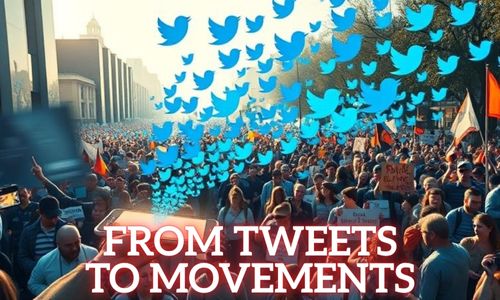
From Tweets to Movements
In the digital era, social media has evolved into a dominant force shaping political narratives, influencing public opinion, and redefining how political communication operates. From Twitter debates to Facebook campaigns, these platforms have become the new public square where political ideologies are contested, amplified, and reshaped. Understanding the intricate relationship between social media and political storytelling is crucial for grasping modern governance, democracy, and civic engagement.
The Rise of Social Media as a Political Arena
The last two decades have witnessed a dramatic shift in political communication. Traditional media—television, newspapers, and radio—once held a monopoly over information dissemination. However, the rise of social networking platforms such as Facebook, X (formerly Twitter), Instagram, and TikTok has democratized the flow of information.
Through these channels, politicians bypass traditional media filters and engage directly with voters. This direct interaction not only humanizes leaders but also allows them to control their narratives, set agendas, and respond instantly to crises. Social media platforms serve as powerful tools for persuasion, capable of mobilizing mass movements, influencing elections, and even sparking revolutions.
The Power of Algorithms in Political Storytelling
Behind every social media post lies a complex algorithm dictating who sees what. These algorithms prioritize engagement—likes, shares, and comments—often favoring emotionally charged or polarizing content.
This mechanism inadvertently amplifies ideological divisions, creating echo chambers where users encounter only opinions that mirror their beliefs. As a result, political polarization deepens, and factual discourse gets overshadowed by sensationalism.
Politicians and strategists have learned to manipulate algorithmic trends, using data-driven campaigns and targeted ads to influence specific voter demographics. This computational politics has revolutionized campaigning, making micro-targeting one of the most effective tools for narrative control.
Hashtag Activism and the Birth of Digital Movements
Social media has given birth to hashtag activism—a phenomenon where online campaigns evolve into global movements. From #ArabSpring to #BlackLivesMatter, these digital symbols have transcended borders, igniting social and political change.
Hashtags act as rallying cries, enabling people to organize, protest, and demand accountability. What once required street protests can now begin with a viral tweet or post. Social media thus becomes a digital battleground for justice and reform, where voices once silenced by censorship find amplification.
However, the same power that drives activism can be exploited for disinformation and propaganda, making it imperative to discern authenticity amidst viral narratives.
Influencers, Opinion Leaders, and the Politics of Personality
In the age of digital media, influencers and online personalities wield as much political power as traditional leaders. Millions follow them not just for lifestyle tips but for political opinions, endorsements, and commentaries.
These individuals often serve as informal opinion leaders, capable of shaping electoral outcomes through persuasive messaging. Political campaigns increasingly collaborate with digital influencers to expand reach and humanize policy discussions.
Yet, this fusion of entertainment and politics raises ethical questions: Where does information end and manipulation begin? The blurred lines between authenticity and agenda make it crucial to analyze the source and intent behind every viral post.
Disinformation, Fake News, and the Crisis of Credibility
Perhaps the most concerning consequence of social media’s political influence is the rise of disinformation. Fabricated news stories, manipulated videos, and deepfakes spread at unprecedented speeds, eroding public trust in legitimate journalism and institutions.
Foreign and domestic actors exploit these vulnerabilities to sow division and confusion. The infamous Cambridge Analytica scandal revealed how data misuse could manipulate voter psychology on a massive scale.
To counter this, governments, tech companies, and fact-checking organizations are investing in digital literacy and AI-based detection systems. However, the responsibility also lies with users—to verify before sharing and to question narratives rather than consume them passively.
Elections in the Age of Digital Propaganda
Modern elections are no longer fought solely on debate stages or at rallies—they are fought in the feeds and timelines of voters. Campaign strategies are increasingly driven by data analytics, psychographic profiling, and content marketing.
From memes to micro-videos, every piece of content is engineered to evoke emotion and action. Political advertisements on platforms like YouTube, Facebook, and TikTok are designed with precision targeting, ensuring messages reach the most receptive audiences.
This digital battleground has both empowered democracy and endangered it. While it encourages participation and awareness, it also exposes societies to manipulation and coordinated misinformation campaigns that distort electoral integrity.
Social Media and Public Opinion Formation
Social media doesn’t just reflect public opinion—it actively shapes it. Through curated feeds, viral trends, and user interactions, these platforms construct perceptions of reality.
Research shows that repeated exposure to certain narratives—regardless of factual accuracy—creates a “truth effect”, where people begin to accept information simply because it’s familiar. This cognitive bias has profound implications for policy support, candidate perception, and issue prioritization.
Thus, social media acts as both a mirror and a mold, simultaneously reflecting collective sentiment and sculpting it to fit algorithmic and ideological designs.
Regulating the Digital Political Sphere
As the political influence of social media intensifies, calls for regulation grow louder. Governments worldwide are enacting data privacy laws, transparency requirements, and content moderation frameworks to ensure ethical digital discourse.
However, the challenge lies in balancing free speech with accountability. Overregulation risks stifling dissent, while underregulation enables misinformation to flourish. The future of political communication depends on finding this delicate equilibrium—where digital freedom coexists with responsibility and truth.
The Future of Political Narratives in a Connected World
Looking ahead, the relationship between social media and politics will only deepen. Artificial intelligence, augmented reality, and real-time analytics are poised to make political messaging even more immersive and personalized.
Governments and citizens alike must navigate this evolving landscape with vigilance and critical awareness. The power of social media lies not only in its ability to spread information but also in its potential to empower or enslave thought.
Ultimately, the digital world has handed every user a microphone—and with it, the responsibility to use it wisely. The political narratives of tomorrow will be written not by a few elites, but by millions of connected voices shaping collective destiny.
Conclusion
Social media stands at the crossroads of democracy and technology—a force capable of both enlightenment and distortion. It redefines how citizens engage with power, how leaders craft their messages, and how nations perceive truth.
By understanding its mechanisms, responsibilities, and risks, societies can harness its potential for genuine democratic dialogue rather than division.









LEAVE A COMMENT