
St. Patrick’s Day
St. Patrick’s Day, also known as the Feast of St. Patrick, is a cultural and religious holiday celebrated annually on March 17th in honour of Saint Patrick, the most recognized patron saint of Ireland. The holiday is celebrated by the Irish and those of Irish descent all around the world and is a day to celebrate Irish culture, history, and traditions. Traditionally, St. Patrick’s Day is celebrated with parades, music, dancing, feasting, and wearing green clothing or accessories. Many buildings and landmarks are illuminated in green light to mark the occasion. Traditional Irish foods and drinks such as corned beef and cabbage, Irish soda bread, and Guinness are often enjoyed.
While the exact origins of the holiday are not clear, it is believed to have started as a religious observance in honor of St. Patrick, who used the three-leafed shamrock as a symbol to explain the concept of the Holy Trinity to the Irish people. Over time, St. Patrick’s Day evolved into a more secular holiday and is now celebrated by people of all backgrounds. The holiday was first officially celebrated in the United States in the late 18th century when Irish immigrants organized the first St. Patrick’s Day parades in New York City. Since then, the holiday has become a popular celebration of Irish culture and heritage and is celebrated with parades, parties, and other festivities in many countries around the world.
St. Patrick, the patron saint of Ireland, is widely known for bringing Christianity to the country during the 5th century. He was born in Britain, captured by Irish raiders when he was 16, and spent six years in Ireland as a shepherd before escaping and becoming a priest. St. Patrick returned to Ireland as a missionary, established churches and monasteries, baptized converts, and used the three-leafed shamrock as a symbol to explain the Holy Trinity to the Irish people. He is also credited with many legends and miracles, including driving snakes out of Ireland and using prayer to defeat pagan druids.

St. Patrick’s contributions helped shape Ireland’s religious and cultural identity and he is celebrated on March 17th each year as a national holiday in Ireland and many other countries. While his specific religious affiliation is not known, he is generally considered a pre-Schism saint, and his legacy and contributions are still celebrated by Christians of all denominations today. St. Patrick’s teachings centered around the Christian faith and the importance of spreading the gospel message. He believed in the Holy Trinity, which is the Christian doctrine that the Father, the Son (Jesus Christ), and the Holy Spirit are three distinct persons in one Godhead. St. Patrick emphasized that every person was important in the eyes of God and encouraged Christians to spread the message of God’s love and salvation. He also stressed the importance of prayer and fasting, forgiveness, and repentance.

One of the most famous teachings associated with St. Patrick is his use of the shamrock to explain the concept of the Holy Trinity to the Irish people. He used the three-leafed plant to represent the three distinct persons of the Trinity, yet united in one Godhead. St. Patrick’s emphasis on the importance of a personal relationship with God and his use of symbols helped to make Christianity accessible and understandable to the Irish people. St. Patrick’s legacy has had a significant impact on Ireland and the world. He is credited with bringing Christianity to Ireland, and his missionary work helped to establish the Christian faith in the country. His emphasis on the importance of a personal relationship with God and his use of symbols to explain complex theological concepts have influenced Christian art, literature, and culture for centuries.
St. Patrick’s teachings have also helped to shape Irish culture and identity. The Christian values of love, forgiveness, and humility that he preached have become important parts of Irish cultural values. His use of the Irish language in his missionary work helped to preserve the language and make it an important part of Irish identity. In addition, St. Patrick’s influence has extended beyond Christianity. The shamrock, which he used as a symbol for the Holy Trinity, has become a symbol of Irish culture and identity. The celebration of St. Patrick’s Day has also become a way for people of Irish descent all around the world to celebrate their heritage and identity.

St. Patrick’s legacy is significant, both in terms of his contributions to Christianity and Irish culture. He is known for his missionary work in Ireland, where he helped to establish the Christian faith and spread the gospel message. His teachings emphasized the importance of living a life of faith, serving others with humility and love, and spreading the gospel to all people. St. Patrick’s use of symbols, such as the shamrock to explain the concept of the Holy Trinity, helped to make Christianity accessible and understandable to the Irish people. His emphasis on the importance of a personal relationship with God has inspired generations of Christians to deepen their faith and relationship with God.

St. Patrick’s legacy has also had a significant impact on Irish culture and identity. The values of love, forgiveness, and humility that he preached have become important parts of Irish cultural values. His use of the Irish language in his missionary work helped to preserve the language and make it an important part of Irish identity. The celebration of St. Patrick’s Day has become a way for people of Irish descent all around the world to celebrate their heritage and identity. The shamrock, which he used as a symbol for the Holy Trinity, has become a symbol of Irish culture and identity.
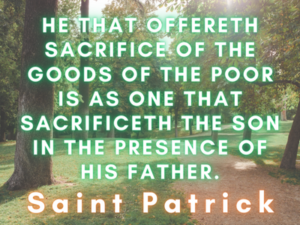
Overall, St. Patrick’s legacy has had a profound impact on Ireland, Christianity, and the world. His emphasis on love, forgiveness, and humility, as well as his use of symbols to explain complex theological concepts, has helped to shape the Christian faith and Irish culture for centuries.











LEAVE A COMMENT