
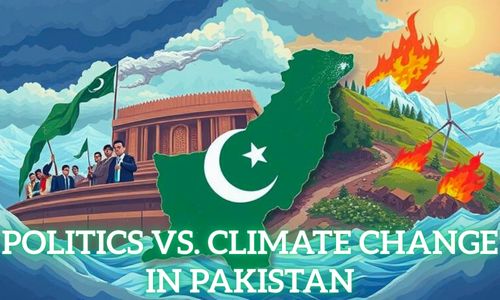
Politics vs Climate Change in Pakistan
Climate change is no longer a distant concern—it is a pressing national crisis for Pakistan. With devastating floods, prolonged droughts, rising temperatures, and melting glaciers, Pakistan finds itself at the frontline of global climate change. Yet, questions persist: is the government doing enough to address this escalating threat, or is political inefficiency amplifying the risks faced by millions?
Pakistan’s Vulnerability to Climate Change
Pakistan ranks among the top 10 most climate-vulnerable countries despite contributing less than 1% to global carbon emissions. The country’s unique geography, reliance on agriculture, and fragile infrastructure make it exceptionally susceptible.
-
Glacial Melt: Pakistan hosts over 7,000 glaciers, the largest outside the polar regions. Rapid melting poses severe risks of floods, glacial lake outbursts, and water insecurity.
-
Flood Disasters: The 2022 floods displaced millions, caused billions in damages, and highlighted the lack of climate resilience in urban planning and governance.
-
Rising Temperatures: Increasing heatwaves affect labor productivity, public health, and crop yields.
-
Agricultural Strain: Nearly 40% of Pakistan’s workforce depends on agriculture, making droughts and erratic monsoons direct threats to livelihoods.
This heightened vulnerability makes climate governance a matter of survival rather than choice.
Government Initiatives on Climate Policy
The Pakistani government has introduced several policy frameworks and climate action programs, aiming to counter environmental challenges.
1. National Climate Change Policy
First introduced in 2012 and revised in 2021, this policy provides a framework for climate adaptation and mitigation. It focuses on agriculture, water, energy, forestry, and disaster preparedness. However, implementation remains inconsistent due to political instability and limited financial capacity.
2. Ten Billion Tree Tsunami Project
Launched as a flagship initiative, this project seeks to restore degraded forests, enhance carbon sequestration, and improve biodiversity. International organizations have praised its ambition, but critics highlight weak monitoring mechanisms and allegations of corruption in plantation figures.
3. Renewable Energy Transition
The government pledged to achieve 60% renewable energy by 2030. Solar and wind projects are growing, but progress is slow due to policy uncertainty, investment bottlenecks, and reliance on imported fossil fuels.
4. Climate Finance and Global Advocacy
Pakistan actively advocates for “loss and damage” compensation on international platforms, particularly at COP27. While this has elevated Pakistan’s global profile, translating commitments into domestic resilience remains a challenge.
Challenges in Implementation
Despite these initiatives, Pakistan struggles to translate climate policies into tangible outcomes.
-
Political Instability: Frequent changes in leadership disrupt long-term projects and climate strategies.
-
Lack of Coordination: Overlapping jurisdictions between federal and provincial authorities hinder smooth policy execution.
-
Financial Constraints: Pakistan’s economic crisis restricts investment in renewable energy, disaster preparedness, and adaptation infrastructure.
-
Urbanization and Mismanagement: Rapid, unplanned urban growth worsens air pollution, heat stress, and water mismanagement.
-
Public Awareness: Climate change remains a low priority in political discourse compared to immediate economic and security concerns.
Without addressing these governance gaps, Pakistan risks facing climate-induced disasters on an even larger scale.
The Role of Politics in Climate Policy
The intersection of politics and climate change in Pakistan is complex. While environmental issues often receive attention during international conferences, domestic policies frequently fall victim to short-term political agendas.
-
Policy Continuity: Each new government often sidelines projects of its predecessors, disrupting momentum.
-
Populism vs. Sustainability: Politicians prioritize short-term populist measures, such as subsidies on fossil fuels, instead of long-term sustainable policies.
-
Legislative Weakness: Environmental legislation exists but is rarely enforced effectively, leading to unchecked deforestation, pollution, and resource exploitation.
This politicization of climate action undermines Pakistan’s ability to build resilience against future crises.
The Human Cost of Inaction
Climate change in Pakistan is not merely an environmental issue—it is a humanitarian crisis.
-
Health Impacts: Rising temperatures contribute to heatstroke, vector-borne diseases, and respiratory illnesses due to worsening air quality.
-
Water Scarcity: Mismanagement of rivers and groundwater depletion threaten food security and public health.
-
Displacement: Millions are already displaced due to floods and droughts, creating climate refugees within the country.
-
Gendered Impact: Women in rural communities bear a disproportionate burden, as they are often responsible for water collection and household sustenance.
The human face of climate change underscores why policy responses must go beyond rhetoric and move towards urgent, inclusive action.
Pathways for Stronger Climate Action
To address the mounting crisis, Pakistan must prioritize systematic reforms and practical solutions:
-
Strengthening Climate Governance
-
Establish independent climate oversight bodies to ensure accountability and transparency.
-
Enhance coordination between federal and provincial governments.
-
-
Investing in Renewable Energy
-
Accelerate investment in solar, wind, and hydropower projects.
-
Offer incentives for private sector participation and reduce reliance on imported fossil fuels.
-
-
Climate-Resilient Infrastructure
-
Build flood-resilient housing, climate-smart agriculture systems, and early warning systems for disasters.
-
Upgrade urban drainage systems to prevent flood damage.
-
-
Public Awareness and Education
-
Launch nationwide campaigns to promote sustainable practices.
-
Integrate climate education into school curricula.
-
-
International Partnerships
-
Leverage global climate funds and strengthen bilateral agreements for technology transfer and adaptation financing.
-
Push for fair climate justice frameworks that support vulnerable countries like Pakistan.
-
Is the Government Doing Enough?
Pakistan’s government has taken steps in the right direction, from ambitious tree plantation campaigns to active participation in global climate negotiations. However, policy execution remains weak, plagued by political instability, financial constraints, and governance inefficiencies.
If climate action continues to remain fragmented, Pakistan risks facing catastrophic consequences for its people, economy, and future generations. The need of the hour is consistent political will, strong institutions, and community engagement. Only then can Pakistan shift from being a victim of climate change to becoming a resilient nation capable of withstanding its challenges.












LEAVE A COMMENT