
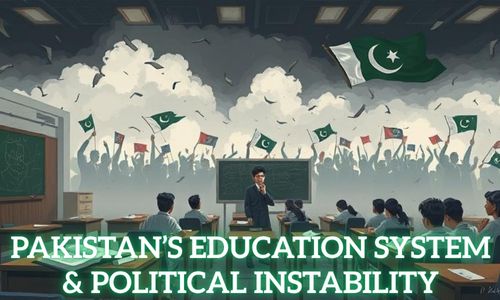
Pakistan’s Education System & Political Instability
In Pakistan, the education system has long been entangled with the nation’s political climate. While education is universally recognized as a cornerstone of sustainable development, in Pakistan, it often becomes a tool of political manipulation rather than a pillar of progress. The result is a fragmented and underperforming system where national priorities shift with every new government, and students bear the brunt of instability.
Frequent Policy Shifts and Inconsistent Educational Reforms
Each new political regime brings its own set of education policies, often reversing the efforts of the previous government. This lack of continuity results in:
-
Frequent curriculum changes that confuse educators and students.
-
Delays in syllabus implementation due to re-approval and distribution.
-
Politically motivated textbook alterations, leading to ideological bias rather than factual learning.
For instance, the introduction and then partial rollback of the Single National Curriculum (SNC) is a classic example of policy inconsistency. While the idea aimed at standardization, it lacked proper consultation, training, and readiness at the provincial level, thus facing backlash and poor implementation.
Political Budgeting: The Misallocation of Educational Funds
Education in Pakistan has historically received less than 3% of GDP, which is far below UNESCO’s recommended 4-6%. Political priorities often redirect educational funds toward short-term populist projects, mega infrastructure developments, or defense.
Impacts of underfunding include:
-
Deteriorating infrastructure in public schools, especially in rural areas.
-
Shortage of qualified teachers, forcing reliance on untrained staff.
-
Lack of basic facilities like clean water, toilets, and electricity.
The issue becomes worse during political transitions, where existing development funds are frozen, delayed, or canceled.
Politicization of Education Administration
Many appointments in educational boards, universities, and curriculum committees are made on the basis of political affiliation rather than merit. This undermines institutional integrity and leads to:
-
Nepotism in hiring and promotions.
-
Inefficient school management.
-
Suppression of dissenting academic voices in higher education.
Politically appointed education officers often lack the expertise needed to tackle complex challenges, further worsening administrative efficiency.
Religious and Ideological Influence Over Curriculum
In Pakistan, political alliances with religious groups often translate into increased control over school curriculums. Governments, to secure votes, sometimes allow theological narratives to dominate the academic content, pushing science, critical thinking, and pluralism to the sidelines.
Such influence has:
-
Distorted historical facts to fit specific ideological agendas.
-
Contributed to the radicalization of youth.
-
Compromised secular and inclusive education, especially for minorities and girls.
Political Unrest and Its Effect on School Attendance
Frequent political protests, shutdowns, and law and order issues often lead to extended school closures, particularly in urban centers like Karachi, Lahore, and Islamabad. The direct consequences include:
-
Loss of academic days and gaps in learning.
-
Rescheduling or cancellation of public exams.
-
Increased dropout rates, particularly in economically disadvantaged areas.
Moreover, political instability creates a hostile environment for foreign investment in education, further delaying modernization and international collaboration.
Provincial Disparities and Political Tug-of-War
After the 18th Amendment in the Constitution, education was devolved to provincial governments. While the move was intended to localize control, it has led to deep disparities in educational standards across provinces due to:
-
Uneven budget allocations.
-
Varied policy priorities.
-
Political competition between provincial and federal governments.
For example, Punjab’s relatively stronger infrastructure is in stark contrast with Balochistan, where more than 60% of children are out of school due to poor governance and lack of political will.
Impact on Teachers and Educational Workforce
Teachers often become the frontline victims of political influence. In many cases:
-
Recruitments are politicized, with unqualified individuals given teaching jobs.
-
Teachers are pressured to participate in political rallies or elections, especially in rural areas.
-
Transfer and postings are used as political rewards or punishments.
This has contributed to low morale and job satisfaction in the teaching profession, severely undermining the quality of classroom instruction.
Political Interference in Higher Education and Academic Freedom
Universities in Pakistan are increasingly facing political interference in their administration and academic freedom. Vice-chancellors and key academic figures are often chosen for political loyalty, not academic credentials. This limits innovation, research output, and global university rankings.
Moreover, student unions, once platforms for democratic engagement, have been banned or controlled, limiting the political awareness and leadership grooming of the youth.
Digital Divide and Political Neglect in EdTech
While many countries embraced digital education during COVID-19, Pakistan’s lack of political foresight and infrastructure exposed a deep digital divide. Despite pledges, little was done to ensure:
-
Internet access in rural and remote areas.
-
Distribution of digital devices to underprivileged students.
-
Investment in local e-learning platforms and training.
Political inaction in embracing EdTech means millions of students continue to be excluded from modern educational opportunities.
Depoliticizing Education
For Pakistan to move forward, education must be depoliticized and treated as a national priority rather than a political tool. Key solutions include:
-
Establishing an independent education commission with long-term policy vision.
-
Increasing education funding to at least 4% of GDP.
-
Ensuring merit-based appointments in educational institutions.
-
Promoting academic freedom and inclusive curriculum design.
-
Bridging the urban-rural educational divide through investment in infrastructure and technology.
The Way Forward
The correlation between political decisions and Pakistan’s education crisis is undeniable. Without a stable, merit-driven, and forward-thinking approach, the nation’s youth will continue to suffer. Education must be removed from the battlefield of political power games and restored to its rightful place as the engine of national progress.









LEAVE A COMMENT