
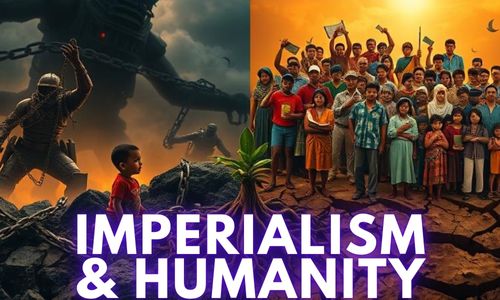
Imperialism & Humanity
ESSAY OUTLINE
1. Introduction
- Hook: The Universal Declaration of Human Rights boldly declares that all humans are born free and equal in dignity and rights, yet inequality and oppression persist worldwide.
- Background Information: Brief overview of the concept of human dignity and rights as universal principles versus the reality of widespread discrimination, injustice, and oppression.
- Thesis Statement: Although every human is inherently equal in dignity and rights, systemic inequalities, social injustices, and political oppression continue to place many in metaphorical shackles, preventing true freedom and equality.
2. The Principle of Universal Equality
- A. Foundations of human dignity and rights: Explain the philosophical and legal basis for equality (e.g., UDHR, natural rights theory).
- B. The ideal of equality before law and society: How equality is supposed to manifest in society through justice, fairness, and opportunity.
- C. The moral and legal imperative to uphold human rights: Importance of recognizing and protecting these rights globally.
3. Shackles of Social Inequality
- A. Economic disparity and poverty: How extreme poverty traps millions in cycles of deprivation and limits access to basic rights.
- B. Discrimination and social exclusion: Race, caste, gender, religion, and ethnicity as sources of systemic inequality.
- C. Lack of access to education, healthcare, and employment: Barriers that deny individuals equal opportunity and dignity.
4. Shackles of Political Oppression and Injustice
- A. Authoritarian regimes and denial of political freedoms: Suppression of free speech, assembly, and political participation.
- B. Corruption and weak rule of law: How these undermine justice and protect the powerful at the expense of ordinary citizens.
- C. Displacement, conflict, and human rights violations: Refugees, torture, unlawful detention, and other abuses denying dignity and rights.
5. Global and Systemic Factors Perpetuating Inequality
- A. Unequal global economic systems: How international trade, debt, and corporate power reinforce disparities.
- B. Historical legacies of colonialism and imperialism: Continuing impacts on marginalized populations.
- C. Inadequacies of international institutions: Failures to enforce human rights and equality on a global scale.
6. Pathways to Liberation and True Equality
- A. Strengthening legal protections and institutions: National and international laws that promote equality and human rights.
- B. Social movements and activism: The role of grassroots campaigns and global awareness in challenging injustice.
- C. Education and empowerment: Promoting awareness of rights and opportunities for marginalized groups.
- D. International cooperation and reforms: How global solidarity can help dismantle systemic shackles.
7. Conclusion
- Restate Thesis: Despite the universal truth that all humans are born equal in dignity and rights, millions remain trapped by social, political, and systemic shackles that deny their freedom.
- Call to Action: The world must commit to dismantling these barriers through justice, equality, and sustained collective effort to realize the true promise of human dignity and rights for all.
ESSAY
The Universal Declaration of Human Rights boldly proclaims that every person is born free and equal in dignity and rights. Yet, despite this powerful declaration, millions across the globe continue to experience inequality and oppression in daily life.
The concept of human dignity and universal rights serves as the foundation for justice and fairness in societies worldwide. These principles aim to ensure that everyone enjoys equal respect and opportunities. However, the harsh reality starkly contrasts with this ideal, as discrimination, social exclusion, and political repression persist in many countries, undermining the very essence of equality.
Although every human being possesses inherent equality in dignity and rights from birth, systemic inequalities, entrenched social injustices, and widespread political oppression continue to shackle countless individuals, preventing them from experiencing true freedom and equality.
Philosophers and legal scholars have long argued that all humans possess inherent dignity and equal rights simply by virtue of being human. The Universal Declaration of Human Rights (UDHR), adopted by the United Nations in 1948, firmly establishes this principle as a global standard. It builds upon natural rights theory, which holds that rights are universal, inalienable, and not granted by governments but inherent to every individual. This foundation forms the moral and legal bedrock of equality that every nation is expected to respect.
Societies ideally treat all individuals equally before the law and ensure equal access to opportunities. This means governments must enforce justice impartially, safeguard freedoms, and provide fair access to education, employment, and social services. Equality should manifest in everyday life by removing discrimination and bias, allowing every person to pursue their potential without arbitrary barriers based on race, gender, religion, or other identities. When law and society uphold this ideal, they affirm the equal dignity of all citizens.
The global community has a collective responsibility to recognize and protect human rights everywhere. Upholding these rights is not only a legal obligation but a moral imperative to ensure that dignity and equality are more than abstract ideals. International institutions, governments, and civil society must actively work to promote these rights and hold violators accountable. When human rights are respected universally, they create a foundation for peace, justice, and development worldwide.
Extreme poverty traps millions in a relentless cycle of deprivation, stripping them of basic human rights such as adequate food, shelter, and healthcare. When people struggle to meet their most fundamental needs, they lose access to education and opportunities for advancement. This economic inequality entrenches social divides and prevents many from exercising their full rights and dignity, effectively chaining them to hardship and exclusion.
Societies frequently perpetuate systemic inequality through discrimination based on race, caste, gender, religion, and ethnicity. These forms of bias exclude entire groups from full participation in social, economic, and political life. Governments and communities often tolerate or even enforce such discrimination, denying affected individuals the respect and opportunities they deserve. These social shackles deepen divisions and prevent true equality from being realized.
Many individuals face significant barriers that block access to essential services like education, healthcare, and employment. Without education, people cannot acquire skills or knowledge necessary to improve their lives. Inadequate healthcare undermines their well-being, while unemployment or underemployment limits financial independence. These obstacles deny individuals the chance to live with dignity and break free from the shackles of inequality.
Authoritarian regimes actively suppress fundamental political freedoms such as free speech, peaceful assembly, and political participation. Governments often silence dissenting voices through censorship, intimidation, or imprisonment, preventing citizens from expressing their opinions or challenging injustice. This repression locks individuals in a political system where they cannot influence decisions affecting their lives, effectively chaining them to oppression.
Rampant corruption and weak enforcement of laws undermine justice and protect the interests of the powerful elite while neglecting ordinary citizens. When officials exploit their positions for personal gain, they erode public trust and allow impunity for abuses. This breakdown of the rule of law denies people equal protection and perpetuates inequality, keeping many trapped in a cycle of injustice without recourse.
Ongoing conflicts and political instability force millions into displacement, creating refugees and internally displaced persons who suffer from loss of home, security, and rights. Governments and armed groups often commit grave human rights abuses—such as torture, unlawful detention, and extrajudicial killings—that strip individuals of dignity and safety. These violations form chains that bind victims in constant fear and vulnerability, denying them the basic freedoms promised to all humans.
International trade agreements, debt burdens, and the concentration of corporate power often reinforce economic disparities between nations and within societies. Wealthy countries and multinational corporations exploit resources and labor in poorer countries, extracting value without fair compensation. These imbalances trap developing nations in cycles of dependency and underdevelopment, deepening global inequality and limiting access to rights and opportunities for millions.
The enduring effects of colonialism and imperialism continue to marginalize many populations around the world. Former colonies face systemic disadvantages in economic development, political stability, and social cohesion due to the exploitation and arbitrary borders imposed during colonial rule. These historical injustices created structural inequalities that persist today, maintaining power imbalances and obstructing efforts toward genuine equality.
International organizations tasked with promoting human rights and equality often fail to enforce these principles effectively on a global scale. Political interests, limited resources, and lack of enforcement mechanisms weaken their impact. When international institutions cannot hold violators accountable or support marginalized groups adequately, they allow systemic inequalities to persist unchecked, limiting progress toward universal dignity and rights.
Grassroots campaigns and global activism play a crucial role in challenging social and political injustice. Citizens organize protests, raise awareness, and pressure governments to enact reforms. These movements empower marginalized communities to claim their rights and foster solidarity across borders, creating momentum for lasting change.
Providing education about human rights and opportunities equips marginalized groups to advocate for themselves effectively. When people understand their rights and gain skills, they can break free from cycles of discrimination and poverty. Education also promotes tolerance and social cohesion, helping to dismantle prejudices that sustain inequality.
Global solidarity and cooperation can dismantle systemic shackles by addressing issues that cross national borders. Reforming international institutions to ensure fairness, transparency, and enforcement of human rights strengthens global governance. Collaborative efforts to reduce poverty, combat discrimination, and promote peace can create a more just and equal world for all.
Despite the universal truth that all humans are born equal in dignity and rights, millions remain trapped by social, political, and systemic shackles that deny them their fundamental freedoms. These barriers continue to restrict access to justice, equality, and opportunity, preventing many from living with the dignity they inherently deserve.
The global community must commit to actively dismantling these obstacles through comprehensive justice reforms, promotion of equality, and sustained collective efforts. Governments, civil society, and international institutions need to work together relentlessly to turn the ideal of universal human dignity and rights into a reality for every individual, everywhere.











LEAVE A COMMENT