
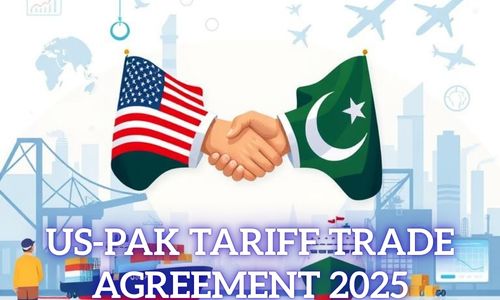
US-PAK Tariff Trade Agreement 2025
The Pakistan-US Tariff Trade Agreement 2025 marks a pivotal moment in the economic relationship between Islamabad and Washington. Designed to reset previous trade structures, this agreement aims to reduce bilateral tariff barriers, encourage industrial collaboration, and streamline access to key goods and services. As a successor to previous preferential trade frameworks, the 2025 accord represents a bold new approach with far-reaching economic implications.
Background of the Pakistan-US Trade Relationship
Historically, the Pakistan-US trade partnership has been defined by Generalized System of Preferences (GSP) access, security-linked trade packages, and fluctuating tariff alignments. From the 2003 Bilateral Investment Treaty negotiations to the post-9/11 trade incentives, economic ties have largely been reactive, conditional, and unbalanced.
While Pakistan has benefited from duty-free access on specific products, tariff asymmetries have long constrained the full potential of trade. The previous frameworks provided short-term gains without long-term industrial benefits for Pakistan.
Key Features of the 2025 Agreement
1. Reduction of Tariff Barriers on Key Pakistani Exports
The 2025 agreement outlines a 35-70% reduction in tariffs on textiles, surgical instruments, sports goods, and leather products—Pakistan’s leading exports to the US. These concessions are projected to increase Pakistan’s export volume by $3.2 billion annually by 2028.
2. Inclusion of IT and Digital Services
For the first time, IT services, software exports, and digital payments infrastructure are included in the tariff framework. This reflects a broader recognition of Pakistan’s growing IT sector, which has recorded over 35% annual growth since 2020.
3. Joint Compliance Mechanism
A bilateral Compliance and Transparency Council has been established to ensure both countries maintain equitable market practices. This is a key improvement over previous trade deals that lacked accountability enforcement.
4. Protection of Strategic Industries
Certain sensitive sectors like pharmaceuticals and agriculture have been carved out of the agreement to allow for protective tariffs, especially for Pakistan’s developing food processing industry.
Comparative Analysis with Previous Tariff Agreements
Past Agreements and Limitations
-
Generalized System of Preferences (GSP): While useful, it was unilateral, temporary, and excluded critical export categories like garments and value-added textiles.
-
2005 Trade and Investment Framework Agreement (TIFA): A diplomatic platform more than a trade liberalization tool, it lacked enforceable tariff reduction clauses.
-
Post-2001 Preferential Access: Heavily conditioned on geopolitical cooperation, especially counterterrorism, offering little structural economic support.
Advantages of the 2025 Agreement
-
Bilateral and Binding: Legally enforceable commitments from both sides, unlike the one-sided GSP.
-
Sectoral Diversification: Broader scope including services and technology, not just goods.
-
Long-Term Validity: A 10-year duration with automatic 5-year extension, subject to performance benchmarks.
Pros for Pakistan
1. Boost in Exports and GDP
The reduction in tariffs is expected to boost exports by over 35% within the first three years, particularly in textiles, surgical instruments, and IT services. This could add $7 billion to Pakistan’s GDP by 2030.
2. Employment Generation
With manufacturing exports expanding, the government estimates the creation of 1.5 million direct and indirect jobs, primarily in Punjab and Sindh’s industrial belts.
3. Improved Investment Climate
Clear trade terms with the US improve investor confidence, potentially unlocking $2.8 billion in foreign direct investment (FDI) across logistics, IT, and agro-processing.
4. Digital Trade Integration
Inclusion of IT and services reduces Pakistan’s overdependence on low-margin physical goods, helping it pivot to high-value digital exports.
Cons and Risks for Pakistan
1. Exposure to Competition
With reciprocal access, US goods and services—particularly in agriculture and technology—may outcompete local industries if protections are not enforced properly.
2. Regulatory Pressure
Compliance with US-style labor laws, environmental standards, and data regulations may increase the operational burden for small and medium enterprises (SMEs).
3. Dependency on a Single Market
Heavy reliance on the US for tariff-linked gains can prove risky, especially if future political shifts lead to protectionist reversals.
4. Underdeveloped Supply Chains
Pakistan’s logistical inefficiencies and energy shortages may limit its ability to fully exploit the new market access. Without infrastructure upgrades, the gains may be unevenly distributed.
Geopolitical Dimensions
The 2025 agreement carries strategic overtones. As US-China tensions continue, Washington aims to diversify its sourcing away from China, giving Pakistan an opportunity to emerge as a regional trade substitute, especially in textiles and assembly lines.
Additionally, the agreement may bolster Pakistan’s position in regional blocs like ECO and SAARC, offering leverage in future negotiations with the EU, UK, and Gulf countries.
Economic Risks and Forecast
According to analysts:
- A 10–15% drop in demand for Pakistani goods due to compliance costs and competition could result in $366–$549 million in annual losses.
- The textile sector alone may lose up to $487 million, affecting employment and foreign exchange reserves.
Policy Recommendations for Pakistan
-
Upgrade Infrastructure: Focus on modernizing ports, roads, and digital frameworks to handle export expansion.
-
SME Empowerment: Provide subsidies, tax incentives, and technical training to enable SME participation in export chains.
-
Diversify Export Portfolio: Encourage innovation in pharmaceuticals, software, and agritech to reduce dependence on textiles.
-
Strengthen Regulatory Bodies: Equip trade and customs officials to meet US compliance benchmarks without slowing exports.
-
Build Trade Intelligence Cells: Monitor US market trends, tariff revisions, and consumer preferences to stay competitive.
A Trade-Off Worth Watching
The Pakistan-US Tariff Trade Agreement 2025 is a transformative shift from historical trade dependencies to a more reciprocal and sustainable partnership. While the deal offers a promising avenue for growth, its success depends on strategic implementation, structural reforms, and long-term vision.
The Pakistan-US Tariff Trade Agreement 2025 is undeniably a landmark in bilateral relations. But its long-term success hinges on Pakistan’s ability to:
- Strengthen domestic institutions like SECP, FBR, and TDAP
- Support SMEs in meeting international standards
- Diversify export markets to reduce dependency on the US
While the deal opens new doors, it also demands vigilance, reform, and strategic foresight. For Pakistan, the challenge is to ensure that this “win” doesn’t become a long-term liability. If executed wisely, it can reshape Pakistan’s economic future and position it as a key player in the evolving global trade architecture.







LEAVE A COMMENT