
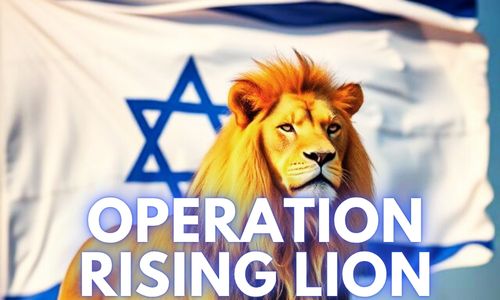
Operation Rising Lion
Operation Rising Lion is an ongoing Israeli military operation targeting Iran’s nuclear and military infrastructure. Launched on June 13, 2025, the operation has involved extensive airstrikes on key Iranian facilities, including nuclear enrichment sites and missile bases.
Israel has claimed that the strikes aim to dismantle Iran’s military capabilities, particularly its nuclear program, which Israel views as an existential threat. Reports indicate that Iranian military leaders and nuclear scientists have been killed in the attacks, and Iran has retaliated with missile strikes on Israeli cities.
The international community is closely monitoring the situation, with concerns over a prolonged regional conflict. Some nations have called for restraint, while others have supported Israel’s right to defend itself. The United States has denied direct involvement, though Iran claims to have evidence of American support for the Israeli strikes.
Operation Name Origins
The name Operation Rising Lion is rooted in biblical symbolism. It originates from Numbers 23:24 in the Torah, where the prophet Balaam was sent to curse Israel but instead blessed it. The verse states: “Behold, the people shall rise up as a great lion, and lift up himself as a young lion.”
Israeli Prime Minister Benjamin Netanyahu reportedly placed a note with this phrase in the Western Wall hours before the operation began. The name is meant to symbolize Israel’s strength and determination, comparing the nation to a lion rising to face its enemies.
Some analysts also suggest that the name could reference Persian royal symbolism, as the lion was historically associated with Iran’s monarchy before the Islamic Revolution.
Objectives of Operation
The key objectives of Operation Rising Lion appear to be:
- Disrupt Iran’s Nuclear Program – Israel has targeted nuclear enrichment sites, including Natanz, aiming to delay or dismantle Iran’s ability to develop nuclear weapons.
- Eliminate Key Military Figures – Several high-ranking Iranian officials, including IRGC Commander Hossein Salami and Armed Forces Chief Mohammad Bagheri, have reportedly been killed.
- Weaken Iran’s Missile Capabilities – The operation has struck missile storage depots and air defense systems, reducing Iran’s ability to retaliate.
- Destabilize Iran’s Leadership – Some analysts suggest the strikes may be part of a broader effort to undermine Iran’s government, potentially paving the way for regime change.
- Prevent Retaliatory Strikes – Israel has preemptively targeted Iranian military infrastructure, aiming to limit Iran’s ability to launch counterattacks.
Global Perception of Operation
Global reactions to Operation Rising Lion have been mixed, with different nations and analysts interpreting the Israeli strikes in various ways:
- United States & Allies – While the U.S. has denied direct involvement, some reports suggest logistical and intelligence support for Israel. Western nations, including the United Kingdom and France, have expressed concerns about regional stability, but have not condemned Israel outright.
- Iran & Its Allies – Iran has labeled the operation an act of war, vowing retaliation. Russia and China have criticized Israel’s actions, calling them destabilizing and warning of economic repercussions, particularly in the global energy market.
- Middle Eastern Nations – Saudi Arabia and the UAE have remained cautious, urging de-escalation while privately assessing the impact on their own security. Some Gulf nations fear that Iran may target oil infrastructure in response.
- Military Analysts – Some experts view the operation as a strategic success, arguing that Israel has crippled Iran’s nuclear program and eliminated key military leaders. Others warn that the strikes could provoke a prolonged conflict, with Iran expanding its nuclear efforts in retaliation.
Effect on Iran
Operation Rising Lion has caused significant damage to Iran’s nuclear and military infrastructure. Here are some key impacts:
Damage to Nuclear Facilities
- Natanz Nuclear Site – Satellite images show multiple buildings damaged or destroyed, including structures supplying power to the facility.
- Fordow Enrichment Plant – Reports indicate strikes on underground enrichment halls, though Iran has not confirmed the extent of the damage.
- Piranshahr Nuclear Facility – A blast reportedly disrupted power lines, affecting operations.
Military & Missile Infrastructure
- Missile Bases in Kermanshah & Tabriz – Satellite images reveal burns and structural damage across these sites, impacting Iran’s ballistic missile capabilities.
- Ghadir Missile Site – Targeted strikes have reportedly crippled Iran’s missile storage and launch systems.
Casualties & Leadership Losses
Along with 80 civilians in which 20 were children, several high-ranking Iranian officials were reportedly killed in Operation Rising Lion. Here are some of the key figures:
- Major General Mohammad Bagheri – Chief of Staff of Iran’s Armed Forces, overseeing both the Islamic Revolutionary Guard Corps (IRGC) and the regular army.
- Major General Hossein Salami – Commander-in-Chief of the IRGC, known for his hardline stance against Israel and the U.S.
- General Gholamali Rashid – Head of the Khatam-al Anbiya Central Headquarters, responsible for coordinating Iran’s military operations.
- General Amir Ali Hajizadeh – Commander of the IRGC Aerospace Force, overseeing Iran’s missile program.
- Ali Shamkhani – Former National Security Chief, a key figure in Iran’s nuclear negotiations.
- Dr. Fereydoon Abbasi – Former head of Iran’s Atomic Energy Organization, involved in nuclear research.
- Dr. Mohammad Mehdi Tehranchi – Nuclear physicist and head of Azad University, reportedly involved in Iran’s nuclear program.
These losses have severely impacted Iran’s military leadership, with Iranian Supreme Leader Ayatollah Khamenei swiftly appointing replacements.
Iran’s Response & Retaliation
Iran has launched Operation True Promise 3, firing ballistic missiles at Israeli cities, including Tel Aviv. The attacks have killed civilians and triggered widespread panic. In response, Israel has expanded its military operations by striking Iran’s energy infrastructure, targeting fuel depots and the Defense Ministry headquarters. The conflict is escalating rapidly as global leaders call for restraint while both nations prepare for further military engagement.
Way Forward
The way forward after Operation Rising Lion depends on how Israel, Iran, and the international community choose to respond. Here are some possible scenarios:
1: Diplomatic De-escalation
- International Mediation – The United Nations, United States, and European Union may push for ceasefire negotiations to prevent further escalation.
- Backchannel Talks – Israel and Iran could engage in secret diplomacy to avoid prolonged conflict whose chances are very minimal.
- Sanctions & Pressure – Western nations may impose economic sanctions on Iran to deter further retaliation.
2: Continued Military Engagement
- Iranian Retaliation – Iran may expand missile strikes on Israeli cities or target U.S. bases in the region.
- Israeli Follow-up Strikes – Israel could continue targeting Iranian military assets, including energy infrastructure.
- Regional Proxy Wars – Iran-backed groups like Hezbollah and the Houthis may escalate attacks on Israel.
3: Long-Term Strategic Shifts
- Iran’s Nuclear Acceleration – Iran may speed up uranium enrichment, potentially leading to a nuclear crisis.
- Middle East Alliances – Gulf nations like Saudi Arabia and the UAE may reassess their security strategies, possibly aligning more closely with Israel or Iran as it all depends upon the changing situation of the region.
- Global Economic Impact – Oil prices could spike, affecting global markets and energy security.








LEAVE A COMMENT