
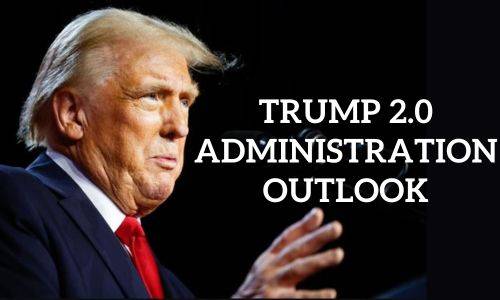
Trump 2.0 Administration
Donald Trump’s second term as President, often referred to as Trump 2.0, is shaping up to be quite different from his first. Here are some key figures who are likely to be part of his administration:
Key Appointments
1. JD Vance: The Vice President-elect, a former venture capitalist and author, is a staunch advocate of Trump’s America First agenda.
2. Robert F. Kennedy Jr.: Expected to play a leading role in health, though his exact position is unclear.
3. Vivek Ramaswamy: A biotechnology entrepreneur who has been a vocal supporter of Trump.
4. Brooke Rollins: A close ally of Trump and CEO of the America First Policy Institute, she is a contender for the White House Chief of Staff.
5. Susie Wiles: Trump’s 2024 campaign chief, also a contender for the Chief of Staff role.
6. Mike Pompeo: Former Secretary of State and CIA Director, he could be a top contender for Secretary of Defence but the reports suggest he will not be part of the administration and will not be considered.
7. Richard Grenell: A staunch ally of Trump, he is seen as a top pick for several national security and foreign policy roles.
8. Elon Musk: The CEO of Tesla and SpaceX, he is a potential candidate to lead a new Department of Government Efficiency.
9. John Bolton: It will seems unlikely that John Bolton will be part of Trump’s 2.0 administration. Bolton has distanced himself from Trump and has openly criticized his leadership
10. Zalmay Khalilzad: As for Zalmay Khalilzad, while he played a prominent role in shaping the Doha Agreement during Trump’s first term, there is no clear indication that he will be part of the new administration
These appointments reflect Trump’s focus on loyalty and his America First agenda. Moreover, many key figures from his first term, such as John Kelly and John Bolton, have distanced themselves from Trump. Instead, Trump 2.0 features new faces like JD Vance as Vice President, Robert F. Kennedy Jr. in a health-related role, and Elon Musk potentially leading a new Department of Government Efficiency.
Trump is surrounding himself with loyalists who align closely with his America First agenda. This includes figures like Brooke Rollins and Susie Wiles.

Policy Focus
A prospective return of Donald Trump to the White House, referred to as a “Trump 2.0” administration, would signify a shift that builds on his original tenure from 2017 to 2021. To project the potential trajectory, it is essential to analyze the policies, strategies, and priorities likely to define such an administration. Below are the key areas of focus that could shape this new era:
1. Economic Revival and Deregulation
Expect a continuation of Trump’s protectionist trade policies, including high tariffs on Chinese goods. This could lead to renewed trade tensions and impact global markets. As Trump’s first term underscored a strong focus on economic growth fueled by deregulation, tax cuts, and trade re-negotiations. A second term would likely emphasize:
a. Protectionism: Trump plans to continue his protectionist trade policies, including imposing high tariffs on Chinese goods. This could lead to renewed trade tensions and impact global markets.
b. Tax Reforms: Expect further tax cuts aimed at stimulating economic growth and benefiting businesses.
c. Infrastructure Investments: Pushing for large-scale infrastructure projects to modernize America’s roads, bridges, and digital networks.
d. Deregulation Wave: Expanding upon previous cuts to reduce federal oversight in key industries, potentially spurring investment in energy and technology sectors.
2. Foreign Policy:
Trump’s foreign policy is likely to remain unpredictable, with a focus on asserting American interests. This includes a tough stance on China and efforts to broker peace in conflicts like the Russia-Ukraine war.
a. China: A significant focus on rivalry and competition with China, prioritizing military aspects and urging European allies to take on more prominent roles in their own defense.
b. Middle East: Continued strong support for Israel and efforts to broker peace in conflicts like the Gaza war.
c. Ukraine: Skepticism about U.S. support for Ukraine, advocating for a more prominent role for European allies.
3. Domestic Agenda
Trump’s administration is expected to push for significant legislative changes, particularly in areas like healthcare, immigration, and economic policy.
a. Immigration: A hardline stance on immigration, including efforts to deport millions of undocumented immigrants.
b. Healthcare: Potential rollbacks of policies implemented during the Biden administration, particularly in healthcare and social services.
c. Immigration and Border Security: Accelerated construction and improved surveillance at the southern border. Stricter controls on work visas and refugee resettlement, aiming for a balance between border security and skilled workforce needs. Renewed cooperation with ICE and stricter measures on illegal immigration.
d. Law and Order Agenda: Backing law enforcement agencies with increased funding and legislative support for crime reduction.
e. Judicial Appointments: Appointing judges who align with conservative interpretations of the Constitution.
f. Counteracting Social Movements: Reinforcing policies that address national security concerns tied to civil unrest and potential domestic threats.
4. Organizational Changes
a. More Organized: Trump 2.0 is expected to be more organized, with a clearer strategy and more experienced team members. This is a shift from the chaotic nature of his first term.
b. Focused Leadership: With a stronger focus on loyalty and alignment with his vision, Trump is likely to have a more cohesive administration.
c. Efficiency: Potential creation of a new Department of Government Efficiency, possibly led by Elon Musk.
d. Loyalty: Surrounding himself with loyalists who align closely with his America First agenda.
5. Energy Independence
Energy policy under Trump has historically favored domestic production:
a. Oil and Gas Expansion: Reopening lands for drilling and reconsidering regulations limiting exploration.
b. Green Energy Skepticism: Slowing down transitions to renewable energy while promoting nuclear and clean coal as alternatives.
c. Strategic Energy Exports: Strengthening partnerships that make the U.S. a primary energy supplier to allies.
6. Technological Advancement and Innovation
A forward-focused administration might embrace technology in new ways:
a. Reinvigorating Space Exploration: Expanding NASA’s budget and supporting private-sector partnerships.
b. Advancing AI Policy: Balancing the need for innovation with regulations to safeguard American interests.
c. Cybersecurity Fortification: Prioritizing defenses against cyber threats from foreign actors and securing critical infrastructure.
7. Healthcare and Pandemic Preparedness
The COVID-19 pandemic reshaped how health policies are approached:
Restructured Healthcare Markets: Efforts to reduce prescription drug prices and increase competition in the insurance industry.
Pandemic Strategy: Establishing a comprehensive plan for future pandemics with an emphasis on vaccine development, supply chains, and strategic stockpiling.
8. Global Impact
International Relations: Trump’s return to power is likely to disrupt international relations, with potential shifts in alliances and increased volatility in global security.
Climate Change: Trump’s stance on climate change, which includes rolling back environmental regulations, could affect global efforts to combat climate change.
Trump’s second term is poised to bring significant changes both domestically and internationally, with far-reaching consequences for U.S. politics and global dynamics. The roadmap for a Trump 2.0 administration centers on deepening policies rooted in economic nationalism, assertive foreign policy, and conservative social values. While contentious and likely to face significant political challenges, this approach would aim to solidify Trump’s legacy by prioritizing security, prosperity, and a recalibrated approach to global influence. The potential success of this vision hinges on legislative support and a divided national response that remains a significant factor in U.S. politics.









LEAVE A COMMENT