
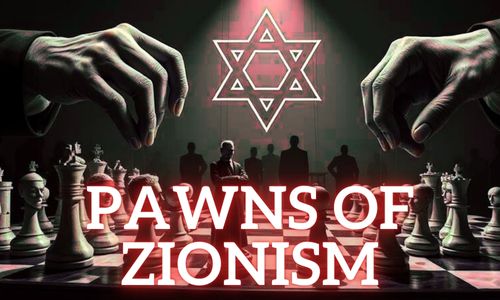
Pawns of Zionism
Historical Origins of Zionism
Zionism emerged in the late 19th century as a nationalist movement aimed at establishing a Jewish homeland in Palestine. While often framed as a liberation ideology, it also carried with it deep political, territorial, and ideological ambitions. Theodor Herzl, considered the father of modern Zionism, argued that Jews needed a sovereign state to escape antisemitism in Europe. His vision, however, wasn’t purely religious or cultural—it was colonial and expansionist in nature.
The movement gained traction during a time when European colonial powers were redrawing maps and influencing global geopolitics. Zionism aligned itself with imperial interests, particularly those of the British Empire. The early Zionists lobbied hard for Western support, setting the stage for political maneuvering that would culminate in major world powers backing their agenda. From the outset, the movement faced criticism not just from Palestinians but from anti-Zionist Jews who viewed the ideology as a betrayal of religious and ethical principles.
The Zionist movement built its foundation by displacing indigenous populations, manipulating political actors, and leveraging international support structures with their own agendas. Understanding its historical roots helps explain how Zionism mobilized global influence to serve its purposes, often at the expense of those it claimed to liberate.
Ideological Foundation and Early Leaders
At its core, Zionism was both an escape and a conquest. Figures like Herzl, Chaim Weizmann, and David Ben-Gurion were not merely freedom fighters for Jewish people—they were political strategists who envisioned a state that would serve Western interests in the Middle East. They used the trauma of European antisemitism to justify a settler-colonial project in Palestine.
These leaders didn’t act alone. They needed pawns—those who would champion their cause, knowingly or unknowingly. These included diplomats, academics, journalists, and even religious figures. The ideology promoted the idea of Jewish superiority and entitlement to a land inhabited by another people, supported by biblical and historical claims. It morphed over time into a powerful geopolitical tool used to realign the Middle East for strategic gains.
Zionist leaders formed international alliances with influential Western powers, particularly during and after World War I. They presented Zionism as a civilizing mission, much like the colonial endeavors of European empires. This narrative conveniently ignored the indigenous population of Palestine and justified the displacement and marginalization of Arabs as a necessary step toward fulfilling a divine or historical destiny.
Political Zionism and Its Global Reach
The Balfour Declaration and British Support
One of the most pivotal moments in the history of Zionism was the Balfour Declaration of 1917. In it, the British government publicly supported the establishment of a “national home for the Jewish people” in Palestine. This statement deliberately aimed to secure Jewish support during World War I, especially to influence American public opinion, making it a calculated political maneuver rather than a simple gesture of support.
The British government made this declaration without consulting the native Arab population, who constituted the majority in Palestine. It marked the beginning of a long-standing betrayal of Palestinian rights, with Britain becoming the first major pawn in the Zionist playbook. During the Mandate period, the British allowed Zionist institutions to flourish while they brutally suppressed Arab resistance. Infrastructure, immigration policy, and military training were all skewed in favor of the Zionist settlers.
The Balfour Declaration also laid the groundwork for future diplomatic manipulations. By leveraging imperial ambitions and manipulating European guilt over antisemitism, Zionists managed to rally global powers behind their cause. The British Empire, stretched thin after the war, saw in Zionism a reliable partner to safeguard its interests in the resource-rich and strategically vital Middle East.
American Support and the Role of Lobbying Groups
Post-World War II, the United States emerged as the chief patron of Zionism. American support was not purely ideological—it was also the result of intense lobbying, media influence, and political coercion. AIPAC (American Israel Public Affairs Committee) and other powerful pro-Israel groups became central to this dynamic, effectively influencing U.S. foreign policy through campaign contributions, media control, and pressure tactics.
Presidents, senators, and representatives often act in ways that align more closely with Israeli interests than American ones, largely due to the enormous sway of Zionist lobbying. These politicians become pawns—some willingly, some unwittingly—serving a foreign agenda while masking it as national interest. This dynamic has led to endless military entanglements, billions in financial aid, and a skewed media narrative that paints Israel as a perpetual victim while demonizing Palestinian resistance.
This political entrapment has also stifled legitimate criticism. Political and media institutions often label anyone who questions the U.S.-Israel relationship as antisemitic or unpatriotic, effectively silencing dissent and enabling the continued exploitation of American taxpayers and military resources for Zionist objectives.
The Strategic Use of Proxy Entities
Political Figures as Instruments
Zionism has thrived not only through overt political moves but also through the strategic placement and utilization of political figures around the world. These politicians often become the most visible pawns in the Zionist chessboard—publicly supporting Israel, advocating for its policies, and pushing legislation that serves Zionist objectives, regardless of its impact on their own nations.
Politicians from both the left and right sides of the spectrum in countries like the United States, Canada, the UK, and France receive campaign contributions and other forms of support from Zionist-linked lobbyists. Once elected, many of these figures begin promoting policies that align with Israeli interests—be it military support, intelligence sharing, or suppression of pro-Palestinian voices.
Even when domestic interests are at odds with Israeli policies—such as when American citizens oppose further foreign wars or military aid—these political pawns push forward with their agenda. These figures often appear on media outlets speaking in defense of Israeli actions, regardless of human rights violations or breaches of international law.
What makes these political instruments even more dangerous is their ability to normalize Zionist ideology. By embedding it in mainstream politics, they make it seem like supporting Israel at all costs is not just acceptable but mandatory. The result? A political environment where dissent is punished, alternative views are erased, and the Zionist narrative remains dominant.
Media Corporations and Narrative Control
Another crucial pillar of Zionist power is control over global media narratives. Large media conglomerates, many of which have ties—either through ownership, funding, or leadership—to pro-Israel interests, have played a massive role in shaping public opinion about Israel, Palestine, and the Middle East in general.
News reports often frame Israeli aggression as “self-defense,” while Palestinian resistance is labeled “terrorism.” This double standard is so deeply entrenched that many consumers of mainstream media are unaware of the imbalance. The language, images, and even the framing of headlines all contribute to a distorted narrative that favors the Zionist viewpoint.
In Hollywood, the pro-Israel influence is evident in film and television portrayals of the Middle East. Movies routinely depict Arabs and Muslims as villains while omitting the brutal realities of occupation, apartheid, and systemic violence inflicted on Palestinians. The entertainment industry has become a soft power tool—a way to win hearts and minds without firing a single bullet.
This narrative control also extends to digital platforms. Social media giants have been documented suppressing pro-Palestinian content and banning activists who challenge Zionist narratives. Algorithms often favor pro-Israel content while shadow-banning or removing posts critical of Israeli policies. All these factors combine to create an information ecosystem where Zionism is never critically examined, and opposition is systematically silenced.
Religious Influence and Manipulation
Evangelical Christian Zionism
One of the most paradoxical yet powerful alliances in the Zionist web is with Evangelical Christians, particularly in the United States. This movement believes in a biblical prophecy that the return of Jews to Israel is necessary for the Second Coming of Christ. Ironically, their ultimate vision ends with the conversion or destruction of Jews—but in the meantime, they are among the strongest supporters of Israel.
Evangelical leaders preach the divine right of Jews to the land of Palestine, often ignoring or justifying the suffering of Palestinians. They use their pulpits to rally support for Israeli military actions, raise funds for Zionist settlements, and lobby U.S. lawmakers to support Israeli interests. This religious fervor is not about justice or coexistence; it’s about fulfilling a theological prophecy, no matter the human cost.
This partnership has led to a bizarre political landscape where some of the most Islamophobic and antisemitic groups in the West are simultaneously among the most vocal supporters of Israel. It shows that political leaders and institutions often support Zionism not out of love for Jews or Judaism, but driven by political, strategic, and even apocalyptic motivations.
Co-opting Jewish Identity and Faith
Zionism has often portrayed itself as synonymous with Judaism, but many devout Jews and religious scholars argue that this is a false equivalence. Zionism is a political ideology, not a religious doctrine. Yet, it has masterfully co-opted Jewish identity to protect itself from criticism and to gain moral legitimacy on the global stage.
Anti-Zionist Jewish groups like Neturei Karta and many Orthodox communities argue that the creation of a Jewish state before the coming of the Messiah violates Jewish law. Mainstream media often ignores or discredits these voices, presenting Jewish identity as monolithically Zionist.
By equating anti-Zionism with antisemitism, Zionist entities have created a shield against legitimate critique. This conflation not only delegitimizes Jewish opposition but also weaponizes Jewish suffering to silence discourse. For example, people frequently invoke Holocaust remembrance to justify contemporary Zionist policies, regardless of how unrelated or contradictory they may be.
This manipulation of faith and identity serves a strategic function: it deters critique, galvanizes support, and reinforces the illusion that Zionism represents all Jews everywhere. In reality, it erases the diverse perspectives within Jewish communities and undermines the integrity of both religious belief and political dialogue.
Economic Power and Global Networks
Financial Institutions and Zionist Interests
Zionist influence extends deeply into the global financial system. Major banks, investment firms, and financial institutions often have ties to pro-Israel agendas. Through lobbying, donations, and partnerships, these institutions help facilitate the financial backing of Israeli settlements, military expansions, and intelligence operations.
In the United States, for example, people can still make tax-deductible donations to organizations that directly support illegal settlements in the West Bank. This creates a pipeline where average citizens, often unknowingly, fund human rights abuses. Financial systems manipulate priorities to favor Zionist objectives while punishing opposition through divestment bans and economic blacklisting.
Even international institutions like the IMF and World Bank, while not Zionist in origin, often operate under geopolitical pressures that align with Zionist goals. Loans, sanctions, and development aid are used as tools to shape policy in countries that may otherwise oppose Israeli interests.
The Role of International Corporations
Large multinational corporations also serve Zionist goals, sometimes directly and sometimes as pawns themselves. Companies in the tech, defense, agriculture, and water industries collaborate with Israeli firms or invest in operations that benefit from the occupation of Palestine. For instance, many corporations profit from surveillance equipment, weapons systems, and infrastructure projects in occupied territories.
Boycott campaigns like BDS (Boycott, Divestment, Sanctions) aim to hold these companies accountable, but Zionist lobbyists fight back through legal and economic means. In several U.S. states, anti-BDS laws penalize companies and individuals who refuse to do business with Israel, blurring the line between corporate freedom and political coercion.
These corporations often hide their affiliations or present their operations as apolitical. However, by contributing to the normalization and profitability of occupation, they become integral to the machinery of Zionism. Their global reach ensures that market forces, as well as states, support Zionist objectives, further entrenching the ideology in the everyday operations of the world economy.
The Role of NGOs and Humanitarian Fronts
The Use of Soft Power and Philanthropy
Zionism has long leveraged soft power to cloak its expansionist agenda in the garb of humanitarianism. NGOs and philanthropic organizations, especially those operating under the guise of promoting democracy, human rights, and education, often play dual roles. While some genuinely contribute to humanitarian causes, others operate with a covert political bias that aligns with Zionist interests.
Organizations that claim to support development or peace-building in the Middle East frequently maintain biased positions favoring Israel. They may ignore or downplay Palestinian suffering, subtly endorse Israeli policies, or manipulate statistics to frame Israel as a victim. Western governments or private donors with pro-Zionist leanings fund many of these NGOs, further blurring the line between aid and agenda.
Even well-known global NGOs sometimes fail to maintain neutrality. They may participate in projects that legitimize illegal settlements or work exclusively with Israeli institutions while marginalizing Palestinian civil society groups. In such cases, humanitarianism becomes a Trojan horse—masking political manipulation with noble intentions.
This strategic use of NGOs not only shapes global perception but also undermines grassroots resistance. When international aid is funneled through biased entities, local movements lose credibility, resources, and platforms. It creates a dependency culture where Palestinians and other oppressed groups are forced to accept aid that comes with ideological strings attached.
Undermining Local Resistance Through Aid
Aid can be a double-edged sword. While it’s essential in crisis zones, it can also be weaponized to control and co-opt local resistance. In the context of Zionism, aid has often been used to pacify Palestinian communities and discourage activism. By offering food, shelter, and limited healthcare while ignoring systemic injustice, Zionist-aligned entities aim to reduce the impetus for resistance.
Moreover, NGOs often collaborate with Western governments to implement “counter-extremism” programs, which are usually veiled surveillance and suppression efforts targeting pro-Palestinian activism. These initiatives, funded and supported under humanitarian pretexts, serve to delegitimize legitimate political expression and equate resistance with terrorism.
In Gaza and the West Bank, local NGOs are frequently pressured to adjust their messaging to align with donor expectations. This means avoiding terms like “occupation,” “apartheid,” or “resistance” to secure funding. Such linguistic manipulation gradually erodes the political consciousness of the people and redirects their focus from liberation to mere survival.
Thus, the Zionist strategy isn’t just about bombs and bullets; it’s about narratives, language, and the psychological framing of struggle. By infiltrating the aid ecosystem, Zionism effectively stifles dissent and weakens the foundations of resistance.
Zionism and Geopolitical Manipulation
Involvement in Middle Eastern Conflicts
Zionism doesn’t operate in a vacuum—it is deeply intertwined with the broader geopolitical conflicts in the Middle East. From Lebanon to Syria, from Iraq to Iran, Israeli interests are often central to Western military interventions. Israel has consistently lobbied for the destabilization of neighboring states, justifying these efforts through security concerns while masking expansionist motives.
The U.S. invasion of Iraq in 2003, for instance, was championed by several neoconservative thinkers with strong Zionist affiliations. They argued that removing Saddam Hussein would enhance regional stability, yet it led to massive chaos that ironically benefited Israel by weakening a major Arab power.
Similarly, Israel has launched multiple military operations in Lebanon and Gaza under the pretext of security, while actively supporting rebel groups in Syria to keep the Assad regime—and its ally Iran—off balance. These interventions are rarely about defense; they are about reshaping the region to maintain Israeli hegemony.
Zionism thus serves as a geopolitical project, influencing foreign policy decisions in Washington, London, and beyond. Through its network of loyal political operatives and think tanks, it swiftly neutralizes any threat to Israeli supremacy, even if it means perpetuating war and regional instability.
Destabilization of Sovereign Nations
Destabilizing sovereign nations is a hallmark of Zionist foreign policy, carried out through both direct action and proxy warfare. The goal is simple: keep neighboring states too weak or divided to challenge Israeli dominance. This is achieved through military invasions, economic sanctions, covert operations, and support for internal dissent.
In Sudan, Egypt, and Libya, popular uprisings were quickly redirected or undermined with Zionist-approved outcomes. In countries like Iran and Syria, endless sanctions and media propaganda aim to demonize leadership and incite regime change. These actions are often framed as promoting democracy, but the underlying objective is to fracture any unified front against Israel.
Intelligence agencies like Mossad have also been implicated in covert operations, including assassinations, sabotage, and cyberattacks, all aimed at destabilizing adversaries without direct confrontation. The Stuxnet virus, developed in collaboration with the United States, was a prime example—crippling Iran’s nuclear program while avoiding conventional warfare.
Through these tactics, Zionism has transformed itself into a geopolitical disruptor, leveraging instability as a strategic advantage. The chaos serves as cover for further territorial expansion, settlement construction, and normalization deals that sideline the Palestinian cause and redraw regional alliances.
Academic and Educational Influence
Shaping Historical Narratives in Schools
Education is one of the most powerful tools for shaping minds, and Zionism has strategically infiltrated school curriculums worldwide to present a sanitized, glorified version of Israeli history. Textbooks often portray the founding of Israel as a miraculous liberation while glossing over the Nakba—the ethnic cleansing of over 700,000 Palestinians in 1948.
In Western countries, history lessons frequently omit Palestinian perspectives altogether. Students grow up believing in the myth of “a land without a people for a people without a land” and never learn about the vibrant Arab culture and society that existed long before the declaration of the state of Israel.
Zionist lobbying groups actively influence curriculum development, textbook content, and academic standards. They provide teacher training, fund educational initiatives, and even offer pre-written modules for classroom use. These materials are crafted to evoke sympathy for Israeli narratives while demonizing Palestinian resistance.
This conditioning results in a generation of students who view Zionism as synonymous with justice and democracy. The early indoctrination makes it harder to challenge Zionist policies later in life because it has already laid the ideological foundation.
The Role of Elite Universities
Elite universities around the world—Harvard, Yale, Oxford, and others—are not immune to Zionist influence. These institutions often host pro-Israel think tanks, receive donations from Zionist philanthropists, and feature faculty with strong ties to Israeli institutions. Academic freedom is frequently compromised, with scholars critical of Zionism facing censorship, professional backlash, or career stagnation.
Campus activism, particularly by groups like Students for Justice in Palestine, is regularly targeted. Zionist organizations label such movements as antisemitic, prompting university administrations to impose bans, revoke funding, or disband groups altogether. The academic space, which should foster critical thinking and open debate, becomes yet another battlefield where Zionist interests aim to dominate.
Governments and institutions often design research grants and study-abroad programs to promote favorable views of Israel. They offer students sanitized tours of Israeli cities while deliberately avoiding occupied territories and refugee camps. This controlled exposure reinforces a biased worldview and discourages empathy for the oppressed.
By controlling the narrative at the highest levels of education, Zionism ensures that future policymakers, journalists, and intellectuals remain within its ideological orbit. It’s not just about winning arguments—it’s about monopolizing thought.
Legal Systems and Judicial Manipulation
Weaponizing International Law
Zionism has not only operated within political and economic frameworks but also learned how to weaponize international law to its advantage. By influencing global institutions like the United Nations, the International Criminal Court, and various human rights councils, Zionist interests have effectively created a legal shield around Israel, rendering it nearly immune to serious accountability.
Despite documented human rights violations—including illegal settlements, collective punishment, and targeted assassinations—Israel rarely faces sanctions or meaningful repercussions. Powerful allies like the United States often secure this immunity through diplomatic pressure, vetoing UN resolutions that criticize Israel. This pattern has transformed international law from a tool of justice into a mechanism of selective enforcement.
Zionist-aligned legal experts and think tanks often reinterpret laws to justify apartheid policies. They frame the occupation of Palestine as a “disputed territory” issue rather than illegal annexation. Such linguistic tricks allow Israel to continue expanding while avoiding the stigma of war crimes.
Suppressing Dissent Through Anti-BDS Laws
One of the most glaring examples of legal manipulation is the global crackdown on the Boycott, Divestment, and Sanctions (BDS) movement. BDS aims to apply nonviolent economic pressure on Israel to end its occupation and apartheid policies. However, Zionist lobbyists have worked tirelessly to pass anti-BDS laws in countries around the world, particularly in the U.S. and Europe.
These laws often punish individuals and companies that support BDS by revoking contracts, funding, or licenses. Some even require public employees to sign anti-BDS pledges—a blatant violation of free speech rights. This legal overreach turns the law into a tool of repression, silencing dissent in democratic societies.
Through these strategies, Zionism shows its ability to twist the very legal frameworks meant to uphold human rights, turning them into instruments of authoritarian control. It’s not just about breaking the law—it’s about rewriting it.
Conclusion: Unmasking the Invisible Hand
The pawns of Zionism stretch far beyond a few influential figures or institutions. A deeply interconnected web of political, economic, religious, and cultural systems actively upholds a singular, expansionist ideology. From mainstream media to elite universities, from the halls of Congress to the classrooms of your children, Zionist influence operates with surgical precision.
This sobering examination reveals how the powerful centralize, mobilize, and weaponize power against the powerless. The illusion of moral superiority, the manipulation of historical narratives, and the suppression of dissent are all carefully curated tools in the Zionist playbook.
But recognizing the pawns is the first step to challenging the king. Awareness breeds resistance, and resistance breeds change. It’s time to unmask the narrative, question the dogma, and stand with truth—even when it’s unpopular. The struggle for justice in Palestine is not just about borders or flags; it’s about the soul of humanity.










LEAVE A COMMENT