

Oxford Chancellors Elections
The recent election for the Chancellor of Oxford University has concluded with Lord William Hague being elected as the new Chancellor. He won the position after four rounds of voting, securing 12,609 votes compared to 11,006 votes for his final round opponent, Lady Elish Angiolini.
Significance of Elections
The election for the Chancellor of Oxford University gained significant attention for several reasons:
High-Profile Candidates: The race featured prominent figures like Lord William Hague, a former Conservative Party leader and ex-foreign secretary, and Lady Elish Angiolini, a former Lord Advocate of Scotland.
Historic Context: This was the first time the election was conducted online, making it accessible to a global community of over 250,000 eligible voters.
Diverse Field: The election began with 38 candidates, showcasing a wide range of backgrounds and expertise.
Gender Milestone: There was significant interest in the possibility of electing Oxford’s first female Chancellor, which added to the election’s importance.
Ceremonial Role: The Chancellor’s role, while largely ceremonial, carries significant responsibilities, including representing the university at national and international events and overseeing the election of the Vice-Chancellor.
These factors combined to make the election a notable event in the university’s history.
Elections Process
The election process for the Chancellor of Oxford University is quite structured and inclusive. Here’s an overview:
1: Eligibility and Application
Eligibility: Any member of the university’s Convocation, which includes graduates, members of Congregation, and retired staff, can apply.
Application: Candidates can nominate themselves, and the application process is open to a wide range of backgrounds.
2: Voting Process
Online Voting: For the first time, the election was conducted online to make it accessible to the global community of over 250,000 eligible voters.
Multiple Rounds: The election involves multiple rounds of voting. The first round narrows down the candidates to a shortlist.
Alternative Vote System: The final rounds use the Alternative Vote system, where voters rank candidates in order of preference. This continues until a candidate achieves 50% of the vote.
3: Key Stages
First Round: Conducted during the third week of Michaelmas term (week commencing 28 October).
Second Round: Conducted during the sixth week of Michaelmas term (week commencing 18 November).
Final Round: The final round determines the winner.
4: Responsibilities of the Chancellor
Ceremonial Role: The Chancellor presides over key ceremonies and acts as an ambassador for the university.
Advocacy and Fundraising: The Chancellor undertakes advocacy, advisory, and fundraising work.
Tenure: The Chancellor serves a 10-year term.
The election process ensures a fair and democratic selection of the Chancellor, reflecting the university’s commitment to inclusivity and global engagement.
Candidates for Chancellorship
The election saw a diverse range of candidates, including prominent political figures, academics, and professionals from various fields. Ultimately, Lord William Hague emerged victorious after four rounds of voting. Here is the list of all 38 candidates who stood for the Oxford University Chancellor election:
- Sidra Aftab
- Hasanat Ahmad
- Ayham Ammora
- Lady Elish Angiolini
- Anwar Baig
- Ankur Bhangal
- Nirpal Singh Paul Bilal
- Alastair Bruce
- George Casely-Hayford
- Margaret Catlin
- Emma Connor
- Mei Rose Dandy
- Azeem Farooqi
- Matthew Grieve
- Dominic Hague
- Lyn Michelle Ivatts
- Simon Mandelson
- Ryn Moxham
- Angie Muhammad Hafiz Shaikh
- Shaikh Aftab Ahmad
- Maxim Javaid Parr-Reid
- Alam Pethiyagoda
- Kadira Rauf
- Kashmaila Royall
- Jan Shah
- Talha Shapoo
- Abrar ul Hassan
- Harry Stratton
- Tanya Tarvadi
- Pratik Vladovici Poplauschi
- Francisc Wang
- Xingang Willetts
- David Willetts
- Tony Blair
- Boris Johnson
- Peter Mandelson
- Jan Royall
- Dominic Grieve
- Imran Khan
Imran Khan, the former Prime Minister of Pakistan, was disqualified from the race for the Chancellor of Oxford University. Despite his interest and application for the position, his candidacy was rejected due to several political factors, including his criminal convictions and political role in Pakistan. The university’s exclusion criteria disqualified applicants deemed not to be a “fit and proper person” by the UK tax authority.
Khan’s disqualification was a significant development, especially given his high-profile status and the controversies surrounding his political career.
Strong Contenders for Chancellorship
The election for the Chancellor of Oxford University saw several strong candidates. Here are the key contenders who made it to the final round:
Lord William Hague: Former leader of the Conservative Party and ex-foreign secretary, Hague ultimately won the election.
Lady Elish Angiolini: The outgoing principal of St Hugh’s College and former Lord Advocate of Scotland, she was Hague’s main competitor in the final round.
Rt Hon Dominic Grieve: Former Attorney General for England and Wales.
Lord Peter Mandelson: Former Labour minister and European Commissioner.
Baroness Jan Royall: Former Leader of the House of Lords and Principal of Somerville College, Oxford.
Imran Khan: Former Prime Minister and Cricket World Cup 92 winner of Pakistan.
Tony Blair: Former Prime Minister of UK
Boris Johnson: Former Prime Minister and cabinet minister of UK.

These candidates brought a wealth of experience and diverse backgrounds to the election, making it a highly competitive race.
Results of Elections
The election process was consist of 4 rounds in all and the summary of each round was as below
First Stage
- Lord Hague: 9,589
- Lady Elish Angiolini: 6,296
- Baroness Jan Royall: 3,599
- Lord Peter Mandelson: 2,940
- Rt Hon Dominic Grieve: 2,484 (eliminated and votes transferred)
Second Stage
- Lord Hague: 10,472
- Lady Elish Angiolini: 6,915
- Baroness Jan Royall: 3,945
- Lord Peter Mandelson: 3,344 (eliminated and votes transferred)
Third Stage
- Lord Hague: 11,766
- Lady Elish Angiolini: 7,727
- Baroness Jan Royall: 4,662 (eliminated and votes transferred)
Final Stage
- Lord Hague: 12,609 (Elected)
- Lady Elish Angiolini: 11,006
William Hague – The Chancellor of Oxford University
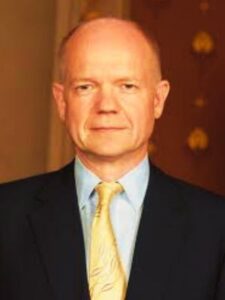
William Hague, the former leader of the Conservative Party and ex-foreign secretary, has been elected as the 160th Chancellor of Oxford University. Hague, a graduate of Oxford’s Magdalen College, secured the position after four rounds of voting.
Agenda of William Hague
William Hague, the newly elected Chancellor of Oxford University, has outlined several key priorities for his tenure:
1: Free Speech and Open Debate: Hague emphasizes the importance of maintaining Oxford as a place of open debate and free speech. He believes that learning from diverse arguments is crucial for the university’s future.
2: Funding and Resources: Addressing the challenges related to funding higher education is a significant focus. Hague aims to build on the legacy of his predecessors in securing financial stability for the university.
3: Advocacy and Representation: As Chancellor, Hague will represent Oxford at national and international events, advocating for the university’s interests and promoting its global reputation.
4: Collaboration with Leadership: Hague plans to work closely with the Vice-Chancellor and her team, as well as students and alumni, to build on their excellent work and ensure the university’s success.
Hague’s agenda reflects his commitment to upholding Oxford’s traditions while addressing contemporary challenges in higher education.
Overall Hague’s election marks a significant moment for both the university and the veteran politician. He expressed his gratitude, calling the election “the greatest honour of my life” and emphasized his commitment to serving the university. Hague will serve a 10-year term, succeeding Chris Patten, who announced his retirement earlier this year.










LEAVE A COMMENT