
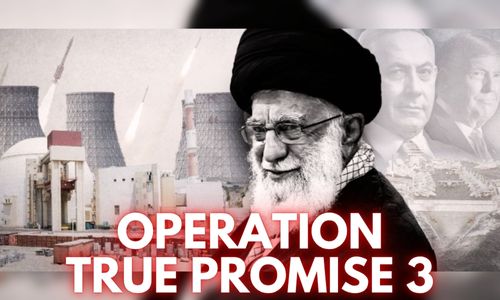
Operation True Promise 3
Amidst the Operation Rising Lion by Israel, Operation True Promise 3 is Iran’s retaliatory military operation against Israel following Operation Rising Lion. Launched by the Islamic Revolutionary Guard Corps (IRGC), the operation involved hundreds of ballistic missiles and drones targeting Israeli military bases, airfields, and strategic infrastructure.
Key Developments
- Massive Missile Barrage – Iran fired over 100 missiles, striking Tel Aviv, Haifa, and Jerusalem.
- Targeted Israeli Military Sites – Iranian forces hit airbases, missile defense systems, and command centers.
- Casualties & Damage – Reports indicate dozens of injuries in Israel, with buildings and infrastructure severely damaged.
- U.S. & U.K. Involvement – The United States assisted Israel in intercepting Iranian missiles, while the United Kingdom deployed fighter jets to the Middle East.
- Iran’s Justification – The IRGC stated the operation was a “forceful and precise retaliation” for Israeli strikes that killed Iranian military leaders and nuclear scientists.
The conflict is rapidly escalating, with global leaders urging restraint while both sides prepare for further military engagements.
Operation Name Origin
The name Operation True Promise 3 originates from the Persian phrase “Sadiq Wada 3”, which translates to “True Promise 3” in English. The term “True Promise” is deeply rooted in Islamic eschatology, referring to the Day of Judgment (Yawm al-Qiyamah)—a fundamental belief in Islam that signifies divine justice and the fulfillment of promises made by Allah.
Iran’s Islamic Revolutionary Guard Corps (IRGC) chose this name to emphasize divine retribution and national resilience, framing the operation as a forceful and precise retaliation against Israeli strikes. The number “3” suggests a continuation of previous Iranian military responses, possibly referencing earlier operations under the same name.
Significance of Operation
Operation True Promise 3 is Iran’s retaliatory military operation against Israel following Operation Rising Lion. The operation marks a major escalation in the conflict, with Iran launching hundreds of ballistic missiles and drones targeting Israeli military bases, airfields, and strategic infrastructure.
Key Significance
- Iran’s Largest Retaliation – This is Iran’s most extensive military response to Israeli strikes, demonstrating its missile capabilities.
- Strategic Targets – Iranian forces struck Israeli airbases, missile defense systems, and command centers, aiming to cripple Israel’s military response.
- Regional Impact – The operation has heightened tensions across the Middle East, with Saudi Arabia and the UAE urging de-escalation.
- Global Involvement – The United States and United Kingdom have stepped in, assisting Israel in intercepting Iranian missiles.
- Symbolic & Psychological Warfare – Iran’s leadership framed the operation as divine retribution, reinforcing national unity and signaling strength to its allies.
Effect on Israel
Operation True Promise 3 caused significant damage across Israel, with Iranian missile strikes hitting multiple cities and military sites. Here are the key impacts:
Damage to Israeli Infrastructure
- Tel Aviv & Haifa – Iranian ballistic missiles struck central Tel Aviv, causing fires and structural damage to buildings2.
- Nevatim Airbase – A key Israeli airbase was hit, reportedly damaging hangars and runways.
- Defense Ministry Headquarters – A missile struck near Israel’s Defense Ministry in Tel Aviv, leading to evacuations and emergency response efforts.
- Power Outages – Several areas in Israel experienced temporary blackouts due to missile strikes.
Casualties & Injuries
- 21 people injured, including two in critical condition. (As numbers may rise as the issue is escalating)
- Hundreds evacuated from damaged buildings in Tel Aviv.
- Israeli military personnel wounded at Nevatim Airbase.
Military Response
- Iron Dome Interceptions – Israel’s air defense systems intercepted many incoming missiles, but some breached defenses.
- U.S. & U.K. Assistance – The United States and United Kingdom deployed assets to help Israel intercept Iranian missiles.
The situation remains tense, with both sides preparing for further military engagements.
Global Reception of Operation
Iran’s retaliatory strikes against Israel, known as Operation True Promise 3, have sparked mixed global reactions. Here’s how different nations and organizations have responded:
Support for Iran’s Actions
- China explicitly condemned Israel’s attacks and backed Iran’s right to defend its sovereignty.
- Russia criticized Israel’s strikes, calling them unprovoked and a violation of international law.
- Pakistan labeled Israel’s actions unjustified aggression, affirming Iran’s right to self-defense.
- Turkey denounced Israel’s destabilization efforts, warning of regional consequences.
- Lebanon’s Hezbollah praised Iran’s response, calling it necessary retaliation.
Calls for De-escalation
- United Nations urged both sides to exercise restraint, warning of catastrophic consequences.
- Saudi Arabia condemned Israel’s violation of Iran’s sovereignty, urging diplomatic solutions.
- European Union expressed concerns over regional stability, calling for immediate ceasefire talks.
- India emphasized diplomatic resolution, urging both nations to avoid further escalation.
Concerns Over Economic Impact
- Oil Prices Surged – Brent crude jumped over 10%, raising fears of global supply chain disruptions.
- Stock Markets Plunged – Investors rushed to safe-haven assets like gold and the U.S. dollar.
- Energy Security Risks – Analysts warned that Iran could disrupt oil shipments through the Strait of Hormuz.
The situation remains volatile, with global leaders pushing for diplomatic solutions while both sides prepare for further military engagements.
Operation Outcry in Israel, Europe and USA
Iran’s retaliatory missile strikes on Israel have triggered widespread outcry across Israel, Europe, and the United States. Here’s how different regions have reacted:
Israel’s Reaction
- Public Fear & Panic – Air raid sirens in Tel Aviv and Haifa sent residents rushing to shelters as Iranian missiles struck key locations.
- Casualties & Damage – Reports indicate at least 13 fatalities, including three children, with hundreds injured.
- Government Condemnation – Israeli Prime Minister Benjamin Netanyahu vowed severe retaliation, calling Iran’s attack “a criminal act”.
- Military Readiness – The Israel Defense Forces (IDF) intercepted many incoming missiles, but some breached defenses, causing damage.
European Response
- United Kingdom & France – Both nations deployed fighter jets to the Middle East, warning Iran against further escalation.
- Germany & EU Leaders – European Union officials expressed concerns over regional stability, calling for immediate ceasefire talks.
- Russia’s Stance – Russia criticized Israel’s initial strikes, calling them unprovoked, while urging diplomatic solutions.
United States Reaction
- Government Response – U.S. President Donald Trump warned Iran that “the full strength” of the U.S. military would be deployed if American assets were attacked.
- Military Assistance – The U.S. helped Israel intercept Iranian missiles, deploying additional defense assets in the region.
- Calls for De-escalation – U.S. officials urged both sides to halt further strikes, warning of catastrophic consequences.
The situation remains tense, with global leaders pushing for diplomatic solutions while both sides prepare for further military engagements.
Way Forward
The way forward after Operation True Promise 3 depends on how Iran, Israel, and the international community choose to respond. Here are some possible scenarios:
- Diplomatic De-escalation
- International Mediation – The United Nations, United States, and European Union may push for ceasefire negotiations to prevent further escalation.
- Backchannel Talks – Iran and Israel could engage in secret diplomacy to avoid prolonged conflict.
- Sanctions & Pressure – Western nations may impose economic sanctions on Iran to deter further retaliation.
- Continued Military Engagement
- Iranian Retaliation – Iran may expand missile strikes on Israeli cities or target U.S. bases in the region.
- Israeli Follow-up Strikes – Israel could continue targeting Iranian military assets, including energy infrastructure.
- Regional Proxy Wars – Iran-backed groups like Hezbollah and the Houthis may escalate attacks on Israel.
- Long-Term Strategic Shifts
- Iran’s Nuclear Acceleration – Iran may speed up uranium enrichment, potentially leading to a nuclear crisis.
- Middle East Alliances – Gulf nations like Saudi Arabia and the UAE may reassess their security strategies, possibly aligning more closely with Israel.
- Global Economic Impact – Oil prices could spike, affecting global markets and energy security.
The situation remains volatile, with global leaders pushing for diplomatic solutions while both sides prepare for further military engagements.











LEAVE A COMMENT