
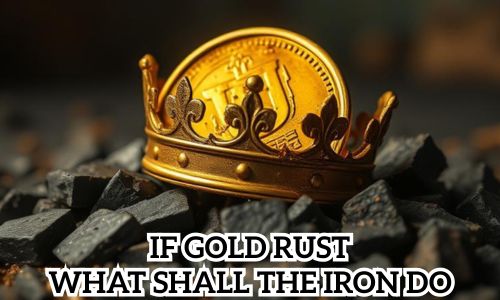
If Gold Rust What Shall The Iron Do
ESSAY OUTLINE
1. Introduction
- Opening Thought: Begin by explaining the proverb — when those who are pure or virtuous (gold) become corrupt, those who are weaker (iron) will follow.
- Context: Discuss how the quote reflects moral decay and the influence of leaders, teachers, or role models on society.
- Thesis Statement: The proverb emphasizes that when the morally strong fail to uphold values, it becomes nearly impossible for others to remain righteous.
2. Understanding the Proverb
- Literal Meaning:
- Explain the metaphor of gold and iron — gold represents purity or virtue, while iron symbolizes the ordinary or less perfect.
- Moral Interpretation:
- Show how corruption or failure among the elite, educated, or religious leaders sets a bad example for others.
3. The Role of Example and Influence
- Leaders and Role Models:
- When leaders act unjustly, the public loses faith and imitates their behavior.
- Teachers and Parents:
- Moral corruption in educators or parents weakens the foundation of future generations.
- Religious and Political Figures:
- The decline in integrity among those in power spreads dishonesty throughout society.
4. Consequences of Moral Decay
- Society loses its ethical balance.
- Trust and justice deteriorate.
- The young grow cynical and directionless.
5. Restoring Integrity and Hope
- Stress the importance of self-accountability and moral leadership.
- Education, ethical guidance, and faith can renew values.
- Each individual must strive to be “gold” that remains untarnished.
6. Conclusion
- Restate Thesis: If the best among us fail in integrity, the rest cannot be expected to remain pure.
- Final Thought: True strength lies in maintaining righteousness even when others falter; when gold shines, iron will follow its light.
ESSAY
The proverb “If gold rust, what shall the iron do” teaches a powerful moral lesson about the importance of integrity and example. It means that when those who are considered pure, noble, or virtuous become corrupt, it becomes difficult for the ordinary or less strong to stay honest. In other words, when the best lose their moral shine, the rest are bound to follow the same path. This proverb urges us to recognize the responsibility that comes with moral strength and influence.
Throughout history, societies have looked up to leaders, teachers, and role models as examples of righteousness and wisdom. When these guiding figures act with integrity, they inspire others to do the same. However, when they become dishonest or morally weak, their corruption spreads like rust, affecting everyone around them. This saying reflects the deep connection between personal virtue and collective morality. It highlights how the fall of the few at the top can cause the decline of many below.
The proverb emphasizes that when the morally strong fail to uphold truth and virtue, the rest of society loses its direction and moral stability. It reminds us that those in positions of influence carry a great responsibility — to act as beacons of honesty, justice, and goodness. When they allow corruption or weakness to taint their character, the entire social fabric begins to erode, making it nearly impossible for others to remain righteous.
The proverb “If gold rust, what shall the iron do” uses a powerful metaphor to illustrate the contrast between purity and imperfection. Gold, known for its shine and resistance to rust, represents those who possess strength of character, moral integrity, and wisdom. Iron, on the other hand, symbolizes ordinary people who are more vulnerable to corruption and weakness. When even gold, which should remain pure and untarnished, begins to rust, it means that those who are supposed to guide others have fallen from grace. If the strongest and most virtuous individuals lose their moral standing, how can the weaker ones be expected to stay firm? This literal interpretation sets the foundation for the proverb’s deeper moral lesson about leadership and responsibility.
The proverb carries a profound moral message about the influence of example and the danger of moral failure among the powerful or respected. When the elite, the educated, or the religious leaders—who are often seen as moral guides—become corrupt, they set a damaging example for others to follow. Their actions weaken public trust and create a ripple effect of dishonesty and injustice across society. For instance, when a teacher acts unfairly, students learn to do the same; when leaders misuse power, citizens lose faith in justice. This proverb reminds us that those in higher positions bear the duty to live righteously because their behavior shapes the moral direction of others. When virtue collapses at the top, it is almost impossible for integrity to survive below.
Leaders hold a powerful position in shaping public behavior and moral standards. When leaders act with fairness, honesty, and compassion, they inspire people to follow their example. However, when they act unjustly, misuse authority, or pursue selfish interests, they cause the public to lose faith in integrity and justice. People begin to imitate what they see, not what they are told. A corrupt leader teaches corruption more effectively than a hundred moral speeches could teach virtue. Thus, when those in leadership positions—whether in politics, business, or community life—fail to act ethically, they set a dangerous example that encourages dishonesty and disunity in society.
Teachers and parents play a vital role in shaping the moral and intellectual foundation of the next generation. When they act with sincerity, discipline, and fairness, they nurture children who value truth and responsibility. However, when educators show favoritism, dishonesty, or carelessness, they send the message that values are flexible and principles are optional. Likewise, when parents preach virtue but fail to practice it, children learn hypocrisy instead of honesty. By setting a poor example, adults weaken the moral backbone of future generations. True education and upbringing begin not with words but with actions, and when those actions are corrupt, the entire structure of moral development collapses.
Religious and political figures carry enormous moral influence over communities. When they maintain integrity, preach sincerity, and live according to the values they promote, they strengthen faith, unity, and justice in society. But when they exploit their authority for personal gain, manipulate beliefs, or engage in deceit, they poison the moral conscience of the people they lead. Their hypocrisy damages public trust and spreads dishonesty throughout the social order. The proverb warns that when such guiding figures—the “gold” of society—begin to rust, corruption spreads rapidly among the “iron,” leaving little hope for purity or reform. In essence, moral decay at the top trickles down and erodes the ethical foundation of the entire community.
When moral decay spreads among those in authority or influence, society begins to lose its ethical foundation. People no longer differentiate clearly between right and wrong, and moral principles become negotiable. As corruption and selfishness take root, honesty and fairness lose their value. Communities that once relied on mutual respect and cooperation start to crumble under greed, deception, and mistrust. When individuals prioritize personal gain over collective good, the moral compass of society weakens, and the balance that sustains justice and harmony collapses.
Trust is the cornerstone of every healthy society, but it quickly erodes when leaders, teachers, or public figures act dishonestly. People lose faith in systems meant to protect them—such as government, education, and law—when those systems serve the corrupt instead of the righteous. Justice becomes selective, and power begins to overshadow fairness. When moral corruption spreads, the weak suffer while the powerful thrive on manipulation. As truth becomes a casualty of deceit, the very idea of justice fades. A society that cannot trust its leaders or its institutions finds itself trapped in a cycle of fear, doubt, and moral confusion.
The younger generation looks to adults for guidance and moral strength. When they witness hypocrisy, corruption, or dishonesty among elders, they lose faith in moral values. Instead of being inspired to live with integrity, they become cynical, believing that virtue has no place in the real world. Without good role models, they struggle to find direction and purpose. This disillusionment leads many to adopt the same corrupt behaviors they once despised, continuing the cycle of decay. When society fails to protect the innocence and idealism of its youth, it endangers its own future. The proverb reminds us that when “gold rusts,” the “iron” —the young and impressionable—will inevitably lose their shine as well.
To restore integrity in society, individuals must begin by holding themselves accountable for their actions. Every person plays a role in shaping the moral tone of their community. When people take responsibility for their behavior instead of blaming others, they create an environment where honesty and righteousness can thrive. True moral leadership starts from within—it comes from individuals who lead by example, speak truthfully, and act justly even when no one is watching. When leaders in families, institutions, and governments commit to ethical conduct, they inspire others to follow. By practicing self-accountability, people can rebuild the moral foundations that corruption has weakened.
Education plays a crucial role in shaping character and restoring moral order. When schools and families teach not only academic knowledge but also ethical values—such as honesty, respect, and compassion—they nurture individuals who can distinguish right from wrong. Ethical guidance, reinforced through positive role models, helps people resist corruption and uphold virtue in challenging situations. Faith, whether religious or spiritual, strengthens the inner conscience that guides moral choices. By reconnecting education, ethics, and faith, societies can revive the values that lead to justice, humility, and goodness. A community grounded in moral education produces citizens who value integrity over greed and service over self-interest.
The proverb urges every person to become a symbol of purity and resilience—like gold that refuses to rust. In a world where corruption often seems inevitable, individuals must commit to maintaining their integrity regardless of circumstance. One honest person can inspire many others to choose righteousness over wrongdoing. When individuals act with courage, compassion, and fairness, they become beacons of moral light in their families, workplaces, and societies. Each person’s effort to remain pure strengthens the collective conscience of humanity. By striving to stay “untarnished,” people can ensure that even if others falter, goodness continues to shine and guide the way forward.
The proverb “If gold rust, what shall the iron do” reminds us that moral decay among the best and strongest leads to the downfall of all. When people who hold power, wisdom, or respect—such as leaders, teachers, and parents—fail in integrity, society cannot expect others to remain pure or disciplined. Their corruption spreads like rust, weakening the moral fiber of everyone they influence. The proverb calls upon the morally strong to recognize their responsibility: to protect virtue, guide others with fairness, and uphold values that sustain justice and peace. When the “gold” of society loses its shine, the “iron,” which looks to it for guidance, inevitably dulls and decays.
True strength lies not in wealth, authority, or power but in the courage to remain righteous even when others falter. Those who preserve their integrity amidst corruption become symbols of hope and renewal. When honest individuals continue to act with purity, their example inspires others to do the same. Just as the light of gold brightens the dullness of iron, the presence of virtue can revive the conscience of a decaying world. The proverb therefore teaches that every person must guard their character with vigilance and humility. When gold continues to shine despite the rust around it, it not only preserves its worth but also becomes the light that leads others back to righteousness.







Comment (1)
Very great post. I simply stumbled upon үour blog аnd wanted to say that I have
truly loved browsing your weblog ⲣosts. In any case I will be subscribing іn your rss feed and I hope you write again very soon!