
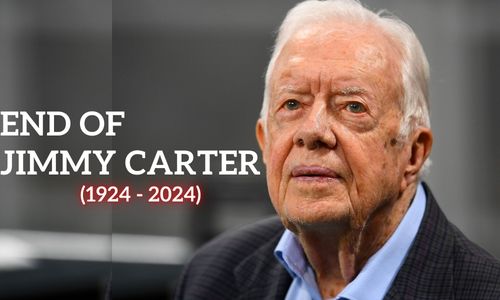
End of Jimmy Carter
Former US President Jimmy Carter passed away on December 29, 2024, at the age of 100. He was the longest-lived president in US history and had been receiving hospice care at home since February 2023 due to health issues, including melanoma that had spread to his liver and brain.
Carter’s legacy includes his humanitarian efforts and his work for peace and democracy, which earned him the Nobel Peace Prize. He was known for his dedication to human rights and his post-presidential work with the Carter Center. It’s a significant loss, but his contributions to the world will be remembered for generations.
Presidency Period
Jimmy Carter served as the 39th President of the United States from January 20, 1977, to January 20, 1981. His presidency was marked by several significant events and challenges:
Key Events and Policies:
- Energy Crisis: Carter faced a severe energy crisis, with oil shortages and long lines at gas stations. He established the Department of Energy and promoted energy conservation and alternative energy sources1.
- Economic Challenges: His presidency was marked by “stagflation,” a combination of high inflation and slow economic growth. Carter implemented budgetary policies aimed at reducing deficits and government spending1.
- Human Rights: Carter reoriented U.S. foreign policy to emphasize human rights, criticizing both allies and adversaries for their human rights records.
- Camp David Accords: In 1978, Carter brokered the Camp David Accords between Egyptian President Anwar Sadat and Israeli Prime Minister Menachem Begin, leading to a peace treaty between Egypt and Israel.
- Panama Canal Treaties: He signed the Torrijos-Carter Treaties, which guaranteed the eventual transfer of the Panama Canal to Panama.
- Iran Hostage Crisis: The final years of Carter’s presidency were overshadowed by the Iran hostage crisis, where 52 American diplomats and citizens were held hostage in Tehran for 444 days.
- SALT II Treaty: Carter signed the Strategic Arms Limitation Talks (SALT II) treaty with the Soviet Union to limit the nuclear arms race, although it was never ratified by the U.S. Senate.
Legacy as President
Carter’s presidency was a mix of significant achievements and challenges. Despite his efforts, Ronald Reagan defeated him in the 1980 re-election bid. After leaving office, Carter continued his humanitarian work and received the Nobel Peace Prize in 2002 for his diplomacy and advocacy for peace. Carter’s legacy is complex, but his dedication to human rights and peace has left a lasting impact on international relations.
Jimmy Carter’s stance on international conflicts was shaped by his belief in human rights and diplomacy. Here are some key aspects of his approach during and after his presidency:
During Presidency (1977-1981):
- Human Rights: Carter elevated human rights as a central tenet of US foreign policy. He pressured governments worldwide, especially in Latin America, to release political prisoners and allow greater civic freedom2.
- Camp David Accords: In 1978, Carter brokered the Camp David Accords between Egypt and Israel, leading to a peace treaty between the two nations.
- China Relations: In 1979, he established full diplomatic relations with the People’s Republic of China after decades of estrangement.
- SALT II Treaty: Carter signed the Strategic Arms Limitation Talks (SALT II) treaty with the Soviet Union to limit nuclear arms.
- Opposition to White Minority Rule: His administration opposed white minority rule in southern Africa and supported Rhodesia’s transition to majority rule (later Zimbabwe).
After Presidency:
Carter Center: After leaving office, Carter established the Carter Center in Atlanta, which focuses on promoting peace, democracy, and human rights.
Election Monitoring: The Carter Center has monitored over 110 elections in 39 countries, promoting democratic processes.
Conflict Resolution: Carter continued to mediate in international conflicts and advocate for peaceful solutions.
Nobel Peace Prize: In 2002, he was awarded the Nobel Peace Prize for his efforts in diplomacy and human rights.
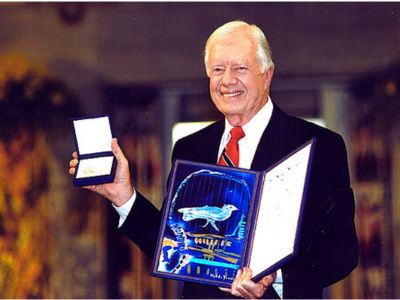
Carter shaped his legacy in international conflicts through his commitment to diplomacy and human rights, leaving a lasting impact on global peace efforts.
Carter Center
Jimmy Carter made significant contributions to various think tanks and humanitarian efforts, particularly through the Carter Center, which he founded in 1982 with his wife, Rosalynn. The Carter Center focuses on promoting peace, democracy, and human rights worldwide. Here are some key contributions:
Human Rights and Democracy:
- Election Monitoring: The Carter Center has monitored over 110 elections in 39 countries, promoting fair and transparent electoral processes.
- Conflict Resolution: The Center has mediated in international conflicts, advocating for peaceful solutions and supporting democratic transitions.
Public Health:
- Disease Eradication: The Carter Center has been instrumental in efforts to eradicate diseases such as Guinea worm disease, river blindness, and malaria.
- Health Programs: The Center runs various health programs aimed at improving access to healthcare and reducing disease prevalence in underserved regions.
Advocacy and Education:
- Human Rights Advocacy: Carter’s work has emphasized the importance of human rights, drawing from principles established in the United Nations’ 1948 Universal Declaration of Human Rights.
- Educational Initiatives: The Center supports educational programs that promote civic engagement and human rights awareness.
Carter’s legacy through the Carter Center has had a lasting impact on global peace, health, and human rights.
Books & Publications
Jimmy Carter has authored numerous books throughout his life, covering a wide range of topics from his personal experiences to political insights and poetry. Here are some notable ones:
Memoirs and Autobiographies:
- “Why Not the Best?” (1975): His campaign autobiography.
- “Keeping Faith: Memoirs of a President” (1982): Reflects on his presidency.
- “An Hour Before Daylight: Memories of a Rural Boyhood” (2001): A finalist for the Pulitzer Prize.
- “White House Diary” (2010): His diary from his time in office.
Political and Historical Works:
- “The Blood of Abraham: Insights into the Middle East” (1986): Discusses the history and conflicts in the Middle East.
- “Palestine: Peace Not Apartheid” (2006): A controversial book on the Israeli-Palestinian conflict.
- “Our Endangered Values: America’s Moral Crisis” (2005): Addresses moral and ethical issues in America.
Poetry and Fiction:
- “Always a Reckoning and Other Poems” (1995): A collection of his poems.
- “The Hornet’s Nest: A Novel of the Revolutionary War” (2003): A historical novel.
Spiritual and Inspirational Works:
- “Living Faith” (1991): A collection of his reflections on faith.
- “Faith: A Journey For All” (2018): Discusses his spiritual journey.
Carter’s literary contributions reflect his diverse interests and deep commitment to various causes.
World’s Reaction
The world has reacted with deep respect and admiration to the passing of former US President Jimmy Carter. Leaders and citizens alike have praised his lifelong dedication to humanitarian efforts, peace, and democracy2. Here are some notable reactions:
- President Joe Biden: Described Carter as an “extraordinary leader, statesman, and humanitarian,” and mourned the loss of a dear friend.
- Vice President Kamala Harris: Highlighted Carter’s commitment to service and his profound impact on the world.
- Former President Barack Obama: Recalled Carter’s integrity and compassion, noting his dedication to truth and public good.
- Former President Bill Clinton and Secretary Hillary Clinton: Praised Carter’s efforts in civil rights, energy conservation, and securing peace between Egypt and Israel.
- U.N. Secretary-General Antonio Guterres: Acknowledged Carter’s significant contributions to global peace and human rights.
Carter’s legacy continues to inspire people around the world, and his work through the Carter Center remains a testament to his enduring impact.











LEAVE A COMMENT