
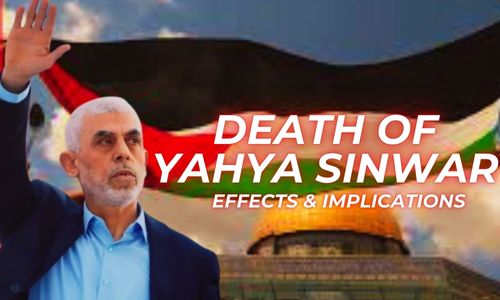
Death of Yahya Sinwar
Amidst the martyrdom’s of Ibrahim Raisi, Ismail Haniye and Hassan Nasrallah, now Yahya Sinwar, the leader of Hamas, is the latest martyr, killed by Israeli forces on October 16, 2024, in Rafah, Gaza. His death marks a significant moment in the ongoing conflict between Israel and Hamas. Sinwar was considered a key figure in Hamas and was involved in orchestrating the October 7, 2023, attack on Israel.
His death has left a leadership gap in Hamas, complicating hostage talks and raising uncertainty about the group’s future. Israeli Prime Minister Netanyahu emphasized that while Sinwar’s death is significant, it doesn’t end the conflict.
World Reaction
The death of Yahya Sinwar has elicited a range of reactions from world leaders and international communities. Here’s a snapshot:
- U.S. President Joe Biden: He stated that Sinwar’s death provides an opportunity for a “day after” in Gaza without the militant group in power, emphasizing that much work remains to be done.
- Canadian Prime Minister Justin Trudeau: He described Sinwar as a brutal leader whose death delivers a measure of justice for his victims and their families.
- French President Emmanuel Macron: Macron highlighted Sinwar’s responsibility for the October 7th attacks and called for the release of all hostages still held by Hamas.
- German Foreign Minister Annalena Baerbock: She labeled Sinwar a brutal murderer and terrorist, urging Hamas to release all hostages and lay down its weapons.
- Italian Prime Minister Giorgia Meloni: Meloni expressed hope that Sinwar’s death would lead to the release of hostages, an immediate ceasefire, and the beginning of reconstruction in Gaza.
- UK Defence Secretary John Healey: Healey did not mourn Sinwar’s death, acknowledging the terror leader’s role in the October 7th attacks and the subsequent conflict.
- Hamas: The group confirmed Sinwar’s death and hailed him as a martyr. They reiterated that they will not release the hostages taken from Israel until a ceasefire is in place and Israeli troops withdraw from Gaza.
- Hezbollah: Hezbollah vowed to escalate their actions against Israel, declaring a transition to a new and more aggressive phase of the conflict. They emphasized that Sinwar’s death would only strengthen the resistance2.
- Iran: Iran’s mission to the United Nations stated that Sinwar’s death would bolster the spirit of resistance in the region. They compared Sinwar to historical figures who stood against oppression, framing his death as a symbol of steadfastness2.
- Other Middle Eastern Countries: Reactions from other Middle Eastern countries have been mixed. While some have expressed concern over the potential for increased violence, others have remained relatively silent, focusing instead on the broader implications for regional stability
The reactions reflect a mix of relief, hope for peace, and calls for further action to address the
ongoing conflict and humanitarian crisis in Gaza.
Impact on Gaza War
The death of Yahya Sinwar, the leader of Hamas, has significant implications for the ongoing Gaza War. His death is seen as a major blow to Hamas, given his role in orchestrating attacks and leading the group. However, it does not mark the end of the conflict. Israeli Prime Minister Benjamin Netanyahu has stated that the war will continue, and the Israeli Defense Forces (IDF) will keep operating in Gaza.
Sinwar’s death could lead to a leadership vacuum within Hamas, potentially making it harder for the group to maintain its current level of operations. This might also open up opportunities for ceasefire negotiations, as the new leadership may seek to end the conflict. However, the situation remains complex, and the war is likely to continue for the foreseeable future
Successors
Khalil al-Hayya, based in Qatar and overseeing Gaza, is expected to take over executive management following Sinwar’s death. Other potential candidates for the Hamas leadership include Zaher Jibril, who handles the West Bank, and Khaled Meshaal, who oversees foreign regions. Meshaal and al-Hayya both belong to Hamas’s political leadership in Qatar.
Al-Hayya, a Hamas veteran and less hardline compared to Sinwar, led ceasefire talks in 2014 and during the current conflict. Known for his close ties with Haniyeh and reportedly good relations with Iran, al-Hayya has expressed openness to a truce with Israel.
In contrast, Meshaal, a relatively moderate figure, served as Hamas’s political leader from 1996 to 2017. He is close to Turkey and Qatar but has strained relations with Iran, Syria, and Hezbollah. Other possible successors include Mohammed Sinwar, a key military leader in Gaza, and Moussa Abu Marzouk, a founding Hamas member and former head of its political bureau.
For security reasons, Hamas may decide to appoint a leader but keep the selection confidential.
Future of Hamas and Gaza war
The future of Hamas in Gaza and the ongoing Gaza war are complex and uncertain. The death of Yahya Sinwar has created a leadership vacuum within Hamas, which could lead to internal power struggles and potentially weaken the group’s operational capabilities. However, Hamas has vowed to continue its resistance against Israel, and the conflict is likely to persist.
The future of Gaza itself is also uncertain. Israel confirmed it will maintain a security presence in Gaza, with ongoing talks about post-war governance involving the Palestinian Authority, international peacekeepers, and Arab nations in Gaza’s reconstruction.
The humanitarian situation in Gaza remains dire, with widespread destruction, displacement, and a severe lack of basic necessities. The international community is calling for increased humanitarian aid and efforts to rebuild the territory.
In short, Sinwar’s death may affect Hamas’s leadership, but the conflict in Gaza is likely to persist, leaving Gaza’s future governance uncertain. The focus will likely be on humanitarian relief and reconstruction efforts in the short term.












LEAVE A COMMENT