
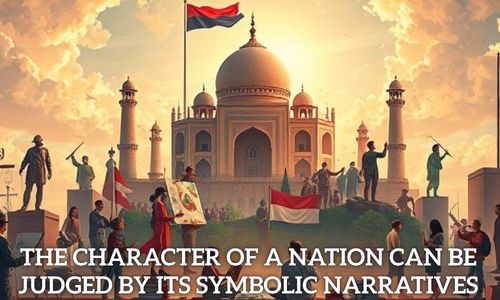
The Character of a Nation Can be Judged by its Symbolic Narratives
ESSAY OUTLINE
1. Introduction
- Opening Thought:
Begin with a reflection on how nations express their values and identity through stories, symbols, and collective memories. - Context:
Explain that symbolic narratives—such as national flags, anthems, myths, historical figures, and monuments—serve as mirrors reflecting a nation’s moral and cultural character. - Key Idea:
These symbols do more than represent a nation; they define how it perceives itself and wishes to be seen by the world. - Thesis Statement:
The character of a nation can indeed be judged by its symbolic narratives, as they embody its values, history, struggles, and aspirations, revealing the true essence of its identity.
2. Understanding Symbolic Narratives
- Definition:
Explain that symbolic narratives are stories, icons, or traditions that represent a nation’s beliefs, virtues, and worldview. - Examples:
Discuss examples like national flags, constitutions, independence heroes, or cultural festivals that embody deeper meanings. - Purpose:
Show how these narratives unite people, inspire patriotism, and preserve historical memory.
3. How Symbolic Narratives Reflect National Character
- Moral and Ethical Values:
Explain how a nation’s symbols reveal its core principles—freedom, justice, equality, or faith.- Example: The Statue of Liberty symbolizes freedom and opportunity.
- Historical Experience:
Show how wars, revolutions, and sacrifices shape the stories a nation tells about itself.- Example: The French Revolution’s symbolism of liberty, fraternity, and equality.
- Cultural Identity:
Describe how language, art, and rituals reflect shared traditions and collective pride.- Example: Japan’s cherry blossom as a symbol of beauty, impermanence, and renewal.
4. The Power of National Symbols and Myths
- Unifying Force:
Explain how shared symbols build national solidarity and belonging. - Moral Compass:
Discuss how narratives guide citizens toward desired behaviors and ideals. - Political and Emotional Influence:
Show how leaders use symbols to inspire or mobilize people during crises or reforms.- Example: Gandhi’s use of the spinning wheel as a symbol of self-reliance.
5. Distorted or Contradictory Narratives
- Manipulation of Symbols:
Examine how propaganda or political agendas can distort national stories. - Selective Memory:
Discuss how nations sometimes glorify certain histories while ignoring injustices.- Example: Colonial powers celebrating conquest while hiding oppression.
- Erosion of Authenticity:
Explain how commercialization or excessive nationalism can weaken the true meaning of symbols.
6. The Role of Citizens in Preserving Symbolic Integrity
- Critical Awareness:
Encourage citizens to understand and question the narratives they inherit. - Reinterpretation:
Show how societies can reinterpret symbols to reflect modern values like inclusivity and peace. - Cultural Responsibility:
Emphasize the duty to protect cultural symbols from misuse or distortion.
7. Counterarguments
- Symbols Can Be Misleading:
A nation’s symbols may project an ideal image that doesn’t match its reality. - Globalization and Cultural Overlap:
Explain how global influences blur the uniqueness of national narratives. - Individual Diversity:
A nation’s character is also shaped by its people, not only its symbols.
8. Conclusion
- Restate Thesis:
Symbolic narratives provide deep insight into a nation’s moral and cultural character. - Summarize Key Points:
They reflect values, history, and identity but can also reveal contradictions and aspirations. - Final Thought:
A nation’s greatness lies not only in its power or wealth but in the truth and integrity of the stories it tells about itself—its symbols, its heroes, and its collective soul.
ESSAY
Every nation expresses its identity and collective values through the stories it tells and the symbols it honors. Nations create narratives that shape how their people think, act, and unite. Through national symbols—such as flags, emblems, and memorials—countries communicate what they stand for. By celebrating heroes, remembering historical struggles, and preserving cultural traditions, nations actively define their moral and spiritual foundation.
Symbolic narratives function as the mirrors of a nation’s conscience. They reflect not only its achievements but also its trials and transformation over time. A flag represents unity and pride, an anthem evokes patriotism and resilience, and monuments remind citizens of the sacrifices that built their freedom. Similarly, historical figures and myths carry lessons about courage, justice, and integrity. When nations honor these symbols, they project their moral and cultural identity to their own people and to the world. Thus, symbolic narratives become powerful tools through which a nation expresses its true character.
These national symbols do more than simply represent a country—they actively shape its self-image. When citizens sing their anthem or salute their flag, they reaffirm a shared sense of belonging and purpose. Nations use symbols to define who they are, what they believe in, and how they want to be perceived globally. Through this process, symbolic narratives help people internalize values like freedom, unity, equality, and perseverance. As a result, a nation’s symbols and stories not only display its ideals but also guide its behavior and collective vision.
The character of a nation can indeed be judged by its symbolic narratives, because these narratives embody its moral values, historical experiences, struggles, and aspirations. Through its symbols, a nation reveals the principles it cherishes, the challenges it has overcome, and the vision it holds for the future. In essence, symbolic narratives serve as a window into the soul of a nation—showing not just what it has achieved, but what it strives to become.
Symbolic narratives represent the collective identity and moral essence of a nation. These narratives are not merely stories or traditions—they are expressions of shared ideals, struggles, and aspirations. When a country tells its story through symbols, monuments, and rituals, it communicates its vision of justice, freedom, and unity. For example, a nation’s anthem might express resilience, while its flag symbolizes values like sacrifice, honor, or hope. In essence, symbolic narratives allow a nation to define what it stands for and remind its people of their common purpose.
Every great nation builds and preserves symbolic narratives that strengthen its identity. For instance, national flags use colors and patterns to represent unity, bravery, or independence. Constitutions serve as living symbols of justice and democracy, guiding a nation’s moral and legal framework. Independence heroes embody courage and sacrifice, reminding future generations of the price paid for freedom. Cultural festivals reflect the nation’s spiritual richness and harmony, keeping ancestral traditions alive. Through these examples, a nation continues to pass down its legacy from one generation to the next, ensuring that its values remain vibrant and relevant.
Symbolic narratives play a crucial role in uniting people under a shared sense of belonging. They create emotional and cultural bonds that transcend class, region, or language differences. When citizens honor their flag, celebrate national holidays, or remember their heroes, they reaffirm their loyalty and love for their homeland. These narratives also preserve historical memory by connecting past achievements with present responsibilities. By doing so, they inspire patriotism, guide moral behavior, and strengthen national resilience. In short, symbolic narratives help a nation not only remember who it is but also envision what it strives to become.
A nation’s symbols vividly express its moral and ethical foundation. They reflect the ideals that guide its people—such as freedom, justice, equality, and faith. When a country chooses certain symbols to represent itself, it consciously projects what it stands for and what it aspires to be. For instance, the Statue of Liberty in the United States stands as a universal emblem of freedom and opportunity. It communicates the belief that every individual deserves liberty, dignity, and a fair chance to pursue happiness. Through such symbols, nations not only define their values but also inspire citizens to uphold them in daily life.
A nation’s symbolic narratives often emerge from its historical struggles and triumphs. These symbols help preserve the memory of wars, revolutions, and sacrifices that have shaped the national spirit. When a nation experiences hardship, it often transforms those memories into powerful stories of resilience and unity. For example, the French Revolution gave rise to enduring symbols of liberty, fraternity, and equality—principles that continue to define France’s identity today. By honoring their past through these narratives, nations remind future generations of the courage and vision that built their freedom, ensuring that history becomes a source of strength rather than division.
Cultural symbols reveal the soul of a nation by expressing its shared traditions, language, and artistic expression. Through literature, music, art, and national rituals, societies convey their collective pride and sense of belonging. For example, in Japan, the cherry blossom (sakura) serves as a profound national symbol representing beauty, impermanence, and renewal. The annual blooming season brings communities together in celebration, reflecting Japan’s deep appreciation for nature and life’s fleeting beauty. Such cultural symbols bind people emotionally, reminding them of their roots and reinforcing unity through common heritage.
National symbols act as a powerful source of unity by connecting citizens through shared identity and emotion. When people rally around a common flag, anthem, or historical legend, they feel part of something greater than themselves. These symbols transcend regional, linguistic, or cultural differences, binding citizens together under one collective vision. For example, a national flag reminds people of their shared history and struggle for independence. Governments and institutions deliberately use these symbols during national events, celebrations, and crises to strengthen cohesion and patriotism. By embracing these common symbols, citizens develop a deeper sense of loyalty and belonging to their nation.
National myths and symbols also serve as a moral compass, guiding citizens toward values and ideals that define their society. Stories of national heroes, freedom movements, and sacrifices teach people what virtues the nation holds sacred—such as courage, honesty, justice, and perseverance. These narratives shape public consciousness, influencing how individuals behave and what they aspire to become. For instance, nations celebrate their founding fathers or revolutionaries not only to honor them but also to remind citizens of integrity, unity, and selflessness. In this way, national myths do more than recount history—they provide ethical direction and reinforce a sense of purpose and duty within the populace.
Leaders actively use national symbols and myths as tools to inspire, mobilize, or unite people, especially during times of crisis or transformation. Political movements often draw strength from these symbols, which evoke emotional responses and collective pride. When a leader invokes a national symbol, they awaken shared memories of struggle, resilience, and triumph. For example, Mahatma Gandhi used the spinning wheel (charkha) as a symbol of self-reliance and resistance against colonial exploitation. This simple image motivated millions of Indians to adopt non-violent protest and economic independence. Similarly, modern leaders employ flags, emblems, and historical references to rally citizens around reform or national recovery. These symbolic gestures foster emotional unity and give people a sense of participation in a shared destiny.
Governments, media, and political leaders often manipulate national symbols and stories to serve specific agendas. They use flags, slogans, and historical figures to promote unity or justify power, even when the underlying motives are self-serving. For instance, political regimes may glorify certain events to strengthen authority or create a false sense of patriotism. When leaders control how history is told, they can reshape truth into propaganda. This manipulation confuses citizens, blurs moral boundaries, and prevents societies from confronting their genuine past. A nation that allows its symbols to be distorted risks replacing truth with illusion.
Nations often practice selective memory by celebrating achievements while concealing uncomfortable truths. Governments and institutions emphasize victories, heroes, and progress, but they often ignore the injustices that occurred along the way. For example, colonial powers highlight exploration and cultural exchange while suppressing stories of exploitation, slavery, and oppression. This selective remembrance creates an incomplete narrative that distorts collective identity. When people forget or deny parts of their history, they repeat mistakes and fail to learn from them. By choosing which events to remember, societies construct an image of themselves that feels noble but lacks honesty.
When nations overuse symbols for commercial or political gain, they weaken their original meaning. Excessive nationalism, consumerism, and marketing often turn cultural icons into products instead of values. For instance, using patriotic imagery in advertisements or political campaigns can cheapen the very ideals those symbols represent. Citizens begin to associate national pride with consumption or blind loyalty rather than genuine love and responsibility for their country. Over time, this erodes authenticity and replaces sincere identity with spectacle. A nation must protect the integrity of its symbols by keeping them rooted in truth, shared values, and humility.
Citizens play a crucial role in preserving the true meaning of their national, cultural, or historical symbols. They must develop critical awareness to understand the origins, purpose, and significance of the narratives they inherit. When individuals think critically, they prevent blind acceptance of outdated or manipulated interpretations. By engaging in discussions, reading authentic sources, and questioning propaganda, people actively protect their collective identity from distortion. A nation’s strength lies in its informed citizens who can distinguish between respectful preservation of tradition and its misuse for personal or political gain.
Societies thrive when citizens are willing to reinterpret traditional symbols in ways that align with modern values such as inclusivity, peace, and equality. People can breathe new life into old traditions by emphasizing their universal meanings rather than their divisive aspects. For example, citizens can celebrate national holidays or cultural symbols by focusing on unity and diversity rather than superiority or exclusion. When communities reinterpret symbols thoughtfully, they make them relevant for future generations while honoring their historical roots. This reinterpretation process keeps culture alive and progressive, transforming it into a tool for harmony rather than conflict.
Every citizen bears a cultural responsibility to protect shared symbols from misuse, distortion, or commercialization. When people respect their cultural heritage and act responsibly, they ensure that these symbols continue to represent truth, dignity, and collective identity. Citizens can fulfill this duty by speaking out against those who exploit symbols for hate, division, or profit. Participating in educational programs, cultural events, and heritage preservation efforts strengthens this responsibility. By actively preserving the integrity of their symbols, citizens maintain the moral fabric and unity of their society, ensuring that future generations inherit values rooted in respect and authenticity.
A nation often uses symbols—such as flags, emblems, or slogans—to project strength, unity, and peace. However, these symbols may not always represent the true condition of the country. Governments may promote an image of prosperity or moral superiority while concealing internal divisions, corruption, or injustice. When a nation emphasizes appearances over actions, it risks losing authenticity. People and other nations begin to question whether its values are genuine or performative. Thus, while symbols can inspire pride, they can also mislead both citizens and the world if they fail to reflect the nation’s real conduct or integrity.
Globalization has connected countries more than ever before, but it has also blurred the uniqueness of national identities. Nations borrow ideas, systems, and cultural elements from one another, creating overlaps in traditions, politics, and values. As global influences spread through technology, media, and trade, the distinct traits that once defined a nation’s character become diluted. A nation that claims moral or ideological superiority might unknowingly adopt the very practices or values it once opposed. Therefore, in a globalized world, the strength of a nation lies not in isolation or symbolic purity but in its ability to adapt, cooperate, and maintain authenticity amid shared global influences.
A nation’s identity and success depend not only on its leaders, policies, or national symbols but also on its people. Every citizen contributes to the moral and cultural fabric of the country. When individuals act with integrity, creativity, and compassion, they strengthen the nation’s true character. However, when inequality, prejudice, or division persist among the population, the nation’s ideals become hollow. The diversity of people—their beliefs, languages, and experiences—shapes a nation far more than abstract symbols or official rhetoric. Therefore, true greatness comes from empowering individuals to live the values that the nation claims to uphold.
Symbolic narratives actively reveal the moral and cultural essence of a nation. They do not merely exist as stories or legends; rather, they shape how a people understand their values, virtues, and collective identity. Through symbols—such as heroes, historical myths, and national ideals—a nation consciously defines what it stands for and what it aspires to become. By interpreting these narratives, one can actively trace the evolution of a nation’s conscience and its guiding principles.
Symbolic narratives actively reflect a nation’s values, history, and identity. They celebrate victories, honor sacrifices, and preserve moral lessons that unite people under shared ideals. However, these same narratives can also expose contradictions, such as the gap between proclaimed values and lived realities. For instance, a nation might glorify freedom while struggling with inequality. By examining such tensions, we can understand how nations confront their flaws and strive for growth. Thus, symbolic stories serve both as mirrors of truth and as instruments of transformation.
A nation achieves greatness not through its power, territory, or material wealth but through the integrity of the stories it tells about itself. When a nation tells stories grounded in truth, compassion, and justice, it builds moral strength that endures beyond any empire or economy. Its symbols become timeless because they resonate with sincerity and purpose. Ultimately, a nation’s collective soul shines brightest when its myths, heroes, and ideals reflect not propaganda, but the authentic pursuit of wisdom, unity, and virtue.









LEAVE A COMMENT