
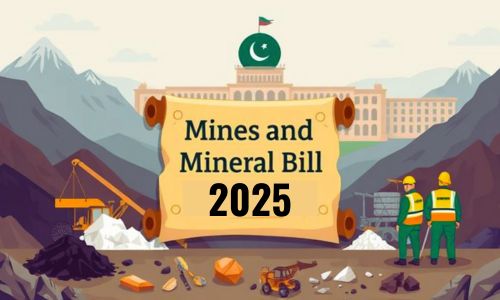
Mines and Mineral Bill
The Khyber Pakhtunkhwa (KP) government introduced the Mines and Minerals Bill 2025 to reform the mining sector in the province through proposed legislation. Here are some key highlights:
- Investment Facilitation: The bill seeks to attract both domestic and international investments by, in turn, creating a Mineral Investment Facilitation Authority. This move is designed to streamline processes, thereby making it easier for investors to engage in the sector.
- Transparency and Digitalization: It introduces a digital system for granting mineral titles and licenses, ensuring transparency and accessibility.
- Shortened License Period: The government will reduce the license duration for leases to three years to make the process more efficient.
- Geological Database: The bill mandates the creation of a comprehensive geological database to support exploration and investment decisions.
- Crackdown on Illegal Mining: A special task force will be established to combat illegal mining, with penalties and machinery confiscation.
- Provincial Autonomy: The KP government has clarified that the bill does not transfer provincial authority to any external entity, addressing concerns about federal interference.
The bill has sparked debates within political circles, particularly among members of the Pakistan Tehreek-e-Insaf (PTI), with some linking its approval to the consent of PTI founder Imran Khan.
Purpose of Bill
The purpose of the Mines and Minerals Bill is to reform and modernize the mining sector in Pakistan, particularly in the province of Khyber Pakhtunkhwa. Here’s what the bill aims to achieve:
- Boost Investment: By creating a streamlined and investor-friendly environment, it seeks to attract local and international businesses to the mining sector.
- Increase Efficiency: The bill reduces the duration of mining licenses and introduces digital systems to simplify the licensing process.
- Enhance Transparency: By implementing digital record-keeping and clear rules, the bill aims to combat corruption and ensure fair practices.
- Support Exploration: Establishing a detailed geological database helps identify potential mining areas and encourages exploration.
- Combat Illegal Mining: A special task force will enforce rules, penalize illegal activities, and confiscate machinery used in unauthorized mining.
- Empower Provincial Authorities: The bill ensures that mineral resources are managed effectively at the provincial level, supporting regional autonomy and development.
Essentially, the bill seeks to unlock the economic potential of Pakistan’s vast mineral resources while ensuring sustainable and responsible practices.
Clauses of Bill
The Mines and Minerals Bill of Pakistan includes several key clauses aimed at regulating and modernizing the mining sector. While the exact text of the bill may vary depending on the province or context, here are some general provisions often included in such legislation:
- Licensing and Leases:
- Procedures for granting, renewing, and revoking exploration or mining licenses and leases.
- Conditions and fees associated with these licenses.
- Regulation of Mining Activities:
- Rules for the exploration, extraction, and processing of minerals.
- Safety standards for mining operations.
- Revenue and Royalties:
- Determination of royalties, rents, and taxes to be paid by license holders.
- Mechanisms for revenue sharing between the government and local communities.
- Environmental Protection:
- Requirements for environmental impact assessments (EIAs) before starting mining projects.
- Measures to mitigate environmental damage caused by mining.
- Illegal Mining:
- Penalties for unauthorized mining activities.
- Confiscation of equipment used in illegal operations.
- Strategic Minerals:
- Provisions for declaring certain minerals as “strategic” and regulating their extraction.
- Transparency and Digitalization:
- Introduction of digital systems for managing licenses and records.
- Measures to ensure transparency in the allocation of mining rights.
- Community Development:
- Clauses to ensure that mining activities contribute to the development of local communities.
For the exact clauses and legal language, you can refer to the official text of the bill or related documents, such as the Regulation of Mines and Oilfields and Mineral Development Act, 1948.
Impact on Locals
The Mines and Minerals Bill could have several potential impacts on local communities, both positive and challenging. Here’s how it might play out:
Positive Impacts
- Economic Opportunities: By attracting investments, the bill could create more jobs for locals, from mining labor to support industries like transportation and services.
- Infrastructure Development: Mining projects often lead to the development of roads, schools, and hospitals in nearby areas, benefitting residents.
- Skills Development: Training programs tied to mining activities might empower locals with new skills and expertise.
- Revenue Sharing: If managed well, a portion of the revenue from mining could be reinvested into community projects, improving living standards.
- Empowerment: By tackling illegal mining, the bill could ensure that resources are used for the benefit of the public, rather than exploited by unregulated entities.
Challenges
- Environmental Concerns: Mining can lead to deforestation, soil erosion, and water contamination, affecting agriculture and local ecosystems.
- Displacement: Expansion of mining areas might displace communities, disrupting their lives and cultural heritage.
- Health Risks: Mining operations could expose residents to dust, noise, and other pollutants, leading to health problems.
- Equity Issues: If benefits are not equitably distributed, it could create resentment or conflict among community members.
The actual outcome will largely depend on the implementation of the bill. Specifically, it will rely on how effectively authorities ensure transparency, enforce environmental protections, and involve local stakeholders in decision-making processes.
Stance of PTI Provincial Government and Military Establishment
Various stakeholders, including the KP government and factions within PTI, have supported the Mines and Minerals Bill. They argue it attracts investment, curbs illegal mining, and modernizes the sector. The KP government emphasizes that the bill upholds provincial autonomy and retains authority within the province.
The military establishment has shown interest in the bill as part of its broader economic agenda. The Special Investment Facilitation Council (SIFC), backed by both civilian and military leadership, has prioritized the mining sector for investment. By passing the bill, the government aims to develop mineral resources, attract foreign investment, and generate substantial revenue.
Opposition parties and some PTI members have criticized the bill, claiming it could undermine provincial autonomy and increase federal control over KP’s resources. This debate highlights the complex relationship between economic development, political dynamics, and regional governance.
Criticism
Criticism against the Mines and Minerals Bill largely revolves around concerns about governance, transparency, and the implications for provincial autonomy. Here are the main points raised by opponents:
- Provincial Autonomy: Critics argue that the bill could lead to federal or external entities exerting control over KP’s mineral resources, undermining the province’s authority.
- Impact on Local Stakeholders: There are fears that the bill might prioritize large-scale investments over the interests of local communities, potentially sidelining smaller, traditional miners and local stakeholders.
- Environmental Risks: Environmentalists worry that the bill does not adequately address the ecological consequences of expanded mining operations, such as deforestation, soil erosion, and water contamination.
- Lack of Transparency: Some have expressed concerns about whether the digital systems for licensing and governance will be implemented fairly and effectively.
- Military Involvement: The backing of the military establishment has raised eyebrows among opposition parties, who see it as a potential overreach into civilian matters.
- Political Concerns: The bill’s association with the Special Investment Facilitation Council (SIFC), which has military backing, and reports of PTI’s founder Imran Khan’s alleged consent for the bill, have led to political divisions. Some see the bill as being driven by top-down pressure rather than grassroots consensus.
- Strategic Minerals: The government can now define and declare certain minerals as “strategic” under the bill, raising concerns that it might hand them over to foreign investors or institutions without providing adequate safeguards.
- Economic Exploitation: There is apprehension that foreign companies or institutions might exploit resources without contributing significantly to local development.
Ultimately, these criticisms highlight a broader debate about balancing economic development, environmental protection, and regional governance. These concerns highlight the need for clear regulations, equitable agreements, and robust oversight to ensure that the bill benefits local communities and preserves provincial rights.
Post Bill
After passing the Mines and Minerals Bill, the KP government will retain control over mines and minerals. At the same time, the bill will introduce new bodies, such as the Mineral Investment Facilitation Authority, and implement digital systems. These steps aim to modernize the sector and, in turn, attract investors.
However, despite these efforts, the bill has raised concerns about potential federal or military involvement through the SIFC. In response, the KP government has reassured critics that it will protect provincial autonomy. Ultimately, the true impact of the bill will depend on how effectively the government implements it.
Way Forward
The way forward involves adopting a multifaceted approach to ensure that the Mines and Minerals Bill achieves its intended goals. Additionally, it must address the concerns raised by various stakeholders, thereby balancing progress with necessary safeguards. Here’s a potential roadmap:
1. Transparent Implementation
- Introduce clear and detailed regulations to prevent ambiguity.
- Ensure transparency in licensing, agreements, and revenue allocation.
- Set up mechanisms for regular audits and public reporting.
2. Stakeholder Engagement
- Actively involve local communities, environmentalists, and experts in decision-making.
- Establish platforms for dialogue to address the concerns of opposition parties and other critics.
3. Environmental Safeguards
- Develop and enforce strict environmental regulations to minimize ecological harm.
- Conduct Environmental Impact Assessments (EIAs) before initiating large-scale mining projects.
4. Equitable Revenue Sharing
- Ensure a fair distribution of mining revenues, allocating funds to local development projects like education, healthcare, and infrastructure.
5. Capacity Building
- Invest in training programs for local workers to enable them to benefit from employment opportunities in the mining sector.
- Build the capacity of provincial authorities to manage and regulate the sector effectively.
6. Independent Oversight
- Establish an independent body to oversee the implementation of the bill and address grievances.
- Monitor the role of any foreign entities or institutions to ensure accountability and fairness.
7. Periodic Reviews
- Conduct regular reviews of the bill’s impact to identify challenges and make necessary amendments.
The government can build trust, reduce risks, and drive sustainable economic development by taking these steps to improve the mining sector.









LEAVE A COMMENT