

Labour Day
Labour Day
Labour Day is a global holiday observed around the globe on May 1st of every year. The holiday honors the American labour movement and the contributions that workers have made to the strength, prosperity, laws, and well-being of the country. The holiday is marked by parades, picnics, and barbecues, and is considered the unofficial end of summer in USA.
The first Labour Day was celebrated on September 5, 1882, in New York City, organized by the Central Labour Union. It became a federal holiday in 1894, following the deaths of several workers during the Pullman Strike. Today, many workers in the United States have the day off from work on Labour Day, and it is seen as a time to relax and spend time with family and friends. It is also a time to reflect on the importance of work and the contributions that workers have made to the country.
Reasons
Labour Day is celebrated to honor and recognize the contributions of American workers to the country’s economy, society, and well-being. The holiday commemorates the efforts of the labour movement and the achievements of workers in the United States, who have fought for better working conditions, fair wages, and improved rights. The beginning of Labour Day can be hinted back to the late 19th century when workers in the United States began organizing and demanding healthier working circumstances, including an eight-hour workday, safer working conditions, and better pay. Labour unions formed, and workers went on strike to protest unfair treatment by employers.
In 1882, the Central Labour Union of New York City organized the first Labour Day parade to recognize the efforts of workers and the labour movement. The holiday gradually gained acceptance across the country and was officially recognized as a federal holiday in 1894. Today, Labour Day is celebrated on 1st May of every year and is a time to honor the contributions of workers, take a break from work, and spend time with family and friends.
Hay Market Affair
On May 1, 1886, thousands of workers went on strike across the country to demand an eight-hour workday. The following day, on May 2, a confrontation occurred between striking workers and police at the McCormick Harvesting Machine Company in Chicago, resulting in the death of one worker and several others being injured. On May 4, a peaceful rally was held in Chicago’s Haymarket Square to protest the previous day’s violence. During the rally, a bomb was thrown towards the police, resulting in the deaths of seven officers and four civilians, and many others were injured. The police responded by firing into the crowd, killing and injuring a number of people.
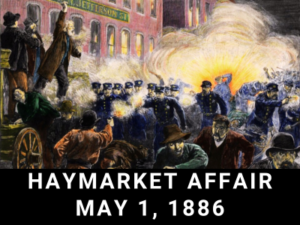
The Haymarket affair led to the arrest and trial of several labour leaders and activists, many of whom were anarchists. Eight of them were charged with conspiracy and were convicted and sentenced to death, despite a lack of evidence linking them to the bombing. This event had a significant impact on the labour movement and the fight for workers’ rights in the United States and around the world.
Purpose
The aim of Labour Day is to honor and celebrate the achievements and contributions of American workers to the country’s economy, society, and well-being. The holiday is meant to recognize the struggles and sacrifices made by workers throughout history to improve their working conditions, wages, and rights. Labour Day also serves as a reminder of the importance of fair labour practices and the need to protect workers’ rights. It is an opportunity to reflect on the progress made in the past and to acknowledge the challenges that still exist today, such as income inequality, job insecurity, and discrimination.
Moreover, Labour Day offers an event for workers to come together and celebrate their harmony and shared experiences. It is a time to recognize the value of hard work and to appreciate the contributions of workers from all walks of life and all industries. Overall, the aim of Labour Day is to show gratitude and respect for the efforts and contributions of American workers and to promote the continued advancement of workers’ rights and protections.
Labour and Labour Rights in Pakistan
Labour Day, also known as May Day, is celebrated in Pakistan on May 1st each year. In reality, the celebration of Labour Day in Pakistan is usually low-key and limited to a few events and demonstrations organized by labour unions and workers’ organizations. Trade unions and workers’ organizations hold rallies and demonstrations in major cities across the country to highlight the challenges and issues faced by workers in Pakistan. However, the celebration of Labour Day in Pakistan is often marred by clashes between the police and protesters, and there have been reports of violence and arrests during these demonstrations in the past.
In recent years, some private companies and organizations in Pakistan have also started to acknowledge Labour Day by giving their workers the day off or organizing special events and activities to show appreciation for their employees. However, this is still not widespread, and many workers in Pakistan continue to work on Labour Day without any recognition or celebration of their contributions.
The labour situation in Pakistan is complex and has been a cause of concern for several years. The country has a large workforce, with an estimated 65 million workers, but the majority work in the informal sector, where they lack legal protections, job security, and social benefits. Formal sector workers also face significant challenges, including low wages, unsafe and unhealthy working conditions, child labour, forced labour, and discrimination against women and minorities.
The government of Pakistan has enacted labour laws and regulations to protect workers’ rights and improve their working conditions, but these laws are often not enforced adequately, leading to widespread violations and exploitation of workers. Trade unions exist in Pakistan, but they face several challenges, including restrictions on the right to organize, harassment, and intimidation of union members, and limited bargaining power. Overall, the labour situation in Pakistan remains a challenge, and there is a need for greater enforcement of labour laws and improved protection of workers’ rights, particularly in the informal sector.
The Constitution of Pakistan and several labour laws provide legal protection and rights to workers in the country. Some of the key labour rights in Pakistan include:
- Minimum Wage: The government of Pakistan sets a minimum wage for workers, which is revised periodically. Employers are required to pay workers at least the minimum wage.
- Working Hours: The maximum working hours per week for an adult worker are 48 hours, with one day off each week. Workers are also entitled to paid leave and overtime pay.
- Health and Safety: Employers are required to provide safe and healthy working conditions for their workers. The government of Pakistan has also established laws and regulations to ensure workplace safety and health.
- Social Security: The government has established a social security system that provides benefits to workers, including pensions, medical care, and disability benefits.
- Trade Unions: Workers have the right to form and join trade unions, and unions have the right to bargain collectively with employers. However, there are some restrictions on the right to organize, and unions face challenges in their ability to negotiate with employers.
- Child Labour: The minimum age for employment in Pakistan is 14 years, and child labour is prohibited in hazardous occupations. However, child labour remains a significant issue in Pakistan, particularly in the informal sector.
Despite these labour rights, many workers in Pakistan still face challenges and violations of their rights. There is a need for greater enforcement of labour laws and improved protection of workers’ rights, particularly in the informal sector.
Struggle for Labour Rights in Pakistan
The struggle of labour for rights is a long and ongoing one that has taken place over centuries. In Pakistan, as in other countries, labour rights have been won through the collective action of workers and their allies. Some of the key milestones in the struggle for labour rights in Pakistan include:
The establishment of trade unions: The first trade unions were established in the early 20th century, and workers used these unions to advocate for better wages and working conditions.
- The Labour Laws: The first labour laws were enacted in the 1950s, providing some legal protections for workers.
- The Labour Movement 1960s: In the 1960s, workers’ movements gained momentum, and the Pakistan Trade Union Federation (PTUF) was established.
- The Labour Movement 1970s: The 1970s saw a period of intense labour activism, and the All-Pakistan Federation of Labour (APFL) was formed in 1972.
- The Labour Movement 1980s: The military dictatorship of General Zia-ul-Haq in the 1980s suppressed labour rights and trade unions. However, workers continued to organize and resist, and the Pakistan Workers Confederation (PWC) was established in 1988.
- The Labour Movement 1990s: In the 1990s, labour activism increased again, and workers organized protests and strikes to demand better wages, working conditions, and legal protections.
Today, workers and their allies continue to fight for labour rights in Pakistan. There have been recent efforts to organize workers in the informal sector, where workers often lack legal protections and bargaining power. The struggle for labour rights in Pakistan, as in other countries, is ongoing and requires continued collective action and solidarity.
Child Labour in Pakistan
Child labour is a worldwide concern that abuses children’s rights and can have long-term depressing effects on their health, education, and future opportunities. Poverty, lack of education, and discrimination against marginalized and disadvantaged communities are some of the main drivers of child labour. There are international laws and conventions that prohibit child labour, but the lack of enforcement and implementation remains a persistent issue in many countries.

In Pakistan, child labour is a significant problem, with an estimated 12.5 million children aged between 5 and 14 years engaged in child labour. Poverty and lack of access to education are the main reasons children are forced to work, with many children working in hazardous conditions and without access to healthcare or education. Although there are laws in place to prohibit child labour, enforcement remains a challenge, and child labour is prevalent in many parts of the country.
Efforts to combat child labour in Pakistan involve increasing access to education and opportunities for children, enforcing laws and regulations to protect them from exploitation in the workforce, and creating awareness about the harmful effects of child labour. NGOs and civil society organizations are also providing support and resources to children and families affected by child labour.
Exploitation of Labour Rights in Private Sector
The situation of labour in the private sector in Pakistan is complex and varied, and workers in this sector face many challenges and issues. One of the main challenges faced by private sector workers in Pakistan is job insecurity. Many workers are hired on short-term contracts or as temporary employees, which can make it difficult to negotiate for better wages and working conditions or to access benefits such as health insurance or pension plans.
Private sector workers in Pakistan also often face low wages, with many workers earning less than the minimum wage set by the government. Long working hours are also common, with some workers reporting working up to 12 hours a day. Safety and health hazards are also significant issues in the private sector, with many workers in industries such as textiles, construction, and mining working in hazardous and unsafe conditions. Workplace accidents and injuries are common, and many workers lack access to protective equipment or training.
Trade unions in the private sector face restrictions on their ability to organize and bargain collectively with employers. Employers often engage in anti-union activities, such as intimidation and harassment of union leaders and members. Overall, the situation of labour in the private sector in Pakistan is challenging, and workers face many obstacles in accessing their rights and protections. There is a need for greater enforcement of labour laws and improved protection of workers’ rights, as well as greater efforts to promote decent work and fair wages in the private sector.
Violation of Labour Rights in Pakistan
The severity of labour rights violations in Pakistan remains a significant concern. Despite the existence of labour laws and regulations, workers in Pakistan face many challenges and violations of their rights. One of the most significant challenges is the prevalence of the informal sector, where workers lack legal protections and job security. The informal sector accounts for a significant proportion of the country’s workforce, and many workers in this sector are vulnerable to exploitation and abuse.
In the formal sector, workers face challenges such as low wages, long working hours, and unsafe working conditions. Employers often fail to comply with labour laws, and the government’s enforcement of these laws is weak, leading to widespread violations of workers’ rights. Child labour is also a significant concern in Pakistan, particularly in the informal sector. Many children are forced to work in hazardous and exploitative conditions, often to support their families.
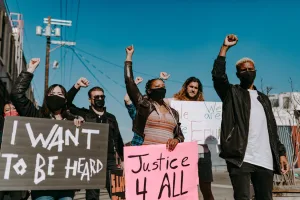
Trade unions face restrictions on their ability to organize and bargain collectively with employers. Union leaders and members are often subjected to harassment and intimidation by employers, and some have faced violence or imprisonment. Overall, the severity of labour rights violations in Pakistan is a cause for concern, and there is a need for greater enforcement of labour laws and improved protection of workers’ rights. This will require greater commitment and action from the government, employers, and civil society organizations.
Measures
There are several measures that can be taken to cope up with violations of labor laws and child labor laws in Pakistan:
Strengthening Legal Frameworks: The government can strengthen the legal frameworks and regulatory mechanisms to ensure that labor laws and child labor laws are enforced. This can include increasing penalties for violations, improving the monitoring and enforcement of labor laws, and ensuring that the legal frameworks are in line with international labor standards.
- Increasing Awareness: Raising awareness among workers and employers about labor laws and child labor laws can help prevent violations. This can involve public education campaigns, training for employers and workers, and the dissemination of information through social media and other channels.
- Improving Access to Education: Lack of access to education is a significant driver of child labor in Pakistan. Therefore, increasing access to education and ensuring that children have access to quality education can help reduce the prevalence of child labor.
- Strengthening Labor Inspections: The government can strengthen labor inspections to ensure that workplaces are complying with labor laws and that child labor is not being used. This can involve hiring more inspectors, improving their training, and increasing the frequency of inspections.
- Providing Support to Victims: Victims of labor law violations and child labor can be provided with support and resources to help them recover from their experiences. This can include providing counseling, medical care, and legal support to victims and their families.
- Collaboration and Partnerships: Collaboration and partnerships between the government, civil society organizations, and the private sector can help address violations of labor laws and child labor. This can involve sharing information, coordinating efforts, and developing joint initiatives to combat child labor and promote decent work for all.
Overall, a multi-stakeholder approach is needed to address violations of labor laws and child labor in Pakistan, and it requires the commitment and cooperation of all stakeholders, including the government, employers, workers, civil society organizations, and consumers.







LEAVE A COMMENT