
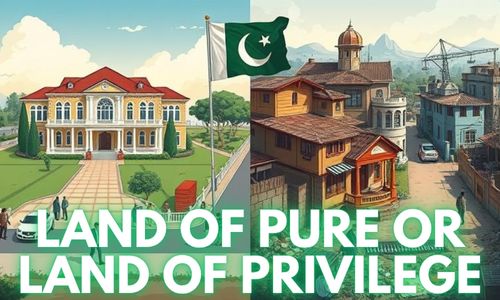
Land of Pure or Land of Privilege
ESSAY OUTLINE
1: Introduction
- Define “fair play”: honesty, justice, equal opportunity, rule of law.
- Explain the phrase “land of pure” as Pakistan’s aspirational identity.
- Thesis statement:
- Despite claiming ideals of fairness, life in Pakistan often reflects deep inequalities, corruption, and injustices, yet there remains potential for reform and a more equitable society.
2: Historical Context of the Ideal
- Founding vision of Pakistan: justice, equality, Islamic values.
- Quaid-i-Azam’s emphasis on rule of law and minority rights.
- Early institutional efforts for fairness (e.g., judiciary, bureaucracy).
- Gap between founding ideals and evolving realities.
3: Political System and Governance
- Patronage and clientelism undermining merit and fairness.
- Corruption and weak accountability mechanisms.
- Elite capture of resources and influence.
- Examples: electoral irregularities, political dynasties.
4: Justice and Legal System
- Delayed justice due to case backlogs and inefficiency.
- Unequal access: poor vs. wealthy litigants.
- Parallel justice systems (jirgas/panchayats) violating rights.
- Case study: lack of accountability in high-profile cases.
5: Socioeconomic Inequality
- Urban-rural divide in services and opportunities.
- Concentration of wealth among elite families.
- Limited upward mobility for marginalized communities.
- Gender disparities in education, employment, and pay.
6: Everyday Life and Social Norms
- Nepotism and sifarish (connections) over merit.
- Gender-based discrimination in family and work life.
- Honour-based violence justified as protecting family reputation.
- Religious and sectarian prejudices influencing social relations.
7: Media and Public Discourse
- Sensationalism undermining fact-based debate.
- Spread of disinformation and divisive narratives.
- Positive role of media in exposing injustice and corruption.
- Role of social media in mobilizing youth and activism.
8: Counterexamples and Positive Developments
- Judicial activism and legal reforms (e.g., anti-harassment laws).
- Strong civil society organizations promoting rights.
- Youth movements demanding accountability.
- Individual stories of integrity and fair play in public service.
9: Recommendations
- Strengthen rule of law and access to justice.
- Reform bureaucracy to ensure merit-based recruitment and promotion.
- Invest in equitable education and healthcare.
- Promote civic education to encourage fairness, tolerance, and critical thinking.
- Empower marginalized groups, especially women and minorities.
10: Conclusion
- Restate thesis: Pakistan struggles to live up to ideals of fair play despite claiming to be the “land of pure.”
- Emphasize dual reality of challenges and potential.
- Call to action: Encourage collective commitment—from citizens, leaders, institutions—to build a fairer, more just Pakistan.
ESSAY
We define fair play as the practice of acting with honesty, upholding justice, ensuring equal opportunity for all, and respecting the rule of law. When a society values fair play, it treats citizens impartially, holds institutions accountable, and guarantees that everyone has a chance to succeed based on merit rather than privilege or connections. Fair play requires transparency, integrity, and a commitment to ethical conduct in all spheres of life—from government to business to daily social interactions.
We understand “land of pure” as a translation of “Pakistan,” which was envisioned as a nation grounded in high moral and ethical principles. The founders dreamed of building a state defined by justice, honesty, and equality, where citizens would live free from oppression, discrimination, and exploitation. This aspirational identity reflects a collective hope that Pakistan would embody purity of intention and governance, serving as a model of fairness and integrity in the Muslim world and beyond.
Despite claiming ideals of fairness, life in Pakistan often reflects deep inequalities, corruption, and injustices, yet there remains potential for reform and a more equitable society.
Pakistan publicly embraces the values of fair play, promising justice and equal opportunity to its citizens. However, in practice, daily life reveals persistent inequalities, systemic corruption, and widespread injustices that undermine this vision. Power, wealth, and connections often dictate outcomes, leaving many marginalized and disenfranchised. Yet this is not a hopeless situation. Pakistan still holds significant potential for reform, as civil society movements, legal activism, and public awareness campaigns push for a more just and equitable society. By recognizing these challenges and committing to change, the country can move closer to realizing the ideals of its founding vision.
The founders of Pakistan envisioned a state built on justice, equality, and Islamic principles that emphasized fairness and compassion. They wanted to create a country where citizens would enjoy equal rights regardless of caste, creed, or class. This vision aimed to break away from the colonial legacy of discrimination and inequality, promising a society governed by moral integrity and social justice inspired by Islamic teachings.
Quaid-i-Azam Muhammad Ali Jinnah repeatedly stressed the importance of the rule of law, constitutionalism, and protection of minority rights. He declared that religion would be a personal matter, and the state would ensure equal treatment for all citizens. He advocated for a legal framework that would secure justice and prevent the abuse of power. By doing so, he laid the groundwork for a country that would practice genuine fairness and respect for diversity.
In the early years, Pakistan tried to establish institutions that could uphold the ideal of fair play. The judiciary was designed to act independently and impartially, ensuring justice for all. The bureaucracy aimed to provide efficient, merit-based public service, free from nepotism or corruption. These institutions reflected an ambition to build a state that would operate transparently and equitably, offering citizens reliable mechanisms to address grievances and ensure accountability.
Despite these lofty ideals, Pakistan quickly experienced a widening gap between vision and practice. Political instability, military interventions, and personalized power eroded institutional independence. Corruption took root in public administration, undermining merit and fairness. Socioeconomic inequalities deepened, and marginalized groups continued to face discrimination. As a result, the promise of building a land of fairness and justice often clashed with the harsher realities of power politics and self-interest.
Politicians often rely on patronage networks to secure and maintain power. They distribute jobs, contracts, and favors to loyal supporters instead of selecting people based on merit. This system encourages loyalty to individuals over institutions and weakens fairness in public service. When leaders prioritize personal connections, they erode public trust and deny opportunities to talented citizens who lack political connections.
Officials across different levels of government frequently engage in corrupt practices, siphoning off public funds or demanding bribes for basic services. Weak oversight institutions fail to hold them accountable. Anti-corruption agencies often face political interference, limiting their effectiveness. This culture of impunity makes citizens cynical and undermines any genuine effort to promote rule of law and equal treatment.
A small political and economic elite dominates key institutions and resources in Pakistan. Wealthy families and power brokers influence policy to serve their interests, blocking reforms that would help the poor or marginalized. They secure favorable contracts, monopolize land, and shape laws that entrench their power. This capture of the state limits social mobility and widens inequality, making fairness a distant ideal for ordinary Pakistanis.
Electoral processes often suffer from irregularities such as vote-buying, rigging, and manipulation of results. Political dynasties continue to dominate parties and legislatures, passing power from one generation to the next without meaningful competition. These practices deny equal opportunity to new leaders and silence alternative voices. As a result, the political system struggles to deliver genuine democracy and fair representation for all citizens.
Courts in Pakistan face massive backlogs that delay justice for years, sometimes decades. Judges handle overwhelming caseloads without enough resources or support staff to ensure timely decisions. Bureaucratic red tape, outdated procedures, and frequent adjournments worsen the problem. When the legal system cannot deliver verdicts swiftly, it denies citizens effective remedies and fuels public frustration with the rule of law.
Wealthy litigants often use their resources to hire skilled lawyers, influence officials, or drag out cases to exhaust poorer opponents. Meanwhile, the poor struggle to afford legal representation or navigate complex procedures. Legal aid systems remain weak and underfunded. As a result, justice becomes a privilege for those who can pay, rather than a right equally accessible to all.
In many rural areas, people turn to informal systems like jirgas or panchayats to resolve disputes quickly. While these forums offer speedy resolutions, they often violate fundamental rights, especially of women and minorities. Decisions can involve forced marriages, honor-based punishments, or collective fines without fair hearings. The state fails to regulate or replace these systems with accessible, rights-based alternatives.
High-profile cases involving powerful individuals frequently illustrate the failure of equal justice. Politicians, business tycoons, and influential criminals often avoid punishment through legal loopholes, political pressure, or bribery. Investigations stall, witnesses face intimidation, and verdicts rarely hold the powerful accountable. These failures reinforce the public perception that the law applies selectively, further weakening faith in the system.
Pakistan’s development heavily favors urban centers, leaving rural areas with poor infrastructure, healthcare, and education. The government often invests more in cities while neglecting remote regions. As a result, rural populations face limited job opportunities, inadequate schools, and scarce medical facilities. This divide forces many to migrate to cities, straining urban resources and deepening inequality.
A small group of elite families and businesses controls a significant share of national wealth and resources. These elites use their influence to shape policies, secure lucrative contracts, and protect their interests. Meanwhile, the majority of the population struggles with inflation, unemployment, and stagnant wages. This concentration of wealth creates social divisions and limits the country’s overall economic potential.
Marginalized groups—including ethnic minorities, low-income families, and certain castes—struggle to break cycles of poverty. They often face discrimination in education, hiring, and social networks. Without targeted support or inclusive policies, these communities remain trapped in low-paying, insecure work with little chance to improve their lives. Government programs frequently fail to reach or empower them effectively.
Women and girls in Pakistan continue to face significant barriers to equality. Many families prioritize boys’ education, leaving girls with fewer opportunities to complete schooling. In the workforce, women often work in informal or low-paying jobs and face discrimination in hiring and promotion. Gender pay gaps persist across sectors. Cultural norms and safety concerns further limit women’s mobility and participation in the economy, undermining national development.
People in Pakistan often use personal connections or sifarish to secure jobs, admissions, and government services. Employers routinely favor relatives or well-connected applicants instead of choosing candidates based on merit or qualifications. This practice undermines fairness and demoralizes talented individuals who cannot compete on an equal footing. As a result, institutions fail to build a culture of excellence and transparency.
Families often impose unequal expectations on men and women. Parents may prioritize sons’ education and careers while pressuring daughters into early marriage and household duties. In workplaces, employers frequently deny women leadership roles, question their commitment, or pay them less for the same work. Society enforces these discriminatory norms through cultural and religious arguments, limiting women’s choices and contributions.
Communities often defend honour-based violence—including forced marriages, beatings, and even killings—as necessary to protect family reputation. Families target women who choose their partners, seek divorce, or defy social expectations. Local councils (jirgas and panchayats) sometimes endorse these punishments instead of reporting crimes to formal courts. Such violence perpetuates fear and suppresses individual freedom, particularly for women.
Religious and sectarian divides shape daily interactions and fuel distrust between communities. People often judge others’ worth or loyalty based on sectarian identity, leading to discrimination in neighborhoods, workplaces, and even marriages. Political and religious leaders sometimes exploit these divisions to maintain power, spreading hate speech or misinformation. These prejudices weaken social cohesion and make collective progress harder.
Pakistani media outlets often prioritize sensational stories and dramatic language to attract viewers and boost ratings. News channels focus on heated talk shows, shouting matches, and emotional appeals rather than sober analysis or evidence-based reporting. Journalists sometimes overlook context or nuance, choosing instead to amplify conflict and controversy. This culture of sensationalism undermines public understanding of complex issues and discourages reasoned, informed debate.
Political actors, interest groups, and even some media houses deliberately spread disinformation to manipulate public opinion. They circulate false or misleading stories about political opponents, minority groups, or foreign powers. Social media platforms accelerate the spread of these narratives, making it harder for people to distinguish fact from fiction. This deliberate spread of misinformation deepens social divides and fosters distrust among different communities.
Despite these flaws, Pakistani media has often played a crucial role in holding power to account. Investigative journalists uncover corruption scandals, land grabs, and abuse of authority. News coverage highlights human rights violations, such as honour killings or child labour, forcing authorities to respond. By shining a light on injustices, the media empowers citizens to demand accountability and pushes the state to uphold the rule of law.
Pakistani youth increasingly use social media to organize, share ideas, and challenge entrenched power structures. Online platforms enable activists to highlight issues like women’s rights, climate change, and minority discrimination. Hashtag campaigns raise awareness and force mainstream media to cover neglected topics. Through social media, ordinary people amplify their voices, build solidarity across regions, and demand reforms from political leaders.
Pakistan’s judiciary has at times stepped up to fill gaps left by other branches of government. Judges have used judicial activism to challenge executive overreach and defend constitutional rights. Courts have also taken notice of public-interest cases, forcing the government to address environmental issues, women’s rights, and labour conditions. Legislators, responding to social pressure, have passed important reforms such as anti-harassment laws that protect women in workplaces. These measures signal the state’s capacity to deliver justice when there is political will and public demand.
Civil society groups in Pakistan work actively to protect human rights, promote education, and support vulnerable communities. NGOs advocate for women’s rights, campaign against honour killings, and provide legal aid to marginalized groups. Organizations such as Edhi Foundation deliver essential services in health and disaster relief, setting standards for integrity and compassion. These groups often fill gaps left by the state, pushing for reforms and holding authorities accountable.
Pakistani youth have begun to challenge entrenched power structures and demand fair play from leaders. Student groups, activists, and young professionals use social media and public demonstrations to highlight corruption, environmental degradation, and governance failures. They press political parties to offer real solutions instead of empty slogans. By demanding transparency and accountability, these youth-led movements create hope for a more democratic, just society.
Pakistan is home to many individuals who uphold the highest standards of honesty and fairness despite systemic challenges. Judges, police officers, teachers, and bureaucrats have refused bribes, exposed wrongdoing, and served the public with dedication. Whistleblowers have risked their careers to reveal corruption. These personal examples of integrity demonstrate that fair play is possible even in a challenging environment, inspiring others to follow suit.
The government must enforce laws impartially and ensure that all citizens, regardless of wealth or influence, can seek redress. Policymakers should increase funding for the judiciary, clear case backlogs, and modernize court procedures to speed up justice delivery. Legal aid programs must expand to support the poor and marginalized. By removing barriers to justice, the state can build public trust and uphold the ideal of fairness in the “land of pure.”
The government should root out patronage and favoritism in public service by enforcing transparent, merit-based recruitment. Institutions like the Federal Public Service Commission must maintain strict standards and independence. Authorities should reward competence and integrity, while punishing corruption. By prioritizing merit, the state can improve governance, deliver services more effectively, and demonstrate commitment to fair play.
Policymakers must allocate sufficient resources to ensure that every child, whether in a village or city, receives quality education. Authorities should build more schools and clinics in underserved areas and train teachers and healthcare workers to high standards. By closing urban-rural gaps in education and healthcare, the state can break cycles of poverty and give all citizens a fair chance at a better life.
Schools should teach students the principles of justice, respect for diversity, and the value of dialogue. Educators must encourage young people to question prejudice, reject violence, and participate responsibly in democracy. The government can support campaigns that promote tolerance and social harmony. By nurturing critical thinkers and responsible citizens, society can sustain fair play as a shared value.
The government should pass and enforce laws that protect women and minorities from discrimination and violence. Authorities must ensure that these groups have equal access to education, employment, and political participation. Programs should support their leadership development and encourage their voices in policy debates. By empowering the marginalized, Pakistan can move closer to its founding promise of justice and equality for all.
Pakistan calls itself the “land of pure,” reflecting an aspirational identity rooted in justice, honesty, and equality. Yet in practice, society often fails to uphold these values. Corruption, nepotism, inequality, and discrimination undermine the principle of fair play at nearly every level—from government institutions to family life. This gap between ideals and reality challenges Pakistan’s promise to its people.
Despite these obstacles, Pakistan possesses significant potential to change. The country faces deep-rooted problems such as weak governance, social prejudice, and economic disparity. At the same time, it also hosts vibrant civil society organizations, dedicated public servants, and an energetic youth demanding reform. By recognizing both the severity of the challenges and the strength of these positive forces, Pakistan can chart a realistic path toward improvement.
Citizens must hold themselves and their leaders accountable, reject corruption, and practice fairness in daily life. Political and institutional leaders should prioritize justice, transparency, and equal opportunity in policy and governance. Educational institutions, the media, and civil society must promote values of honesty, respect, and tolerance. By working together with shared purpose, Pakistan can transform its promise of being the “land of pure” into a lived reality, ensuring a fairer, more just society for all its people.









LEAVE A COMMENT