
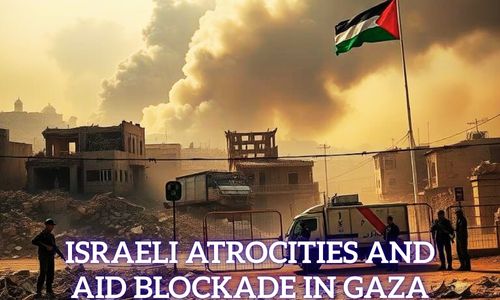
Israeli Atrocities And Gaza Aid Blockade
Since October 7, 2023, the Israeli invasion of Gaza and Rafah has triggered one of the most devastating humanitarian crises in recent history. The blockade of aid, relentless bombardment, and systematic targeting of civilians have led to widespread famine, displacement, and international condemnation. This blog post explores the atrocities committed, the blockade’s impact, and how the situation became increasingly dire and inhumane.
The Israeli military operations and blockade across Gaza, Rafah, and the West Bank continue to cause a severe humanitarian catastrophe, marked by Palestinian genocide, destruction of infrastructure, and obstruction of humanitarian aid. These regions, under prolonged military occupation and blockade, have witnessed systematic human rights violations that demand global attention and accountability.
Gaza: A Besieged Territory on the Brink of Collapse
Since 2007, Gaza has remained under an unrelenting land, sea, and air blockade imposed by Israel, restricting the movement of people and essential goods. This has led to:
-
Severe shortages of food, clean water, and medical supplies. Over 90% of Gaza’s population faces acute food insecurity
-
Total inaccessibility to electricity and fuel
-
Hospitals have bombed out causing collapse of healthcare systems; children and adults are dying from malnutrition
- The U.S. and Israel suspended support for UNRWA, crippling aid infrastructure.
More than 2.3 million residents of Gaza live under siege conditions, where over 80% rely on humanitarian aid. Despite repeated appeals from the United Nations and international NGOs, Israeli authorities frequently delay or prevent aid convoys, further exacerbating the suffering of the civilian population. Human Rights Watch has labeled the use of starvation as a weapon of war a war crimes.
Rafah Crossing Closure: A Chokehold on Humanitarian Lifelines
The Rafah border, connecting Gaza to Egypt, is the only non-Israeli controlled gateway for humanitarian relief. However, Israel has targeted and bombarded this crossing repeatedly, even during times of heightened emergency, making aid deliveries nearly impossible. The closure and attacks on Rafah have resulted in:
-
Stranded medical patients and refugees
-
Blocked ambulances and emergency responders
-
Increased mortality due to lack of medical evacuations
These acts not only violate international humanitarian law, including the Fourth Geneva Convention, but also constitute a form of collective punishment against an entire population.
The West Bank: Expansion of Settlements and Daily Violence
In the occupied West Bank, Israeli forces and settlers routinely conduct night raids, arbitrary detentions, and demolitions of homes, primarily targeting Palestinian families. As of 2025, over 700,000 Israeli settlers reside illegally in the West Bank, often accompanied by violent confrontations against local Palestinians. Key human rights violations include:
-
Land seizures and olive grove burnings by settlers
-
Restricted access to schools, hospitals, and religious sites
-
Frequent military checkpoints disrupting daily life
These actions have fueled a culture of impunity, where perpetrators are rarely held accountable by the Israeli state.
Targeting of Civilians and Civil Infrastructure
The recent escalations in Gaza and Rafah have involved indiscriminate bombing campaigns, resulting in:
-
Thousands of civilian deaths, including women and children
-
Flattening of residential neighborhoods and refugee camps
-
Destruction of UN-run schools, hospitals, and places of worship
Reports by Amnesty International and Human Rights Watch confirm that Israeli forces have used banned weapons and disproportionate force, often in densely populated areas. These tactics not only breach international conventions, but also reflect state-sanctioned aggression.
Media Blackouts and Suppression of Truth
Israel has also systematically suppressed independent journalism in Gaza and the West Bank. Journalists are routinely:
-
Arrested or targeted during airstrikes
-
Barred from entering conflict zones
-
Subjected to digital surveillance and harassment
This media blackout prevents accurate reporting, while Israeli narratives dominate mainstream discourse, framing acts of aggression as “self-defense,” effectively silencing Palestinian voices.
Denial of Medical Aid and Basic Necessities
Hospitals in Gaza have become makeshift morgues and triage centers, overwhelmed by the wounded with limited or no medical supplies. Israel has blocked:
-
Critical shipments of surgical equipment and anesthesia
-
Fuel required for hospital generators
-
Visas for international medical teams
The deliberate obstruction of humanitarian and medical aid violates Article 55 of the Geneva Convention, which requires occupying powers to ensure food and medical supplies to the population under occupation.
International Response and Inaction
While global humanitarian organizations have condemned the Israeli blockade and military aggression, meaningful action remains scarce. The United States and European Union, Israel’s key allies, continue to provide:
-
Military funding exceeding $3.8 billion annually
-
Political cover at the United Nations
-
Vetoes against resolutions condemning war crimes
This tacit approval not only undermines international law but also enables Israel to act with near-complete impunity, despite widespread documentation of atrocities and ethnic cleansing.
Palestinian Resistance and the Right to Self-Determination
Despite decades of oppression, the Palestinian people continue to resist through both non-violent and armed means. Under UN Resolution 3236, Palestinians are recognized as having the right to self-determination, independence, and sovereignty. Their struggle is not terrorism—it is a legitimate resistance against apartheid, occupation, and colonization.
War Crimes and the Path to Accountability
Documented Israeli actions meet the criteria of:
-
Collective punishment
-
Targeted attacks on civilians
-
Unlawful annexation of occupied territory
-
Ethnic cleansing
- Illegal detention of Palestinians across Gaza, Rafah and West Bank into Israeli concentration camps
The International Criminal Court (ICC) has opened investigations into Israeli war crimes, but progress remains slow due to political pressure. Justice for Palestinians hinges on international solidarity and grassroots mobilization demanding:
-
Lifting of the blockade on Gaza
-
Immediate halt to settlement expansion
-
Sanctions against Israel for non-compliance with international law
Call for Global Solidarity and Action
We call upon the international community, civil society, and human rights defenders to:
-
Amplify Palestinian voices
-
Boycott companies profiting from occupation
-
Pressure governments to end military support to Israel
-
Demand accountability in international courts
Without decisive global action, the suffering of millions of Palestinians in Gaza, Rafah, and the West Bank will continue unabated. The time for neutrality has passed. Silence is complicity.
The situation in Gaza, Rafah, and the West Bank since October 7, 2023, is not just a humanitarian crisis—it’s a moral catastrophe. The blockade of aid and deliberate targeting of civilians demand global accountability and urgent action. As the world watches, the question remains: how long will impunity prevail?





LEAVE A COMMENT