

Afghanistan – Graveyard of Empires
The term “graveyard of empires” or “graveyard of superpowers” has been used to describe Afghanistan due to its long history of repelling foreign invasions and interventions. However, it is important to note that this term is not necessarily accurate or comprehensive in describing the complexities of Afghanistan’s history and its relationship with foreign powers.
Afghanistan has indeed faced numerous invasions and interventions throughout its history, including by the British Empire in the 19th century and the USSR in the 20th century. These interventions were met with strong resistance from Afghan forces and ultimately ended in the withdrawal of foreign troops.
However, it is important to recognize that Afghanistan is not solely defined by its resistance to foreign powers. It has a rich cultural and historical heritage and has played an important role in the region and the world throughout history. Furthermore, the situation in Afghanistan is complex and multifaceted, with factors such as internal conflict, corruption, and political instability playing significant roles in shaping the country’s history and current state. In conclusion, while the term “graveyard of empires” has been used to describe Afghanistan, it is not a comprehensive or accurate depiction of the country’s history and relationship with foreign powers.
Greek Empire Invasion
In the 4th century BCE, Alexander the Great embarked on a vast campaign of conquest, known as the Hellenistic conquests. His empire, which originated in Macedonia, extended through Greece and reached as far as Egypt and the Indian subcontinent. During his conquests, Alexander did march into what is now modern-day Afghanistan and captured major cities such as Bactra (present-day Balkh) and Alexandria-on-the-Caucasus (present-day Ai-Khanoum).
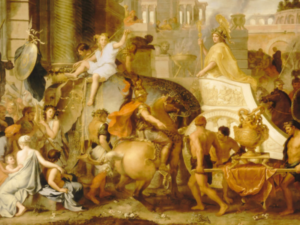
However, Alexander’s ambitions to continue further eastward were halted at the Indus River, and he did not fully incorporate Afghanistan into his empire. Following his death in 323 BCE, his empire fragmented into various successor states, including the Seleucid Empire, which controlled parts of Afghanistan for some time. While Alexander’s campaigns left a lasting impact on the region, it would not be accurate to characterize his incursion into Afghanistan as a failed invasion. Rather, his empire expanded into the region but did not establish long-term control over the territory.
Ancient Chinese Invasion
In ancient history, during the Han Dynasty of China (206 BCE – 220 CE), there were military expeditions conducted by the Han Empire that reached as far west as present-day Afghanistan. These military campaigns were part of the Han Dynasty’s efforts to expand its influence and establish trade routes, particularly the famous Silk Road.
Emperor Wu of Han (r. 141-87 BCE) dispatched several military expeditions, led by generals such as Zhang Qian and Ban Chao, to the western regions, including areas of Central Asia and Afghanistan. The primary objectives were to establish political alliances, secure trade routes, and establish military control over strategic areas.
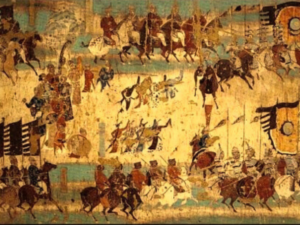
The Han Empire sought to establish relations with various Central Asian and Afghan kingdoms and exert its influence over the region. The military campaigns aimed to ensure safe passage for traders and protect Chinese interests along the Silk Road. However, it is important to note that the Han Dynasty’s control over Afghanistan and Central Asia was limited and largely centered around establishing diplomatic and economic ties rather than long-term territorial control. The region remained largely under the control of local rulers and nomadic tribes.
The Han Dynasty’s military expeditions had a significant impact on diplomatic and cultural exchanges between China and the western regions. They facilitated the spread of Chinese culture, technology, and trade along the Silk Road, which played a crucial role in connecting East and West.
Iranian Empires’ Invasions
It’s important to note that the historical context of Iran and Afghanistan has seen various empires and dynasties rise and fall, and their interactions have been complex and varied. Afghanistan and Iran have had a long history of political and cultural exchanges. Different Persian empires, such as the Achaemenid, Parthian, and Sassanian empires, had varying degrees of influence and control over parts of Afghanistan throughout ancient and early medieval times.
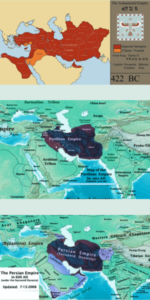
While there were instances of conflicts and territorial disputes between various Iranian and Afghan dynasties over the centuries, it is challenging to point to a specific failed invasion by an Iranian empire into Afghanistan. The history of these regions is characterized by a fluid geopolitical landscape with shifting borders, alliances, and conflicts. It is more accurate to view the interactions between Iran and Afghanistan as a complex tapestry of political, cultural, and historical connections rather than simply failed invasions.
Arab Invasion
The Arab invasion of Afghanistan occurred in the 7th century as part of the Muslim conquests that spread across the Middle East and Central Asia. After the death of the Islamic prophet Muhammad in 632 CE, his successors, known as the Rashidun Caliphs, launched military campaigns to spread Islam and establish an Islamic state.
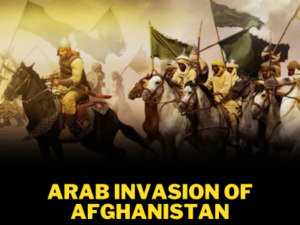
In 652 CE, under the leadership of Caliph Uthman ibn Affan, Arab Muslim armies led by general Abdullah ibn Aamir invaded Afghanistan. The campaigns aimed to expand the territories under Islamic rule and bring the region under the influence of the expanding Arab empire. The Arab armies faced resistance from local rulers and tribes in Afghanistan, but over time, they gradually gained control over the region. The process of Islamization and Arabization took place, with many Afghans converting to Islam and adopting Arabic as a literary and religious language.
The Arab invasion had a significant impact on the cultural, religious, and linguistic landscape of Afghanistan. It played a crucial role in the spread of Islam in the region and laid the foundation for the subsequent Islamic dynasties and empires that emerged in Afghanistan. It is worth noting that while the Arab invasion established Islamic rule in Afghanistan, the region maintained a level of autonomy and saw the rise of various local and regional powers in the centuries that followed.
Mongol Invasion
The Mongol Empire, under the leadership of Genghis Khan and later his successors, conducted a series of invasions and conquests throughout the 13th century. Afghanistan, then known as the region of Khorasan, was one of the territories targeted by the Mongols. In 1219, Genghis Khan launched a campaign against the Khwarazmian Empire, which encompassed parts of modern-day Iran, Afghanistan, and Central Asia. The Mongols quickly overran the region, including parts of Afghanistan, and captured major cities such as Herat and Balkh. The conquest of Khorasan brought it under Mongol control, and the region became part of the Ilkhanate, a Mongol khanate based in Persia.

The Mongol rule in Afghanistan and Khorasan was marked by both destruction and integration. The Mongols brought devastation to some cities and regions, employing brutal tactics, but they also established administrative structures, encouraged trade and commerce, and promoted religious tolerance.
After the collapse of the Mongol Empire in the 14th century, various local rulers and dynasties emerged in Afghanistan, including the Timurids and the various Afghan kingdoms. The Mongol invasion and its aftermath played a significant role in shaping the region’s history and its interactions with neighboring powers. Overall, the Mongol invasion of Afghanistan contributed to the political and cultural transformations of the region, leaving lasting impacts on its governance and society.
Mughal Empire Invasion
The Mughal Empire, centered in present-day India, conducted multiple invasions and military campaigns in Afghanistan during its existence from the 16th to the 18th centuries. Babur, the founder of the Mughal Empire, originally hailed from Central Asia and had familial ties to the region. In 1504, before establishing the Mughal Empire, Babur invaded and briefly occupied Kabul, Afghanistan, but he faced resistance from local Pashtun tribes and was unable to maintain control.
Later, during the reign of Emperor Akbar (1556-1605), the Mughal Empire made further attempts to assert control over Afghanistan. Akbar launched several military expeditions into the region, capturing territories such as Kabul, Kandahar, and Peshawar. These conquests were part of Akbar’s ambition to expand his empire’s territories and secure strategic locations along the northwest frontier. However, the Mughals faced challenges in maintaining control over Afghanistan due to resistance from local Afghan tribes, geographic complexities, and the empire’s preoccupations with other regions. The region remained relatively volatile, with periodic conflicts and power shifts.

The Mughal Empire’s presence in Afghanistan fluctuated over time, and control over the region varied among different Mughal rulers. Afghan tribal leaders often sought to assert their autonomy and resist Mughal authority, leading to ongoing conflicts and power struggles. It is important to note that the Mughal Empire’s influence in Afghanistan was not a continuous occupation but rather sporadic attempts to extend their control over the region. Afghanistan’s history during the Mughal period was characterized by a dynamic and complex relationship with the empire, marked by military campaigns, diplomatic engagements, and intermittent control.
British Empire Invasion
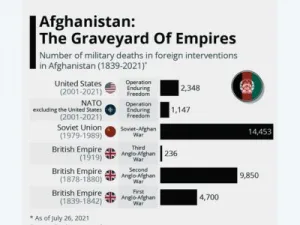
The British Empire made three major invasions of Afghanistan in the 19th and early 20th centuries. The first Anglo-Afghan War took place from 1839 to 1842, when British forces invaded Afghanistan in an attempt to counter Russian influence in the region. The war ended in a British retreat and the deaths of thousands of soldiers and civilians. The second Anglo-Afghan War occurred from 1878 to 1880, sparked by concerns over Russian expansion in Central Asia. British forces once again invaded Afghanistan, and although they succeeded in occupying Kabul, they were ultimately forced to withdraw.
The third and final invasion took place in 1919, following the end of World War I. British forces, along with Indian troops, invaded Afghanistan to secure its strategic position and prevent it from falling under Soviet influence. The war ended with the signing of the Treaty of Rawalpindi, which recognized Afghanistan as an independent nation.
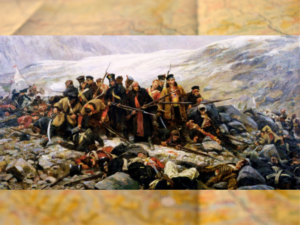
The British invasions of Afghanistan were marked by fierce resistance from Afghan forces, who used guerrilla tactics and the difficult terrain to their advantage. The wars were also characterized by high casualties on both sides, as well as political and military miscalculations by the British. The legacy of these invasions has had a lasting impact on Afghanistan’s relationship with the West and its approach to foreign intervention.
Turkic Invasions
There have been several Turkic invasions of Afghanistan throughout history. The earliest known Turkic invasions of the region date back to the 5th century CE, when the Hephthalites, a nomadic Turkic-speaking people, migrated into the area. They established a powerful empire in parts of Afghanistan and Central Asia that lasted until the 7th century CE. In the 11th century CE, the Seljuk Empire, a Turkic Sunni Muslim state, expanded its influence into parts of Afghanistan. They established a strong presence in the region and controlled significant portions of Central Asia and the Middle East.
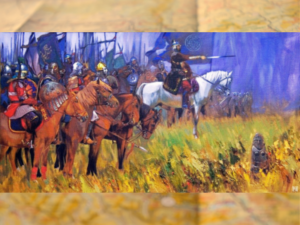
In the 13th century CE, the Mongol Empire, which was founded by Genghis Khan, swept through Afghanistan and much of Central Asia, including the territories of the Seljuk Empire. The Mongols established their rule over the region and controlled it until the 14th century CE. In the late 15th and early 16th centuries CE, the Turkic-speaking Timurid dynasty emerged in Afghanistan and established their rule over parts of the region. The Timurid Empire was known for its cultural and artistic achievements, including the construction of magnificent buildings and the patronage of artists and scholars.
In the 16th century CE, the Uzbeks, another Turkic-speaking group, invaded Afghanistan and established their rule over parts of the region, including Herat. They held control over the region until the rise of the Safavid dynasty in Persia in the early 17th century CE. Overall, the Turkic invasions of Afghanistan had a significant impact on the region’s history and culture. They brought about changes in political power, religion, and cultural practices, and left lasting legacies that can still be seen in the region today.
Russian Empire Invasion
The Russian Empire also attempted to invade Afghanistan in the 19th century. In the late 1800s, the Russian Empire began expanding its territory into Central Asia, which was seen as a threat by the British Empire and other Western powers. In 1878, the Russian Empire signed a treaty with Afghanistan, which gave it some influence in the country. However, this agreement was met with resistance from the British Empire, which saw it as a threat to its own strategic interests in the region.
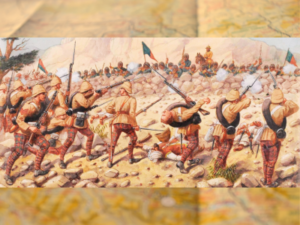
In 1879, Russian troops advanced into Afghanistan, but were met with strong resistance from Afghan forces. The war lasted for two years, with neither side achieving a clear victory. In 1881, Russia withdrew its troops from Afghanistan and signed a new treaty with the country that recognized its independence and sovereignty. The Russian Empire’s invasion of Afghanistan was marked by many of the same challenges faced by the British Empire, including fierce resistance from Afghan forces and the difficult terrain. The invasion was also influenced by the geopolitical tensions between the Russian and British Empires and their competing interests in Central Asia.
Sikh Invasions
In the early 19th century, the Sikh Empire, which was centered in Punjab (present-day India and Pakistan), conducted military campaigns into Afghanistan. The Sikh ruler, Maharaja Ranjit Singh, sought to expand his empire and increase his influence in the region. Under the leadership of various Sikh generals, such as Hari Singh Nalwa and Akali Phula Singh, the Sikh forces launched multiple invasions into Afghanistan. These campaigns aimed to extend Sikh control over parts of Afghanistan and secure strategic territories.
The Sikh forces were successful in capturing and briefly holding important cities like Peshawar and Jamrud in present-day Pakistan, which had a significant impact on the balance of power in the region. However, their attempts to establish a firm grip over Afghanistan were ultimately met with resistance from Afghan tribes and local forces.
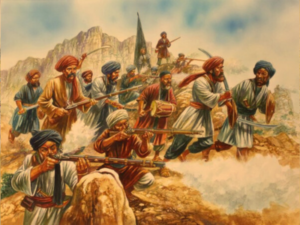
The Sikh invasions of Afghanistan faced significant challenges due to the rugged terrain, guerrilla warfare tactics employed by the Afghan tribes, and resistance from local leaders. Ultimately, the Sikh Empire’s control over Afghanistan was short-lived, and they were unable to maintain a lasting presence in the country. The conflicts between the Sikh Empire and Afghanistan highlighted the complexities of power struggles in the region and the resilience of Afghan resistance against external invasions. These invasions also contributed to the broader historical narrative of Afghan resistance to foreign powers in the 19th century.
USSR invasion of Afghanistan
In 1979, the Soviet Union invaded Afghanistan in an attempt to support a friendly communist government and extend its influence in the region. The Soviet intervention was also driven by concerns over potential Islamist insurgency, which was seen as a threat to the Soviet Union’s own Muslim populations.
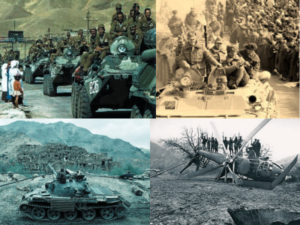
Initially, the Soviet forces were able to gain control of major cities and key infrastructure, but they faced significant resistance from Afghan guerrilla fighters, known as the Mujahideen. The Mujahideen were supported by various foreign powers, including the United States, which provided financial and military aid to the resistance. The Soviet Union faced significant challenges in Afghanistan, including the difficult terrain and the fierce resistance of the Mujahideen. The war also caused widespread destruction and displacement, with millions of Afghans fleeing to neighboring countries as refugees. The war continued for a decade, with Soviet forces eventually withdrawing in 1989 after suffering significant losses.
The Soviet invasion of Afghanistan was widely criticized by the international community, and it had lasting impacts on both Afghanistan and the Soviet Union. The war caused significant human suffering and destabilized the region, while also contributing to the eventual collapse of the Soviet Union.
US invasion of Afghanistan
The United States invaded Afghanistan in 2001, following the 9/11 terrorist attacks on the US, which were carried out by the Al-Qaeda terrorist group. The US government believed that the Taliban government, which controlled Afghanistan at the time, was providing a safe haven for Al-Qaeda and allowing them to plan and carry out terrorist attacks.
The US-led coalition launched a military operation, known as Operation Enduring Freedom, which aimed to remove the Taliban from power and eliminate Al-Qaeda’s presence in Afghanistan. The coalition forces, which included troops from NATO and other countries, were able to quickly topple the Taliban government and install a new government led by Hamid Karzai.
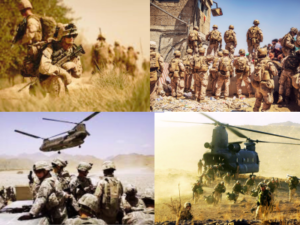
However, the war quickly became a protracted conflict, with the Taliban insurgency regaining strength and launching attacks against coalition forces and the Afghan government. The war has been marked by significant human suffering, including civilian casualties and displacement, and has continued for more than two decades, making it the longest war in US history.
The US invasion of Afghanistan has also been criticized for its long-term consequences, including the destabilization of the region and the rise of extremist groups. The war has also had significant financial and political costs for the US and its allies. In April 2021, the US government announced plans to withdraw its troops from Afghanistan, ending its military involvement in the conflict.
Final Thoughts
Afghanistan’s history is complex and fraught with challenges, including foreign invasions, civil wars, political instability, and ongoing conflict. The country has been a focal point of geopolitical tensions, as various powers have sought to exert their influence in the region. However, despite the efforts of foreign powers over the years, Afghanistan remains a sovereign nation with a unique culture and history.
The future of Afghanistan remains uncertain, and the country will continue to face significant challenges in the years to come. However, it is important to remember that the Afghan people are resilient and have shown remarkable strength in the face of adversity. International support and cooperation will be crucial in helping Afghanistan achieve stability and prosperity in the future.
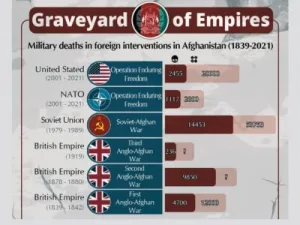
Overall, while the invasions of Afghanistan have certainly had significant consequences for the empires and superpowers involved, it is important to consider the broader geopolitical and historical contexts in which these conflicts took place.










LEAVE A COMMENT