
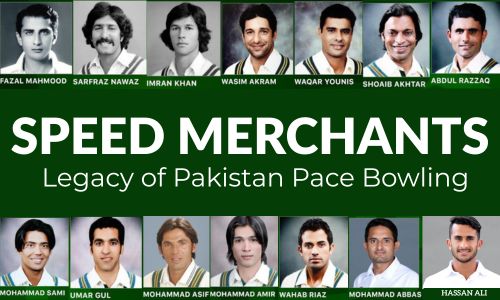
Speed Merchants – Legacy of Pakistani Fast Bowlers
Pakistan cricket and fast bowling are inseparable concepts. For decades, this nation has produced an extraordinary assembly of pace bowlers who have terrorized batsmen, redefined the art of swing bowling, and established a legacy that remains the envy of the cricketing world. From the legendary Imran Khan to the raw pace of Shoaib Akhtar, and from the magic of Wasim Akram to the new generation spearheaded by Shaheen Shah Afridi, Pakistan’s fast-bowling factory shows no signs of slowing down.
This comprehensive exploration delves into the rich history, cultural factors, modern developments, and future prospects of Pakistan’s most celebrated cricketing exports.
The Golden Era: Architects of a Legacy
Imran Khan: The Pioneer
The foundation of Pakistan’s fast-bowling tradition was laid by Imran Khan, who not only became one of the greatest all-rounders in cricket history but also inspired generations of young Pakistanis to take up pace bowling. Imran’s graceful run-up, powerful delivery stride, and ability to extract life from dead pitches set new standards . His success demonstrated that Pakistani fast bowlers could compete with and surpass the best in the world.
Sarfaraz Nawaz, regarded as the pioneer of reverse swing in the 1970s, passed on his revolutionary skills to Imran, creating a knowledge transfer that would define Pakistani cricket for decades . This mentorship tradition became a hallmark of Pakistan’s pace culture.
The Two Ws: Wasim Akram and Waqar Younis
If Imran built the foundation, Wasim Akram and Waqar Younis constructed the palace. The “Two Ws” formed arguably the most devastating fast-bowling partnership in cricket history during the 1980s and 1990s .
Wasim Akram, the “Sultan of Swing,” possessed the rare ability to swing the ball both ways at high pace. His mastery over reverse swing, particularly with the old ball, made him unplayable on his day. Wasim took 916 international wickets across formats, a testament to his enduring quality .
Waqar Younis was the perfect foil—faster, more explosive, and a specialist in toe-crushing yorkers that dismantled batting line-ups. His 789 international wickets and ability to deliver hat-tricks made him one of the most feared bowlers of his generation .
Together, they established Pakistan as the world’s premier factory for fast-bowling talent. As Wasim himself noted, the aggressive Pakistani mentality naturally lends itself to fast bowling: “We are aggressive people in nature and that’s what helps” .
The Rawalpindi Express: Shoaib Akhtar
The turn of the millennium brought Shoaib Akhtar, officially the fastest bowler in cricket history. With a 100-meter sprinter’s build and an explosive action, Akhtar consistently breached the 160 km/h (100 mph) barrier, terrifying batsmen worldwide . His raw pace, combined with a surprisingly effective slower ball, made him a complete fast bowler who carried forward Pakistan’s legacy of speed.
The Jewel in Pakistan’s Crown
Pakistan cricket has been blessed with an extraordinary legacy of producing world-class fast bowlers. From the legendary Fazal Mahmood in the 1950s to the fearsome trio of Imran Khan, Wasim Akram, and Waqar Younis, and now to the modern generation featuring Shaheen Shah Afridi, pace bowling remains the country’s greatest cricketing export .
Fast bowlers have always played a vital role in the success of any cricket team. They are the front-line soldiers who attack the opposition and without their positive contribution, a team’s success—especially in ODIs—becomes exceedingly difficult . For Pakistan, blessed with a historically fragile batting line-up, the fast bowlers have often been the difference between victory and defeat, not just at home but in challenging overseas conditions as well.
The rich tapestry of Pakistan’s fast-bowling heritage through the lens of five remarkable bowlers: Umar Gul, Mohammad Amir, Mohammad Asif, Junaid Khan, and Hasan Ali. Each brought unique gifts to the art of pace bowling and collectively they represent the continuity of a proud tradition.
Umar Gul: The Pioneer of T20 Bowling
When speedsters Shoaib Akhtar and Mohammad Asif became entangled in controversy, Pakistan turned to Umar Gul to spearhead the pace attack in 2006 . It had been three years since Gul made his debut in 2003 at Sharjah, and he was ready to seize his opportunity.
The Art of Precision and Yorkers
With a flowing high-arm action, Gul possessed a rare combination of precision, swing, and the ability to bowl yorkers at will. In him, Pakistan found a worthy successor to the legendary Waqar Younis . His excellent control and ability to move the ball in and out made him stand apart from his contemporaries .
Gul’s champagne moment arrived in 2004 when he ripped through the world-class Indian batting line-up during Pakistan’s tour to India, claiming his first five-wicket haul . A multiple stress fracture halted his progress in 2005, but he returned stronger in 2006, helping Pakistan secure its last Test series victory against the West Indies .
The T20 Pioneer
As Twenty20 cricket gained popularity worldwide, Gul transformed himself into the world’s finest bowler in the format . He played a crucial role in Pakistan’s journey to the final of the inaugural 2007 World Twenty20 and was instrumental in lifting the trophy in 2009 .
His career-best figures of 5-6 against New Zealand in the 2009 World T20 remained the best-ever T20 bowling figures for a remarkably long time . Gul finished as the leading wicket-taker in both the 2007 and 2009 World T20 editions, cementing his reputation as Pakistan’s go-to bowler in the shortest format .
Career Overview
In a distinguished international career spanning from 2003 to 2016, Gul claimed:
-
Tests: 163 wickets in 47 matches at an average of 34.06
-
ODIs: 179 wickets in 128 matches at an average of 29.34
-
T20Is: 85 wickets in 60 matches at a phenomenal average of 16.98, making him Pakistan’s second-highest wicket-taker in T20Is behind Shahid Afridi
Throughout his career, Gul remained away from controversy—a testament to his professionalism and dedication to the sport . When he announced his retirement in October 2020, he did so with a “heavy heart,” emphasizing that cricket would always remain his love and passion .
Mohammad Asif: The Poet of Precision
In the pantheon of Pakistan’s fast bowlers, Mohammad Asif occupies a unique position. He was not blessed with raw pace, but his metronomic accuracy and ability to swing the ball both in the air and off the wicket made him a potent force . Former Pakistan fast bowler Shoaib Akhtar went so far as to rank Asif even above Wasim Akram in terms of being the smartest seam bowler he had witnessed .
The Art of Deception
Asif’s genius lay in his ability to perplex even the world’s finest batsmen. Shoaib Akhtar revealed that he had “actually seen batsmen crying while facing Asif.” VVS Laxman once famously asked, “How will I face this guy?” while AB de Villiers was reportedly reduced to tears during the Asian Test Championship .
Asif’s ability to maintain relentless accuracy while moving the ball both ways created a nightmare for opposition batsmen. His deliveries seemed to carry a magnetic quality, finding the edge with alarming regularity.
The Spectacular Rise
Asif’s debut Test against Australia at Sydney in 2005 was not memorable—he conceded 72 runs in 16 fruitless overs . However, after being dropped, he returned with vengeance during the home series against India in 2006. In the third Test at Karachi, Asif dismantled the Indian top order ruthlessly, picking up seven wickets in the match to secure victory for Pakistan .
From that point, Asif became a proven match-winner. In the second Test against Sri Lanka in Kandy, he claimed his first five-wicket haul and his first ten-wicket haul in Tests as Pakistan clinched a series win. In just two Tests, he had picked up 17 wickets .
His finest performances came outside Asia. During Pakistan’s tour to South Africa in 2007, Asif was the chief destroyer, snapping up 19 wickets in three Tests at a remarkable average of 18 . During Pakistan’s tours to New Zealand and Australia in 2009/10, he was in sublime form, picking up 32 wickets in six Tests .
Career Overview
Despite playing only 23 Tests, Asif’s numbers tell the story of a remarkable talent:
-
Tests: 106 wickets in 23 matches at an exceptional average of 24.37
-
ODIs: 46 wickets in 38 matches at 33.13
-
T20Is: 13 wickets in 11 matches at 26.38
He also played 8 IPL matches for Delhi Daredevils, taking 8 wickets .
The Tragic End
Asif’s career was as intriguing as it was tragic—intriguing because of his phenomenal skill with the ball, and tragic because of the numerous off-field controversies that destroyed him . In 2010, during Pakistan’s tour to England, Asif was involved in the infamous spot-fixing scandal at Lord’s. He was charged for bowling pre-planned deliberate no-balls, leading to a seven-year ban from the sport and a one-year prison sentence . Pakistan cricket had lost one of its finest exponents of swing bowling.
Mohammad Amir: The Prodigy’s Redemption
Mohammad Amir burst onto the cricketing scene in 2007/08 as one of Pakistan’s brightest prospects. His idol, Wasim Akram, had identified him as a special talent long before he toured England with the Pakistan Under-19 side . By 2010, Amir had emerged as one of the finest fast bowlers produced by Pakistan .
The Meteoric Rise
In 2009, Amir impressed on the domestic circuit with his pace and ability to swing the ball both ways while playing for the National Bank of Pakistan. He picked up 55 wickets in his debut season, earning a call-up to the national side for the 2009 World Twenty20 .
He announced his arrival on the international stage by bowling with discipline, pace, and accuracy. Amir played a crucial role in Pakistan’s T20 World Cup campaign, holding his nerve to bowl several decisive last overs . He carried his good form into ODIs, picking up a career-best 4/28 against Sri Lanka, and continued to excel in the Champions Trophy.
His Test career began impressively with six wickets on debut. During Pakistan’s tour to England, he became the youngest bowler to reach 50 wickets in Test cricket .
Career Interrupted
In 2011, Amir was handed a five-year ban by the ICC for his involvement in the spot-fixing controversy alongside Mohammad Asif and Salman Butt . The setback could have ended his career, but Amir worked tirelessly on his bowling during the ban, learning his lessons the hard way .
The Comeback
Amir made his international comeback during Pakistan’s tour to New Zealand in 2016, finishing with 5 wickets in 2 matches . The 2016 Asia Cup proved to be a turning point—he was the pick of the bowlers, with his best performance coming against India when he reduced the formidable Indian batting line-up to 8 for 3 while defending just 83 runs. Virat Kohli was so impressed that he gifted his bat to Amir after the game .
His finest moment arrived in the 2017 Champions Trophy final against India, where he grabbed 3 wickets for just 16 runs, including the prized scalp of Virat Kohli . Pakistan lifted the trophy, and Amir had completed a remarkable redemption arc.
Career Overview
-
Tests: 119 wickets in 36 matches at 30.48
-
ODIs: 81 wickets in 61 matches at 29.63
-
T20Is: 71 wickets in 62 matches at 21.94
Amir’s journey from a banned teenager to a World Cup winner remains one of cricket’s most compelling redemption stories.
Junaid Khan: The Left-Arm Menace
Junaid Khan’s emergence in international cricket was, as Cricbuzz aptly noted, someone’s epic loss becoming someone else’s gain. The spot-fixing bans on Mohammad Amir and Mohammad Asif, combined with Shoaib Akhtar’s retirement after the 2011 World Cup, opened the door for the left-arm fast bowler from Swabi .
The Kohli Nemesis
Junaid announced his arrival on the big stage with pomp and glory during the historic ODI series between India and Pakistan in late 2012. In all three ODIs, Junaid had Virat Kohli’s number, deceiving one of the modern greats with pace and swing . His ability to move the ball at a fast clip made him a handful in all conditions.
His bowling action was a thing of beauty—the initial jump at the start of the delivery stride, followed by a smooth run-up to the crease, and an impeccable release point with the flex of the wrist that gave the ball its movement. A strong wrist position and the ability to bowl quick forced batsmen to constantly adjust .
Match-Winning Performances
Junaid’s finest moment came in November 2013 when, despite an injured shin, he successfully defended 9 runs off the final over in Port Elizabeth, securing Pakistan’s first bilateral ODI series win against South Africa .
He was named in the T20I XI by Cricinfo for his performances in 2013 and was also part of the ‘Team of the Tournament’ at the 2017 Champions Trophy .
Junaid had a particularly impressive record against Sri Lanka, taking all four of his Test five-wicket hauls against them—two in the UAE and two in Sri Lanka. His best innings figures of 5/38 came against Sri Lanka .
Career Overview
-
Tests: 71 wickets in 22 matches at 31.73
-
ODIs: 110 wickets in 76 matches at 29.23
-
T20Is: 8 wickets in 9 matches at 29.50
Injuries plagued Junaid’s career, with fitness concerns ruling him out of the 2015 World Cup . Despite interest from England, where he had qualified to play, Junaid remained loyal to Pakistan cricket .
Hasan Ali: The Golden Boy
On August 18, 2016, a 21-year-old fast bowler made his ODI debut against Ireland. Hasan Ali failed to take a wicket in five overs, but it was a false start—he would soon become a permanent fixture in Pakistan’s limited-overs sides .
The Meteoric Rise
Hasan was picked for the national team after impressing in the first season of the Pakistan Super League (PSL) . From his ODI debut to the Champions Trophy final in June 2017, he played 21 ODIs, taking 42 wickets at an average of 22.66 . In the Champions Trophy alone, he grabbed 13 wickets in 5 matches, playing a pivotal role in Pakistan’s triumphant campaign.
With his outstanding performance, Hasan became the number one bowler in ODI cricket, displacing South African spinner Imran Tahir from the top position . Reverse-swing, slow balls, solid yorkers, and a skiddy bouncer were his potent weapons .
He was the fastest Pakistani to reach the 50-wicket mark in ODI cricket, achieving the feat in just 24 innings .
The Fall
However, Hasan’s career trajectory took a downturn. In the next 32 ODIs, he took 40 wickets at a high average of 37.25. The year 2019 was particularly disappointing—in 12 ODIs, he managed only 7 wickets at an exceptionally high average of 82.14 .
The management and skipper had high expectations for Hasan in the 2019 World Cup, but he failed to deliver. In the high-pressure match against India, he conceded 84 runs for just one wicket in nine overs .
Career Overview and Resurgence
-
Tests: 77 wickets in 21 matches at 24.57
-
ODIs: 91 wickets in 60 matches at 30.36
-
T20Is: 60 wickets in 49 matches at 23.15
Despite the setbacks, Hasan showed glimpses of his class in 2021, taking two five-wicket hauls against South Africa and impressive performances in Zimbabwe and England . The “golden boy” of Pakistan cricket may have lost his sheen temporarily, but his class remains permanent.
The Collective Legacy
These five bowlers—Umar Gul, Mohammad Asif, Mohammad Amir, Junaid Khan, and Hasan Ali—represent different chapters in Pakistan’s rich fast-bowling history:
-
Umar Gul pioneered T20 bowling and remained a model of consistency and controversy-free cricket
-
Mohammad Asif showcased that precision and intelligence could be as devastating as raw pace
-
Mohammad Amir demonstrated that redemption is possible, rising from a banned teenager to a World Cup hero
-
Junaid Khan proved that left-arm pace with swing could trouble even the greatest batsmen
-
Hasan Ali showed that raw talent and aggression could take you to the top of the world rankings
Together, they carried forward the legacy of Fazal Mahmood, Imran Khan, Wasim Akram, and Waqar Younis. They ensured that Pakistan’s assembly line of producing world-class fast bowlers never stopped .
Cultural and Biological Factors: Why Pakistan Produces Pace Bowlers
The Meat Diet Theory
Former fast bowler Sarfaraz Nawaz offers a fascinating explanation for Pakistan’s pace dominance: diet. “We eat meat which strengthens the body,” he told AFP, contrasting Pakistan’s meat-rich diet with neighboring India’s historically vegetarian culture that produced more spinners . This biological factor, combined with natural athleticism, creates ideal conditions for pace-bowling development.
The Mentality of Aggression
Wasim Akram’s observation about Pakistani nature being “aggressive” reflects a deeper truth about the country’s cricketing identity. Fast bowling in Pakistan is not just a skill—it’s an expression of national character. The sight of wickets clattering and batsmen hopping nervously is deeply embedded in the Pakistani cricket psyche .
Role Models and Mentorship
Perhaps the most critical factor is the unbroken chain of mentorship stretching from Sarfaraz Nawaz to Imran Khan, from Imran to Wasim and Waqar, and from them to the current generation. Wasim frequently holds camps to train emerging fast bowlers, ensuring that knowledge transfer continues . This tradition creates a self-perpetuating cycle where each generation produces the next.
As Wasim famously declared: “Many natural resources will dry up, but not Pakistan bowling’s reservoirs. Our fast bowling future is secure as they follow footsteps and run-ups” .
🏏 The Tape-Ball Cricket Connection
Perhaps the most uniquely Pakistani factor in fast-bowling production is tape-ball cricket. Played in parking lots, streets, and empty patches of land across the country, this informal version of cricket uses tennis balls wrapped in electrical tape to make them heavier and faster .
Why Tape Ball Matters
Tape-ball cricket puts the emphasis on pace rather than spin. The taped ball skids onto batsmen quickly, rewarding bowlers who can generate speed. Youngsters grow up trying to bowl as fast as their heroes, developing natural pace from childhood .
The numbers are staggering. Lahore Qalandars, a Pakistan Super League franchise, received more than 350,000 applicants for their talent-hunt programme—nearly half of them tape-ball players . This massive talent pool includes remarkable discoveries like Yasir Jan, an ambidextrous pace marvel who can bowl with both arms.
Head coach Aaqib Javed explained their approach: “We give them platform in our development programme and send them to Australia to hone their talent” . This pathway from the streets to international cricket is uniquely Pakistani and explains the country’s relentless production line.
Modern Scientific Approaches to Fast Bowling
PCB’s High-Performance Initiatives
The Pakistan Cricket Board (PCB) has recognized that natural talent alone is insufficient in modern cricket. In July 2024, Nadeem Khan, Director of High Performance, visited the ECB High Performance Centre in Loughborough to explore cutting-edge biomechanical approaches to fast-bowling development .
Biomechanics and AI Integration
The PCB has entered a five-year contract with DineticQ, a specialist sports science organization, to provide bespoke Athlete Management Programmes in ICC-approved biomechanics laboratories . These services include:
-
Tailored training regimes based on individual biomechanical profiles
-
Biomechanical assessments to optimize bowling actions
-
AI-powered analysis to enhance efficiency and reduce injury risks
Nadeem Khan emphasized the significance: “The collaboration with DineticQ represents a significant enhancement in our approach to player development and performance optimisation. By integrating advanced biomechanical insights into our training programs, we can further elevate the capabilities of our fast bowlers and coaches” .
Scientific Research on Pace Improvement
Academic research is also contributing to Pakistan’s fast-bowling development. A 2024 master’s thesis from Capital University of Physical Education, Beijing, examined the effect of elastic band resistance training on Pakistani university cricketers .
The study found that an 8-week elastic band training program significantly improved bowling speed in the experimental group compared to controls. Researchers concluded that elastic band training increases muscle strength, explosive power, coordination, and stability—all critical factors for fast bowlers .
This scientific approach, combined with traditional methods, represents the future of Pakistan’s pace development.
The Evolution: From Generation to Generation
The Passing of the Torch
| Generation | Pioneers | Transition | Modern Era |
|---|---|---|---|
| 1970s-80s | Imran Khan, Sarfraz Nawaz | — | — |
| 1990s | Wasim Akram, Waqar Younis | — | — |
| 2000s | Shoaib Akhtar | Umar Gul, Mohammad Asif | — |
| 2010s | — | Mohammad Amir, Junaid Khan | Hasan Ali |
Umar Gul bridged the gap between the legendary duo of Wasim-Waqar and the modern generation, while Mohammad Asif represented classical swing bowling at its finest. Mohammad Amir and Junaid Khan carried the left-arm tradition forward, and Hasan Ali embodies the aggressive, modern fast bowler.
Statistical Comparison
| Bowler | Test Wickets | ODI Wickets | T20I Wickets | Peak Years |
|---|---|---|---|---|
| Umar Gul | 163 | 179 | 85 | 2007-2012 |
| Mohammad Asif | 106 | 46 | 13 | 2005-2010 |
| Mohammad Amir | 119 | 81 | 68 | 2009-2019 |
| Junaid Khan | 71 | 110 | 8 | 2011-2017 |
| Hasan Ali | 80 | 100 | 68 | 2016-present |
The Future According to Asif
Mohammad Asif recently emphasized that Pakistan’s fast-bowling legacy—once dominated by legends such as Shoaib Akhtar—was built on long spells of hard bowling and extensive first-class cricket experience . He believes the current generation of pacers needs more red-ball cricket and longer bowling workloads to build the same endurance and skill.
Asif particularly highlighted Pakistan Under-19 fast bowler Ali Raza as a promising talent, praising the youngster’s pace, height, and aggressive bowling style . “The way he is bowling aggressively shows great potential. If used properly, he can serve Pakistan for 10 to 12 years,” Asif remarked .
The Current Generation: Carrying the Torch
Shaheen Shah Afridi
At just 20 years old, Shaheen Shah Afridi has already established himself as Pakistan’s premier fast bowler. With his height, pace, and ability to swing the new ball both ways, Shaheen represents the perfect synthesis of Pakistan’s fast-bowling traditions . His devastating opening spells have become a trademark, and his maturity beyond his years suggests a long and successful career ahead.
Naseem Shah
Naseem Shah burst onto the scene as a 16-year-old with raw pace and the ability to move the ball. His hat-trick against Sri Lanka in 2020 announced the arrival of a special talent . Now established in all formats, Naseem combines genuine pace with growing control, making him a worthy inheritor of Pakistan’s pace legacy.
The Supporting Cast
Beyond the spearheads, Pakistan possesses remarkable depth:
-
Mohammad Hasnain: Regularly clocking 150 kph, he continues the tradition of raw pace
-
Haris Rauf: A late bloomer who has become a T20 specialist with lethal yorkers
-
Zaman Khan: Known for his death bowling skills, though currently injured
-
Jalat Khan: The 23-year-old from Layyah recently replaced Zaman Khan in PSL 11, having taken 25 wickets in 14 matches at an impressive economy rate of 6.40
The Next Wave
The production line continues. The PSL and domestic circuit regularly unearth new talents, and franchises like Lahore Qalandars have institutionalized talent development through structured programs. The 350,000+ applicants to their talent hunt program ensure that the pipeline remains full .
Challenges and Concerns
Injury Management
Fast bowling places enormous stress on young bodies. The 2007 pace camp in Lahore pioneered the use of MRI scans to track knee health, a forward-looking approach that remains relevant today . Modern biomechanical analysis through the PCB’s partnership with DineticQ aims to reduce injury risks through optimized actions and training regimes .
Form and Consistency
Despite the depth of talent, concerns about form persist. During the 2026 T20 World Cup match against India, Shaheen Shah Afridi’s two overs were described as “outright bland, bereft of heat, hostility and magic” . The Indian Express noted that he was “a shadow of the terror he once was, a metaphor of Pakistan’s fading fast-bowling heritage” .
While this assessment may be overly harsh, it highlights the expectations placed on Pakistan’s fast bowlers and the need for consistent performance management.
The Spin Debate
Pakistan’s recent home Test strategy has raised questions about the future of pace bowling. Under interim coach Aaqib Javed, Pakistan has prepared raging turners where fast bowlers are “rendered as superfluous as horse-drawn carriages” . In four Tests, seamers bowled just 17 overs and took one wicket.
Captain Shan Masood called this a “sacrifice” that batters and fast bowlers must make for victories . However, critics worry about the long-term impact on Pakistan’s pace heritage. As ESPN noted: “Any denunciation of Pakistan’s playing style over the past three Tests largely circled around whether these were sporting wickets or if they were doing Pakistan’s long-term prospects hard” .
The Bumrah Paradox
The rise of Jasprit Bumrah—a bowler spiritually belonging to “the Pakistan school of fast-bowling oddities” but born in India—has created an uncomfortable mirror for Pakistani cricket . During the 2026 T20 World Cup, Bumrah produced a masterclass that left Pakistani fans and pundits transfixed, evoking memories of Wasim and Waqar tormenting Indian batsmen decades ago.
As The Indian Express observed: “Pakistan was once the world’s (read the neighbour’s) envy. Fast bowlers pounced from everywhere, from the alleys and gallis, from universities and academies, from plains and peaks. So abundant was the stock that some of the gifted ones never received their due love or affection. Now, in a shocking reflection of a lost heritage, they look over the border and envy the dazzling oeuvre of Jasprit Bumrah” .
This observation serves as a wake-up call—Pakistan’s pace heritage cannot be taken for granted.
The Future of Pakistan Fast Bowling
Talent Development Infrastructure
The PCB’s investment in biomechanics, sports science, and high-performance coaching represents a commitment to maintaining Pakistan’s pace legacy. The five-year partnership with DineticQ will create institutional knowledge and systematic development pathways .
The PSL Factor
The Pakistan Super League has become a crucial platform for identifying and nurturing pace talent. Franchises like Lahore Qalandars have developed comprehensive talent-hunt programs that cast a wide net across the country, discovering raw pace from remote areas .
Balancing Tradition and Science
The future lies in balancing traditional Pakistani fast-bowling wisdom with modern sports science. The mentorship of legends like Wasim Akram, combined with biomechanical analysis and data-driven training, creates an optimal environment for producing world-class pace bowlers.
Sustaining the Legacy
Wasim Akram’s confidence in Pakistan’s fast-bowling future remains undimmed: “Many natural resources will dry up, but not Pakistan bowling’s reservoirs” . This optimism is grounded in the cultural factors, grassroots participation, and institutional commitment that make Pakistan unique.
However, the current generation must rise to meet the challenges. The depth is undeniable—Shaheen, Naseem, Hasnain, and a host of emerging talents ensure that Pakistan will continue to produce fast bowlers. But translating raw talent into sustained excellence requires consistent management, injury prevention, and strategic clarity.
Final Words
Pakistan’s legacy of fast bowling is one of cricket’s most remarkable stories. From Imran Khan’s pioneering brilliance through the magical artistry of Wasim and Waqar, the raw pace of Shoaib Akhtar, and now the new wave led by Shaheen Shah Afridi and Naseem Shah, the country has maintained an unbroken chain of pace excellence.
The factors behind this success are uniquely Pakistani—a meat-rich diet that builds strong bodies, an aggressive cricketing mentality, a mentorship tradition spanning generations, and the ubiquitous tape-ball cricket that teaches pace from childhood.
Modern initiatives by the PCB, including biomechanical analysis and scientific training methods, promise to sustain this heritage. Yet challenges remain—injury management, form consistency, and the strategic debate over home pitches that marginalize fast bowlers all require careful navigation.
The Jasprit Bumrah paradox serves as both warning and inspiration: Pakistan’s pace heritage cannot be taken for granted, but the raw materials remain abundant. With over 350,000 aspiring fast bowlers knocking on talent scouts’ doors, the pipeline is full. The task now is to ensure that pipeline produces bowlers worthy of the legends who came before.
As Wasim Akram said, Pakistan’s fast-bowling reservoirs will never dry up. The world will continue to witness the rise of Pakistan’s fast bowlers—a legacy of speed and skill that defines a nation’s cricketing identity.












LEAVE A COMMENT