
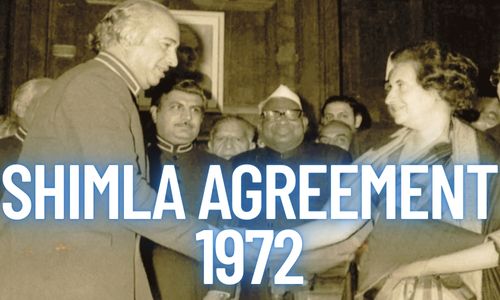
Shimla Agreement
In the chaotic aftermath of the Indo-Pakistani War of 1971, a significant political and diplomatic milestone was achieved — the Shimla Agreement of 1972. Crafted in the serene hills of Shimla, India, this pact wasn’t just a ceasefire; it was an earnest attempt to rewrite the future of two historically entwined yet adversarial nations: India and Pakistan. The agreement emphasized peaceful bilateral relations, mutual respect for sovereignty, and a new line of control in Kashmir, setting the tone for decades of diplomacy. But did it truly reshape the region’s destiny, or was it merely a pause between conflicts?
Background: The Road to Shimla
Indo-Pakistani War of 1971
The seeds of the Shimla Agreement were sown in the ashes of war. In December 1971, India and Pakistan clashed fiercely over the humanitarian and political crisis brewing in East Pakistan (now Bangladesh). After a mere 13 days of combat, Pakistan suffered a humiliating defeat, culminating in the surrender of 93,000 Pakistani soldiers — one of the largest surrenders since World War II.
Emergence of Bangladesh
The creation of Bangladesh was a tectonic shift in South Asian geopolitics. India’s military intervention on behalf of Bengali nationalists not only fractured Pakistan but also cemented India’s stature as a regional power. However, the victory came with heavy baggage — the need to manage a fragile peace with a battered yet volatile neighbor.
Diplomatic Pressure and Global Attention
While India emerged triumphant, the global community, particularly the superpowers like the US, USSR, and China, nudged both nations towards dialogue. The world feared that a prolonged India-Pakistan hostility could spiral into a wider regional conflict, dragging in global alliances during the tense Cold War era.
Key Participants and Venue
Indira Gandhi and Zulfikar Ali Bhutto
The Shimla Agreement was steered by two towering political figures: Indian Prime Minister Indira Gandhi and Pakistan’s newly appointed President (later Prime Minister) Zulfikar Ali Bhutto. Both leaders carried heavy mandates — Gandhi with the spoils of victory, Bhutto with the burden of defeat. Yet, each realized that a roadmap for peace was essential for their respective political survival.
The Choice of Shimla
Shimla, a picturesque town nestled in the Himalayan foothills, provided an ideal setting for such a historic dialogue. Far from the pressures of national capitals, the quietude of Shimla allowed for introspection, negotiation, and eventual compromise.
The Main Objectives Behind the Shimla Agreement
At its heart, the Shimla Agreement was designed to:
-
Cement the cessation of hostilities.
-
Promote the normalization of diplomatic relations.
-
Encourage bilateral negotiations over contentious issues.
-
Lay down a peaceful framework for future conflict resolution.
-
Maintain the territorial integrity and sovereignty of both nations.
Both countries agreed that “relations would be governed by the principles and purposes of the Charter of the United Nations.”
Details of the Shimla Agreement
Bilateral Relations
The cornerstone of the agreement was the commitment that all disputes would be resolved bilaterally without external mediation. This directly impacted the internationalization of the Kashmir issue, limiting the role of the United Nations and other third parties.
Line of Control (LoC)
A critical provision was the redefinition of the ceasefire line into what became known as the Line of Control (LoC) in Jammu and Kashmir. Though not recognized as an international boundary, the LoC was respected by both sides — at least on paper — as the de facto division of territory.
Principles of Sovereignty and Non-Interference
The agreement stressed mutual respect for territorial integrity, non-aggression, non-interference in internal affairs, equality, and peaceful coexistence. This marked a major shift from the confrontational rhetoric that had characterized Indo-Pakistani relations until then.
Reasons for Signing the Shimla Agreement
Rebuilding Trust
After the devastation of 1971, the need to rebuild diplomatic bridges was pressing. For India, stabilizing the region was crucial to focus on economic development and maintaining peace in newly independent Bangladesh. For Pakistan, regaining international credibility and seeking the return of prisoners of war (POWs) was a matter of national urgency. Both countries understood that mutual trust, even if tentative, was the only way forward.
The Shimla Agreement offered a structured way to restore communication channels and lay a diplomatic groundwork. By opting for a bilateral framework, both nations made a conscious decision to tackle issues through dialogue rather than military confrontation. Trust was fragile, but Shimla represented the first stitches of a new diplomatic fabric.
Prisoners of War and Territorial Issues
India held around 93,000 Pakistani soldiers as POWs after the 1971 war. Additionally, India had captured approximately 5,139 square miles of Pakistani territory. For Bhutto, securing the release of these soldiers and regaining lost territories was paramount, not just diplomatically but emotionally, for the morale of the Pakistani populace and military.
Negotiations were intense. India had the upper hand, but Indira Gandhi showed diplomatic magnanimity, agreeing to return both the prisoners and most captured territories as a gesture of goodwill. In return, Pakistan recognized the need for peaceful bilateralism in future disputes.
Political Legitimacy
Both Indira Gandhi and Zulfikar Ali Bhutto needed political wins back home. Gandhi, though victorious, had to demonstrate that India sought peace, not perpetual conflict. Bhutto, newly in power, needed to show strength and statesmanship in negotiating terms that salvaged Pakistan’s dignity. The Shimla Agreement offered both leaders the political capital they urgently needed.
Immediate Effects of the Shimla Agreement
Release of POWs
One of the most immediate and tangible outcomes was the phased release of Pakistani prisoners of war. India returned the vast majority of the captured soldiers, a move that was hailed internationally and helped ease tensions considerably.
However, India retained a few POWs longer as bargaining chips for negotiations regarding the recognition of Bangladesh, ensuring that the Pakistani leadership would follow through on its diplomatic commitments.
Formal Recognition of Bangladesh
Though Pakistan was hesitant at first, the Shimla talks laid the foundation for the eventual formal recognition of Bangladesh in 1974. This was a monumental shift — Pakistan had to come to terms with its own dismemberment and accept Bangladesh’s sovereignty, a bitter but necessary pill.
Re-drawing of the Ceasefire Line
The transformation of the ceasefire line into the Line of Control (LoC) was another critical outcome. Both nations agreed to respect the LoC without prejudice to their stated positions. While not a final solution to the Kashmir conflict, it was a temporary arrangement to prevent further military clashes.
The LoC became, in practical terms, the boundary in Kashmir, though both sides continued to assert claims over the entire region.
Long-Term Consequences of the Agreement
Bilateral Approach to Conflict Resolution
The Shimla Agreement became a diplomatic cornerstone for future India-Pakistan relations. It firmly established the principle that all issues, including Kashmir, would be addressed bilaterally. This provision was invoked repeatedly by India whenever Pakistan attempted to internationalize the Kashmir issue at forums like the United Nations.
By cutting out third-party interventions, India secured a major diplomatic victory. However, Pakistan often accused India of using bilateralism to stonewall discussions, leading to mutual frustration over the years.
Setting a Diplomatic Precedent
Beyond India and Pakistan, the Shimla Agreement set a broader precedent for conflict resolution in South Asia. It highlighted how even bitter adversaries could, under pressure, engage in direct negotiations to avoid further bloodshed.
Other nations in conflict, notably in Africa and Southeast Asia, often cited the Shimla model as an example of how post-war negotiations could be structured for sustainable peace.
Impact on Kashmir Issue
While the Shimla Agreement temporarily lowered tensions over Kashmir, it did not resolve the dispute. Instead, it froze the status quo under the guise of a mutual agreement. Over the decades, Kashmir continued to be a flashpoint, with both sides accusing each other of violating the terms of the agreement — especially concerning respect for the LoC.
Critics argue that by not setting a clear roadmap for resolving Kashmir, Shimla left a ticking time bomb that continues to impact Indo-Pak relations even today.
The Role of Shimla Agreement in Shaping South Asian Geopolitics
The Shimla Agreement was more than a bilateral treaty; it was a recalibration of the power dynamics in South Asia. With Bangladesh emerging as a new state and India asserting itself as the dominant regional power, the geopolitics of the subcontinent were permanently altered. The agreement signaled a shift toward regional conflict management without direct superpower intervention — a significant move during the Cold War era when global tensions were always just a hair-trigger away.
India’s insistence on bilateralism not only marginalized Pakistan’s attempts to garner international support but also encouraged other smaller nations like Nepal, Bhutan, and Sri Lanka to pursue regional solutions to their issues. The seeds of later initiatives like SAARC (South Asian Association for Regional Cooperation) can trace some inspiration back to the diplomacy modeled by the Shimla Agreement.
However, the underlying tensions between India and Pakistan remained, simmering under the surface, waiting for any opportunity to flare up — a pattern that continues even today.
Impact on Indo-Pakistan Relations
Short-Term Improvements
Immediately after Shimla, there was a visible thaw in relations between India and Pakistan. Diplomatic missions were restored, and some trade and travel channels were reopened. There was a genuine, albeit cautious, optimism among people and political leaders on both sides.
Small steps, like cricket diplomacy and cultural exchanges, gained momentum in the 1970s and 80s. The public sentiment briefly shifted from hatred and animosity to guarded hope. It appeared that perhaps Shimla had laid the foundation for a lasting peace.
Renewed Tensions
But as history shows, old wounds don’t heal easily. By the late 1980s and 1990s, relations soured again, primarily due to the Kashmir insurgency, the Kargil War, and cross-border terrorism. Both sides accused each other of violating the spirit and letter of the Shimla Agreement.
Pakistan claimed that India was unilaterally dismissing discussions on Kashmir, while India argued that Pakistan had internationalized the issue against the bilateral framework agreed upon at Shimla. The cycle of mistrust and hostility returned, showing that while Shimla might have set a course for dialogue, it wasn’t enough to erase deeply ingrained animosities.
Critical Analysis: Successes and Failures
Successes of the Shimla Agreement
-
Avoidance of Immediate War: Shimla successfully averted another war right after 1971.
-
Stabilized the Region Temporarily: The agreement brought temporary calm and normalization.
-
Set a Framework for Future Dialogue: It emphasized dialogue over confrontation, influencing later initiatives like Lahore Declaration and Agra Summit.
Shortcomings and Loopholes
-
Ambiguous Language: The wording around Kashmir and the LoC was deliberately vague, leaving room for divergent interpretations.
-
No Binding Mechanisms: Unlike modern peace treaties, Shimla lacked strong enforcement clauses, relying solely on political goodwill.
-
Ignored Root Causes: The agreement was more about managing the symptoms (ceasefire, POWs, etc.) than solving the underlying issues like Kashmir, water sharing, and mutual distrust.
Thus, while Shimla was a diplomatic victory in the short run, its structural weaknesses ensured that it would not prevent future conflicts.
Comparison: Shimla Agreement vs Other Indo-Pak Agreements
When compared to earlier and later agreements like:
-
Tashkent Agreement (1966): Focused on restoring pre-1965 war status without addressing core issues.
-
Lahore Declaration (1999): Attempted to revive bilateralism but failed due to Kargil conflict shortly after.
-
Agra Summit (2001): Collapsed due to deep mistrust and internal political pressures.
Shimla stands out as one of the more robust, lasting efforts, even if its promises were only partially fulfilled. It remains a critical diplomatic watermark between the two countries.
Immediate Effects on India
Strategic and Political Gains
For India, the Shimla Agreement was a diplomatic and military win. India had not only demonstrated its military prowess by helping birth Bangladesh, but through Shimla, it locked Pakistan into a bilateral negotiation framework. This prevented Pakistan from easily internationalizing the Kashmir issue in global forums like the United Nations.
Strategically, India also maintained its dominant regional position without having to manage large numbers of prisoners of war indefinitely, allowing it to refocus on internal growth and security stabilization.
Diplomatic Strengthening
India’s image on the global stage improved dramatically. After Shimla, India was seen as a responsible power willing to negotiate peace rather than act as an expansionist bully. This helped strengthen ties with countries like the USSR and newly independent nations in Africa and Southeast Asia.
Immediate Effects on Pakistan
Political Stabilization
Bhutto leveraged the Shimla Agreement to stabilize his fragile government. By negotiating the return of prisoners of war and some territories, he restored a semblance of national pride and demonstrated that Pakistan had not been completely humiliated by the war’s outcome.
Return of Prisoners of War
One of the most tangible wins for Pakistan was the return of approximately 90,000 soldiers. This massive repatriation not only relieved social and political pressures but also ensured the Pakistani military could rebuild its operational capabilities quicker.
Economic Impact on India
India’s economy, already strained by the costs of war, benefited from the peace that Shimla ushered in, however temporary. Defense spending could be moderated, and attention could turn towards rebuilding infrastructure and promoting the Green Revolution in agriculture.
Moreover, normalized relations with Pakistan opened up limited trade opportunities, though economic ties remained secondary to security concerns.
Economic Impact on Pakistan
For Pakistan, the economic picture was more mixed. The loss of East Pakistan (Bangladesh) significantly dented its economy, which was heavily reliant on the resources and industries of the east. However, the peace accord allowed for some foreign investment and international aid to start flowing again, crucial for rebuilding a broken economy.
Bhutto’s efforts to nationalize industries and introduce economic reforms were partly made possible by the relative peace following Shimla.
Long-Term Political Impact on India
India’s Regional Dominance
The Shimla Agreement helped India cement its position as the preeminent power in South Asia. With Pakistan diplomatically cornered and Bangladesh firmly allied with India, New Delhi gained immense strategic depth.
Strengthened Internal Politics
Domestically, Indira Gandhi’s political capital soared. She was hailed as the “Iron Lady” of India, and her leadership during and after the war strengthened the Congress Party’s dominance for several more years.
Long-Term Political Impact on Pakistan
Domestic Challenges
Despite initial stabilization, the long-term political effects on Pakistan were less positive. The military, embarrassed by the 1971 defeat, began to withdraw support from civilian governments, sowing seeds for future military coups. Bhutto himself was later overthrown and executed, highlighting the persistent political instability.
Shift in Foreign Policy
After Shimla, Pakistan started to pivot more aggressively towards alliances with China and Islamic countries in the Middle East. The desire to counterbalance India became a driving force behind many of Pakistan’s foreign policy decisions.
Impact on Kashmir Issue
Shimla formalized the LoC but left the Kashmir dispute unresolved. Both nations agreed to resolve Kashmir bilaterally, yet neither side backed down from their claims. Over time, violations of the LoC and insurgencies turned Kashmir into one of the most heavily militarized zones in the world, making it the most enduring conflict fallout from Shimla.
Military Impact and Strategic Adjustments
Indian Military Position
India used the breathing space after Shimla to modernize its military, invest in domestic arms production, and strengthen its defense doctrine. This long-term planning would later help India win subsequent skirmishes like the Kargil War in 1999.
Pakistani Military Reforms
For Pakistan, the defeat and the Shimla aftermath led to extensive military reforms. New strategies, alliances, and weapons acquisitions (especially nuclear ambitions) were prioritized to prevent future humiliations.
Effects on Bilateral Relations
Short-Term Peace
Initially, the Shimla Agreement helped both sides maintain a cold peace. Diplomatic missions reopened, prisoners were exchanged, and both nations engaged in cautious confidence-building measures.
Long-Term Strain
However, peace proved elusive. As trust eroded and provocations continued, both sides weaponized the ambiguities of Shimla to accuse the other of non-compliance. Wars and near-wars (like Kargil) showed that Shimla’s influence had limits.
Impact on International Relations
India’s Stand on Bilateralism
India’s foreign policy strategy post-Shimla became centered on bilateralism, refusing third-party interventions — a stance that persists today, especially concerning Kashmir.
Pakistan’s Changing Alliances
Pakistan, feeling isolated, drew closer to China, Saudi Arabia, and later sought strategic ties with the US during the Soviet invasion of Afghanistan, further complicating South Asian geopolitics.
Effect on Public Opinion
In India, public sentiment viewed Shimla as a dignified peace offering after a crushing victory. In Pakistan, opinions were divided — some saw it as Bhutto salvaging national pride, while others believed it was a humiliating compromise.
Modern Relevance of the Shimla Agreement Effects
In today’s context, with India revoking Jammu & Kashmir’s special status under Article 370 and Pakistan responding with diplomatic and military posturing, Shimla’s relevance is often debated.
India maintains that the agreement’s emphasis on bilateralism still applies and resists any third-party mediation. Pakistan, meanwhile, argues that India’s actions have rendered the agreement obsolete. Despite these disagreements, Shimla remains cited in every major Indo-Pak diplomatic interaction, making it a living, if somewhat strained, part of South Asian diplomacy.
The essence of Shimla — dialogue over violence — continues to offer a template for peace, even if current realities make its application increasingly difficult.
Lessons Learned from the Shimla Agreement
The Shimla Agreement leaves us with several important lessons — not just for India and Pakistan, but for the broader world. First and foremost, it shows that even after devastating wars, adversaries can sit across the table and negotiate peace. Dialogue remains the most powerful tool in diplomacy, capable of transforming battlegrounds into meeting grounds.
Another lesson is that vague agreements without strong enforcement mechanisms tend to falter over time. Shimla’s broad and sometimes ambiguous language gave both countries room to interpret its provisions differently, leading to disputes later. For future peace processes, clarity and actionable steps are crucial.
Also, the Shimla Agreement underlined the importance of political will. Both Indira Gandhi and Zulfikar Ali Bhutto had to make unpopular compromises at home to move the peace process forward. Without courageous leadership willing to take political risks, peace remains an elusive dream.
Finally, it shows that without addressing the core grievances — like Kashmir in this case — peace agreements can only serve as temporary fixes. Real, lasting peace demands tackling the root causes, no matter how difficult or politically inconvenient they might be.
A Defining Moment in Indo-Pakistan History
The Shimla Agreement of 1972 stands as one of the most significant chapters in the tangled history of India and Pakistan. Born out of the horrors of war and human suffering, it was a courageous attempt to turn the page toward a future of dialogue and coexistence.
While its successes were real, its failures were equally profound. It prevented another immediate war, but it didn’t heal the deep-seated mistrust that continues to define Indo-Pak relations even today. The agreement’s insistence on bilateralism shifted the framework of engagement, sidelining international players, but also sometimes slowing down resolutions.
Today, nearly five decades later, the echoes of Shimla are still heard in every diplomatic conversation, every military standoff, and every cricket match between India and Pakistan. It reminds us that peace is possible — but it demands relentless effort, clarity of purpose, and above all, courage from leaders and citizens alike.
The story of the Shimla Agreement is a story of hope — hope that even the most bitter enemies can find a way, however fragile, to peace.










LEAVE A COMMENT