
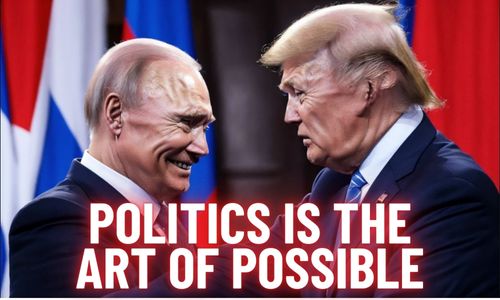
Politics is the Art of Possible
ESSAY OUTLINE
1: Introduction
A. Explanation of the Quote
(i) Define what it means by “Politics is the art of the possible.”
(ii) Politics involves negotiation, compromise, and achieving practical outcomes.
B. Context and Origin of the Phrase
(i) Briefly explain the historical context (often attributed to Otto von Bismarck).
(ii) The idea that politics focuses on achieving what is feasible rather than ideal.
C. Thesis Statement: Politics thrives on pragmatism and the ability to balance ideals with reality, making it an art that involves compromise, negotiation, and adaptability to achieve tangible progress.
2: Politics as the Art of Compromise
A. Importance of Compromise in Political Processes
(i) Political success often hinges on finding middle ground between differing viewpoints.
(ii) Examples: Bipartisan legislation, peace treaties, or coalitions in government.
B. Achieving Incremental Progress
(i) Politicians often achieve change in small, manageable steps rather than sweeping reforms.
(ii) Example: Social welfare programs or healthcare reforms, where gradual changes are made over time.
3: Negotiation as a Key Tool in Politics
A. The Role of Negotiation in Political Success
(i) Political negotiations allow for the resolution of conflicts, helping leaders achieve what is possible given constraints.
(ii) Example: Diplomatic negotiations between nations (e.g., nuclear disarmament talks).
B. Real-World Examples of Political Negotiation
(i) Historical examples where negotiation has led to significant political outcomes.
(ii) Example: The Camp David Accords or the Paris Climate Agreement.
4: Balancing Ideals with Reality
A. The Tension Between Idealism and Pragmatism
(i) Politics involves navigating between ideological goals and real-world constraints.
(ii) Example: Advocating for environmental policy in a way that balances economic interests.
B. The Role of Political Leadership in Managing Expectations
(i) Leaders must manage public expectations while pursuing policies that are practically achievable.
(ii) Example: Economic policies that attempt to balance fiscal responsibility with social welfare programs.
5: Political Adaptability in a Changing World
A. The Need for Flexibility in Political Strategy
(i) Political landscapes constantly evolve, requiring adaptability in policy approaches.
(ii) Example: Shifts in policy on global trade, healthcare, or immigration in response to changing economic conditions or public opinion.
B. Successful Adaptation Examples
(i) Highlight examples of political leaders or governments that adapted to new circumstances and succeeded.
(ii) Example: The shift in U.S. foreign policy post-Cold War.
6: Politics as a Reflection of What Society Will Accept
A. Public Opinion’s Influence on Political Possibilities
(i) Politicians are constrained by what the public will support or tolerate.
(ii) Example: The civil rights movement and how shifting public opinion influenced legislative change.
B. Political Change as a Reflection of Societal Maturity
(i) Political achievements reflect societal readiness for certain changes.
(ii) Example: Legalizing same-sex marriage after public attitudes evolved.
7: Conclusion
A. Restating Thesis
(i) Politics, as the art of the possible, requires a constant balancing act between ideals and practicality, using compromise, negotiation, and adaptability to bring about achievable change.
B. Broader Reflection on the Importance of Pragmatism in Politics
(i) Emphasize the importance of understanding politics not just as the pursuit of ideals but as the skillful management of what is achievable within the constraints of reality.
C. Final Thoughts
(i) Politics continues to be the art of navigating the possible in a world where progress is often slow and requires both patience and realism.
ESSAY
The phrase “Politics is the art of the possible” suggests that politics revolves around finding practical solutions rather than pursuing unattainable ideals. It means that politicians must focus on what can realistically be achieved within the constraints of the situation, often requiring them to make compromises. Politics, in this sense, is about striking a balance between idealism and the limitations imposed by societal, economic, and political factors. By navigating these constraints, politicians work towards achieving outcomes that are feasible rather than perfect.
Otto von Bismarck, the 19th-century German statesman, is often credited with coining the phrase. Bismarck’s approach to politics, particularly in uniting the German states, reflected his belief in practicality over idealism. He understood that rigid adherence to ideological purity could hinder progress, whereas flexibility and pragmatism could lead to real, albeit imperfect, results. In this historical context, Bismarck’s phrase underscores the idea that politics is not about achieving utopian goals but about making the best of what is possible in a given situation.
Politics thrives on pragmatism, relying on the ability of politicians to balance lofty ideals with the realities of governing. This balancing act requires compromise, negotiation, and adaptability. By treating politics as the art of the possible, leaders can bring about tangible progress, even in the face of complex challenges and competing interests. Ultimately, the most effective political outcomes are those that recognize and work within the boundaries of what can realistically be achieved.
Political success often depends on the ability to find middle ground between opposing viewpoints. In a democratic setting, diverse opinions and interests frequently clash, making it difficult to achieve consensus. Politicians must negotiate and make concessions to reach agreements that satisfy multiple parties. This process of compromise is essential for the passage of legislation, the formation of governing coalitions, and the resolution of international conflicts. For example, bipartisan legislation, where politicians from different parties work together, often leads to successful policy-making. Similarly, peace treaties between warring nations, which require both sides to give up certain demands, rely on the art of compromise to maintain stability and prevent further conflict.
Politicians often bring about change through small, manageable steps rather than attempting sweeping reforms that may face resistance or be too difficult to implement. Incremental progress allows politicians to introduce reforms gradually, building consensus and avoiding the risk of alienating key stakeholders. For example, social welfare programs typically evolve over time, with governments introducing benefits in phases to ensure public acceptance and financial sustainability. Likewise, healthcare reforms often start with smaller changes—such as expanding coverage or reducing costs—before broader transformations occur. This method of gradual advancement demonstrates how compromise and patience can lead to long-term, meaningful political achievements.
Political negotiations play a critical role in resolving conflicts and helping leaders achieve feasible outcomes within the constraints they face. In the political arena, differing interests, priorities, and ideologies often lead to disagreements, which can stall progress. Through negotiation, political actors can find common ground, making concessions and adjustments that allow them to reach a compromise. Negotiation enables leaders to navigate complex issues, such as international conflicts or domestic policy disputes, by focusing on what can realistically be achieved. For instance, diplomatic negotiations between nations, like nuclear disarmament talks, are essential in reducing global tensions. By negotiating terms that both sides find acceptable, political leaders avoid confrontation and promote stability.
History is filled with examples where successful political negotiations have led to significant and lasting outcomes. One of the most prominent examples is the Camp David Accords, where U.S. President Jimmy Carter facilitated negotiations between Egypt and Israel, leading to a peace agreement between the two countries in 1978. This negotiation process involved difficult discussions and compromises but ultimately resulted in a historic peace treaty. Another example is the Paris Climate Agreement, where countries around the world negotiated a framework to address climate change. Although not every nation got everything they wanted, the agreement marked a major global effort to combat climate change, achieved through political negotiation and compromise.
Politics constantly requires leaders to navigate the tension between their ideological goals and the real-world constraints they face. While many politicians enter office with lofty ideals, such as fighting climate change or reducing inequality, they must also deal with the limitations imposed by economic, political, and social realities. For instance, when advocating for environmental policies, leaders must strike a balance between protecting the planet and addressing economic concerns, such as the potential impact on jobs and industries. Crafting policies that promote sustainability while considering economic growth requires pragmatism, ensuring that idealistic goals do not conflict with practical needs.
Political leaders play a crucial role in managing public expectations while pursuing policies that are realistically achievable. Voters often expect sweeping changes or immediate results, but the complexities of governance require leaders to pace their reforms and deliver gradual improvements. To maintain public trust, leaders must communicate the need for incremental progress and realistic outcomes. For example, in economic policy, leaders often balance fiscal responsibility with social welfare programs. While citizens may demand extensive social benefits, leaders must ensure that these programs are sustainable and do not lead to excessive government debt. By setting clear expectations and pursuing practical solutions, political leaders can achieve meaningful progress without overpromising or compromising the stability of their nations.
Political leaders must consistently show flexibility as the political landscape evolves due to changing economic conditions, public opinion, or global events. Staying rigid in one’s approach can lead to political stagnation or missed opportunities, whereas adaptability allows for effective responses to unforeseen challenges. For instance, shifts in global trade policies often arise from economic downturns or geopolitical tensions, requiring leaders to recalibrate strategies to protect national interests. Similarly, healthcare policies may need to be adjusted in response to new technologies or emerging public health crises, while immigration policies often reflect societal attitudes and economic demands. Flexibility in policy-making ensures that governments remain responsive and capable of addressing dynamic issues as they arise.
Throughout history, political leaders and governments have successfully adapted to new circumstances and navigated challenges by adjusting their strategies. One notable example is the shift in U.S. foreign policy after the Cold War. With the collapse of the Soviet Union, the global geopolitical landscape transformed, and U.S. leaders had to reorient their foreign policy from a focus on superpower rivalry to addressing new threats, such as terrorism and regional conflicts. Another example is the economic adaptation by countries like China, which gradually opened up to global markets and adopted a more market-oriented approach while maintaining political control. This adaptability allowed China to become a major global economic power. These examples highlight the importance of flexibility in political strategy for achieving long-term success.
Public opinion plays a pivotal role in shaping the boundaries of what politicians can achieve. Leaders must remain attuned to the beliefs, values, and concerns of their constituents, as they are often constrained by what the public is willing to support or tolerate. For example, during the civil rights movement in the United States, shifting public attitudes towards racial equality significantly influenced political action. As public opinion evolved and more Americans began supporting desegregation and equal rights, political leaders felt compelled to pass legislation, such as the Civil Rights Act of 1964. This demonstrates how societal attitudes directly impact the political landscape, dictating what is politically possible.
Political achievements often mirror the maturity and evolution of society. As societal attitudes shift, political leaders are able to push forward reforms that reflect the readiness of the public to accept and embrace certain changes. For instance, the legalization of same-sex marriage came after years of evolving public attitudes towards LGBTQ+ rights. As more people came to support marriage equality, political leaders were able to enact laws that reflected this new societal consensus. The eventual political success of these movements highlights how political change is not just a top-down process but a reflection of society’s evolving values and willingness to accept new norms.
Politics, as the art of the possible, demands a continuous balancing act between pursuing idealistic goals and dealing with practical realities. Achieving meaningful change relies on the ability to compromise, negotiate, and adapt strategies in response to ever-changing circumstances. This pragmatic approach enables politicians to turn feasible ideas into actionable policies, ensuring progress even within constraints.
Understanding politics requires recognizing that it involves more than merely pursuing lofty ideals. It is about the skillful management of what is achievable within the constraints of current realities. Pragmatism in politics helps navigate complex challenges, balancing ambitions with the limitations imposed by economic, social, and political factors. This practical approach is crucial for enacting policies that are both effective and sustainable.
Politics remains the art of navigating the possible, a process that involves patience and realism. Progress often unfolds slowly, and successful political action requires leaders to be adaptable and responsive to evolving circumstances. By focusing on what can be achieved and effectively managing constraints, politicians contribute to incremental but significant advancements in society.











LEAVE A COMMENT