
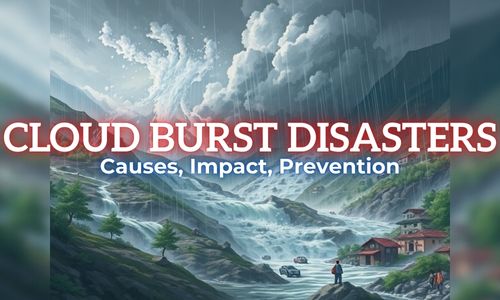
Cloud Burst Disasters
A cloudburst is an intense, short-duration rainfall event that results in sudden and heavy downpours over a localized area. Unlike normal rain, cloudbursts can release an extraordinary amount of precipitation—sometimes more than 100 mm of rain in less than an hour—leading to flash floods, landslides, and catastrophic damage. Cloudbursts occur primarily in mountainous regions, where orographic lifting forces clouds to rise, condense, and suddenly release trapped moisture.
Understanding the causes, impacts, and preventive measures of cloudbursts is critical for disaster management, environmental planning, and the safety of communities at risk.
Causes of Cloud Burst
1. Orographic Effect in Mountains
Cloudbursts usually occur in hilly terrains where warm, moist air is pushed upwards by mountain slopes. As the air cools rapidly at higher altitudes, the moisture condenses, forming dense clouds. When the saturation point is reached, the cloud suddenly releases water in the form of torrential rain.
2. Cumulonimbus Cloud Formation
Large cumulonimbus clouds, often associated with thunderstorms, are responsible for cloudbursts. The rapid upward movement of moist air inside these clouds causes water droplets to accumulate. When these droplets become too heavy to be sustained, they fall in a violent downpour.
3. Atmospheric Instability
Unstable atmospheric conditions—where hot, moist air rises quickly and collides with cooler air layers—can trigger sudden condensation. This instability often results in explosive rainfall within minutes.
4. Monsoon and Seasonal Variations
During the monsoon season, particularly in South Asia, the interaction of moist monsoon winds with Himalayan topography makes cloudbursts frequent. Seasonal climate shifts and intense low-pressure zones further accelerate these events.
Consequences of Cloud Burst
1. Flash Floods
The most immediate effect of cloudbursts is flash flooding. Rivers and streams swell rapidly, overflowing their banks and sweeping away everything in their path—homes, vehicles, livestock, and even bridges.
2. Landslides
In mountainous regions, heavy rainfall loosens soil and destabilizes slopes, leading to landslides. These landslides often cut off roads, damage infrastructure, and endanger human lives.
3. Damage to Infrastructure
Cloudbursts can cause widespread destruction of infrastructure, including roads, electricity networks, water pipelines, and communication lines. Rural areas, with weaker construction standards, face the brunt of this devastation.
4. Agricultural Losses
Excessive rainfall damages standing crops, soil fertility, and irrigation channels. Farmers in hilly regions suffer severe financial losses as farmland is eroded and productivity declines.
5. Human and Animal Casualties
Cloudbursts often lead to loss of human lives due to drowning, building collapses, and accidents triggered by flash floods. Domestic animals are also washed away, intensifying the socioeconomic impact.
6. Long-Term Environmental Impact
The erosion of soil, destruction of forests, and contamination of water sources create long-term ecological imbalances. Repeated cloudburst incidents can degrade biodiversity and natural resources.
Historical Examples of Cloud Burst Disasters
-
Leh, Ladakh (2010): A cloudburst caused flash floods that killed over 200 people and destroyed entire villages.
-
Uttarakhand (2013 & 2025): Cloudbursts triggered landslides and flash floods, devastating Kedarnath and other regions, claiming thousands of lives.
-
Khyber Pakhtunkhwa, Pakistan (2022 & 2025): Sudden cloudbursts resulted in flash floods, displacing thousands of families and destroying agricultural land.
These examples highlight the unpredictability and destructive nature of cloudbursts in mountainous and monsoon-affected regions.
Preventive Measures Against Cloud Bursts
1. Early Warning Systems
The installation of advanced weather monitoring systems, Doppler radars, and satellite imagery can provide early warnings. Real-time alerts can help local populations evacuate vulnerable zones in time.
2. Strengthening Infrastructure
-
Flood-resistant housing designs in prone areas.
-
Reinforced bridges and culverts to withstand sudden water surges.
-
Better drainage networks to channel excess water safely.
3. Disaster Preparedness and Training
Local communities should be trained in disaster response, including evacuation drills, first aid, and communication during emergencies. Establishing community-based disaster management committees strengthens resilience.
4. Land Use Planning
Restricting construction in vulnerable flood-prone and landslide-prone areas is crucial. Proper zoning laws and urban planning can reduce damage significantly.
5. Afforestation and Soil Conservation
Tree plantations and soil-binding vegetation help stabilize slopes and reduce the risk of landslides. Restoring natural ecosystems acts as a buffer against heavy rainfall.
6. River and Drainage Management
Regular desilting of rivers and drainage channels ensures smooth water flow during heavy rainfall, reducing chances of flooding.
7. Government Policy and Coordination
Strong disaster management policies, coordination between local and national authorities, and emergency relief funds are vital for addressing the after-effects of cloudbursts.
Technological Solutions for Cloud Burst Prediction
-
Doppler Weather Radar Systems for high-resolution rainfall detection.
-
Remote Sensing and GIS Mapping to identify vulnerable zones.
-
Artificial Intelligence Models for predicting extreme weather events.
-
Mobile-Based Warning Apps for delivering alerts directly to at-risk populations.
These innovations can help authorities take proactive measures before a cloudburst escalates into a disaster.
Conclusion
A cloudburst is one of the most devastating natural phenomena, capable of destroying lives, infrastructure, and ecosystems within minutes. The combination of climate change, rising temperatures, and shifting rainfall patterns has increased the frequency of such events in recent years. While complete prevention is impossible, preparedness, early warning systems, sustainable development, and strong policy frameworks can significantly reduce the damage caused by cloudbursts.
Communities, governments, and individuals must work together to ensure resilience against natural disasters, protecting both present and future generations from their catastrophic impacts.











LEAVE A COMMENT