

Butcher of Gujarat
The “Butcher of Gujarat” refers to the 2002 Gujarat riots in India, during which over 2000+ people, mostly Muslims, were killed officially but un-officially the numbers are higher than 5000+ or so. Other than that burning and demolishing the properties of Muslims mainly are also included. The violence was sparked by the death of Hindu pilgrims in a train fire, which was blamed on Muslims. The riots have been widely condemned as a pogrom against Muslims, and there have been numerous allegations of state involvement and collusion in the violence.

There has been a significant amount of evidence of the involvement of Hindu extremists in the violence and there have been many accusations that the government, led by the then Chief Minister of Gujarat, Narendra Modi, turned a blind eye to the violence or even actively encouraged it. Modi, who is now the Prime Minister of India, has been criticized for his handling of the riots and has been accused of failing to stop the violence. In conclusion, the Gujarat riots of 2002 were a tragic and devastating event in which thousands of Muslim lives were lost, and there is significant evidence linking the violence to Hindu extremism and the involvement of the state government led by Modi.
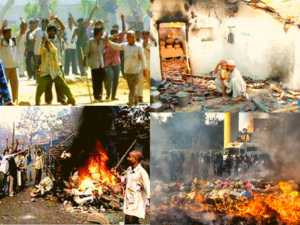
The international community generally condemned the 2002 Gujarat riots, which resulted in the deaths mostly of Muslims. Many human rights organizations and governments called for an investigation into the violence and for those responsible to be held accountable. The United States and United Kingdom governments, along with the European Union, criticized the Indian government for failing to stop the violence and for not providing enough protection for the Muslim minority. They also called for an independent inquiry into the riots and for those responsible to be brought to justice.
United Nations High Commissioner for Human Rights, Mary Robinson, visited Gujarat and reported that the violence was “well planned, possibly with the support of the state” and called for an independent inquiry. The international human rights organizations such as Amnesty International, Human Rights Watch, and the International Federation of Human Rights also condemned the violence and called for an independent investigation. In conclusion, the international community widely condemned the Gujarat riots of 2002, calling for an investigation into the violence and accountability for those responsible. The United Nations, the United States, the United Kingdom, the European Union, and various human rights organizations all criticized the Indian government for its handling of the riots.
A recent BBC documentary about the 2002 Gujarat riots, titled “The Truth Behind the Lies: Gujarat 2002,” has created controversy in India. The documentary features testimony from survivors of the riots and human rights activists, and it alleges that the government, led by then-Chief Minister Narendra Modi, was complicit in the violence. The documentary also claims that Modi and his administration actively encouraged and supported the Hindu nationalist groups that carried out the attacks on Muslims.
The documentary has created outrage in India, with many accusing the BBC of bias and of presenting a one-sided view of the events. The Indian government has also criticized the documentary, with the Ministry of Information and Broadcasting issuing a statement calling it “a malicious attempt to defame India.” The Gujarat government has filed a complaint against the BBC for airing the documentary and the police have initiated an investigation against the channel for airing the documentary. The documentary has also led to a lot of online trolling and harassment of the interviewees and the makers of the documentary. In conclusion, the recent BBC documentary about the 2002 Gujarat riots has created controversy in India, with many accusing the BBC of bias and of presenting a one-sided view of the events, and the Indian government has criticized the documentary and filed a complaint against the channel for airing it.







LEAVE A COMMENT