
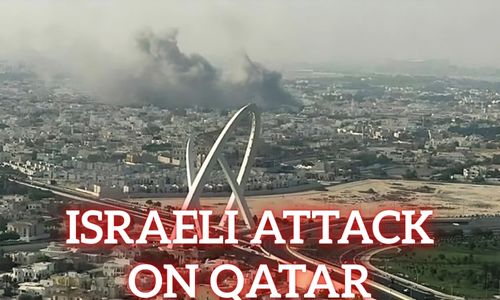
Israeli Attack On Qatar
On 9 September 2025, Israel launched its first-ever strike on the Qatari capital, targeting a compound in Doha’s West Bay Lagoon where senior Hamas leaders were meeting to discuss a US-brokered ceasefire. The unprecedented airstrike sent shockwaves through the Gulf Cooperation Council (GCC), challenged existing security guarantees, and risked upending fragile Middle East diplomacy.
Background: Qatar’s Role as Mediator
Since 2012, Qatar has hosted Hamas’s political bureau at the behest of the United States, maintaining a rare direct channel to the group for ceasefire discussions in Gaza. Doha’s willingness to accommodate talks made it a linchpin of regional diplomacy, balancing close ties with Washington against its support for Palestinian causes.
The Strike: Timeline and Casualties
At approximately 3:46 pm local time, Israeli fighter jets and drones unleashed multiple missiles on a gated villa complex housing Hamas negotiators and Qatari security personnel.
- Six people were killed, including the son of negotiator Khalil al-Hayya and a Qatari Internal Security Forces officer.
- Four others were wounded, but all intended Hamas targets survived the decapitation attempt.
- Thick plumes of smoke rose over Doha’s diplomatic district, prompting immediate lockdowns and an influx of emergency services.
Global and Regional Reactions
- Qatar condemned the strike as “state terrorism” and an egregious violation of its sovereignty, calling an emergency Arab-Islamic summit for 14 September in Doha.
- The United Nations Security Council, including the United States, formally condemned the attack for breaching international law, though stopped short of naming Israel in the final text.
- Gulf monarchies—once firmly under the US security umbrella—warned of eroding trust in American guarantees after Washington notified Doha only post-strike.
Implications for US-Arab Security Ties
The attack exposed glaring gaps in informal US defense pacts with the Gulf:
- Gulf states lack legally binding security treaties ratified by the US Senate, leaving them vulnerable to third-party actions.
- Saudi Arabia and other GCC members are now expediting plans for a formal US mutual defense agreement or a standalone regional defense union to deter future incursions.
- Analysts argue that Doha’s shaken confidence in Washington may accelerate collective Gulf defense integration, from unified air-defense systems to joint rapid-response forces.
Post-Attack Diplomatic Landscape
- Ceasefire Talks in Limbo The airstrike derailed ongoing Gaza truce negotiations in Doha, with Hamas reluctant to reconvene under perceived Qatari insecurity.
- Emergency Summit Outcomes The Arab-Islamic summit in Doha issued a draft resolution condemning the attack and demanding reparations, signaling unprecedented GCC solidarity against external aggression.
- US-Qatar High-Level Engagement Days after the strike, US special envoy Steve Witkoff and senior State Department officials flew to Doha, while former President Trump hosted Qatar’s prime minister in Washington to reassure American support despite public misgivings over the incident.
Conclusion
Israel’s attack on Qatar represents more than a military operation—it marks a watershed in Gulf security dynamics. By striking a key US ally and mediator, Israel forced Gulf states to reevaluate decades-old defense assumptions, pushing them toward formalized security pacts or indigenous joint defense mechanisms. The coming months will determine whether the GCC deepens ties with Washington or forges a new, autonomous defense architecture—decisions that will shape the future of Middle East stability.









LEAVE A COMMENT